
SERV Robotics has positioned itself as a potential infrastructure backbone for autonomous delivery, much like Nvidia became the essential hardware provider for artificial intelligence. The comparison stems from SERV’s strategy of not just building delivery robots, but developing the underlying platform””hardware, software, and operational systems””that other companies could theoretically license or deploy for their own last-mile logistics needs. Where Nvidia sells the picks and shovels to AI miners, SERV aims to provide the autonomous delivery layer that restaurants, retailers, and logistics companies can plug into rather than build from scratch.
The company, which spun out of Uber in 2021, has deployed sidewalk delivery robots in Los Angeles and other markets, partnering with Uber Eats to handle food deliveries. A specific example of this model in action: rather than a local restaurant chain developing its own autonomous delivery fleet, it can access SERV’s robots through existing delivery platforms, reducing the barrier to entry for automated last-mile logistics. This article examines whether the Nvidia comparison holds water, explores SERV’s technology and business model, discusses the competitive landscape, and considers the limitations that could prevent the company from achieving such dominant infrastructure status.
Table of Contents
- What Makes SERV a Potential Platform Play in Last Mile Automation?
- SERV’s Technology Stack and Hardware Differentiation
- The Competitive Landscape in Autonomous Delivery
- Regulatory Considerations and Market Access
- Unit Economics and the Path to Profitability
- Partnership Strategy and Ecosystem Development
- Future Outlook for SERV and Last Mile Automation
- Conclusion
What Makes SERV a Potential Platform Play in Last Mile Automation?
The Nvidia comparison isn’t about market cap or current revenue””it’s about business model architecture. Nvidia succeeded by creating a layer of the technology stack that became indispensable, then licensing and selling that layer broadly rather than building end products. serv appears to be pursuing something similar: developing the autonomous delivery robot as a standardized unit that can serve multiple customers across different verticals. This platform approach differs from vertically integrated competitors. A company like amazon building delivery robots serves only Amazon. SERV’s model, by contrast, involves deploying robots that can theoretically deliver for any merchant through partnership agreements with delivery platforms.
The robots themselves become shared infrastructure, similar to how a single Nvidia GPU can train models for thousands of different AI applications. However, this comparison has limits. Nvidia’s GPUs are physical products sold at scale with software ecosystems. SERV operates a service requiring physical robot presence, maintenance, and local operational expertise””a fundamentally different scaling challenge. The platform potential also depends on whether autonomous sidewalk delivery becomes the dominant form of last-mile logistics or remains a niche application. Historical data on delivery robot adoption has been limited, as the industry remains nascent. As of recent reports, SERV had deployed hundreds of robots rather than thousands, suggesting the technology is still in relatively early commercial stages.

SERV’s Technology Stack and Hardware Differentiation
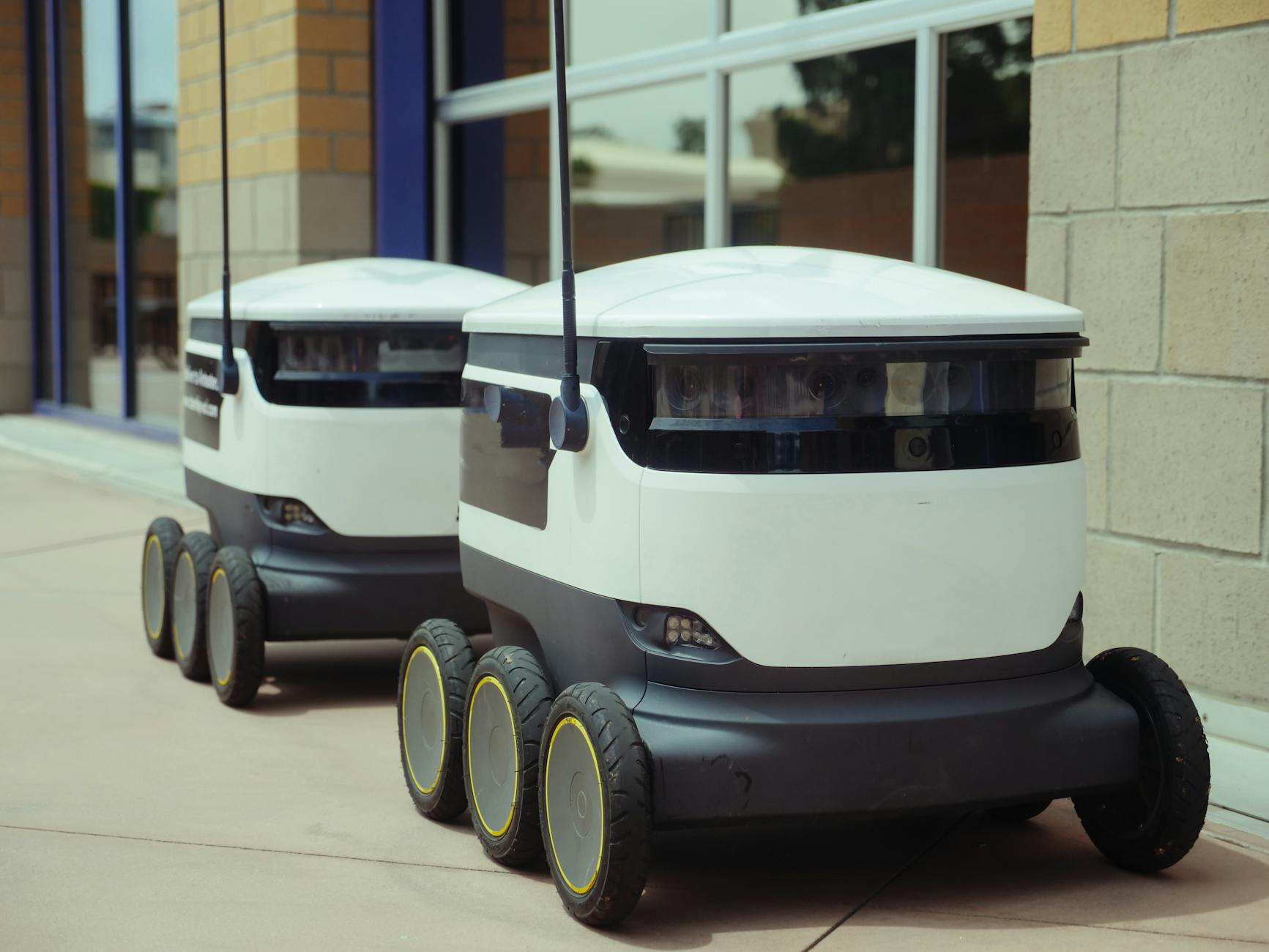
SERV’s robots are designed for sidewalk operation, distinguishing them from larger autonomous vehicles designed for roads. The machines navigate using a combination of cameras, lidar, and other sensors, processing this information through onboard AI systems to avoid pedestrians, handle curbs, and reach delivery destinations. The company has emphasized its proprietary autonomy software as a key differentiator. One technical advantage SERV has pursued is operating without a human safety operator trailing behind or constantly monitoring each robot””a cost structure that plagued early delivery robot pilots. Achieving genuine autonomy at this level requires sophisticated perception and decision-making systems, and the company has iterated through multiple hardware generations to improve reliability and capability. The robots are electric and designed for relatively short-range urban deliveries, typically under a few miles.
However, hardware in robotics is notoriously difficult to scale profitably. Unlike software, each additional robot requires manufacturing, components, and physical deployment. If a critical part fails or a design flaw emerges, fixes require physical intervention. This contrasts with Nvidia’s model of shipping chips that customers then deploy and maintain. SERV must manage a distributed fleet of robots across multiple cities, each requiring charging infrastructure, maintenance technicians, and operational oversight. This operational complexity represents a significant caveat to the platform comparison.
The Competitive Landscape in Autonomous Delivery
SERV operates in a field with well-funded competitors pursuing similar goals. Starship Technologies, founded in 2014 by Skype co-founders, has historically been one of the most prolific sidewalk delivery robot operators, with deployments on college campuses and in suburban neighborhoods. Nuro, which has raised substantial venture funding, focused on larger road-based delivery vehicles. Amazon has tested its Scout delivery robots, though reports have indicated shifting priorities. Various Chinese companies have also deployed delivery robots in their home markets. The competitive dynamics matter for the Nvidia comparison because infrastructure providers typically benefit from network effects or lock-in that reduce competitive pressure over time.
Nvidia’s CUDA software ecosystem created switching costs that helped maintain its AI chip dominance. It remains unclear whether SERV can build equivalent moats. A restaurant using SERV through Uber Eats could theoretically switch to a different robot provider if the delivery platform offered alternatives, assuming regulatory and technical compatibility. What might favor SERV is first-mover advantage in specific markets and relationships with major delivery platforms. The Uber connection provides distribution that standalone robotics companies lack. If SERV robots become the default option when an Uber Eats customer orders from a nearby restaurant, usage could scale faster than competitors relying solely on direct merchant relationships.
Regulatory Considerations and Market Access
Autonomous delivery robots face a patchwork of regulations that vary by city, state, and country. Some jurisdictions have welcomed sidewalk robots with minimal restrictions. Others have imposed weight limits, speed limits, or outright bans. San Francisco, for instance, has historically taken a cautious approach to delivery robots, while other cities have been more permissive. For SERV or any competitor pursuing the platform model, regulatory navigation becomes a competitive advantage.
Companies that successfully obtain permits, build relationships with city officials, and demonstrate safe operation can effectively lock out competitors who haven’t done the same groundwork. This creates barriers to entry that could support a platform business””similar to how telecom companies benefit from spectrum licenses or cable companies from franchise agreements. The regulatory environment also introduces risk. A high-profile accident involving a delivery robot””from any company””could trigger restrictive legislation that affects the entire industry. SERV’s fortunes are partly tied to the actions of competitors and to public perception of autonomous systems generally. This systemic risk doesn’t have a clear parallel in the Nvidia comparison, where GPU safety concerns are minimal.
Unit Economics and the Path to Profitability
The fundamental question for SERV’s platform ambitions is whether autonomous delivery can achieve favorable unit economics. Each successful delivery needs to generate more revenue than the marginal cost of operating the robot, including depreciation, electricity, maintenance, and overhead. Early delivery robot operations have struggled with this calculation, as limited autonomy required expensive human oversight. SERV has suggested that its technology improvements have dramatically reduced the cost per delivery compared to human couriers in certain scenarios. Short-distance deliveries in dense urban areas may favor robots, which don’t require wages, benefits, or rest breaks.
However, the comparison isn’t straightforward. Human couriers can handle stairs, apartment building access, and unusual delivery situations that challenge robots. A robot delivery might fail and require redelivery, negating cost savings. The tradeoff between automation and reliability matters significantly. If autonomous deliveries fail 10 percent of the time and require human intervention or redelivery, the cost advantage erodes quickly. SERV’s long-term viability depends on achieving reliability levels that make the economics clearly superior to alternatives””not just comparable but substantially better, to justify the capital investment in robot fleets.
Partnership Strategy and Ecosystem Development
SERV’s relationship with Uber represents its most significant partnership, providing access to Uber Eats’ merchant network and customer base without SERV having to build demand generation from scratch. This integration model reflects the platform strategy: SERV provides the delivery capability, Uber provides the marketplace, and merchants get autonomous delivery without direct involvement in robotics. The company has also pursued partnerships with convenience stores, grocery chains, and other retailers looking to offer rapid delivery. Each partnership expands the use cases for SERV’s robots and increases utilization rates””a critical metric since robots sitting idle generate costs without revenue.
An example scenario: robots delivering lunch orders during midday might deliver convenience store items in the evening, smoothing demand across hours. Building an ecosystem of partners, however, requires SERV to meet diverse requirements and service level expectations. A failed grocery delivery has different consequences than a failed restaurant order. Expanding partnership types increases complexity and potentially dilutes focus. The platform model works when the underlying technology generalizes well; it struggles when each customer segment requires significant customization.
Future Outlook for SERV and Last Mile Automation
The question of whether SERV becomes “the Nvidia of last mile automation” will likely be answered over the next several years as the autonomous delivery market matures. Several factors will determine the outcome. First, whether sidewalk delivery robots achieve broad regulatory acceptance and consumer adoption. Second, whether SERV’s technology maintains competitive advantages as the industry evolves.
Third, whether the company can scale operations while maintaining reliability and favorable economics. The Nvidia comparison is aspirational rather than descriptive at this stage. Nvidia achieved its position through decades of product iteration, ecosystem development, and fortuitous timing as AI demand exploded. SERV is at a much earlier phase, with the underlying market still developing. The company has assembled relevant pieces””technology, partnerships, capital””but converting these into infrastructure-level dominance requires execution over an extended period in a competitive and uncertain environment.
Conclusion
SERV Robotics has deliberately positioned itself as a platform provider for autonomous last-mile delivery rather than simply a robot manufacturer or delivery service. The Nvidia comparison reflects this ambition: becoming the essential layer that enables autonomous delivery across multiple customers and use cases. The company’s technology, Uber partnership, and operational progress provide a foundation for this strategy, though significant execution challenges remain.
Investors and industry observers should evaluate SERV based on concrete metrics rather than aspirational comparisons. Deployment numbers, delivery success rates, unit economics, and partnership growth will indicate whether the platform model is working. The autonomous delivery market remains early-stage with uncertain adoption curves, regulatory variability, and intense competition. SERV has a plausible path to significance in this space, but the Nvidia-level outcome requires favorable conditions and sustained execution that cannot be assumed.