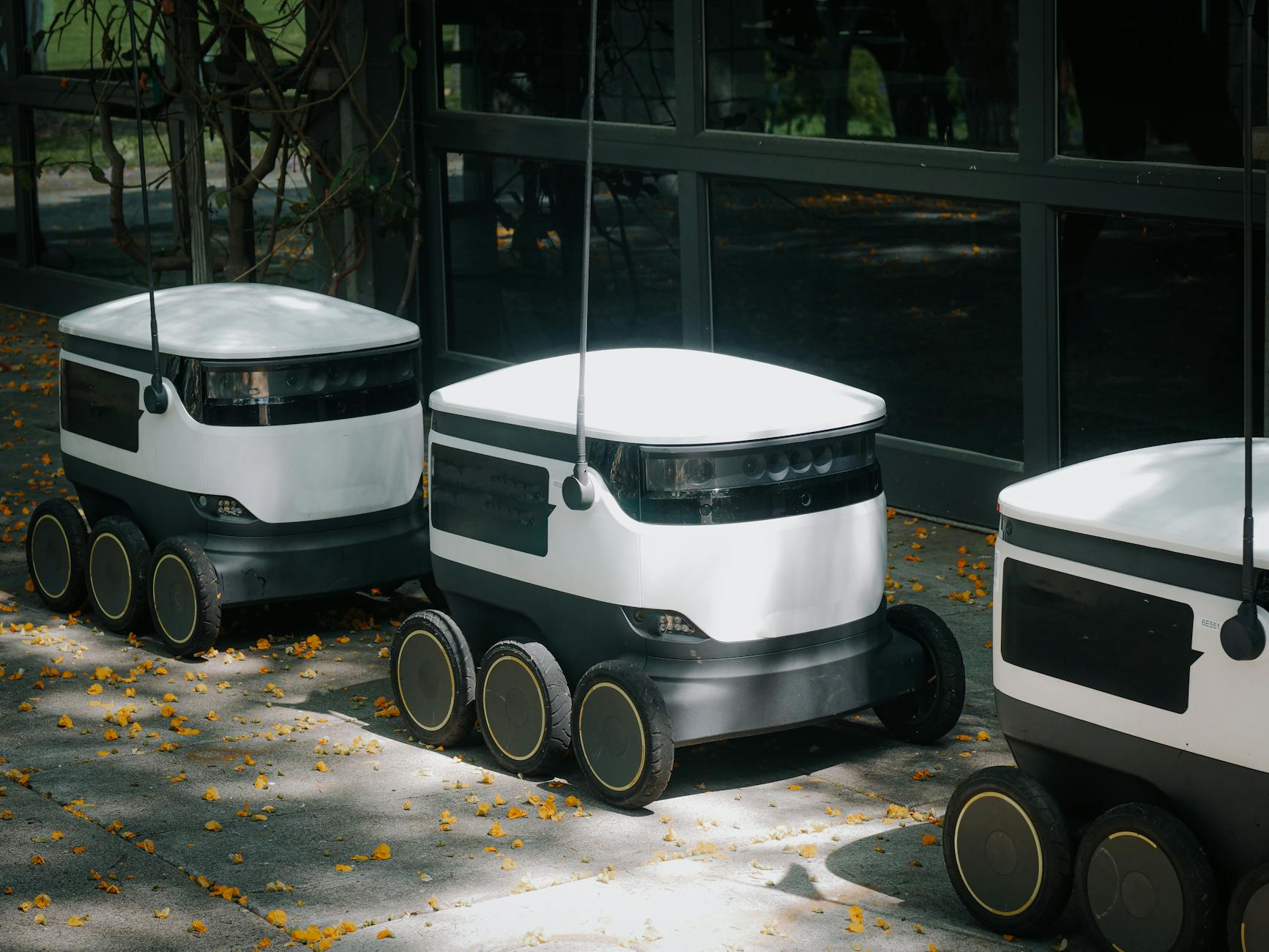

The search for the next Nvidia in robotics has intensified as investors and industry analysts recognize that physical automation stands at an inflection point similar to where artificial intelligence was a decade ago. Just as Nvidia transformed from a gaming graphics company into the indispensable backbone of AI computing, a handful of robotics companies are positioning themselves to become the essential infrastructure providers for a world increasingly dependent on autonomous machines. The question occupying boardrooms and venture capital meetings is not whether this transformation will happen, but which companies will emerge as the dominant players. The robotics industry faces a fundamental challenge that mirrors the early days of AI development: fragmentation.
Hundreds of companies build robots for specific tasks, but few provide the underlying platforms, components, or software that enable the entire ecosystem to function. Nvidia’s dominance came from recognizing that AI developers needed powerful, standardized computing hardware and a robust software ecosystem. The robotics equivalent would be a company that provides the essential building blocks””whether sensors, actuators, AI chips optimized for physical interaction, or operating systems””that every robot manufacturer needs regardless of their specific application. By examining current market dynamics, emerging technologies, and the structural requirements for platform dominance, readers will gain insight into which companies possess the characteristics that could position them as the foundational layer of the robotics revolution. This analysis moves beyond surface-level speculation to examine the technical and business model requirements for achieving Nvidia-like market influence in automation technology.
Table of Contents
- Why Could the Next Nvidia in Robotics Be Hiding in Plain Sight?
- Key Players Positioning as Robotics Platform Leaders
- Technologies That Will Define Robotics Infrastructure Dominance
- How to Identify Potential Robotics Infrastructure Winners
- Challenges and Risks in the Robotics Platform Race
- The Role of AI Foundation Models in Robotics Platform Development
- How to Prepare
- How to Apply This
- Expert Tips
- Conclusion
- Frequently Asked Questions
Why Could the Next Nvidia in Robotics Be Hiding in Plain Sight?
The pattern of transformative technology companies hiding in plain sight before their explosive growth phase repeats throughout business history. Nvidia traded at modest valuations for years as a graphics card manufacturer before the deep learning revolution revealed its true strategic importance. Similarly, potential robotics platform winners may currently operate in seemingly mundane market segments””industrial sensors, motor controllers, or simulation software””that obscure their potential to become essential infrastructure. Several factors contribute to this visibility problem.
First, robotics remains highly fragmented across industries including manufacturing, logistics, healthcare, agriculture, and consumer applications. A company providing critical components to multiple segments may not attract attention because analysts covering each vertical see only a fraction of their total addressable market. Second, the enabling technologies for robotics””computer vision, force sensing, precision motion control””often exist within larger conglomerates where their strategic value gets buried in diversified earnings reports. Third, many crucial robotics technologies are sold business-to-business rather than directly to consumers, limiting their brand recognition despite their fundamental importance.
- **Component suppliers with cross-industry reach**: Companies like Harmonic Drive (precision gears) or Cognex (machine vision) provide essential components to multiple robotics sectors but lack the visibility of end-product manufacturers
- **Software infrastructure providers**: Firms developing simulation environments, robot operating systems, or AI training platforms may capture disproportionate value as the industry matures
- **Specialized semiconductor designers**: Companies creating chips optimized for robotic perception, planning, and control could become as essential to physical AI as Nvidia became to digital AI
Key Players Positioning as Robotics Platform Leaders
Several companies have emerged as serious contenders for platform dominance in the robotics ecosystem, each pursuing different strategic approaches. Nvidia itself has recognized the opportunity and aggressively expanded into robotics through its Isaac platform, which provides simulation, AI training, and deployment tools specifically designed for robotic applications. The company’s existing relationships with AI developers and its powerful GPU hardware give it significant advantages, though success in physical automation requires expertise beyond pure computation. Fanuc, headquartered in Japan, represents another potential platform play despite being primarily known as an industrial robot manufacturer. The company holds over 100 patents in robot control systems and has installed more than 750,000 industrial robots worldwide.
More significantly, Fanuc has developed proprietary AI capabilities and a comprehensive software ecosystem that increasingly positions it as an infrastructure provider rather than merely a hardware vendor. ABB and Kuka occupy similar positions, though ownership changes and strategic shifts have created uncertainty about their platform ambitions. The semiconductor space offers perhaps the most direct Nvidia parallel. Companies like Ambarella, which specializes in computer vision chips, and Qualcomm, with its robotics-specific processor line, are competing to become the processing standard for autonomous systems. Smaller players like Hailo and Mythic have developed neuromorphic and analog computing approaches that could prove superior for robotic edge processing.
- **Boston Dynamics** has transitioned from research demonstrations to commercial deployment, with parent company Hyundai providing resources for platform development
- **Rockwell Automation** controls significant market share in industrial control systems and has been acquiring robotics-adjacent companies to build an integrated automation platform
- **Intuitive Surgical** dominates surgical robotics with installed base advantages and proprietary training systems that create platform-like lock-in effects
Technologies That Will Define Robotics Infrastructure Dominance
The path to platform dominance in robotics runs through several critical technology domains where standardization and ecosystem effects can create durable competitive advantages. Simulation and digital twin technology has emerged as a primary battleground because training robots in the physical world is expensive, slow, and potentially dangerous. Companies that provide compelling simulation environments where developers can train and validate robotic systems before physical deployment may capture significant value from the entire industry. Nvidia’s Omniverse platform explicitly targets this opportunity, but alternatives from Unity, Epic Games, and specialized robotics companies like Anymal or Gazebo (now maintained by Open Robotics) compete for developer mindshare. The winner in simulation could establish the same type of ecosystem lock-in that iOS and Android created in mobile computing.
Developers who invest in learning one simulation platform, building assets and training data within it, and integrating their workflows around its tools face high switching costs. Perception systems represent another critical infrastructure layer. Robots need to understand their environment through combinations of cameras, lidar, radar, ultrasonic sensors, and force/torque sensing. Companies that provide integrated perception solutions””combining hardware sensors with the AI software to interpret them””could capture platform-like positions. Velodyne, Ouster, and Luminar compete in lidar; Intel’s RealSense and Stereolabs provide depth cameras; while numerous startups develop novel sensing modalities.
- **Edge AI processing**: Robotic systems require real-time decision making that cannot tolerate cloud latency, making specialized edge processors essential
- **Motion control systems**: Precision actuators and the control algorithms that drive them remain technically challenging, with Japanese companies maintaining significant advantages
- **Safety certification frameworks**: As robots operate closer to humans, companies providing certified safety systems may become mandatory integration partners

How to Identify Potential Robotics Infrastructure Winners
Identifying which companies possess genuine platform potential requires examining specific characteristics that historically predicted infrastructure dominance in technology transitions. Network effects stand as the most reliable indicator””platforms become more valuable as more participants join, creating self-reinforcing growth. In robotics, network effects manifest through developer ecosystems, data accumulation advantages, and interoperability standards. Investor and industry observers should examine several concrete metrics when evaluating potential platform companies. Gross margins above 50% typically indicate that a company provides differentiated value rather than commoditized hardware.
High switching costs, measured by customer retention rates and the breadth of integration into customer workflows, suggest platform characteristics. Developer community engagement””measured through GitHub activity, forum participation, and third-party ecosystem development””predicts future mindshare growth. The timing of market entry matters significantly. Companies that establish platform positions during technology transitions often maintain dominance for decades. The current moment, with AI capabilities dramatically expanding robotic possibilities, represents such a transition. Companies that capture developer mindshare and establish ecosystem positions during this window may lock in advantages that prove difficult to displace.
- **Cross-industry applicability**: Companies selling to multiple robotics verticals have greater platform potential than single-industry specialists
- **Software revenue percentage**: Growing software and services revenue relative to hardware indicates platform business model evolution
- **Partnership announcements**: Integration partnerships with major robot manufacturers signal recognition as essential infrastructure
- **Patent portfolios**: Foundational patents in sensing, control, or AI indicate defensible technology positions
Challenges and Risks in the Robotics Platform Race
Despite the compelling opportunity, the path to Nvidia-like dominance in robotics faces significant obstacles that may prevent any single company from achieving comparable market power. The physical nature of robotics creates challenges absent in software-centric AI. Robots must operate in diverse, unstructured environments where failure modes multiply compared to controlled computing environments. This diversity may prevent the standardization that enables platform economics. Regulatory complexity adds another layer of difficulty.
Robots operating near humans face safety certification requirements that vary by geography and application. Medical robots require FDA approval; industrial robots must meet OSHA standards; autonomous vehicles face state-by-state regulatory patchworks. A company attempting to build a cross-industry platform must navigate this complexity or limit itself to specific regulated domains. Capital requirements present additional challenges. Building robotics platforms requires sustained investment in hardware development, manufacturing capabilities, and ecosystem support that may exceed what public market investors will tolerate. Nvidia benefited from decades of GPU revenue that funded its AI infrastructure investments; potential robotics platforms may lack equivalent cash-generating businesses to fund platform development.
- **Supply chain fragmentation**: Unlike software, robotic systems require physical components from multiple specialized suppliers, limiting vertical integration opportunities
- **Commoditization pressure**: Many robotic components face aggressive price competition, particularly from Chinese manufacturers who have built significant capabilities in motors, sensors, and basic computing hardware
- **Technology uncertainty**: The optimal technical approach for general-purpose robotics remains unclear, creating risk that dominant platforms could be displaced by superior architectures
- **Geopolitical risks**: Technology competition between the United States and China has specifically targeted robotics, creating supply chain and market access risks for companies with exposure to both markets

The Role of AI Foundation Models in Robotics Platform Development
The emergence of large language models and their extension into multimodal and robotic applications has created new platform possibilities that did not exist even two years ago. Companies developing foundation models capable of controlling robotic systems could capture the highest-value position in the stack, similar to how operating systems captured value in personal computing. Google DeepMind, OpenAI, and several well-funded startups are racing to develop these robotic foundation models.
This development could reorganize the competitive landscape in unexpected ways. If foundation models prove capable of generalizing across different robot hardware, the importance of hardware standardization diminishes. The platform winner might be the company whose AI model becomes the default brain for diverse robotic systems, rather than the company providing physical components. However, the specialized requirements of robotic control””real-time processing, safety guarantees, physical intuition””may limit how much existing AI companies can leverage their advantages in language and image models.
How to Prepare
- **Map the robotics value chain comprehensively**: Create detailed diagrams showing how value flows from component suppliers through system integrators to end users. Identify which positions capture the most margin and which face the most competition. This exercise often reveals hidden platform players that exist at critical chokepoints.
- **Track developer ecosystem metrics**: Monitor GitHub repositories, Stack Overflow questions, and developer conference attendance for robotics platforms and tools. Growing developer engagement often precedes commercial success by several years, providing early signals of platform potential.
- **Study historical technology platform transitions**: Examine how Microsoft, Intel, Cisco, and Nvidia achieved platform dominance in their respective domains. Identify common patterns””standard-setting, ecosystem development, strategic acquisitions””and look for robotics companies executing similar playbooks.
- **Build relationships with robotics developers and integrators**: Engineers working directly with robotic systems often have visibility into which tools and components prove indispensable versus which face ready substitution. Their perspectives frequently differ from those of financial analysts who rely on public information.
- **Monitor acquisition activity and corporate venture investments**: Large technology companies often signal their platform ambitions through acquisitions and strategic investments. Tracking which robotics companies attract attention from potential acquirers can identify valuable assets before public markets recognize their importance.
How to Apply This
- **Diversify across the robotics value chain**: Rather than betting on a single potential platform winner, consider exposure to multiple layers””semiconductors, sensors, software, and integrated systems””to capture industry growth regardless of which specific platform model prevails.
- **Weight investments toward companies with software-centric business models**: Software typically offers better margins and stronger network effects than hardware. Robotics companies transitioning toward software and services revenue deserve premium valuations if the transition proves sustainable.
- **Consider geographic diversification**: Different regions maintain advantages in different aspects of the robotics stack. Japanese companies lead in precision components, Chinese manufacturers dominate cost-optimized hardware, and American companies tend to lead in AI software. A balanced portfolio captures global innovation.
- **Establish review triggers**: Set specific milestones””market share thresholds, developer adoption metrics, margin expansion targets””that would indicate a company achieving platform status. Regular review against these triggers prevents both premature conviction and delayed recognition of emerging winners.
Expert Tips
- **Focus on bottleneck technologies**: The most valuable positions in any technology stack occur where demand exceeds supply and alternatives prove difficult to develop. In robotics, this currently includes precision actuators, real-time AI inference chips, and safety-certified software components.
- **Distinguish between current revenue and strategic position**: Some companies with modest current robotics revenue occupy strategic positions that could yield dramatic growth as the market matures. Evaluate both present financial performance and long-term positioning.
- **Watch for standard-setting activity**: Companies that participate actively in robotics standards bodies often aim to embed their technologies into industry specifications. ROS (Robot Operating System) standardization, safety certification frameworks, and communication protocols all represent opportunities for platform positioning.
- **Recognize that hardware still matters**: Unlike pure software platforms, robotics requires physical systems that must function reliably in the real world. Companies with manufacturing expertise, quality control capabilities, and supply chain relationships possess advantages that pure-play software companies cannot easily replicate.
- **Consider the services opportunity**: As robots proliferate, companies providing fleet management, maintenance, and training services could capture recurring revenue streams analogous to software-as-a-service models. This opportunity may favor companies with strong customer relationships and domain expertise over pure technology leaders.
Conclusion
The search for the next Nvidia in robotics requires looking beyond obvious candidates to examine the structural requirements for platform dominance in physical automation. The winning company will likely combine several characteristics: technology that proves essential across multiple robotics applications, a business model that creates increasing returns as adoption grows, and management with the vision to pursue platform strategies despite near-term pressure for hardware-centric revenues. Whether this winner emerges from established automation giants, semiconductor companies extending into robotics, or startups building new approaches from the ground up remains genuinely uncertain. The opportunity size justifies serious attention from investors and industry participants.
Robotics penetration across manufacturing, logistics, healthcare, and service industries remains in early stages despite decades of development. The combination of improved AI capabilities, declining component costs, and growing labor constraints has created conditions for accelerating adoption. Companies that establish platform positions during this growth phase could compound advantages for decades. The next Nvidia in robotics may indeed be hiding in plain sight””perhaps in an industrial components catalog, an academic robot operating system project, or a chip designer’s product roadmap””waiting for market conditions that will reveal its true strategic importance.
Frequently Asked Questions
How long does it typically take to see results?
Results vary depending on individual circumstances, but most people begin to see meaningful progress within 4-8 weeks of consistent effort. Patience and persistence are key factors in achieving lasting outcomes.
Is this approach suitable for beginners?
Yes, this approach works well for beginners when implemented gradually. Starting with the fundamentals and building up over time leads to better long-term results than trying to do everything at once.
What are the most common mistakes to avoid?
The most common mistakes include rushing the process, skipping foundational steps, and failing to track progress. Taking a methodical approach and learning from both successes and setbacks leads to better outcomes.
How can I measure my progress effectively?
Set specific, measurable goals at the outset and track relevant metrics regularly. Keep a journal or log to document your journey, and periodically review your progress against your initial objectives.
When should I seek professional help?
Consider consulting a professional if you encounter persistent challenges, need specialized expertise, or want to accelerate your progress. Professional guidance can provide valuable insights and help you avoid costly mistakes.
What resources do you recommend for further learning?
Look for reputable sources in the field, including industry publications, expert blogs, and educational courses. Joining communities of practitioners can also provide valuable peer support and knowledge sharing.