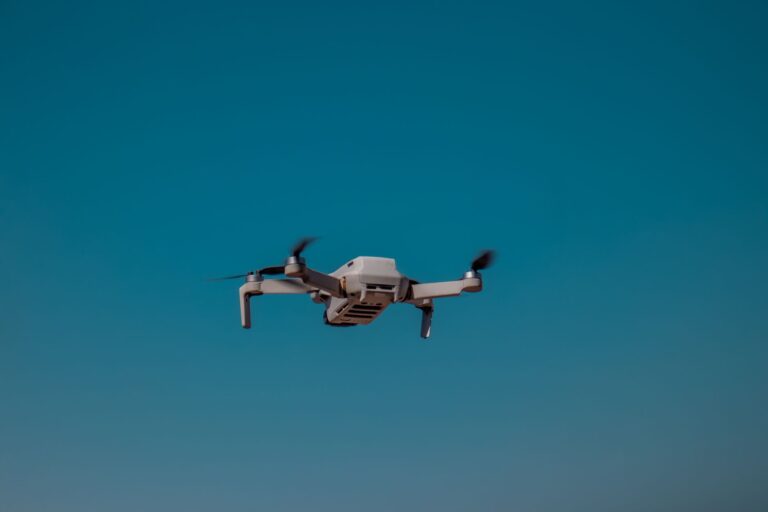

Palladyne AI (NASDAQ: PDYN) qualifies as a speculative defense technology play because the company is burning through capital with a -953% net margin while pursuing high-risk Pentagon contracts that could transform its business—but might never materialize at scale. The stock appeals primarily to aggressive investors willing to bet that the company’s autonomous robotics software, currently being tested by the U.S. Air Force for applications like autonomous media blasting and sanding operations, will eventually generate sufficient defense contract revenue to offset its significant cash burn.
With $62.7 million in cash and zero debt as of mid-2025, Palladyne has runway to execute on its strategy, but the company remains unproven in converting military trials into sustainable, high-margin recurring revenue. The speculative nature of this play becomes clear when examining Palladyne’s recent pivot: in November 2025, the company acquired GuideTech, Warnke Precision Machining, and MKR Fabricators to build out a vertically integrated defense ecosystem, then immediately launched a dedicated Palladyne Defense division. This vertical integration strategy is unusual in the tech world and signals management’s confidence in defense opportunities, but it also increases the company’s fixed costs and capital intensity at precisely the moment when profitability remains elusive.
Table of Contents
- What Makes Palladyne an AI Defense Play Rather Than a Traditional Robotics Company?
- Pentagon Funding and the Path to Defense Contracts
- The Acquisitions Strategy and Vertical Integration Bet
- The Financial Cliff and Cash Burn Reality
- The Contract Revenue Uncertainty and Margin Risk
- Domestic Manufacturing and Reshoring as a Tailwind
- What Happens Next and the Timeline Question
- Conclusion
What Makes Palladyne an AI Defense Play Rather Than a Traditional Robotics Company?
Palladyne’s positioning in the defense sector centers on autonomous drone cooperation and robotics software that minimizes human management requirements—a capability that military and intelligence agencies have shown intense interest in. Rather than selling hardware robots directly, the company has focused on the intelligence layer that coordinates multiple autonomous systems with reduced operator overhead. This software-first approach to defense markets is what elevates Palladyne beyond a conventional industrial robotics vendor and into the speculative AI defense category that attracts both venture investors and government agencies. The Pentagon’s willingness to fund testing represents validation of this approach but not proof of adoption.
The U.S. Air Force trials involve relatively straightforward applications like autonomous media blasting and sanding—tasks that demonstrate the technology’s capability but do not yet show whether Palladyne’s software can handle the complexity of actual military operations. Defense adoption timelines are notoriously long, often stretching five to ten years from initial testing to full procurement. For a cash-burning company, that timeline presents both opportunity and risk: the opportunity to secure multi-million-dollar contracts, and the risk of depleting capital before those contracts materialize.

Pentagon Funding and the Path to Defense Contracts
The Pentagon’s decision to provide additional funding for testing Palladyne’s AI software with the Air Force is significant but should not be misinterpreted as a procurement commitment. Government testing programs serve multiple purposes: they validate technology, they reduce risk for decision-makers, and they generate data for future procurement decisions. However, a successful test is only the first step in a process that includes specification refinement, competitive evaluation, integration with existing military systems, and regulatory approval—each of which can derail a product’s path to large-scale adoption. Palladyne’s backlog of $13.5 million at year-end 2025 grew to nearly $18 million by mid-Q1 2026, representing growth exceeding 30%.
This backlog expansion suggests the company is winning early contracts, but the margin structure of those contracts remains unclear from public disclosures. For a company burning cash at a rate proportional to its -953% net margin, even a $13.5 million to $18 million backlog provides only limited comfort. If those contracts carry low margins or require significant upfront capital investment, the backlog growth could actually accelerate cash burn rather than extend the runway. This distinction between topline growth and cash sustainability is crucial for evaluating speculative defense plays.
The Acquisitions Strategy and Vertical Integration Bet
In a single move in November 2025, Palladyne acquired three companies—GuideTech (advanced avionics), Warnke Precision Machining, and MKR Fabricators (certified U.S.-based manufacturing)—to build what management frames as a vertically integrated defense technology company. This strategy represents a calculated bet that defense agencies prefer integrated vendors who can handle software, hardware, and manufacturing in-house, and that domestic manufacturing (a priority for U.S. national security policy) commands premium pricing and contract preference. Vertical integration carries a significant trade-off that speculative investors must weigh carefully.
On one hand, owning the entire supply chain protects against partner dependencies and allows Palladyne to control quality and delivery timelines. On the other hand, manufacturing operations consume capital, carry fixed costs, and require operational expertise in unfamiliar domains. A software-focused company acquiring manufacturing facilities is betting that the strategic benefits outweigh the operational complexity. If defense demand materializes quickly, this strategy looks prescient; if demand develops slowly, those manufacturing operations could become a drag on cash flow. Palladyne is essentially doubling down on its defense thesis by making its cost structure less flexible at a time when demand remains uncertain.

The Financial Cliff and Cash Burn Reality
Palladyne’s balance sheet reveals the underlying urgency of its strategy: $62.7 million in cash and zero debt provide a runway, but the -953% net margin indicates the company is losing far more than a dollar for every dollar of revenue it generates. At that burn rate, even a strong cash position can disappear in a matter of years if the company cannot reach positive unit economics. This is where the speculative designation becomes critical—Palladyne is not a company with a viable business model that happens to be unprofitable; it is a company that has not yet proven it can make money at scale.
The comparison to other defense technology startups is instructive. Companies like Anduril and Shield AI have pursued similar strategies—developing autonomous and AI-driven capabilities for defense applications—and both have raised substantial venture funding at high valuations precisely because venture investors believe the eventual defense contracts will justify the current cash burn. The difference is that Palladyne is pursuing these goals as a public company with quarterly earnings scrutiny, which accelerates pressure to demonstrate revenue growth and traction. The November 2025 acquisitions were likely intended to signal to the market and to the Pentagon that Palladyne is serious about defense, but they also represent the company spending capital on growth during a period of significant red ink—a strategy that only works if the Pentagon contracts arrive at scale and within a compressed timeline.
The Contract Revenue Uncertainty and Margin Risk
The biggest limitation investors face in evaluating Palladyne is fundamental uncertainty about whether Pentagon contracts will convert to high-margin recurring revenue. Military purchasing is different from commercial software sales in several critical ways: contracts often involve fixed-price bids (which shift risk to the vendor), integration with legacy military systems (which can be costly and slow), and qualification and certification requirements (which add time and expense). A $50 million Pentagon contract that requires $40 million in fulfillment costs and two years of additional R&D is fundamentally different from a $50 million commercial software contract with 80% gross margins. Palladyne has not yet disclosed the margin structure of its existing backlog or the expected margins on future Pentagon contracts.
This opacity is typical for companies early in the defense contracting game—margins are often proprietary and subject to non-disclosure agreements—but it creates blind spots for investors. A speculative defense AI play is speculative partly because the market does not yet know whether the unit economics will work at scale. The company is betting they will; investors are betting with them. If the company’s own internal analysis shows low-margin defense contracts, the investment thesis falls apart regardless of how large the contracts are.

Domestic Manufacturing and Reshoring as a Tailwind
One advantage Palladyne built into its strategy through the November 2025 acquisitions is positioning as a domestic, integrated manufacturer at a time when U.S. defense policy explicitly favors reshoring and reducing dependence on foreign supply chains. The Biden and Trump administrations have both emphasized bringing advanced manufacturing back to the United States, and the Inflation Reduction Act and CHIPS Act have provided financial incentives for domestic production. MKR Fabricators and Warnke Precision Machining, as certified U.S.-based manufacturers, align Palladyne directly with this policy environment.
This policy tailwind is not guaranteed to translate to contract wins, but it removes one potential obstacle. A defense agency evaluating Palladyne’s autonomous robotics software will not have to explain why it selected a company that relies on foreign manufacturing partners. This “reshoring bonus” is particularly valuable in the current geopolitical environment, where concerns about Taiwan, semiconductors, and supply chain vulnerability are driving government procurement decisions. For speculative investors, this represents a material advantage relative to competitors that lack domestic manufacturing capacity, though it does not reduce the fundamental cash burn and profitability challenges the company faces.
What Happens Next and the Timeline Question
Palladyne’s future hinges on a question of timing that no investor can answer with certainty: how quickly will Pentagon testing translate to significant procurement? If the Air Force completes testing within the next 6 to 12 months and authorizes large-scale purchases, Palladyne’s current cash position and backlog growth become adequate to carry the company through to profitability. If testing extends beyond two years or if procurement decisions face delays due to budget cycles, competing technologies, or bureaucratic friction, the company’s runway could tighten dramatically.
The acquisitions of manufacturing and avionics capabilities suggest management expects to close that timeline quickly—they would not have taken on the fixed costs of manufacturing operations if they anticipated three to five years of continued testing and development. This is a tell about management’s own confidence in near-term defense traction, but it is also the highest-stakes bet the company has made. If that confidence proves misplaced, Palladyne will face pressure to either divest the manufacturing operations (at a loss) or accelerate military adoption efforts in ways that could compromise product quality or financial discipline.
Conclusion
Palladyne AI represents a speculative defense technology investment with legitimate technical merit and government interest but significant cash burn and unproven unit economics. The company has positioned itself strategically through acquisitions and division creation, and the Pentagon’s willingness to fund testing validates the core technology. However, the -953% net margin and the absence of a clear path to profitability mean this is a bet on an outcome, not an investment in an existing business model.
The company has capital to execute, but it does not have time to execute indefinitely. For investors in robotics and automation technology, Palladyne’s play is instructive in another sense: it demonstrates how government interest in autonomous systems and AI-driven robotics is creating new companies and new venture models, but it also shows why speculative is the right word. The gap between interesting technology and profitable business can be wider in defense than anywhere else in industrial automation, and Palladyne is crossing that gap in public market conditions while burning substantial cash. The next 18 to 24 months will likely determine whether the Pentagon commitment translates to the contracts and margins the company needs to survive as an independent, profitable business.