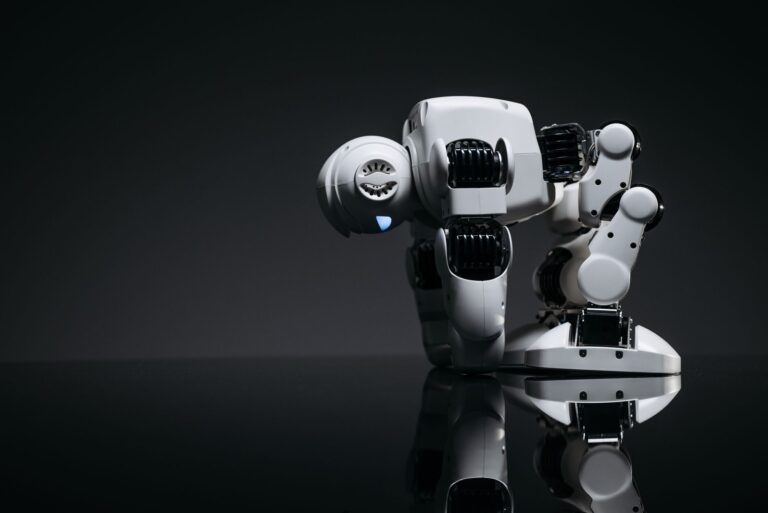

POET stands as a distributed computing architecture that functions as a high-leverage multiplier for robotics systems, enabling organizations to scale automation capabilities without proportional increases in hardware costs or system complexity. At its core, POET allows multiple robotic units to operate in parallel while sharing computational resources and decision-making frameworks, creating a network effect where additional robots improve overall system efficiency rather than diminish it. A manufacturing facility implementing POET might deploy twenty collaborative robots that operate with the computational efficiency of a much larger centralized system, each unit contributing to and benefiting from collective learning and resource optimization.
The leverage aspect of POET derives from its ability to abstract computational bottlenecks away from individual hardware devices. Rather than each robot carrying its own processing power and neural networks, POET distributes intelligence across a networked infrastructure, allowing simpler, cheaper robotic units to perform complex tasks. This fundamental shift transforms robotics economics: instead of choosing between expensive smart robots or cheap dumb robots, organizations can deploy numerous accessible units backed by centralized intelligence.
Table of Contents
- How Does POET Enable Parallel Processing in Robotics?
- Infrastructure Requirements and System Limitations
- Real-World POET Applications in Modern Manufacturing
- Evaluating POET for Your Automation Challenges
- Common Integration Challenges and Data Consistency Issues
- Security Considerations in Centralized Robot Management
- The Future of Distributed Robotics and POET Evolution
- Conclusion
How Does POET Enable Parallel Processing in Robotics?
poet‘s architecture allows multiple robots to execute tasks simultaneously while maintaining coordination and consistency across the entire system. Unlike traditional approaches where each robot operates independently with its own AI models and decision trees, POET uses a hub-and-spoke model where robots send sensor data to a central processor, receive coordinated instructions, and report results back. This means a warehouse operation can have fifty robots moving packages, all receiving real-time optimization instructions from the same decision engine, rather than fifty separate decision engines competing for resources.
The computational efficiency gains are substantial but come with latency tradeoffs that engineers must carefully consider. A robot operating with local processing can make microadjustments in milliseconds; a POET-enabled robot sending requests to a central server introduces network delay. This limitation makes POET ideal for slower, coordinated tasks like sorting, material handling, and inventory management, but less suitable for high-speed assembly work or tasks requiring sub-50-millisecond response times. industrial integrators implementing POET must thoroughly test latency profiles before deploying in time-sensitive applications.

Infrastructure Requirements and System Limitations
Implementing POET requires building robust network infrastructure that the organization likely doesn’t already have at the scale needed for distributed robotics. Unlike traditional factory robots that sit isolated on a workbench, POET systems demand redundant networking, careful bandwidth management, and failover protocols to ensure that central processing outages don’t paralyze the entire robot fleet. A company with twenty robots and spotty WiFi will quickly discover that the cost of the network infrastructure actually exceeds the cost savings from simplified robot hardware.
The system also introduces a critical single point of failure: if the central processing hub becomes unavailable, the distributed robots lose their decision-making capability and become expensive paperweights. Some organizations mitigate this through redundant servers and automatic failover, but this adds significant expense and complexity. Real-world deployments have experienced situations where a firmware update to the central system caused unexpected downtime across dozens of robots simultaneously—a scenario that wouldn’t occur with independent robotic systems. Any organization considering POET must plan for centralized system management and develop comprehensive backup strategies.
Real-World POET Applications in Modern Manufacturing
Amazon’s warehouse automation strategy mirrors POET principles, using coordinated robot fleets that operate under centralized orchestration rather than individual decision-making. The robots themselves are relatively simple, but the central system ensures they move in patterns that maximize throughput and minimize collisions. A single update to the central optimization algorithm improves performance across thousands of units immediately, whereas updating firmware on individual robots would take weeks and require physical intervention at each location.
Food processing facilities have found particular value in POET-style systems for sorting and quality control tasks. Multiple vision-equipped robots can inspect products simultaneously while a central AI system learns from all cameras collectively, improving detection rates more rapidly than any single robot could achieve. However, integrators have noted that the coordination overhead becomes problematic in applications with extreme variations—a facility processing ten different product types encountered significant latency issues when the central system tried to manage too many simultaneous decision branches.

Evaluating POET for Your Automation Challenges
Choosing between POET and independent robotic systems requires honest assessment of your operation’s characteristics. POET excels when you have similar, repetitive tasks performed by many robots—distribution centers, packaging facilities, and large-scale assembly lines benefit tremendously. The system struggles when tasks are highly variable, when your facility spans multiple locations with unreliable connectivity, or when you need immediate real-time responses. A custom electronics manufacturer with dozens of unique daily configurations would likely find POET frustrating; a consumer goods distributor with millions of identical shipments would find it transformative.
The financial tradeoff deserves careful analysis: POET reduces per-unit robot costs perhaps 30-40% but increases infrastructure and software costs significantly. The breakeven point typically occurs somewhere between fifteen and forty robot units, depending on task complexity and facility bandwidth. Organizations with fewer than ten robots typically find that managing independent units simpler and cheaper; those with more than fifty robots almost always benefit from POET’s scaling economics. When evaluating proposals, request references from installations similar to your own—the success of POET depends heavily on matching system architecture to operational requirements.
Common Integration Challenges and Data Consistency Issues
Synchronizing data across a distributed robot fleet sounds straightforward but presents subtle problems that appear only after deployment. A robot completes a task, reports success, but the network loses the confirmation message. Does the central system think the task is incomplete and assign it again? Now the work gets done twice. POET systems require sophisticated state management and idempotency checks to prevent these scenarios, and implementation errors create cascading problems that seem unrelated to their source. One logistics company spent three months debugging incorrect shipment counts that stemmed from a race condition in their state synchronization code.
Firmware updates present another operational headache. POET systems often require coordinating updates across both the central infrastructure and dozens of distributed robots to maintain compatibility. A partial update where some robots upgraded but the central system didn’t creates incomprehensible failures. Professional implementations use blue-green deployment strategies or carefully orchestrated rolling updates, but this complexity isn’t always apparent when budgeting for the system. Organizations accustomed to simply pushing new firmware to equipment need to adopt more sophisticated deployment practices.
Security Considerations in Centralized Robot Management
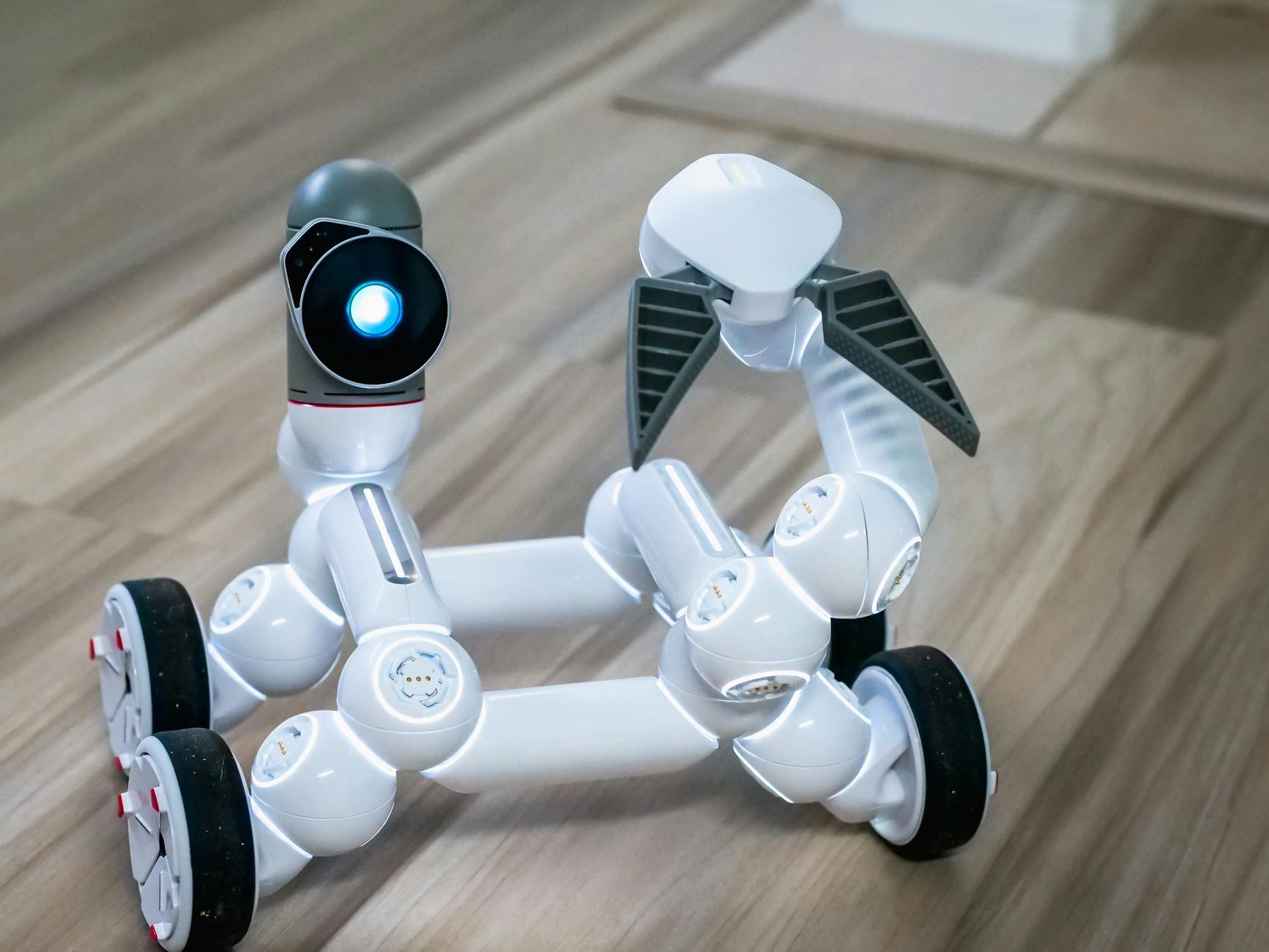
Centralizing the intelligence behind your robot fleet transforms the security landscape. A successful attack on the central system now compromises not one robot but your entire operation. POET deployments require network segmentation, regular security audits, and careful credential management that many manufacturing facilities weren’t designed to implement.
A pharmaceutical company discovered this the hard way when compromised credentials gave an attacker write access to the central robot orchestration system, potentially allowing inventory manipulation. Conversely, some security aspects improve with POET: it becomes much easier to audit and log all robot activities because they all report to a central point, whereas distributed robots often operate with minimal logging. Compliance with data governance requirements becomes simpler because sensor information flows through a single, controllable point rather than scattered across dozens of devices.
The Future of Distributed Robotics and POET Evolution
As 5G networks become more prevalent and edge computing capabilities improve, POET-style architectures will likely become more practical for latency-sensitive applications. The next generation of these systems will push decision-making to the network edge—close to the robots but not on the robots themselves—allowing near-realtime response while retaining the coordination benefits of centralization. This hybrid approach addresses some fundamental POET limitations without abandoning its core advantages.
Machine learning models trained on aggregated data from POET fleets continue to improve faster than individually updated robots could achieve. We’re likely to see increasing specialization where complex decision-making lives in central systems while robots become increasingly simple and modular. However, this trend also increases operational complexity: instead of learning a single robot platform, your engineers need to understand the distributed architecture, the central intelligence system, and how the two coordinate.
Conclusion
POET represents a genuine shift in robotics economics by centralizing intelligence and distributing execution, but it’s not universally applicable. Success depends on having a substantial fleet of similar robots, reliable network infrastructure, and tasks that tolerate modest coordination latency.
Organizations should evaluate POET not as an inherently superior approach, but as a specific architectural choice with clear tradeoffs—excellent efficiency and scaling properties offset by reduced flexibility, increased infrastructure requirements, and new operational complexity. Before committing to a POET-style system, thoroughly map your facility’s network reliability, define your latency requirements precisely, and examine references from similar installations. Many organizations find that a hybrid approach—using POET for high-volume, low-variety tasks while maintaining independent robots for specialized work—balances the benefits and limitations most effectively.