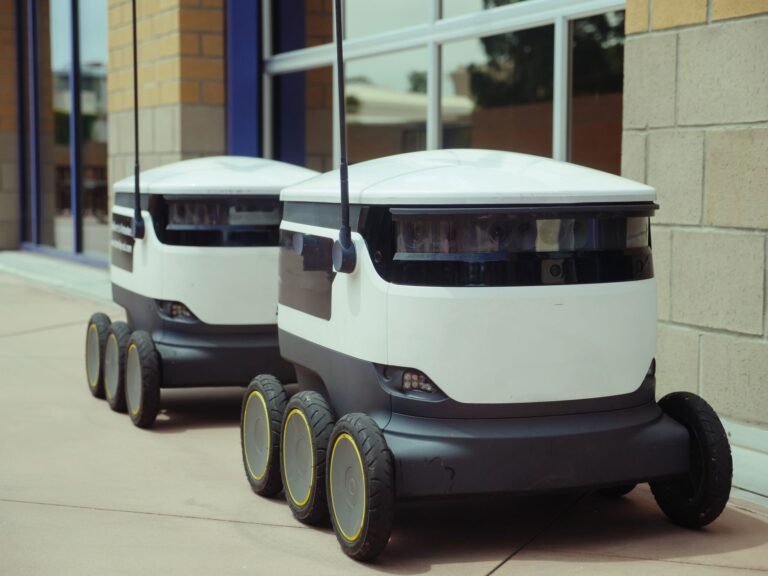
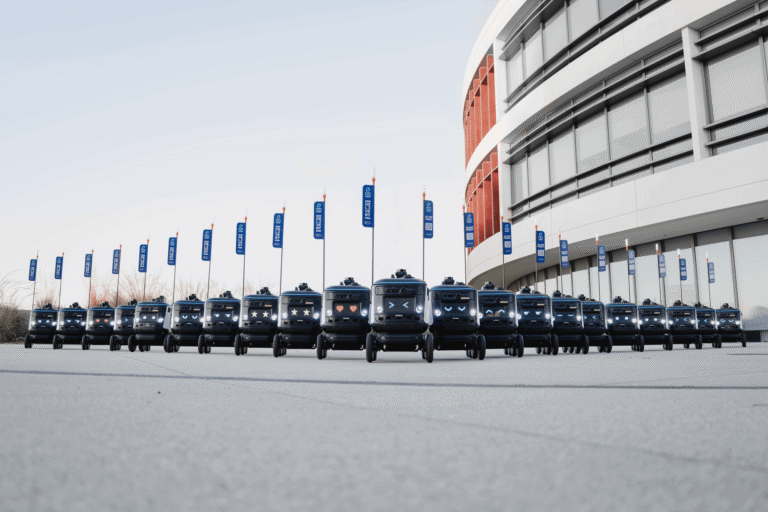
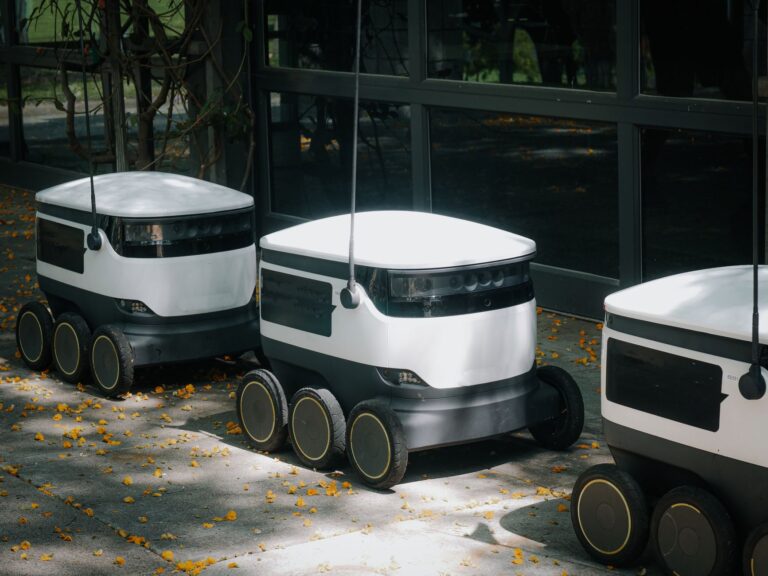
Amazon operates one of the largest robotic fleets in the world, with over 750,000 robots working alongside human employees in fulfillment centers globally. What began with the 2012 acquisition of Kiva Systems has evolved into a comprehensive automation ecosystem that fundamentally changes how goods move from warehouse shelves to customer doorsteps.
The scale of Amazon’s robotic operations provides a glimpse into the future of warehouse logistics. These machines handle everything from moving inventory shelves to sorting packages and picking individual items. Understanding how Amazon deploys robotics offers valuable lessons for anyone involved in supply chain management, logistics technology, or the future of work.
This article examines Amazon’s robot fleet in detail, covering the different types of robots deployed, the technology driving their capabilities, and the broader implications for the logistics industry. Whether you are a logistics professional, robotics enthusiast, or investor, understanding Amazon’s approach provides insight into where warehouse automation is heading.
Table of Contents
- The Evolution of Amazon’s Warehouse Automation
- Understanding Amazon’s Robot Fleet
- Kiva and Proteus: Goods-to-Person Systems
- Robin and Sparrow: AI-Powered Sorting and Picking
- Human-Robot Collaboration at Amazon
- The Technology Behind Amazon Robotics
- Impact on the Logistics Industry
- What’s Next for Amazon Robotics
- Frequently Asked Questions
The Evolution of Amazon’s Warehouse Automation
Amazon’s journey into warehouse robotics began in earnest with the acquisition of Kiva Systems in 2012 for $775 million. At the time, this represented Amazon’s second-largest acquisition ever and signaled a strategic commitment to automation that has only intensified over the following decade.
The Kiva Foundation (2012-2016)
Kiva Systems had developed orange robotic drive units that could lift and transport portable shelving units around warehouse floors. Rather than workers walking to products, products came to workers. Amazon deployed these systems aggressively, growing from 15,000 robots in 2014 to over 45,000 by 2016.
- Cost savings: Amazon estimated 20% reduction in operating costs per fulfillment center
- Speed improvements: Order processing time reduced from over an hour to approximately 15 minutes
- Density gains: Inventory storage capacity increased by 50% in robotic facilities
Diversification Phase (2017-2022)
Recognizing that Kiva-style robots addressed only part of the fulfillment process, Amazon began developing additional robotic systems. New machines targeted package sorting, item picking, and palletizing operations that Kiva units could not handle.
AI Integration Era (2023-Present)
Recent developments focus on adding artificial intelligence and machine learning capabilities to Amazon’s robots. Systems like Sparrow can now identify and pick individual items from mixed inventory, a task that previously required human dexterity and judgment.
Understanding Amazon’s Robot Fleet
Amazon deploys several distinct robot types, each designed for specific warehouse tasks. Understanding these different systems reveals the comprehensive approach Amazon takes to automation.
Mobile Robots
The largest category includes robots that move throughout the warehouse floor, transporting goods, shelves, or containers between locations. These range from the original Kiva-style drive units to newer autonomous mobile robots (AMRs) that navigate without fixed infrastructure.
Robotic Arms
Stationary and mobile robotic arms handle tasks requiring manipulation, including picking items from bins, placing products into containers, and sorting packages. These systems increasingly incorporate computer vision and AI to handle diverse product types.
Sorting Systems
Automated sorting systems direct packages to correct shipping destinations at high speeds. These combine conveyors, diverters, and robotic handlers to process thousands of packages per hour.
Specialized Equipment
Amazon also deploys specialized robots for tasks like palletizing, container unloading, and inventory scanning. These machines address specific bottlenecks in the fulfillment process.
Kiva and Proteus: Goods-to-Person Systems
The goods-to-person concept remains central to Amazon’s fulfillment strategy. Instead of workers walking warehouse aisles to find products, robots bring entire shelving units to picking stations where workers select items for orders.
Original Kiva Drive Units
These squat orange robots operate in dedicated zones within fulfillment centers. Key characteristics include:
- Navigation: QR codes on the floor provide positioning information
- Payload capacity: Up to 750 pounds (340 kg)
- Speed: Approximately 5 feet per second
- Battery: Automatic charging when not actively tasked
- Infrastructure: Requires dedicated space with specific flooring and markers
Proteus: The Autonomous Evolution
Introduced in 2022, Proteus represents Amazon’s first fully autonomous mobile robot designed to operate safely around human workers without barriers. Key advances include:
- Safety systems: Advanced sensors allow operation in mixed human-robot environments
- Flexibility: Can operate throughout the fulfillment center, not just dedicated zones
- Integration: Works alongside existing conveyor and sorting infrastructure
- Navigation: Uses LIDAR and cameras rather than floor markers alone
Impact on Fulfillment Operations
Goods-to-person systems dramatically change fulfillment economics. Workers at picking stations can process orders much faster when products arrive at their workstation rather than requiring travel through warehouse aisles. Amazon reports that robotic fulfillment centers can store 40% more inventory in the same space while maintaining faster processing times.
Robin and Sparrow: AI-Powered Sorting and Picking
While mobile robots handle transportation, robotic arms address manipulation tasks that require grasping and moving individual items. Amazon has developed several systems targeting different manipulation challenges.
Robin: Package Sorting
Robin systems sort packages by destination using computer vision and suction-based grasping. Deployed starting in 2019, Robin handles packages moving on conveyors:
- Throughput: Processes packages at rates matching conveyor speeds
- Vision system: Identifies package size, shape, and destination labels
- Grasping: Suction cups adapt to various package sizes
- Accuracy: High success rate on standard package types
Sparrow: Individual Item Picking
Announced in 2022, Sparrow represents a significant advance in robotic manipulation. Unlike Robin’s package handling, Sparrow picks individual items from mixed inventory bins:
- Item recognition: AI identifies millions of different products
- Grasping strategies: Multiple grip approaches for different item types
- Speed: Matches practical picking rates for many item categories
- Learning: System improves as it encounters new products
Cardinal: Heavy Package Handling
Cardinal addresses larger, heavier packages that exceed Robin’s capabilities. Using advanced computer vision and robotic arm coordination, Cardinal lifts packages up to 50 pounds and places them precisely for shipping.
The Picking Problem
Item picking has long been considered one of the hardest challenges in warehouse robotics. The variety of products, their different shapes, weights, and materials, makes automated picking extremely difficult. Sparrow’s deployment indicates meaningful progress, though human pickers still handle many product types more effectively.
Human-Robot Collaboration at Amazon
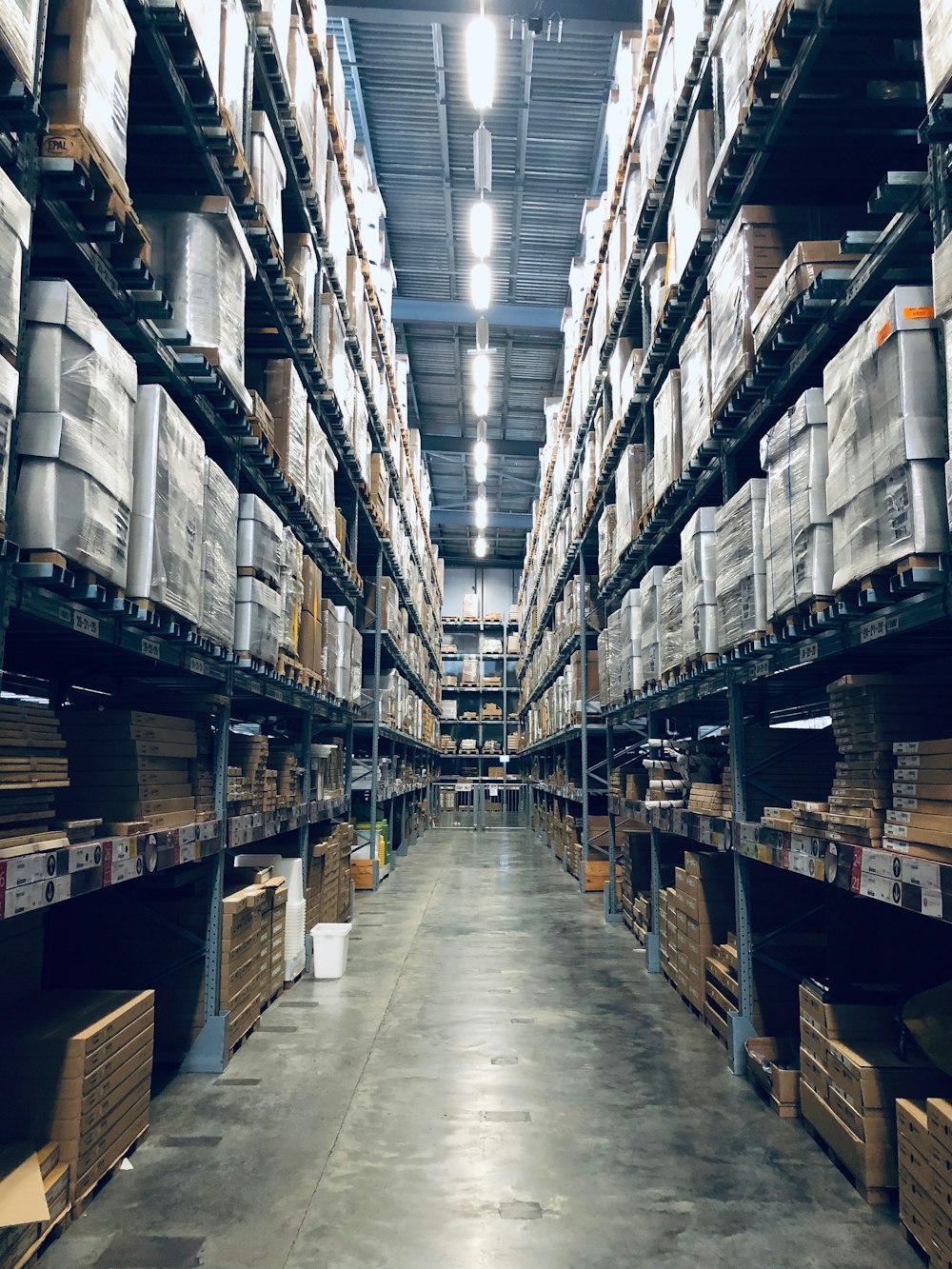
Despite extensive automation, Amazon employs over 1.5 million people, many working directly with robotic systems. The relationship between human workers and robots continues to evolve as technology advances.
Current Collaborative Model
Most Amazon facilities use robots and humans in complementary roles:
- Transportation: Robots handle most goods movement within facilities
- Picking: Humans still perform most individual item picking
- Packing: Mixed automation with human oversight
- Problem solving: Humans address exceptions and unusual situations
Worker Safety Considerations
Robotic systems can reduce certain workplace injuries by eliminating repetitive walking and heavy lifting. However, the increased pace of work and repetitive motions at picking stations create different ergonomic challenges. Amazon has invested in robotics specifically designed to reduce injury-prone tasks.
Training and Adaptation
Amazon provides training for workers who operate alongside robots. The skills required in robotic fulfillment centers differ from traditional warehouse work, with more emphasis on technology interaction and less on physical navigation.
Job Evolution vs. Job Elimination
The question of whether robots eliminate jobs or change them remains contentious. Amazon points to continued hiring despite increasing automation. Critics note that productivity gains may reduce long-term workforce needs even as the company grows. The reality likely involves both job displacement and job creation in different roles.
The Technology Behind Amazon Robotics
Amazon’s robotic systems combine several sophisticated technologies. Understanding these technical foundations helps explain both current capabilities and future potential.
Navigation and Mapping
Different robots use different navigation approaches:
- QR codes: Original Kiva robots use floor markers for precise positioning
- SLAM: Newer robots build and update maps using sensors
- Hybrid systems: Combining multiple navigation methods for reliability
Computer Vision
Vision systems enable robots to identify products, read labels, and assess grasping opportunities:
- Deep learning: Neural networks trained on millions of product images
- 3D sensing: Depth cameras provide spatial information for grasping
- Real-time processing: Decisions made in milliseconds during operation
Fleet Coordination
Managing thousands of robots in a single facility requires sophisticated coordination:
- Task assignment: Algorithms optimize which robot handles which task
- Path planning: Robots navigate without collisions despite shared space
- Load balancing: Work distributed to minimize bottlenecks
Machine Learning Integration
AI increasingly powers Amazon’s robotic capabilities:
- Grasp prediction: ML models predict successful grasping strategies
- Demand forecasting: Robots positioned based on predicted needs
- Continuous improvement: Systems learn from operational data

Impact on the Logistics Industry
Amazon’s robotic investments influence the broader logistics industry, affecting competitors, technology vendors, and workforce expectations across the sector.
Competitive Pressure
Amazon’s efficiency gains from automation pressure competitors to invest similarly:
- Walmart: Expanding robotic systems across fulfillment centers
- Target: Investing in automation for same-day fulfillment
- FedEx and UPS: Deploying sorting robots in distribution hubs
Technology Ecosystem
Amazon’s demand has accelerated development of warehouse robotics technology:
- Component suppliers: Growing market for sensors, motors, and batteries
- Software platforms: Warehouse management systems evolving to integrate robots
- Robotics startups: Investment flowing to companies addressing automation gaps
Customer Expectations
Automated fulfillment enables service levels that reshape customer expectations:
- Speed: Same-day and next-day delivery becoming standard
- Accuracy: Lower error rates in order fulfillment
- Availability: Better inventory management improves product availability
Workforce Implications
Amazon’s approach influences how the industry views warehouse labor:
- Skill requirements: Technical skills increasingly valuable
- Wage pressure: Automation reduces dependence on low-cost labor
- Geographic flexibility: Automated facilities can locate based on logistics needs rather than labor availability
What’s Next for Amazon Robotics
Amazon continues investing heavily in robotics research and development. Several trends suggest where the technology is heading.
Increased AI Capability
Future robots will likely handle more complex tasks with less human intervention:
- Universal picking: Robots capable of handling any product type
- Adaptive behavior: Systems that adjust to new situations without reprogramming
- Predictive operations: AI that anticipates needs before they arise
Expanded Deployment
Robots will likely appear in more Amazon operations:
- Delivery: Continued development of delivery robots and drones
- Returns processing: Automation of reverse logistics
- Grocery: Robots for fresh food handling
Technology Licensing
Amazon may choose to sell or license robotics technology to other companies, similar to how AWS commercialized internal infrastructure. This could generate revenue while spreading development costs across more applications.
Humanoid Robots
Amazon has begun testing humanoid robots in warehouses. These general-purpose machines could eventually handle diverse tasks that current specialized robots cannot address, though practical deployment remains years away.
How to Prepare for Robotic Logistics
Organizations preparing for increasingly automated logistics should consider:
- Facility design: New warehouses should accommodate robotic systems
- Workforce development: Training programs for technical skills
- System integration: IT infrastructure that supports robotic coordination
- Vendor evaluation: Understanding available robotic solutions