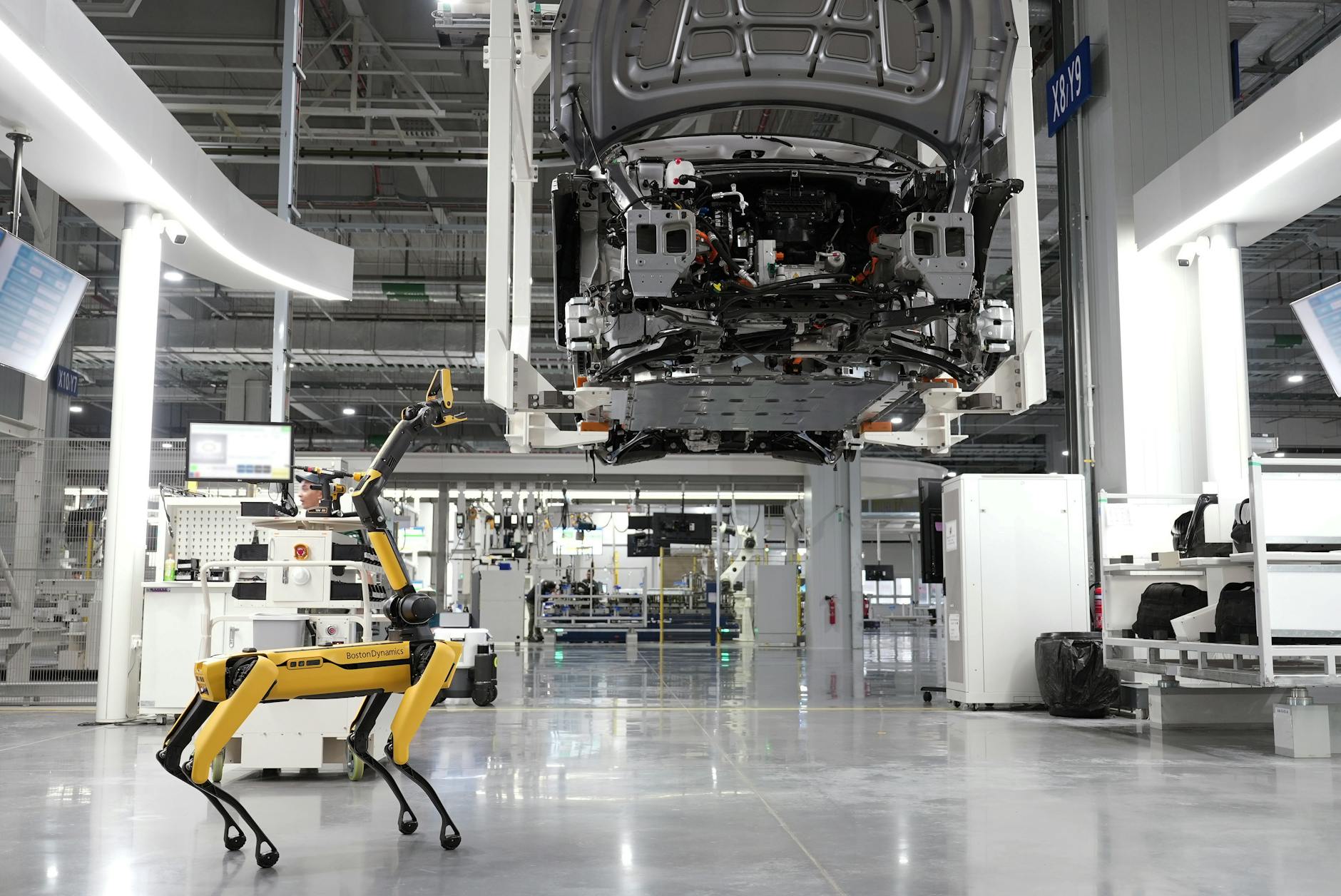

ROK positions itself as an aggregation platform for smart factory automation—essentially an industrial marketplace where manufacturers can discover, compare, and integrate robotics and automation solutions much like Amazon lets consumers browse products. Rather than building proprietary hardware, ROK connects factory operators with vetted automation providers, offering a centralized ecosystem where legacy manufacturers and cutting-edge robotics firms operate on the same platform. The comparison to Amazon is deliberate: just as Amazon solved the problem of fragmented retail by creating a single destination where buyers could explore millions of products, ROK aims to solve manufacturing’s fragmentation problem by creating a digital commons where automation solutions converge.
The practical value becomes clear in a mid-sized automotive supplier deciding to automate its assembly line. Instead of hiring separate consultants for vision systems, robotic arms, and software integration—a process that historically took months and multiple vendor relationships—the supplier logs into ROK’s platform, browses pre-integrated solutions from dozens of vendors, and purchases a turnkey automation package. This shift from bespoke engineering projects to modular, discoverable systems represents a fundamental change in how factories approach modernization.
Table of Contents
- How ROK Functions as a Unified Automation Marketplace
- The Integration Challenge and Technical Limitations
- How ROK Compares to Traditional Automation Supply Chains
- Building a Factory Strategy Around ROK’s Ecosystem
- Security, Reliability, and Data Ownership Concerns
- Early Success Cases and Where ROK Works Best
- The Future of Industrial Automation Marketplaces
- Conclusion
How ROK Functions as a Unified Automation Marketplace
rok operates as a B2B marketplace that standardizes connections between industrial automation vendors and factory operators. The platform abstracts the complexity of vendor integration by creating common APIs and data standards, allowing a robotic arm from one company to communicate seamlessly with vision systems from another without extensive custom programming. This modular approach mirrors how Amazon forced retail vendors to adopt unified standards around shipping, returns, and customer service.
The business model depends on network effects—the more automation providers that join the platform, the more valuable it becomes to factory operators; the more factory operators adopt ROK, the more incentive vendors have to join. A factory in rural Germany and a contract manufacturer in Vietnam can both access the same vetted solution vendors, eliminating geographic arbitrage and standardizing pricing across regions. However, this creates dependency risk: factories that deeply integrate with ROK’s ecosystem may face switching costs if they want to move to a competitor, similar to concerns companies face when committing to Amazon’s AWS services.
The Integration Challenge and Technical Limitations
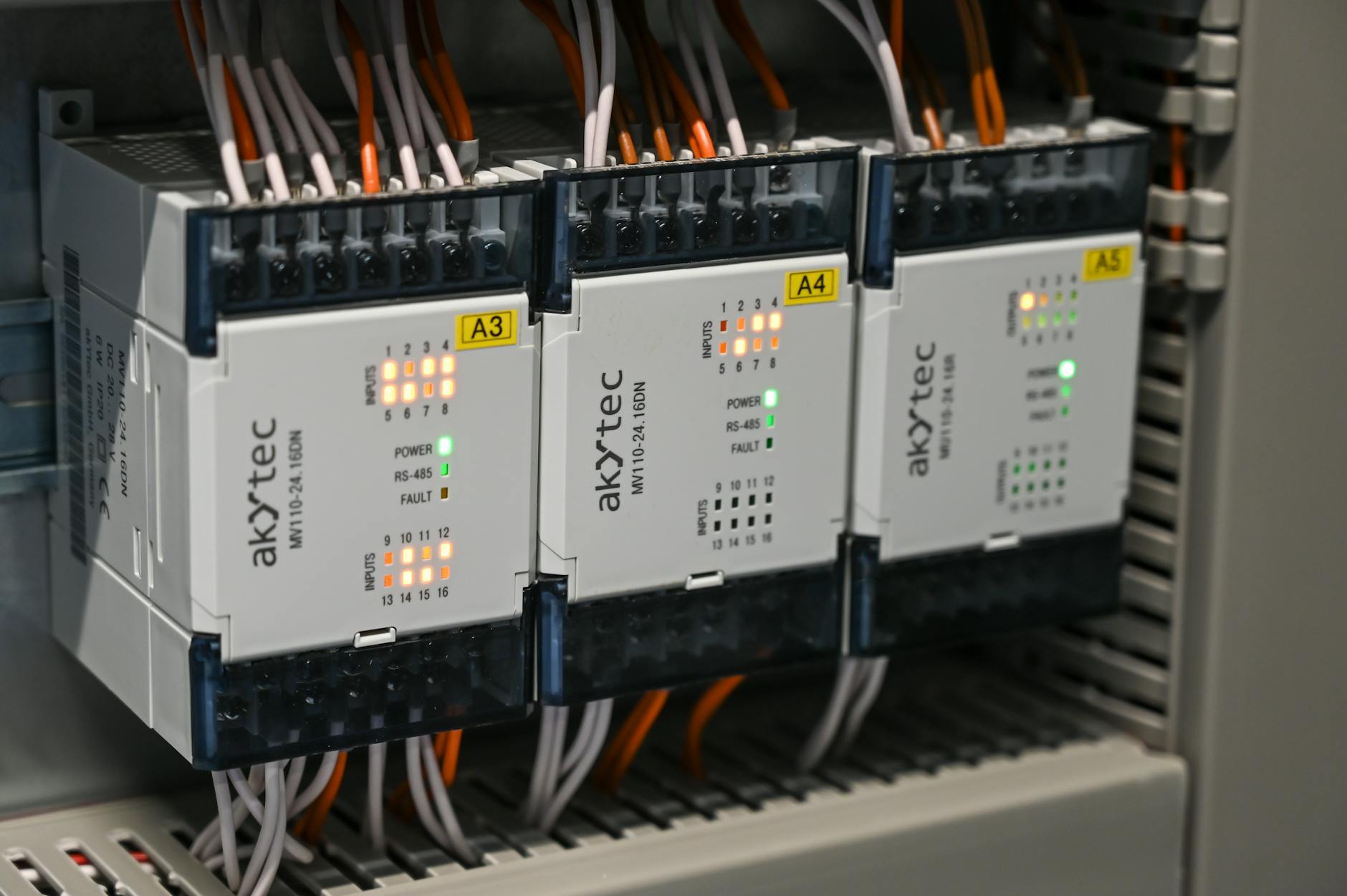
One critical limitation of ROK’s marketplace model is the reality of legacy systems. Many factories still operate on decade-old manufacturing execution systems (MES) that were never designed to integrate with modern APIs. While ROK provides connectors and adapters for common legacy platforms, retrofitting a facility with a 20-year-old programmable logic controller (PLC) into the ROK ecosystem often requires custom engineering that adds cost and complexity, negating some of the platform’s efficiency gains. A food manufacturer with proprietary production line logic built directly into custom hardware may find that ROK’s integration advantages become marginal in practice.
data standardization also remains a challenge despite ROK’s efforts. Industrial automation generates enormous volumes of sensor data—temperature readings, cycle times, defect rates—but each vendor’s equipment traditionally outputs data in slightly different formats. While ROK works to normalize this data, real-world implementations frequently reveal edge cases where normalization breaks down, forcing integrators to write workarounds. Another warning: platform lock-in creates negotiating leverage for ROK itself. As factories become dependent on the platform, ROK has incentive to increase fees or change terms, much as amazon has done with third-party sellers as AWS dependency grew.
How ROK Compares to Traditional Automation Supply Chains
The traditional approach to factory automation involved hiring an integrator—a specialized firm that would assess your facility, design a custom solution, source components from multiple vendors, oversee installation, and provide ongoing support. This process was expensive, slow, and relationship-dependent. A medium-sized electronics manufacturer might spend six months and $500,000 just on the assessment and design phase before a single machine was ordered.
ROK attempts to compress that timeline by allowing factories to self-service a significant portion of the discovery and design phase. Rather than waiting for an integrator’s proposal, a factory operations team can log into the platform, review completed case studies from similar facilities, and configure a basic automation plan within weeks. However, ROK still often requires integrators to handle final deployment—the platform democratizes information and comparison but doesn’t eliminate the need for skilled people to physically install equipment and debug real-world problems. Some vendors have built their entire business models around being “ROK-certified integrators,” becoming middlemen once again in a system designed to eliminate middlemen.
Building a Factory Strategy Around ROK’s Ecosystem
For factories evaluating whether to commit to ROK, the decision should hinge on facility complexity and existing infrastructure. Simple operations—a warehouse implementing picking robots or a packaging facility adding conveyor automation—see rapid ROI from ROK’s streamlined vendor discovery process. The comparison is stark: what might have taken three vendor consultations now takes one week of online research and one consultation call. Conversely, factories with highly specialized requirements or extreme customization needs often find that ROK’s modular approach becomes a constraint.
A pharmaceutical manufacturer with strict validation requirements for its production environment may need integration approaches that ROK’s standardized connectors don’t accommodate. The tradeoff is real: ROK’s strength—modularity and standardization—becomes its limitation when you need something unique. Factories should also consider their technical depth. Deploying ROK solutions still requires people who understand both the factory’s existing systems and the new automation technology. Purchasing access to ROK doesn’t replace the need for skilled manufacturing engineers; it just changes what they spend their time on, shifting focus from vendor management to solution customization.
Security, Reliability, and Data Ownership Concerns
A significant warning for factories considering ROK: placing critical production data on a third-party platform creates cybersecurity surface area. ROK aggregates production metrics, inventory data, and equipment status across multiple factories for its own analytics and vendor insights. While ROK maintains that this data is anonymized, the concentration of sensitive manufacturing intelligence on a single platform creates an attractive target for industrial espionage or competitors. A factory in a competitive market needs to carefully review what data ROK collects and whether sharing even anonymized production patterns poses strategic risk. Reliability is another limitation.
Any centralized platform introduces a single point of failure. If ROK experiences an outage, factories depending on the platform for real-time equipment monitoring and predictive maintenance lose visibility. Unlike traditional vendor relationships where your equipment manufacturer’s cloud service fails independently from your other vendors, ROK failure is a common-mode failure across all integrated systems. Factories should maintain offline fallback procedures and not assume ROK will achieve six-nines uptime. Additionally, the question of data ownership and portability remains murky. If a factory wants to leave ROK, how easily can it extract and migrate its historical data, its vendor configurations, its custom integrations? These terms matter significantly but often get negotiated late in the relationship when switching has become expensive.

Early Success Cases and Where ROK Works Best
Industries with high equipment standardization have seen the clearest ROK adoption. Electronics manufacturing—where facilities often run similar pick-and-place, assembly, and testing processes across different companies—has become a ROK stronghold. A contract electronics manufacturer in Southeast Asia can rapidly deploy automated quality inspection solutions configured on ROK because the underlying equipment (cameras, lighting, computing) is commoditized and similar across facilities.
The ecosystem effect works because the problem space is narrow and repeatable. Less success so far has come in highly customized sectors like aerospace or specialty chemicals, where each facility’s process differs significantly. These industries still rely heavily on traditional integrators who understand their specific constraints.
The Future of Industrial Automation Marketplaces
ROK represents a broader trend toward platform consolidation in industrial technology. Just as cloud computing moved from a world of in-house data centers to AWS, Azure, and Google Cloud, manufacturing automation is moving from a world of bespoke integrations to standardized platforms. The long-term question isn’t whether ROK specifically survives, but whether the industry accepts the centralization that a marketplace model requires.
One forward-looking consideration: as factories become more comfortable with ROK-style modularity, the barrier to entry for new automation vendors may actually lower. A startup developing a novel robotic gripper doesn’t need to build sales force and integrator network—it can simply list on ROK and reach global demand. This could accelerate innovation in component technologies, though it might also commoditize vendors and compress margins across the industry.
Conclusion
ROK functions most effectively not as a replacement for traditional automation engineering but as a parallel discovery layer that shortcuts the vendor evaluation phase. For factories with straightforward automation needs and relatively modern infrastructure, ROK offers genuine speed and cost advantages. For complex, specialized facilities, ROK remains a useful tool in the process but not a complete solution to the integration challenge.
The “Amazon of smart factories” comparison captures both ROK’s promise and its limitations. Amazon succeeded by handling logistics complexity on behalf of sellers and buyers, but Amazon doesn’t work for everything—you can’t buy a custom-built house or a personally guided expedition on Amazon. Similarly, ROK works well for standardized, repeatable automation tasks but will likely always coexist with specialized integrators for the long tail of complex manufacturing requirements.