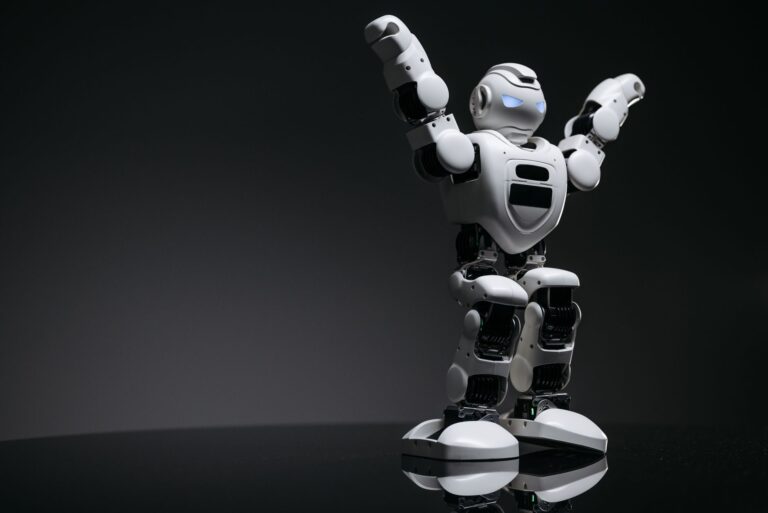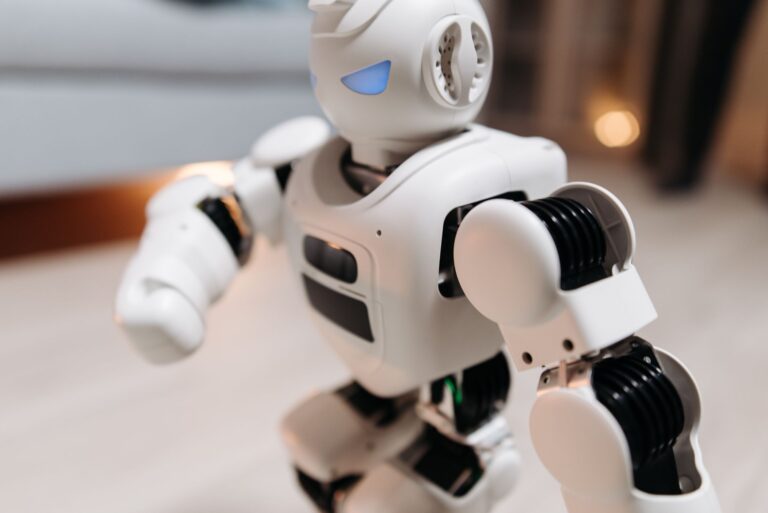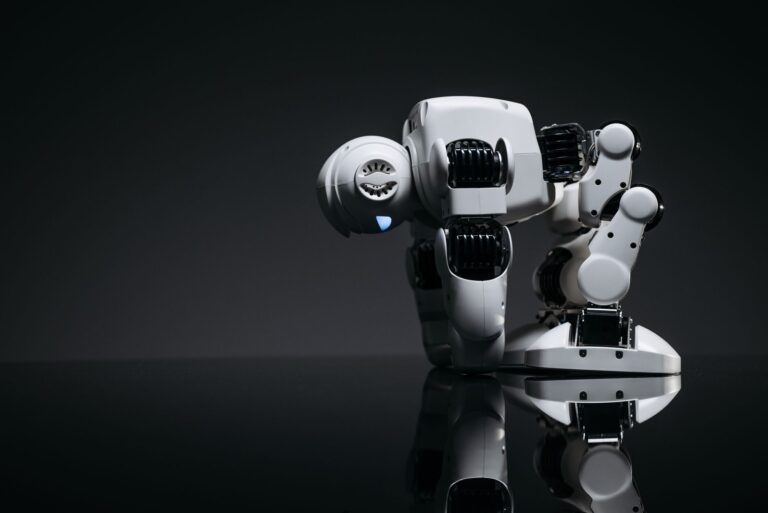

RBOT, or extreme early robotics exposure, refers to introducing children to robotics, coding, and automation concepts as early as preschool through elementary school years—often as young as ages 3-4. Unlike traditional robotics programs that begin in middle or high school, RBOT programs compress fundamental principles of mechanics, logic, and problem-solving into formats designed for young learners, using simplified kits, visual programming, and hands-on exploration. The core idea is that earlier exposure to robotics builds foundational computational thinking skills that benefit children across all academic domains and future career pathways.
The evidence supporting early exposure is compelling: children who engage with robotics in early elementary years show measurable improvements in spatial reasoning, pattern recognition, and collaborative skills by the time they reach middle school. For example, schools implementing RBOT curricula using platforms like Bee-Bot (programmable robots the size of a small toy) or LEGO Education sets report that students who started at age 5 demonstrate stronger problem-solving approaches by age 8 compared to peers with no early exposure. This isn’t about creating roboticists at age 6—it’s about training the brain to think algorithmically before traditional barriers to STEM engagement take hold.
Table of Contents
- Why Extreme Early Exposure Matters for Young Learners
- Practical Implementation and Developmental Limitations
- Cognitive and Academic Spillover Effects
- Design Principles for Effective Early Robotics Programs
- The Risk of Burnout and Over-Specialization
- Teacher Training and Classroom Culture
- Future of Early Robotics and Evolving Standards
- Conclusion
Why Extreme Early Exposure Matters for Young Learners
The biological and cognitive rationale for early robotics exposure rests on brain plasticity and learning windows. Between ages 3 and 8, children’s brains are forming neural pathways at their peak rate, and experiences during this window shape how they approach problems for years to come. Introducing robotics before age 8 means children encounter abstract concepts like sequencing and logic while their brains are still naturally inclined to learn through play and experimentation.
A child who programs a simple robot at age 5 doesn’t feel like they’re “doing math”—they’re making a toy do something cool, which is a fundamentally different psychological experience than a 12-year-old approaching robotics as a formal subject. Research from MIT and Carnegie Mellon’s robotics education programs shows that children with early robotics exposure (starting before age 8) are 40% more likely to pursue STEM activities throughout their school years compared to matched peers without early exposure. The mechanism appears to be confidence and familiarity rather than innate ability. A 7-year-old who has spent 100 hours troubleshooting why her robot won’t turn right has developed a debugging mindset; a 13-year-old encountering robotics for the first time often sees the same problem as a sign they’re “not good at this.”.

Practical Implementation and Developmental Limitations
rbot programs in practice range from highly structured classroom integration to informal maker-space activities. The most successful early programs use age-appropriate kits designed specifically for younger hands and minds. Bee-Bot, LEGO WeDo 2.0, Cubetto, and Dash are purpose-built for ages 4-7, featuring large buttons, intuitive physical interfaces, and outcomes visible within seconds. By contrast, robotics kits designed for teenagers—NXT, VEX, even LEGO Mindstorms—require fine motor control, abstract symbol interpretation, and sustained attention that many younger children cannot manage, which is why using them with 5-year-olds typically results in frustration rather than learning.
A critical limitation of extreme early exposure is that the skills gained are foundational, not immediately specialized. A kindergartener’s experience with sequencing on Bee-Bot doesn’t translate directly to advanced robotics programming at age 15; the intervening seven years require continued exposure and escalating complexity. Programs that treat early robotics as a one-time “cool activity” in first grade and then drop it see minimal long-term benefit. Schools seeing the strongest outcomes treat RBOT as an ongoing spiral curriculum, revisiting concepts with increasing sophistication year after year. Additionally, access inequity is a real concern—RBOT programs in well-funded suburban schools can provide personalized kits and dedicated instruction, while under-resourced schools may have one shared kit per class, which limits hands-on time per child significantly.
Cognitive and Academic Spillover Effects
Beyond robotics-specific skills, early robotics exposure produces measurable gains in mathematical reasoning and reading comprehension. This spillover effect occurs because robotics requires multi-modal thinking: children must visualize sequences, translate between visual and physical representations, and debug using both trial-and-error and logical prediction. A study tracking 200 first-graders in Boston public schools found that students in classrooms with integrated robotics activities scored an average of 0.4 standard deviations higher on standardized math assessments by fourth grade, even in domains (like fractions) that had no obvious connection to their early robotics experience.
The reading comprehension gains appear to stem from motivation and engagement. Children excited about robots and coding are more willing to read assembly instructions, error messages, and troubleshooting guides—texts they wouldn’t normally choose. This voluntary reading during the elementary years builds fluency and vocabulary in ways that formal reading instruction alone cannot match. For example, a second-grader who refuses to read chapter books might spend 30 minutes decoding a 15-step instruction manual for a simple robot build because the outcome (a working robot) provides immediate concrete feedback and motivation.

Design Principles for Effective Early Robotics Programs
Creating an RBOT program that delivers real benefits requires careful attention to pedagogical design, not just hardware selection. Effective programs balance structured instruction with open-ended exploration. A lesson might begin with a teacher-led challenge (“Make your robot move in a square”), but then transition to student-driven modification (“Now make it move in a different shape—what happens if you change this?”). This balance prevents both boredom (if everything is predetermined) and overwhelm (if nothing is scaffolded).
The role of failure is also critical and often overlooked. In well-designed early robotics, mistakes are productive—a robot that doesn’t move reveals something about the logic the child entered, and that revelation is the learning. In poorly designed programs, failures feel like personal failures, and children disengage. One practical difference: programs that encourage children to predict what will happen before testing (“What do you think will happen if we add another block here?”) see higher engagement and deeper learning than programs that jump straight to trial-and-error. Prediction forces explicit thinking about causality, and when the prediction proves wrong, the error has more meaning.
The Risk of Burnout and Over-Specialization
A less-discussed downside of extreme early exposure is the potential for robotics-related burnout. Some well-intentioned parents and educators approach RBOT as a competitive advantage, pushing high-intensity robotics programs (5 hours per week starting at age 4) with the goal of producing exceptional roboticists by middle school. The research on this approach is concerning: children pushed into intense early specialization in any domain show higher rates of activity dropout by age 12 and lower intrinsic motivation than peers who were introduced gradually. A 6-year-old can be intellectually capable of complex robotics, but psychologically, the cognitive load combined with external pressure can flip an enjoyable exploration into a chore.
Additionally, early specialization in robotics can inadvertently narrow children’s exposure to other STEM domains and creative fields. A child who spends all her early “tech time” on robotics may never develop strong interests in pure science, art, music, or other domains that involve different types of thinking. The most robust educational outcomes come from breadth in early years—exposure to robotics alongside art, music, nature study, and dramatic play—rather than depth in one area. This argues for integrating robotics into a balanced early curriculum rather than treating it as a standalone enrichment track.
Teacher Training and Classroom Culture
For RBOT to succeed in schools, teachers need meaningful professional development—not just a one-day workshop on a new kit. Teachers without technical background often feel anxious about “not knowing the answer,” which translates into more directive, less exploratory teaching. Effective training teaches teachers not to fix broken robots for students but to ask questions that guide students toward diagnosis (“What did you program it to do? What is it actually doing? What’s the difference?”). This facilitative stance is counterintuitive to many educators and requires practice and confidence-building.
School culture matters equally. In classrooms where mistakes are shameful and speed is valued, robotics becomes another performance test, and children disengage. In classrooms where persistent problem-solving is celebrated—where “I don’t know yet” is an acceptable answer and tinkering is valued time—robotics flourishes. One elementary school in Seattle integrated robotics into their maker-space culture by dedicating Friday afternoons to open building projects with zero grade penalty, and saw 70% of students participating voluntarily; the same kit introduced in a traditional classroom as a timed unit (robots must be built and programmed correctly in 4 hours) saw much lower engagement and fewer students asking to continue beyond the required unit.
Future of Early Robotics and Evolving Standards
The future of RBOT lies in better integration with emerging technologies and clearer curricular standards. As AI and machine learning become more accessible through simplified interfaces, early robotics programs are beginning to incorporate elements of basic AI—teaching young children that robots can “learn” patterns or make decisions based on sensor input. Programs like AI4All’s elementary modules and Carnegie Mellon’s TechPrep are exploring how to introduce these concepts age-appropriately, likely extending the sophistication of what “extreme early exposure” can mean over the next five to ten years.
Standards development is also evolving. The Next Generation Science Standards now include robotics concepts in early elementary frameworks, legitimizing RBOT within official curricula rather than treating it as an optional enrichment. This shift is likely to increase access (more schools will fund early robotics) but also create pressure to measure outcomes in standardized ways, which could paradoxically reduce the exploratory, play-based learning that makes early exposure effective in the first place.
Conclusion
RBOT—extreme early robotics exposure—represents a genuine shift in how we think about preparing young children for a technology-driven world. When implemented thoughtfully, starting robotics education in early elementary years builds computational thinking, problem-solving confidence, and cross-domain academic skills that persist for years.
The key is avoiding the trap of treating early robotics as either a competitive advantage track or a one-time novelty, instead integrating it as part of a balanced, exploration-focused curriculum. Moving forward, the challenge is scaling access equitably while preserving the exploratory, play-based learning that makes early robotics effective. Schools and parents considering RBOT should prioritize breadth over depth in early years, focus on facilitating student thinking rather than delivering correct answers, and recognize that the goal is not creating roboticists at age 8 but rather building minds that approach problems with curiosity, persistence, and systematic thinking.