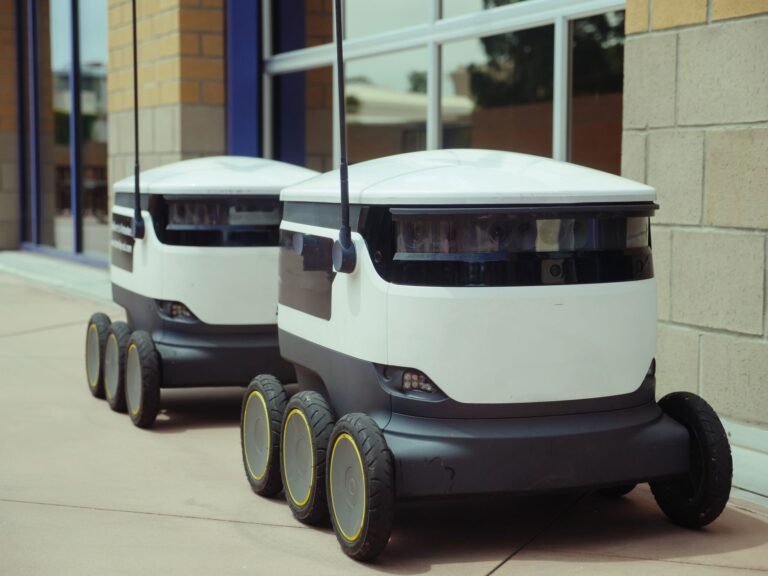

RCAT, short for Robotic Case Assessment Tool, functions as a dominant platform in the robotic Intelligence, Surveillance, and Reconnaissance space by providing comprehensive search and assessment capabilities across distributed robotic networks. Much like Google revolutionized information discovery on the internet, RCAT serves as the primary interface for teams managing multiple autonomous and remotely operated robotic systems, aggregating sensor data, mission logs, and operational intelligence into a unified ecosystem. The platform’s strength lies not in inventing new robotic hardware, but in making existing robotic systems more discoverable, trackable, and actionable—a critical shift in how organizations operationalize distributed robotic assets. The comparison to Google is particularly apt because RCAT prioritizes search and discovery over individual tool excellence.
Where a single quadcopter or ground robot might excel at specific tasks, RCAT coordinates and catalogs performance across fleets, allowing operators to quickly locate the right system for emerging mission requirements. For example, a search and rescue operation can query the platform to find which robots in a deployment have completed building perimeter surveys, how long those surveys took, and where gaps in coverage remain—all from a single interface. This universal access model represents a fundamental shift in robotic operations. Rather than managing each robot as an isolated asset with separate dashboards and data silos, RCAT unifies control and visibility, making robotic intelligence both accessible and scalable to organizations that deploy dozens or hundreds of systems.
Table of Contents
- Why RCAT Dominates the Robotic ISR Market
- Architecture and Data Integration Capabilities
- Operational Applications in Intelligence and Surveillance
- Deployment Models and Operational Considerations
- Performance Limitations and Operational Constraints
- Integration with Autonomous Decision Systems
- Evolution and Future Directions in Robotic ISR
- Conclusion
Why RCAT Dominates the Robotic ISR Market
rcat‘s market position stems from addressing a problem that became acute as robotic deployments scaled beyond single-platform operations. When organizations operated one or two drones or ground robots, specialized interfaces sufficed. Once teams grew to managing five, twenty, or fifty systems across multiple locations and use cases, fragmentation became untenable. RCAT solved this by creating a platform-agnostic layer that integrates data from heterogeneous robotic sources—different manufacturers, different sensor suites, different deployment models—and presents it through a consistent interface. The dominance also reflects RCAT’s ecosystem approach.
Rather than forcing customers to abandon existing robotic investments, the platform accommodates them, functioning as a bridge between legacy systems and modern robotic operations. This extensibility is critical: organizations with existing quadcopters, fixed-wing systems, and ground platforms can integrate them into RCAT without wholesale replacement. Contrast this with proprietary platforms that lock customers into single manufacturers; RCAT’s openness has proven more appealing to operations with mixed-fleet architectures. Real-world adoption demonstrates this strength. Border security agencies, infrastructure inspection programs, and disaster response teams have standardized on RCAT not because it manufactures the best hardware, but because it provides the most reliable way to index, query, and deploy whatever hardware they already own. This mirrors Google’s dominance in search—the search engine became essential not by building the internet, but by making it navigable.

Architecture and Data Integration Capabilities
RCAT operates on a distributed architecture designed to handle real-time data ingestion from robotic systems operating under variable connectivity and reliability constraints. The platform maintains local processing capabilities at edge locations, allowing robotic missions to proceed even when connectivity to central servers drops, and later synchronizes mission data once connectivity is restored. This asynchronous approach is essential for ISR operations, where robotic systems often operate in remote or GPS-denied environments where reliable data uplinks cannot be guaranteed. Data integration within RCAT requires careful schema design to accommodate different robotic platforms’ varying output formats, sensor resolutions, and metadata conventions.
Developers building integrations must translate proprietary data structures into RCAT’s standardized format—a non-trivial engineering task that often uncovers inconsistencies in how different manufacturers label coordinates, timestamps, or sensor calibration parameters. For instance, one quadcopter manufacturer might report thermal imagery with north-relative orientation, while another reports it with body-relative orientation; RCAT’s integration layer must detect this variance and normalize it before presenting unified results to operators. One significant limitation emerges here: the quality of RCAT’s output is constrained by the quality of its inputs. A robotic platform with poor sensor calibration, inaccurate GPS, or unreliable data transmission will produce degraded results in RCAT, regardless of the platform’s computational sophistication. Organizations often discover during implementation that their existing robots’ data quality is worse than previously believed—a finding that occasionally triggers hardware upgrades rather than software fixes.
Operational Applications in Intelligence and Surveillance
RCAT finds practical application in scenarios requiring systematic area coverage and targeted follow-up. In infrastructure inspection, utility companies use RCAT to coordinate autonomous drones conducting routine power line surveys across hundreds of miles. When a drone’s initial pass detects anomalies—corroded connectors, damaged insulators, vegetation encroachment—operators query RCAT to identify which nearby drones can perform high-resolution follow-up imaging. The system tracks coverage completion, prevents redundant scans, and maintains historical records for trend analysis. A utility company inspecting regional transmission lines can answer critical questions: Which segments were last surveyed? Which segments require re-inspection based on time intervals? Which drones have the appropriate sensors for detailed assessment? In disaster response, RCAT coordinates reconnaissance efforts across affected areas using available robotic assets—aerial drones for rapid area assessment, ground robots for detailed building-by-building evaluation.
Operators dispatch systems based on real-time data showing where imaging is complete and where gaps remain. This coordination prevents the common problem of redundant coverage in easily accessible areas while missing dangerous or difficult-to-reach locations. A post-flood operation can systematically map water depth, structural damage, and hazards across an entire district rather than generating scattered, uncoordinated observations. Border and perimeter security operations leverage RCAT’s ability to manage extended patrol routes across multiple robotic units, correlating observations from different platforms to detect movement patterns that might indicate unauthorized access attempts. The platform’s query capabilities allow security teams to ask questions like “Show me all perimeter incursions detected in the past 48 hours,” instantly pulling relevant data from multiple robotic patrol units.

Deployment Models and Operational Considerations
Organizations deploy RCAT under different architectural models depending on security requirements, connectivity constraints, and operational scale. Cloud-based deployments offer maximum scalability and accessibility but require trust in external infrastructure and acceptance of potential data transmission delays. On-premises deployments maintain data sovereignty but require significant infrastructure investment and skilled staff for maintenance and updates. Hybrid models, increasingly common, maintain sensitive processing locally while using cloud services for non-critical analytical tasks and historical archival. The choice between deployment models involves tradeoffs that become apparent only during implementation.
A military organization prioritizing data security might choose full on-premises deployment, accepting reduced analytical capabilities from cloud-based machine learning tools. A commercial infrastructure inspection company might embrace cloud deployment to reduce capital expenditure and operational complexity, accepting slightly higher latency in real-time coordination. One practical consideration often overlooked during planning: ensuring that RCAT’s integration layers remain compatible as both the platform itself and connected robotic systems receive updates. Version management becomes complex when coordinating updates across dozens of deployed robots, each with different update cycles and dependencies. Real-world example: A regional fire department deploying RCAT for disaster assessment discovered that their network infrastructure, adequate for traditional computer systems, became a bottleneck when robotic systems began streaming high-resolution thermal and visual imagery. They ultimately invested in dedicated network capacity just for robotic data, a consideration that deployment planning initially underestimated.
Performance Limitations and Operational Constraints
RCAT’s effectiveness depends fundamentally on the diversity and capability of robotic assets connected to it. A fleet of identical, single-purpose drones will generate less diverse intelligence than a mixed fleet with heterogeneous sensors and mobility profiles. While RCAT excels at coordinating what exists, it cannot substitute for missing capabilities. An organization lacking thermal imaging sensors cannot generate thermal intelligence, regardless of how sophisticated RCAT’s aggregation and analysis become. Similarly, RCAT cannot overcome fundamental physical limitations—a ground robot cannot survey rooftops, and aerial drones cannot peer inside underground tunnels. Operators must also contend with data latency and staleness. Real-time coordination works well when robotic systems maintain constant connectivity and frequent position updates, but robotic operations frequently occur in environments where connectivity is intermittent.
RCAT may coordinate on data that is minutes or hours old, particularly in distributed operations spanning large geographic areas. In fast-moving tactical scenarios, this staleness can create coordination problems—systems deployed based on outdated intelligence may encounter changed conditions. A critical limitation emerges in contested environments or high-noise situations. RCAT’s ability to distinguish relevant intelligence from noise depends on careful sensor calibration, environmental characterization, and operator expertise. A thermal camera that generates false positives due to solar reflection might flood the system with invalid alerts. Multiple robotic platforms observing the same phenomenon might generate duplicate or conflicting reports. The burden of distinguishing signal from noise ultimately rests with human operators, a human-in-the-loop requirement that becomes impractical at very large scale.
Integration with Autonomous Decision Systems
Advanced RCAT deployments integrate automated decision-making layers that execute mission changes based on streaming robotic intelligence. Rather than always requiring human operators to query RCAT and decide how to respond, automated systems can trigger pre-defined responses to specific sensor patterns. When thermal imagery detects heat signatures matching known anomaly profiles, the system can automatically vector nearby robotic assets to provide higher-resolution follow-up without human intervention.
These automated layers provide significant operational acceleration but introduce new failure modes. Miscalibrated detection algorithms, incomplete pattern matching, or environmental factors not anticipated during development can cause automated systems to make poor decisions that humans would have questioned. One detailed example: An automated anomaly detection system trained on visual imagery from temperate regions deployed into desert operations where sand conditions create visual patterns superficially similar to targeted anomalies. The system generated high false-positive rates until retrained on representative data, highlighting the need for careful environmental validation during development and before wide deployment.
Evolution and Future Directions in Robotic ISR
RCAT’s continued evolution depends on handling increasingly heterogeneous robotic systems as the field diversifies beyond traditional drones and ground platforms. Emerging platforms—robotic boats for aquatic surveillance, robotic submersibles for subsurface assessment, small insect-scale systems for interior spaces—will generate novel data types and operational requirements. Maintaining platform-agnostic compatibility while extracting maximum intelligence from increasingly diverse systems represents the core technical challenge for future development.
The trajectory suggests RCAT will evolve toward greater autonomous intelligence, reducing operator workload through improved automated anomaly detection, multi-platform correlation, and predictive positioning. However, this evolution will necessarily remain bounded by the reality that genuine operational intelligence requires human judgment. The platform’s ultimate ceiling is not computational but human cognitive capacity—RCAT can retrieve and correlate information at machine speed, but human operators must ultimately interpret that information within operational context and make decisions based on broader objectives that algorithms cannot reliably encode.
Conclusion
RCAT’s dominance in the robotic ISR space reflects a fundamental insight: the problem in distributed robotic operations is not individual system capability but coordinating heterogeneous systems toward unified objectives. By providing unified search, discovery, and coordination across diverse platforms, RCAT functions as the essential infrastructure layer for robotic intelligence operations, much as search engines became essential infrastructure for the broader internet. The platform’s strength lies not in manufacturing robotic hardware but in making existing hardware more discoverable, coordinated, and impactful.
Organizations implementing RCAT must approach it as infrastructure, not as a turnkey solution. Successful deployments require careful attention to data quality from connected systems, realistic assessment of operational constraints, and thoughtful integration with human decision-making processes. The platform’s expanding role in ISR operations suggests continued investment in improving heterogeneous system integration, autonomous coordination capabilities, and analytical tools—with success measured not by technological sophistication but by operational effectiveness in reducing uncertainty and improving decision quality for teams managing distributed robotic assets.