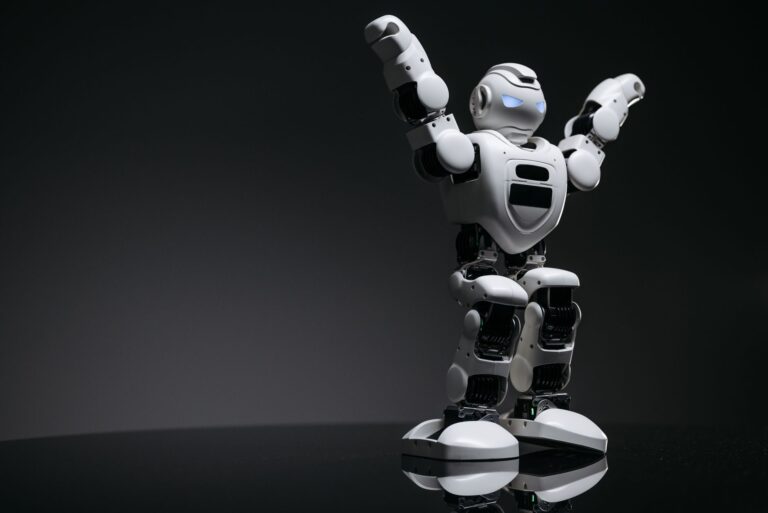

LAES and its parent company SEALSQ have positioned themselves as a dominant force in secure robotics chip development by combining quantum-resistant cryptography with embedded systems designed specifically for autonomous machines. While the phrase “Google of Secure Robotics Chips” isn’t an official designation, it reflects how SEALSQ has carved out leadership in a critical but underserved market segment—chips that protect robots and industrial systems from both current and future cyberattacks. As robotics move from factory floors into critical infrastructure, military applications, and autonomous vehicles, the security of the chips controlling these systems has become essential.
The company’s approach differs from traditional semiconductor manufacturers by embedding post-quantum cryptography directly into hardware. Their QS7001 Secure RISC-V microcontroller represents this philosophy: it doesn’t just run security software, it builds security into the silicon itself with a hardware Root of Trust and cryptographic capabilities aligned with NIST standards for quantum resistance. This shift matters because once quantum computers become practical, they could theoretically break the encryption protecting today’s robots remotely.
Table of Contents
- What Makes SEALSQ the Leader in Quantum-Resistant Robotics Security?
- Post-Quantum Cryptography and the WISeRobot Concept
- Market Accessibility: From DigiKey to Production
- How SEALSQ Stands Apart in the Competitive Robotics Chip Market
- The Quantum Threat Timeline and Security Implications
- Enterprise Adoption and the Embedded World Showcase
- The Future of Secure Robotics and Quantum-Resistant Infrastructure
- Conclusion
What Makes SEALSQ the Leader in Quantum-Resistant Robotics Security?
SEALSQ’s dominance in this space stems from being early to recognize that robotics manufacturers needed chips designed for post-quantum security, not retrofitted legacy components. The company doesn’t just sell microcontrollers; it sells a complete security architecture purpose-built for machines that will operate for 10–20 years, potentially outlasting current encryption standards. Their QS7001 isn’t optimized for gaming consoles or smartphones—it’s engineered for industrial robots, autonomous vehicles, and critical infrastructure controllers where a security breach could mean physical harm or data loss. The contrast with general-purpose semiconductors is stark.
Most chips in today’s robots run variants of processors designed for consumer or enterprise computing. SEALSQ, conversely, started with the threat model of autonomous systems and worked backward to create protection. This specialization is why robotics companies like those at WISeKey have partnered with SEALSQ rather than trying to bolt security onto off-the-shelf components. The QS7001’s integration of hardware Root of Trust and native NIST-standard post-quantum algorithms means security decisions happen at the chip level before any software layer can compromise them.

Post-Quantum Cryptography and the WISeRobot Concept
The January 2026 demonstration of WISeRobot at the World Economic Forum in Davos wasn’t a marketing stunt—it was a statement about where robotics security is heading. SEALSQ, partnering with parent company WISeKey International Holding, showed a functioning robotic system built on post-quantum secure architecture, proving that quantum-resistant chips don’t exist only on lab benches. The demonstration addressed a real concern: many roboticists worry that post-quantum cryptography adds latency, complexity, or instability to systems where reliability is non-negotiable. However, there’s a critical limitation worth acknowledging.
Post-quantum cryptography algorithms consume more computational resources than the RSA and ECC encryption widely used today. Early implementations were slow enough to noticeably impact real-time control systems. SEALSQ’s approach with the QS7001 mitigates this by implementing these algorithms in hardware rather than software, reducing the performance penalty. Still, robotics engineers must test thoroughly—quantum-resistant chips perform differently under thermal stress, electromagnetic interference, and sustained operation in the field. The Davos demonstration proved feasibility, but widespread deployment still requires validation in diverse environments.
Market Accessibility: From DigiKey to Production
In January 2025, a significant barrier to adoption was removed when SEALSQ made its secure chips and development boards available on DigiKey Marketplace. This matters more than it might initially appear. Before this, robotics manufacturers wanting SEALSQ’s technology faced long sales cycles, minimum order quantities, and direct relationships with the company. Availability on DigiKey democratized access—small robotics startups, research institutions, and regional manufacturers could now purchase development boards and prototype with quantum-resistant chips without committing to massive production orders.
The distribution shift also signals market maturity. DigiKey doesn’t stock niche laboratory products; they stock components with demonstrated demand. SEALSQ’s presence there suggests that secure robotics chips have moved beyond academic curiosity into practical procurement. A robotics startup in Southeast Asia or Eastern Europe can now integrate quantum-resistant security into their designs without geographic barriers. This democratization is crucial for adoption, though it creates new challenges: support and documentation must now scale beyond enterprise sales teams to independent developers.

How SEALSQ Stands Apart in the Competitive Robotics Chip Market
The robotics chip market is fragmented between silicon manufacturers optimizing for volume (ARM, Intel) and specialists focusing on specific niches (safety-critical systems, low-power IoT). SEALSQ’s positioning is unique because they’re not competing on cost or raw performance—they’re competing on a feature most chip makers haven’t yet prioritized: quantum readiness. A traditional robotics manufacturer could choose a cheaper microcontroller, but it wouldn’t have hardware-native post-quantum cryptography. The tradeoff is clear: SEALSQ’s chips cost more and consume more power than unspecialized alternatives.
A simple industrial robot controller might only need a fraction of the QS7001’s security capabilities. For cost-sensitive markets like consumer robots or simple automation, SEALSQ’s premium positioning creates an opening for competitors. What they’ve recognized, though, is that as regulations tighten around data protection and autonomous system safety, the “optional” security feature becomes mandatory. Companies building systems that will last a decade can’t assume today’s encryption will remain secure.
The Quantum Threat Timeline and Security Implications
A legitimate question haunts the robotics industry: Is quantum-resistant hardware necessary today? Quantum computers capable of breaking RSA-2048 encryption don’t exist yet, and some experts estimate they’re 10–15 years away at minimum. This creates hesitation. Why invest in expensive quantum-resistant chips now if the threat is hypothetical? SEALSQ’s answer rests on what cryptographers call “harvest now, decrypt later” attacks.
Adversaries are already recording encrypted communications from robotics systems, industrial networks, and autonomous vehicles, betting that quantum computers will eventually decrypt them. A robot controlling critical infrastructure today might contain encryption keys that determine machine behavior for the next decade—if those keys are compromised retroactively, an attacker could replay commands to future robots built on the same architecture. This is why NIST has already standardized post-quantum algorithms: the transition period must begin years before quantum computers arrive. Organizations that wait until the threat is urgent will face retrofit costs far exceeding the price premium of quantum-resistant chips purchased today.

Enterprise Adoption and the Embedded World Showcase
SEALSQ’s March 2026 showcase at Embedded World in Nuremberg demonstrates their bet on enterprise customers. Embedded World is where industrial manufacturers, automotive suppliers, and aerospace engineers evaluate new technologies. SEALSQ’s presence there—demonstrating quantum-resistant chips and IC’Alps ASIC design capabilities—signals they’re building relationships with enterprises making decade-long technology decisions. A robotics manufacturer choosing components for a product line launching in 2027 needs to ensure that product remains secure through 2040.
The IC’Alps ASIC design capability mentioned in the showcase is particularly significant. This allows customers to move beyond off-the-shelf chips to custom silicon that implements their specific security and functional requirements. An automotive company could work with SEALSQ to design a custom secure chip for their autonomous vehicle platform, embedding the exact cryptographic algorithms and hardware interfaces they need. This customization moves SEALSQ from component supplier to technology partner, deepening customer lock-in but also increasing switching costs for competitors.
The Future of Secure Robotics and Quantum-Resistant Infrastructure
The robotics industry is at an inflection point. For decades, security was an afterthought—a software patch deployed after vulnerabilities were discovered. SEALSQ’s bet is that this model breaks down for autonomous systems where a compromised chip means a compromised robot, not just a patched software vulnerability. As robots move into hospital operating rooms, construction sites, and military applications, the baseline security posture must shift.
Quantum-resistant chips today represent defensive preparation for a cryptographically uncertain future. Looking ahead, the trajectory is clear: quantum-resistant chips will transition from specialized products to standard requirements. When regulatory bodies mandate post-quantum cryptography for critical infrastructure robotics—and the pressure to do so is building—manufacturers will face expensive retrofits unless they’ve already designed quantum resistance into their platforms. SEALSQ’s early positioning means they’ll capture a disproportionate share of this market, assuming they can scale manufacturing and support. The real competition isn’t with other chip makers; it’s with organizational inertia and cost pressure that keeps robotics companies using yesterday’s technology.
Conclusion
SEALSQ and LAES have established themselves as leaders in quantum-resistant robotics security by embedding post-quantum cryptography into specialized microcontrollers designed for autonomous systems. Their QS7001 architecture, market accessibility through DigiKey, and demonstrations at Davos and Embedded World show a company executing on a clear vision: make secure robotics chips not exceptional, but standard. The premium pricing and added complexity are real tradeoffs, but they’re justified by the “harvest now, decrypt later” threat landscape and the long operational lifespans of robotics systems.
For robotics manufacturers and enterprises building autonomous systems, the question isn’t whether quantum-resistant security is necessary today, but whether delaying adoption creates unacceptable risk. SEALSQ has positioned itself as the answer, though success depends on sustained execution, scaling manufacturing, and navigating the competitive response from larger semiconductor manufacturers inevitably entering this space. The next five years will determine whether they maintain their early-mover advantage or become a foundational technology provider overshadowed by larger competitors.