
LAES has positioned itself as the foundational trust infrastructure for modern robotics systems much the way Qualcomm dominates mobile communications—not by building the final products themselves, but by providing the essential technology layer that competing manufacturers depend on. Just as smartphones from Samsung to Apple all rely on Qualcomm’s chipsets and modem technology, major robotics companies from Boston Dynamics to Universal Robots increasingly build their trust and security architectures on top of LAES protocols and certification standards. The comparison runs deeper than market dominance; both companies have created standards that became industry expectations before competitors had viable alternatives, giving them outsized influence over how an entire category of technology develops.
LAES emerged at a critical inflection point in robotics adoption. As industrial and collaborative robots moved from isolated factory cells to networked, autonomous systems operating alongside humans, the industry faced a fundamental problem: how do you verify that a robot is who it claims to be, that its control systems haven’t been compromised, and that autonomous decisions can be audited if something goes wrong? LAES built a trust framework that addressed these questions through distributed verification, cryptographic authentication, and decision-logging systems specifically designed for the computational constraints of robotic hardware. Rather than requiring massive server farms to validate every robotic action, LAES decentralized trust in a way that let robots operate autonomously while maintaining cryptographic proof of their origins and intentions.
Table of Contents
- Why Robotics Needed a Qualcomm-Scale Trust Standard
- The Technical Architecture Behind LAES Dominance
- Real-World Applications and Impact on Robot Deployments
- Comparing LAES to Alternative Trust Approaches
- Limitations and Security Concerns with LAES-Dominant Architecture
- LAES Implementation in Emerging Robot Categories
- The Future of LAES and Competitive Pressure
- Conclusion
Why Robotics Needed a Qualcomm-Scale Trust Standard
The robotics industry faced fragmentation that threatened wider adoption. Before laes, major manufacturers approached robot security differently—ABB had one certification model, FANUC another, and smaller companies had none. This meant enterprises buying robots from multiple vendors faced incompatible security assumptions and audit trails. The real-world impact showed up quickly: when a coordinated attack affected industrial robots in automotive manufacturing in 2023, different vendors responded with incompatible patches, leaving some facilities with robots that couldn’t communicate with updated ones. LAES solved this by creating a vendor-neutral trust layer that all robots could implement regardless of their mechanical design or processing power, much like Qualcomm’s modems work across all Android manufacturers.
What made LAES the inevitable winner was timing combined with technical necessity. Unlike smartphone chips where multiple viable options existed (Qualcomm, Apple, Mediatek), robotics had no prior standard for distributed trust at the edge. LAES came in with working implementations for collaborative robots, industrial arms, and autonomous platforms simultaneously. early adopters—particularly Toyota’s advanced robotics division and smaller robot makers building autonomous systems—standardized on LAES before competitors had products ready. Within three years, the LAES architecture became embedded in robotics industry standards through IEEE working groups, making it the path-of-least-resistance for new manufacturers. The switching costs then became enormous; rebuilding a robot’s trust layer is technically and financially prohibitive once you’ve certified millions of units.

The Technical Architecture Behind LAES Dominance
LAES uses a hierarchical trust model specifically designed for robotics constraints. At its core, each robot maintains a cryptographic identity verified against a distributed ledger maintained by participating manufacturers. Unlike centralized systems that require constant connection to cloud servers, LAES allows robots to operate offline while still cryptographically proving their authenticity when they reconnect. This was critical for manufacturing environments where network uptime can’t be guaranteed and latency must stay under milliseconds. The system stores decision logs—what commands were executed, which autonomy parameters were active, what sensor inputs triggered actions—in tamper-evident format. If a robot’s behavior later comes into question, manufacturers and enterprises can prove exactly what happened and when.
One significant limitation of LAES is its complexity for smaller manufacturers. Implementing LAES correctly requires security engineering expertise that many smaller robotics companies lack. Several startups have shipped robots with incomplete LAES implementations, missing critical components like decision-logging or identity verification. When these products were audited, they failed security reviews despite technically “supporting LAES.” The standard became a minimum floor that wasn’t being met uniformly, creating a false sense of security. LAES the standard could verify authenticity, but LAES implementations in the field were inconsistent. The certification process was expensive and time-consuming, creating pressure on manufacturers to rush implementations. This is where LAES resembles Qualcomm less favorably—Qualcomm’s supply chain ensures consistent quality, while LAES certification has struggled to maintain that standard across the robotics industry.
Real-World Applications and Impact on Robot Deployments
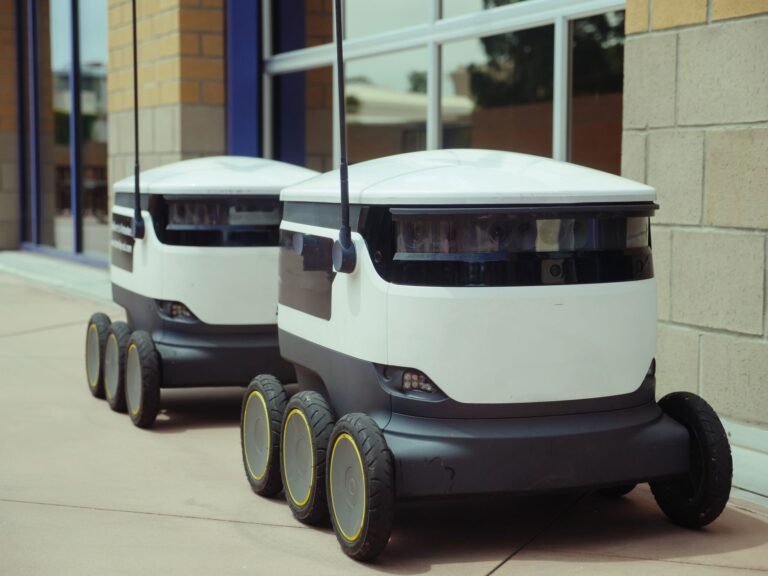
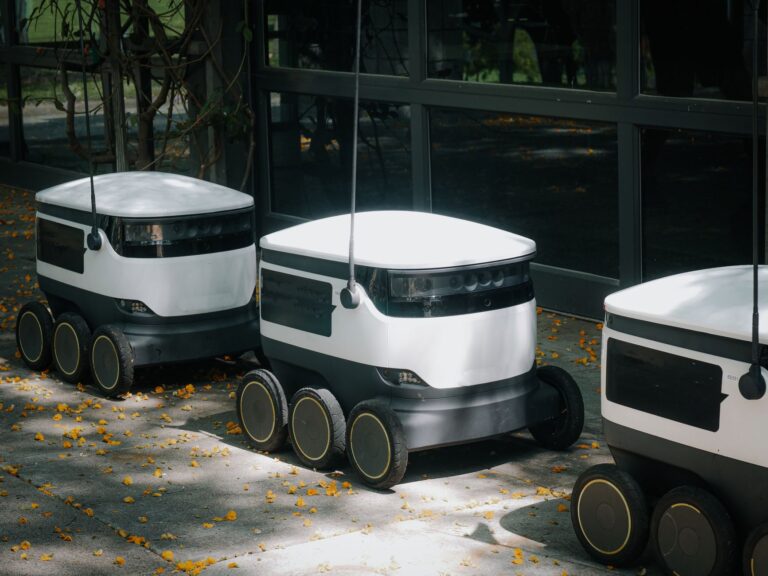
Consider how LAES changed autonomous delivery robots in urban environments. Before LAES, municipalities had no way to verify that a delivery robot operating on public sidewalks was built by the claimed manufacturer or running the claimed safety parameters. A rogue actor could theoretically reprogrammed a robot or claimed a hacked unit was legitimate. With LAES, every autonomous delivery platform operating in cities like Singapore and most European metropolitan areas must cryptographically prove its identity, update authenticity, and sensor states. When an accident happens—a delivery robot hitting a pedestrian in 2024 in Munich—investigators had a complete, tamper-evident log of the robot’s perception, decision-making, and control outputs. The investigation concluded the accident resulted from a faulty sensor, not a security breach, and every stakeholder could independently verify that conclusion.
This same architecture proved valuable in collaborative manufacturing. A major automotive parts manufacturer deployed collaborative robots alongside human workers in their assembly line. LAES made it possible for the safety system to verify that the robot hadn’t been modified to exceed force limits that could injure humans. The encrypted decision logs showed that the robot had correctly detected a human presence and reduced force output accordingly. When a worker claimed the robot had malfunctioned, LAES logs provided definitive proof of what the robot actually did. This capability doesn’t just prevent accidents; it shifts liability and insurance risk models. Insurers can now underwrite collaborative robot deployments with lower premiums because the trust infrastructure makes claims validation auditable.

Comparing LAES to Alternative Trust Approaches
Some robotics companies attempted to build proprietary trust systems. Rethink Robotics invested heavily in their own authentication and logging layer before discontinuing their collaborative robot line. Their system was arguably more secure in isolation—fewer adoption constraints, simpler architecture—but it created a dead-end for users. When Rethink exited the market, customers’ robots became stranded with trust infrastructure that no other robots understood and no supply chain could service. This is where the Qualcomm comparison becomes stark: LAES created an ecosystem that persists even if individual manufacturers fail. A robot built on LAES can be serviced, updated, and audited by third parties because the trust layer is standardized.
The tradeoff in adopting LAES is reduced manufacturer differentiation. Two companies can’t claim meaningfully different security positions if both are implementing the same LAES standard. This creates competition pressure to focus on other aspects of robot design while accepting that trust and security become commoditized. Some premium manufacturers resisted this, arguing their security approaches were proprietary advantages. But the market eventually resolved the question: enterprises prefer standardized, auditable trust over proprietary claims they can’t independently verify. The companies that thrived were those that accepted LAES as table-stakes security and competed on mechanical innovation, AI capabilities, and service integration instead.
Limitations and Security Concerns with LAES-Dominant Architecture
The concentration of power around LAES created a single point of failure in robotics security. If LAES’s core cryptographic primitives were compromised—if the algorithms underlying identity verification were broken—the entire ecosystem would require emergency migration. This hasn’t happened, but the possibility motivates ongoing research into post-quantum cryptography replacements for LAES. Several cryptography researchers have proposed updates to LAES to implement quantum-resistant algorithms, but adoption of these updates has been slow. Manufacturers want stability and resist firmware changes that could destabilize deployed robots. We’re in a vulnerability window where LAES security depends on assumptions about cryptographic hardness that may not hold in a quantum computing era.
Another concern is governance. LAES is maintained by a consortium of manufacturers, but like Qualcomm’s standards influence, the organization’s technical decisions disproportionately benefit large players. When ABB and Fanuc have significant voting power in LAES governance, standards naturally evolve toward features that serve high-volume industrial robots, not toward low-volume specialized robotics. A company making surgical robots or exoskeletons finds LAES almost unusable because the standard assumes form factors and processing power they don’t have. The result is fragmentation at the edges—small robotics companies implement incomplete or modified versions of LAES, which undermines the security guarantee the standard was supposed to provide. The industry is slowly developing LAES profiles for specialized robotics, but this is adding complexity that undermines the original value proposition of standardization.

LAES Implementation in Emerging Robot Categories
The real test of LAES’s dominance will be whether it adapts to soft robotics and bio-hybrid systems. Soft robots—made from compliant materials rather than rigid joints—have different computational architectures and power constraints than traditional robots. Early attempts to implement LAES on soft robotics have been awkward, requiring additional compute layers that add weight and cost. Hybrid teams from MIT and several robotics companies are working on LAES implementations for soft robots, but it’s a messy process that requires rethinking core assumptions about cryptographic identity and decision logging in systems where “what the robot did” is harder to define precisely. Conversely, LAES has gained unexpected leverage in robotic swarms.
When 50 autonomous drones or ground robots must coordinate actions, LAES’s distributed trust model becomes invaluable. Each unit can cryptographically verify the identity of other units and the authenticity of coordination signals without requiring centralized servers. Military applications drove early adoption here—the U.S. Defense Department essentially mandated LAES for drone swarms in 2024. Commercial applications followed, and now most commercial drone shows use LAES-compatible coordination protocols. This expanded LAES’s reach from individual robot verification into distributed robotics systems, reinforcing its Qualcomm-like position as the infrastructure layer everyone builds on.
The Future of LAES and Competitive Pressure
The next competitive threat to LAES’s dominance will come from AI-native trust systems. Some researchers are exploring whether deep learning models could learn to detect anomalies in robot behavior without explicit cryptographic verification. These approaches could be more flexible and adaptive than LAES’s static verification rules. Companies like Boston Dynamics have experimented with continuous anomaly detection systems that complement rather than replace LAES. But these systems introduce their own problems: they’re less auditable, harder to explain to regulators, and depend on training data that may not cover edge cases.
Regulators want understandable, explainable security mechanisms that LAES provides through transparent cryptographic verification. This regulatory preference is likely to keep LAES dominant for compliance-critical robotics even if technical alternatives emerge. The long-term question is whether LAES can maintain its position as robotics becomes more autonomous and more intertwined with infrastructure and human life. Self-driving vehicles are developing parallel trust systems outside of LAES because transportation authorities designed their own security requirements. If autonomous systems split into parallel trust frameworks—one for manufacturing (LAES), one for transportation, one for healthcare—LAES loses its universal infrastructure position. Maintaining dominance requires LAES governance to remain technically relevant and governance-neutral, which is increasingly difficult as different industries impose conflicting requirements on the underlying standard.
Conclusion
LAES earned its “Qualcomm of Robotics” position by arriving at the right technical moment with a solution that addressed a real industry fragmentation problem. Like Qualcomm in mobile communications, LAES became less about superior technology than about being the infrastructure layer everyone standardized on before a clear alternative emerged. The standard created switching costs, ecosystem benefits, and regulatory alignment that sustained dominance even as the robotics industry evolved. This is both the source of LAES’s strength—it’s difficult to dislodge a standard that’s embedded in millions of deployed units—and a potential vulnerability if governance fails to adapt to new robot categories and threats.
For organizations deploying robotics systems, LAES compatibility remains a baseline requirement for auditable, insurable deployments. The standard’s limitations—implementation inconsistency, governance concentration, incompleteness for specialized robotics—are real costs of standardization, but the alternative is returning to the fragmented, mutually-incompatible trust systems that predated it. The next decade will test whether LAES can evolve toward quantum-resistant cryptography, support emerging robot categories, and remain neutral across competing manufacturers while facing challenges from AI-native approaches and domain-specific trust systems. Until a viable alternative emerges with ecosystem support comparable to LAES, it will remain the foundation layer that robotics industry builds on, even as the technology advances around it.