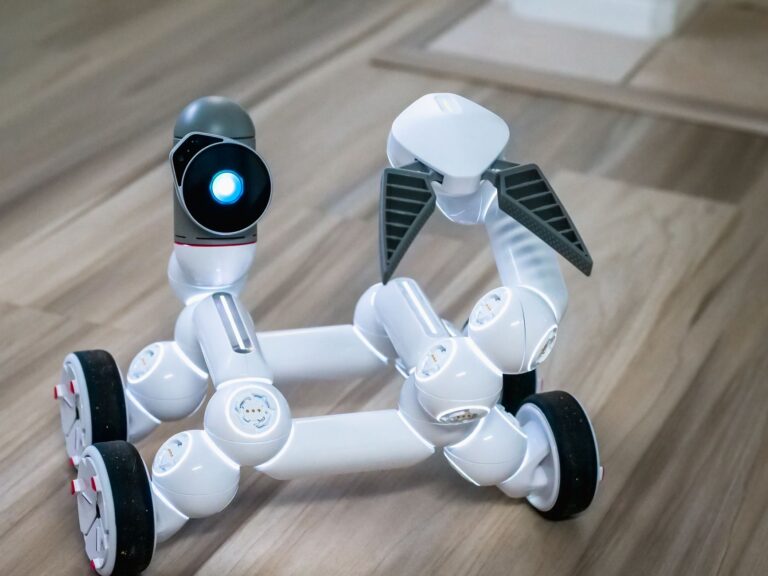

For most people buying one kit this November, the Arduino Alvik is the best choice: it is the only robot Arduino builds and sells itself, it arrives assembled around real embedded hardware, and Arduino's own store lists it at $112, down from $140. If you want to physically assemble a robot from parts rather than program a finished one, the Petoi Bittle X quadruped kit at $319 is the stronger pick, because screwing together nine servos and a chassis is the actual build experience.
The deciding factor this month is not which kit is cleverest. It is which platform still has a future, which stock is actually available, and whether you should wait three weeks. One of the best-known education kits is being discontinued, two popular kits are out of stock, and Black Friday lands on 27 November.
Table of Contents
- Why the Alvik wins on hardware, not marketing
- What Alvik does not give you
- The budget options and their catches
- The kit to avoid buying new this month
- Should you buy now or wait for Black Friday?
- Matching the kit to the builder
- Frequently Asked Questions
Why the Alvik wins on hardware, not marketing
Alvik is not a toy controller in a plastic shell. Arduino's hardware documentation describes an Arduino Nano ESP32 — a u-blox NORA-W106 module built on the ESP32-S3, with Wi-Fi and Bluetooth Low Energy — paired with a second STM32 Cortex-M4 microcontroller that handles motors and sensors. That split matters in practice: your code runs on one chip while motor timing and sensor polling stay on another, so a slow line of Python does not make the robot swerve. The sensor set is genuinely current. There is a VL53L7CX time-of-flight sensor with a 90-degree field of view, which measures distance by timing a laser pulse rather than listening for an echo, an LSM6DSOX six-axis inertial measurement unit for tilt and rotation, an RGB colour sensor, and a three-sensor line-follower array.
Power comes from a replaceable 18650 lithium cell charged over USB-C, so a dead battery is a $5 part and not a dead robot. The part that justifies "best single purchase" is the software. Arduino Education states that Alvik runs block-based code, MicroPython and Arduino C. A ten-year-old can start by dragging blocks, and the same hardware is still useful when that person is writing C against the ESP32's peripherals. Few kits in this price range span that range without being re-bought.
What Alvik does not give you
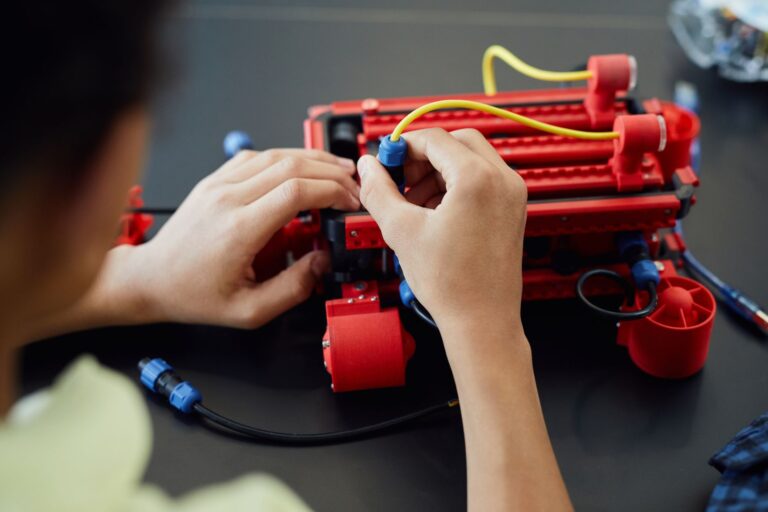
Alvik ships assembled. If the appeal of a "DIY robot kit" is the mechanical work — fasteners, wiring, a chassis that goes together wrong the first time — Alvik skips that part entirely. You are buying a programmable robot, not a build project. Petoi's Bittle X fills that gap.
Petoi's product page lists the quadruped construction kit at $319.00, supplied as a chassis, nine servo motors, the BiBoard controller, a battery and screws, with step-by-step assembly instructions. It runs OpenCat, Petoi's open-source locomotion framework, which means the walking gaits are code you can read and change rather than a sealed firmware blob. Two cautions. The price is roughly three times Alvik's, and some servo variants on that page show as sold out — on a nine-servo walking robot, a servo you cannot replace is a robot you cannot use. Check variant availability before ordering, not after.
The budget options and their catches
Makeblock's mBot2 is the obvious value play, and the obvious trap. Makeblock's mBot2 page shows a limited-time $94.99 against a $149.99 list price, for a kit built on the CyberPi controller: an ESP32-WROVER-B running at 240 MHz dual-core, with a 1.44-inch colour display and a 2500 mAh battery rated at about five hours. The catch is that Makeblock does not agree with itself. Its buy page shows $149.99 for the same robot while the products overview shows $139.99. Treat $94.99 as a claim to verify in the cart at checkout, not as the price.
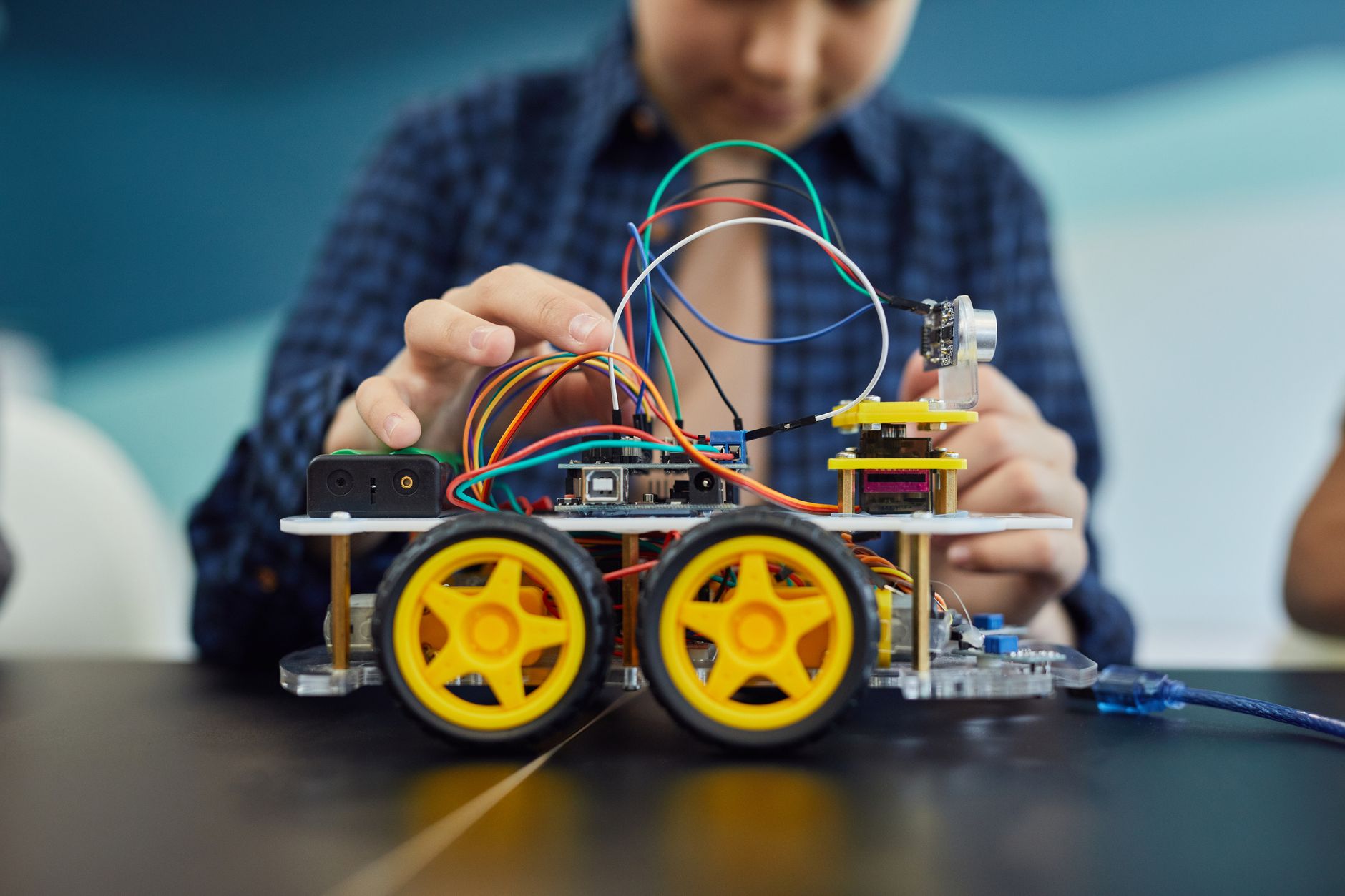
A $55 swing is the difference between the best-value kit here and an unremarkable one. Elegoo's Smart Robot Car Kit V4.0 is cheaper still, and currently unavailable. Elegoo's listing puts the camera version at $75.99 with an OV2640 camera on an ESP32-WROVER module, ultrasonic ranging, infrared line tracking and 24 module parts — but marks the US page **Sold out**, and the €69.99 EU page as well. It remains the cheapest route to a robot with working computer vision if restocked. Watch it; do not plan around it.
The kit to avoid buying new this month
LEGO Education SPIKE is the one clear mistake available right now. LEGO announced in January 2026 that it is retiring the entire SPIKE portfolio — SPIKE Prime and SPIKE Essential both — in favour of Computer Science & AI kits that started shipping in April 2026 from $339.95 per kit. The spare-parts timeline is what should stop a buyer. LEGO Education's page for SPIKE Prime set 45678 lists it at $429.95 and flags it as retired, and the matching replacement parts pack retires on 30 June 2026.
Buying in November 2026 means starting on a platform whose official spare-parts supply has already ended. That is a real problem for a kit with 528 elements and small driven parts. SPIKE hardware in classrooms will keep working for years, and existing owners should not panic. But paying $429.95 for a retired platform, when $112 buys current, supported hardware, is hard to defend.
Should you buy now or wait for Black Friday?
Black Friday 2026 falls on Friday 27 November, with Cyber Monday on 30 November. Anything bought in the first three weeks of the month is bought immediately ahead of the year's heaviest electronics discounting.
How much that matters depends on which kit you want: If the kit is a gift for late December, the two-week wait costs nothing. If it is for you and you will actually use it in November, buy now and accept you may leave $15 on the table.
- **Alvik at $112** is already marked down from $140. The discount exists now; a deeper one may not come, since Arduino controls its own pricing and does not discount as aggressively as retail resellers.
- **mBot2** advertises $94.99 against a $139.99–$149.99 list. Here waiting is low-risk — the price is unstable anyway, and a late-November promotion is plausible.
- **Elegoo's car kit** is out of stock, so the decision is made for you. Restocks often coincide with the sales window.
- **Bittle X at $319** is the largest sum involved and the one where a 15% discount is worth real money. If the servo variant you need is in stock now, though, availability beats price.
- **SPIKE Prime** will likely be discounted hardest, because retired inventory is what gets cleared. A discount on a platform without spare parts is not a bargain.
Matching the kit to the builder
A quick decision path: One final note on Alvik's European pricing: the EU store lists it at €159 including VAT, which is not a straight conversion of $112. The US figure is pre-tax and the European one is not, so compare the number you will actually be charged rather than the sticker.
- **First robot, mixed ages, one purchase that lasts years** — Alvik, $112. Blocks today, MicroPython next year, C after that, on the same hardware.
- **You want to build, not just program** — Bittle X, $319, nine servos and a screwdriver. Confirm the servo variant is in stock.
- **Tightest budget, happy to verify the price yourself** — mBot2, with the colour display and the five-hour battery, at whatever the cart actually says.
- **You specifically want camera-based vision cheaply** — Elegoo V4.0 with the OV2640, once it is back in stock.
Frequently Asked Questions
Is Alvik a true "DIY" kit if it arrives assembled?
No — the build work is in the code, not the chassis. If you want mechanical assembly, the Bittle X ships as parts, screws and nine separate servos.
Why is the same mBot2 listed at three different prices?
Makeblock's own pages disagree: $94.99 on the product page, $139.99 on the products overview, $149.99 on the buy page. The cart total is the only figure to trust.
Can I still use SPIKE Prime hardware I already own?
Yes. Existing sets keep working and software support has not been switched off. The issue is specific to new purchases, since the replacement parts pack retired on 30 June 2026.