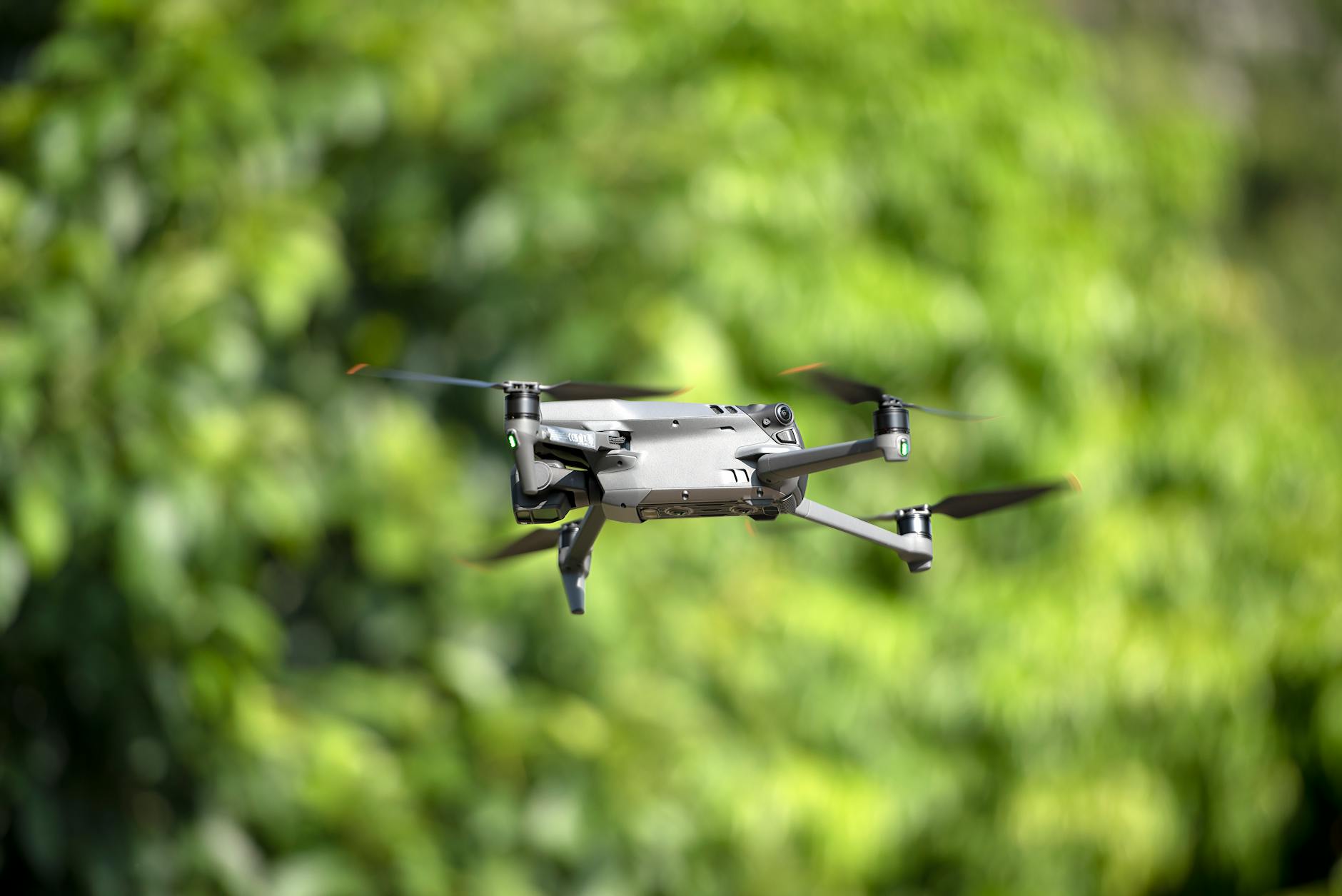

AI-powered autonomous drone swarms are fundamentally reshaping military operations by enabling coordinated attacks from dozens or hundreds of unmanned aerial vehicles controlled by a single operator or operating independently through distributed artificial intelligence. These systems use algorithms inspired by natural phenomena”such as ant colony optimization and particle swarm optimization”to maintain formation, adapt to losses, and execute missions without centralized command structures. In Ukraine, where drones now cause 70-80 percent of battlefield casualties, AI-assisted targeting has boosted first-person view drone strike accuracy from 30-50 percent to approximately 80 percent, demonstrating the immediate tactical impact of these technologies. The operational implications extend beyond simple force multiplication.
In January 2026, Swiss-American company Auterion demonstrated the first live-fire combat drone swarm where a single operator engaged three targets simultaneously using drones from different manufacturers coordinated through the Nemyx software platform. This capability represents a paradigm shift from the traditional one-drone-one-operator model toward systems where individual warfighters can direct lethal force across multiple targets with unprecedented coordination. This article examines how AI enables swarm coordination, the specific systems currently deployed or in development, defensive countermeasures and their limitations, ethical considerations surrounding autonomous lethal systems, and the trajectory of international regulatory efforts. Understanding these dynamics is essential for anyone tracking the evolution of military robotics and autonomous systems.
Table of Contents
- How Does AI Enable Autonomous Drone Swarm Coordination in Combat?
- Current Military Drone Swarm Systems and Deployments
- Countering Drone Swarms: Defense Challenges and Limitations
- Ethical Dimensions of Autonomous Lethal Systems
- International Regulatory Efforts and the Race Against Technology
- The Ukraine Laboratory: Real-World Lessons in Drone Warfare
- How to Prepare
- How to Apply This
- Expert Tips
- Conclusion
- Frequently Asked Questions
How Does AI Enable Autonomous Drone Swarm Coordination in Combat?
military drone swarms rely on decentralized AI architectures that distribute decision-making across individual units rather than depending on a central controller. Each drone in a swarm follows three fundamental behavioral rules”separate, align, and cohere”derived from biological swarm models. The US Army’s autonomous drone programs use hierarchical reinforcement learning to optimize intelligence, surveillance, and reconnaissance coverage while reducing operator workload. This “distributed brain” architecture allows swarms to self-organize, adapt when individual units fail, and continue missions even after sustaining losses. The technical requirements for effective swarm coordination are substantial. Protocols must enable independent decision-making within mission parameters while distributing tasks and synchronizing actions without constant operator intervention.
Shield AI’s V-Bat Teams system, powered by an AI called Hivemind, demonstrates this capability by operating autonomously in high-threat environments without GPS or external communication. Thales has similarly developed AI-based system architectures providing supervised autonomy that adapts to changing operational conditions. However, current autonomous capabilities have significant constraints. Most operational drone swarms still require human supervision, with operators making real-time decisions in dynamic combat scenarios. The tempo mismatch between AI processing speed”which can assess threats in milliseconds”and human decision-making creates integration challenges. Systems that operate too independently risk misidentifying targets, wasting resources, or unintentionally escalating engagements. Combat environments remain too unpredictable for fully autonomous operations without human oversight in the decision loop.

Current Military Drone Swarm Systems and Deployments
Several nations have moved beyond experimental programs to field operational drone swarm capabilities. Turkey’s STM developed the Kargu-2, a 15-pound quadcopter operating in coordinated swarms of up to 20 units with AI-based object recognition for autonomous strike missions. The system has been deployed in Libya and during the Armenia-Azerbaijan conflict, representing one of the first documented cases of AI-enabled drone swarms used in actual combat. Russia deploys 30-50 autonomous drones daily in Ukraine, effectively using the conflict as a live training ground for AI systems. The United States has pursued swarm technology through multiple programs. The Perdix system, developed with MIT’s Lincoln Laboratory, deployed over 100 autonomous micro-drones capable of 20-minute flights at speeds up to 70 mph.
The Pentagon’s Replicator program, now operating under the Defense Autonomous Warfare Group, aims to scale deployment of thousands of low-cost autonomous systems with $500 million in FY 2024 funding. Software frameworks like Autonomous Collaborative Teaming and Opportunistic Resilient Network Topology provide the coordination backbone. The reality of deployment has lagged stated ambitions. Despite Pentagon assertions, the Congressional Research Service noted that only “hundreds” rather than “thousands” of systems materialized by the August 2025 target date. This gap between capability demonstrations and operational fielding reflects the challenges of integrating autonomous swarms into existing military structures, supply chains, and doctrine. Germany’s KITU 2 program, the UK’s Blue Bear systems, and India’s NewSpace Research programs indicate that this technology is spreading globally, with over 60 vendors now active in the sector according to GlobalData.
Countering Drone Swarms: Defense Challenges and Limitations
Defending against drone swarms presents asymmetric cost challenges that favor attackers. In one documented case, a US ally destroyed a $200 quadcopter using a $3 million Patriot missile”a cost ratio that renders traditional air defense economically unsustainable against mass drone attacks. Research from the US Naval Postgraduate School found that even the Aegis system, designed for naval air defense, cannot effectively handle swarm attacks; when eight drones participated in simulated attacks on an Aegis-class destroyer, an average of 2.8 drones still penetrated defenses. The technical obstacles to effective counter-swarm defense are multifaceted. Individual swarm drones are small with low radar cross-sections, making targeting difficult. Detection sensors struggle with the surface area characteristics and relative speeds of small drones.
Defense networks require diverse, integrated sensors tracking dozens of low-flying targets, layered effectors capable of progressively thinning swarms, and intelligent battle management making decisions within seconds. Few current US weapons systems are equipped for this mission, and counter-drone systems that do exist have not been widely fielded. High-power microwave weapons are considered the most promising counter-swarm technology because microwave blasts can disable multiple targets across a wide area simultaneously”unlike lasers or kinetic interceptors that engage threats individually. However, defensive gaps extend beyond hardware. Legal frameworks were not designed to address small unmanned systems as threats, and current law does not permit timely detection of potential drone threats originating outside military installations. Every unit will eventually need organic counter-drone capability, but training and equipment distribution remain inadequate.

Ethical Dimensions of Autonomous Lethal Systems
The deployment of AI-driven lethal autonomy raises fundamental questions about accountability and human dignity in warfare. Critics argue that autonomous weapons systems undermine moral accountability, exacerbate risks to civilians, and corrode human agency in life-and-death decisions. Under existing legal frameworks governing the right to life, killing is only lawful when necessary, proportionate, and a last resort”determinations that require human judgment and context-specific reasoning that current AI cannot replicate. A November 2025 incident highlighted these concerns when a swarm of seven autonomous drones reportedly attacked a civilian area in Ukraine, raising questions about the system’s capacity to distinguish combatants from non-combatants. Classification accuracy remains a critical weakness: AI-based detection must distinguish hostile drones from friendly systems and civilian aircraft with high precision. False positives waste countermeasures or cause collateral damage, while false negatives allow threats through.
Neither outcome is acceptable when human lives are at stake. Human Rights Watch recommends prohibiting autonomous weapons that operate without meaningful human control and those designed to target people directly. The International Committee of the Red Cross has called for banning unpredictable autonomous weapons and strict restrictions on all others. However, the gap between advocacy and action is significant. If a military believes its adversaries are developing fully autonomous systems, the pressure to match those capabilities”regardless of ethical reservations”becomes intense. This dynamic mirrors historical arms races where ethical considerations were subordinated to perceived strategic necessity.
International Regulatory Efforts and the Race Against Technology
International consensus is building toward restrictions on autonomous weapons, but progress remains frustratingly slow relative to technological advancement. In November 2025, 156 nations voted to support a UN General Assembly resolution stressing the importance of human involvement in the use of force to ensure accountability and legal compliance. Since 2018, UN Secretary-General António Guterres has called lethal autonomous weapons “politically unacceptable and morally repugnant” and recommended concluding a legally binding prohibition instrument by 2026. The regulatory landscape reveals both momentum and obstacles. Within the Group of Governmental Experts, 42 states delivered a joint statement in September 2025 calling for negotiations on a binding instrument.
The New York Times editorial board joined international organizations in calling for a new treaty on autonomous weapons with limits on target types, requirements for human supervision, and intervention and deactivation capabilities. The European Commission’s ALTISS program, funded through the European Defence Fund, explicitly targets autonomous swarm missions while operating within emerging regulatory frameworks. Despite a decade of discussions, concrete outcomes remain limited. The mismatch between rapid technological development and sluggish diplomatic processes creates what observers describe as “an Oppenheimer moment””a threshold where machines gain the power to decide who lives and dies. Five nations voted against the 2025 resolution, and major military powers continue investing heavily in autonomous capabilities. The race to deploy coordinated swarms of autonomous systems proceeds regardless of unresolved ethical and legal questions.

The Ukraine Laboratory: Real-World Lessons in Drone Warfare
Ukraine has become the world’s most intensive testing ground for drone swarm concepts, providing unprecedented operational data on autonomous systems in contested environments. The Ukrainian Defence Ministry’s “Drone Line” project aims to establish a 15-kilometer unmanned “kill zone” along the front, with ambitions to extend it to 40 kilometers. This initiative tightly integrates aerial reconnaissance with ground-based operations, seeking to render movement impossible for Russian forces through persistent drone presence.
Auterion-powered drones already conduct AI-assisted targeting against Russian vehicles daily in Ukraine, demonstrating that the technology has crossed from experimental to operational use. The conflict has accelerated development timelines that might otherwise have taken years, compressing innovation cycles as both sides adapt to emerging capabilities and countermeasures. This real-world crucible has validated some theoretical concepts while revealing limitations in others, generating lessons that defense planners worldwide are studying carefully.
How to Prepare
- Conduct a comprehensive assessment of existing command and control infrastructure, identifying gaps in communication bandwidth, processing power, and data integration capabilities required to coordinate multiple autonomous systems simultaneously.
- Establish clear doctrine defining human oversight requirements, rules of engagement, and authority levels for autonomous decision-making”specifying which actions require human approval and which can proceed autonomously within defined parameters.
- Develop training programs that address both technical operation and the unique cognitive demands of overseeing autonomous swarms, recognizing that operators must interpret AI recommendations rather than control individual units directly.
- Implement redundant communication architectures and GPS-denied operational capabilities, as adversaries will prioritize electronic warfare against swarm coordination systems. Warning: organizations that fail to plan for degraded communications will find their swarm capabilities neutralized in contested environments.
- Create testing and evaluation protocols that assess swarm behavior under realistic conditions including electronic jamming, unit losses, and rapidly changing mission parameters”laboratory performance rarely predicts battlefield effectiveness.
How to Apply This
- Begin with small-scale heterogeneous swarms combining different drone types with complementary capabilities”surveillance, communications relay, and strike”rather than deploying large homogeneous formations that present single points of failure.
- Prioritize software interoperability by adopting platform-agnostic coordination frameworks similar to Auterion’s Nemyx, enabling integration of drones from multiple manufacturers rather than locking into proprietary ecosystems.
- Implement layered autonomy where routine navigation and formation-keeping operate independently while target engagement decisions require human authorization, maintaining meaningful control over lethal actions.
- Build iterative feedback loops between operational deployment and system refinement, capturing data on swarm performance, coordination failures, and adversary countermeasures to drive continuous improvement.
Expert Tips
- Start with ISR missions before deploying swarms for strike operations; intelligence gathering allows validation of coordination algorithms and communication resilience in lower-stakes scenarios.
- Do not assume commercial drone swarm demonstrations translate directly to military applications”contested electromagnetic environments, adversary countermeasures, and hardened targets create demands that entertainment or agricultural swarms never face.
- Invest in edge computing capabilities that allow individual drones to process sensor data and make tactical decisions without continuous communication with central command, enabling operation in communications-degraded environments.
- Plan for attrition by designing swarms that maintain effectiveness even after losing 30-50 percent of constituent units; systems optimized for full-strength operation become brittle under combat conditions.
- Establish clear protocols for mission abort and return-to-base scenarios when communication is lost, ensuring autonomous systems default to safe behaviors rather than continuing operations without oversight.
Conclusion
AI-powered autonomous drone swarms represent a transformative military capability that is actively reshaping combat operations, defense planning, and international security discussions. The technology combines advances in artificial intelligence, distributed computing, and unmanned aerial systems to enable coordinated operations that overwhelm traditional defenses while reducing the human footprint in contested environments.
From Turkey’s Kargu-2 deployments to Ukraine’s emerging drone kill zones, these systems have transitioned from laboratory concepts to battlefield realities. The trajectory ahead involves competing pressures: military imperatives driving autonomous capability development, ethical concerns demanding meaningful human control, and regulatory efforts struggling to constrain technology that advances faster than diplomatic processes. Organizations engaged in defense, policy, or robotics development must track these developments closely, understanding both the operational potential and the profound questions autonomous lethal systems raise about the future of warfare and human agency in life-and-death decisions.
Frequently Asked Questions
How long does it typically take to see results?
Results vary depending on individual circumstances, but most people begin to see meaningful progress within 4-8 weeks of consistent effort. Patience and persistence are key factors in achieving lasting outcomes.
Is this approach suitable for beginners?
Yes, this approach works well for beginners when implemented gradually. Starting with the fundamentals and building up over time leads to better long-term results than trying to do everything at once.
What are the most common mistakes to avoid?
The most common mistakes include rushing the process, skipping foundational steps, and failing to track progress. Taking a methodical approach and learning from both successes and setbacks leads to better outcomes.
How can I measure my progress effectively?
Set specific, measurable goals at the outset and track relevant metrics regularly. Keep a journal or log to document your journey, and periodically review your progress against your initial objectives.
When should I seek professional help?
Consider consulting a professional if you encounter persistent challenges, need specialized expertise, or want to accelerate your progress. Professional guidance can provide valuable insights and help you avoid costly mistakes.
What resources do you recommend for further learning?
Look for reputable sources in the field, including industry publications, expert blogs, and educational courses. Joining communities of practitioners can also provide valuable peer support and knowledge sharing.