
Deere & Company, commonly known as John Deere or simply DE (its NYSE ticker symbol), has positioned itself as the dominant marketplace and manufacturer for robotic farm equipment in the agricultural sector. The comparison to Amazon is apt: just as Amazon transformed retail by creating an ecosystem where customers can find virtually any product with seamless purchasing and delivery, Deere has built an integrated platform where farmers can acquire autonomous tractors, robotic planters, AI-powered sprayers, and precision agriculture technology””all connected through a unified digital infrastructure. The company’s acquisition strategy and internal R&D have created a one-stop shop for agricultural automation that competitors struggle to match. Consider a soybean farmer in Iowa looking to automate their operation.
Rather than piecing together equipment from multiple vendors””a sprayer from one company, guidance systems from another, data analytics from a third””Deere offers the entire stack. Their See & Spray technology identifies weeds and applies herbicide only where needed, their autonomous 8R tractor can plow fields without a driver present, and their Operations Center software ties everything together into a single dashboard. This vertical integration mirrors Amazon’s approach of controlling everything from warehouses to delivery trucks to the customer interface. This article examines how Deere achieved this market position, the technology underpinning their robotic equipment lineup, the competitive landscape they dominate, and the concerns farmers and regulators have raised about such concentrated market power in agricultural automation.
Table of Contents
- How Did John Deere Become the Leading Platform for Robotic Farm Equipment?
- The Technology Stack Behind Deere’s Autonomous Equipment
- Market Share and Competitive Landscape in Agricultural Robotics
- Economic Realities of Adopting Robotic Farm Equipment
- Right-to-Repair Battles and Platform Control Concerns
- Autonomous Equipment Adoption Across Different Farm Types
- The Future Trajectory of Agricultural Robotics Consolidation
- Conclusion
How Did John Deere Become the Leading Platform for Robotic Farm Equipment?
Deere’s path to agricultural automation dominance began with a strategic pivot in the early 2000s, when the company recognized that the future of farming equipment wasn’t just mechanical””it was digital. The 2017 acquisition of Blue River Technology for $305 million marked a turning point. Blue River’s computer vision and machine learning capabilities became the foundation for See & Spray, which uses cameras and AI to distinguish crops from weeds at highway speeds. This single acquisition gave Deere a multi-year head start over competitors in precision application technology. The company followed a deliberate strategy of acquiring complementary technologies rather than building everything in-house.
Purchases of companies specializing in GPS guidance, soil sensing, yield monitoring, and farm management software created an ecosystem where each component communicates with the others. By 2024, Deere had invested over $10 billion in smart industrial technology, transforming from a manufacturer of “dumb iron” into what CEO John May calls a “smart industrial company.” What separates Deere from competitors attempting similar strategies is scale. The company’s installed base of over 500,000 connected machines generates 300 million field acres of agronomic data annually. This data advantage creates a flywheel effect: more machines generate more data, which improves AI models, which makes the equipment more valuable, which sells more machines. CNH Industrial and AGCO have capable equipment, but neither approaches this data volume or the network effects it produces.
The Technology Stack Behind Deere’s Autonomous Equipment
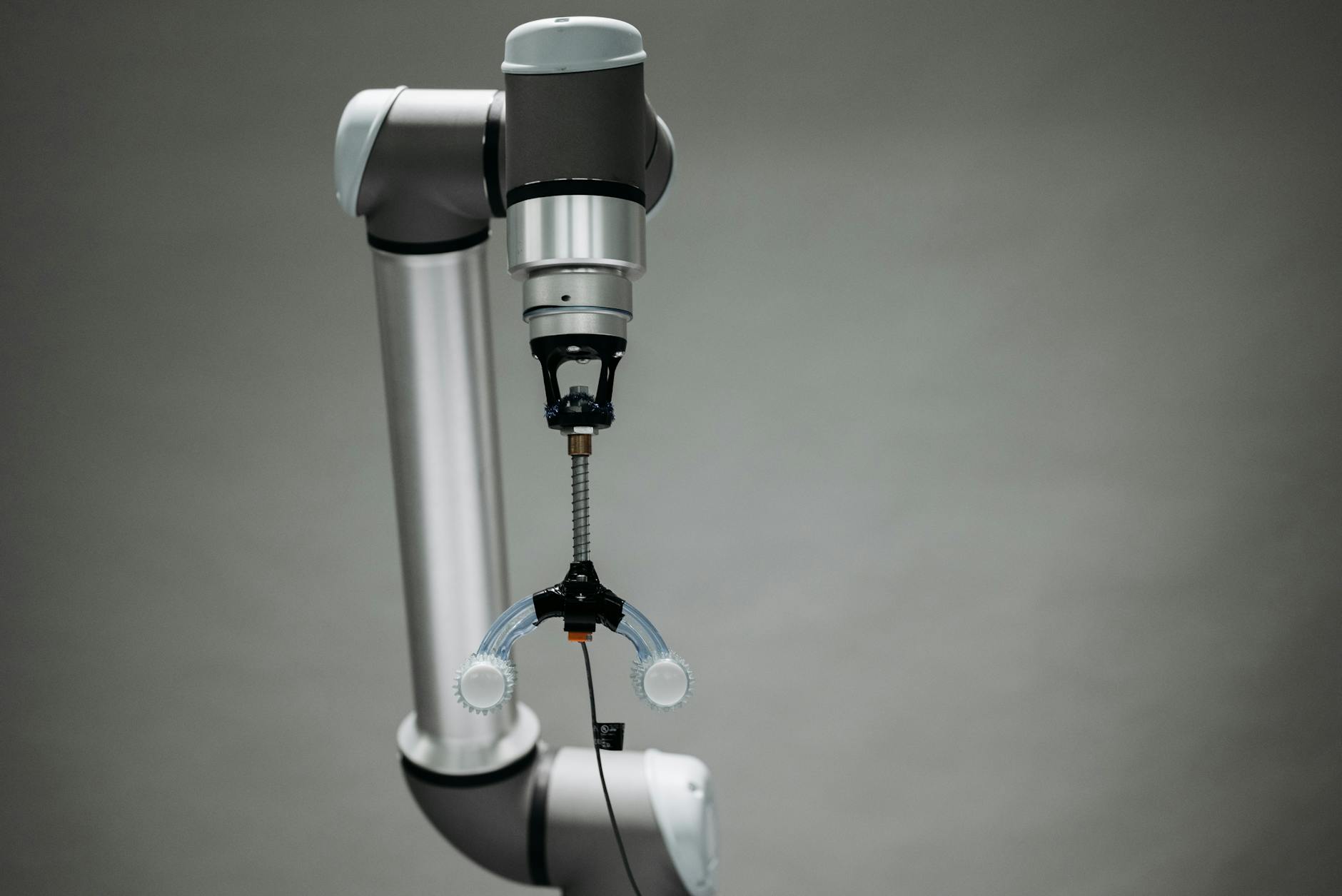
At the hardware level, Deere’s robotic equipment relies on a sensor fusion approach combining GPS receivers with Real-Time Kinematic (RTK) correction, stereo cameras, LiDAR arrays, and radar units. The autonomous 8R tractor announced in 2022 uses six pairs of stereo cameras providing 360-degree obstacle detection, processing over 50 million pixels per second to navigate fields and avoid hazards. The system achieves positioning accuracy within one inch””critical when planting rows that must align precisely for later mechanical cultivation. The software layer runs on Deere’s proprietary JDLink connectivity system, which transmits machine data to cloud servers for analysis and sends commands back to equipment in real-time. Their Operations Center platform serves as the central nervous system, integrating data from soil sensors, weather stations, and equipment performance metrics into actionable recommendations.
A farmer can monitor an autonomous tractor from their phone, receive alerts if the machine encounters an obstacle, and remotely authorize the system to continue or stop. However, this technological sophistication comes with significant limitations. The autonomous tractor currently works only in open fields with defined boundaries””it cannot navigate between fields on public roads, handle irregular terrain, or operate in orchards and vineyards where obstacles are dense and unpredictable. Farmers in regions with small, fragmented land holdings or diverse crop rotations may find the technology less applicable than those running large-scale monoculture operations in the Midwest. The investment also requires reliable cellular connectivity, which remains spotty in many rural areas.
Market Share and Competitive Landscape in Agricultural Robotics
Deere commands approximately 53% of the large agricultural equipment market in North America, a dominance that extends into the robotics segment where their integration advantages compound. In precision agriculture technology specifically””the category encompassing guidance systems, variable rate application, and autonomous functions””industry analysts estimate Deere holds between 60-70% market share depending on how the category is defined. This concentration exceeds amazon‘s share in any of its major market segments. The competitive response has been fragmented. CNH Industrial (owner of Case IH and New Holland) has developed autonomous concepts and acquired Raven Industries for $2.1 billion in 2021 to bolster their precision ag capabilities.
AGCO purchased Precision Planting and has invested heavily in Fuse, their connected equipment platform. Smaller players like Monarch Tractor focus on electric-autonomous tractors for specialty crops, while startup companies such as Bear Flag Robotics (acquired by Deere in 2021) and Sabanto have attempted to retrofit existing equipment with autonomous capabilities. The challenge for competitors is that Deere’s ecosystem creates significant switching costs. A farmer using Deere’s planter, sprayer, combine, and data platform faces substantial friction in adopting a competitor’s autonomous tractor””the equipment may not communicate seamlessly with existing systems, historical data might not transfer, and the learning curve for new software resets. This lock-in effect mirrors how Amazon Prime members hesitate to shop elsewhere because they’ve invested in the subscription and accumulated purchase history.

Economic Realities of Adopting Robotic Farm Equipment
The financial case for autonomous and robotic farm equipment centers on labor savings, input reduction, and yield optimization””but the math varies dramatically by operation size. A fully autonomous Deere 8R tractor carries a premium of approximately $50,000-100,000 over conventional models, with total system costs including the required autonomy kit reaching $500,000 or more. For a 5,000-acre corn and soybean operation, the labor savings from 24-hour autonomous planting and tillage can justify this investment within three to five years. For a 500-acre farm, the payback period extends beyond the equipment’s useful life. See & Spray technology offers a different value proposition: Deere claims the system reduces herbicide usage by up to 77% by targeting only weeds rather than broadcasting chemicals across entire fields.
At current herbicide prices, this can save $15-25 per acre annually on a treated field. The equipment costs roughly $350,000-400,000 for a fully equipped sprayer, suggesting a payback period of five to eight years for operations treating 3,000 or more acres annually. The tradeoff farmers must weigh is capital intensity versus operational flexibility. Purchasing the full Deere autonomous stack represents a major capital commitment that assumes stable commodity prices, continued equipment functionality, and access to dealer support. Leasing arrangements and equipment-as-a-service models are emerging but remain less developed than in other industries. Some farmers are choosing to wait for second-generation autonomous systems, reasoning that early adoption carries both higher costs and greater technical risk.
Right-to-Repair Battles and Platform Control Concerns
Deere’s ecosystem approach has generated significant controversy around repair rights and farmer autonomy. The company’s equipment runs on proprietary software that farmers cannot legally modify, and diagnostic tools are restricted to authorized dealers. This means a farmer whose autonomous tractor experiences a software fault during planting season may wait days for a dealer technician rather than implementing a fix themselves. The frustration parallels complaints about locked-down smartphones, except the stakes involve crop timing windows and potential yield losses. The company has faced sustained pressure from right-to-repair advocates, farmer organizations, and regulators.
In January 2023, Deere signed a memorandum of understanding with the American Farm Bureau Federation promising to provide farmers and independent mechanics with tools, software, and documentation needed for repairs. However, advocates note the agreement is voluntary, contains significant exceptions, and doesn’t address the fundamental issue of who controls the software running on equipment farmers own. The concern extends beyond repair access to data ownership and competitive lock-in. Deere’s terms of service grant the company extensive rights to data generated by their equipment, raising questions about who ultimately benefits from the agronomic insights produced on a farmer’s own land. Some farmers have likened the arrangement to sharecropping in the digital age””they own the land and do the work, but a corporation extracts value from the data harvest. Several states have passed or proposed agricultural right-to-repair legislation in response, though federal action remains stalled.

Autonomous Equipment Adoption Across Different Farm Types
Adoption patterns for Deere’s robotic equipment reveal stark divides by operation type and geography. Row crop operations in the Corn Belt represent the primary market, where field sizes, crop uniformity, and terrain favor autonomous systems designed for straight-line work over large acreage. A 2024 survey by the American Society of Agricultural Engineers found that 34% of farms over 2,000 acres had adopted some form of autonomous or robotic equipment, compared to just 8% of farms under 500 acres.
Specialty crop operations””orchards, vineyards, vegetable farms””present different challenges that Deere’s current lineup addresses less comprehensively. These operations require equipment that can navigate between rows, handle varying plant sizes, and perform delicate tasks like pruning or harvesting without damaging produce. While Deere has demonstrated orchard-capable autonomous prototypes, commercial offerings lag behind row crop systems. Competitors like Abundant Robotics (apple harvesting) and Agrobot (strawberry harvesting) have targeted these niches, though many have struggled commercially.
The Future Trajectory of Agricultural Robotics Consolidation
Industry analysts expect continued consolidation in agricultural robotics, with Deere likely acquiring additional technology companies to fill gaps in their portfolio. The company has signaled interest in expanding autonomous capabilities to additional equipment categories and crop types, with combines and specialty crop machinery representing logical next steps. Their stated goal of delivering fully autonomous corn and soybean production by 2030 suggests aggressive development timelines.
The regulatory environment could alter this trajectory. Antitrust scrutiny of agricultural equipment markets has intensified, with the Federal Trade Commission and Department of Justice examining both consolidation and digital platform practices. The European Union has implemented stricter data portability requirements that could weaken ecosystem lock-in effects. If regulators mandate equipment interoperability or data sharing, Deere’s competitive moat would narrow””though the company’s manufacturing scale and dealer network would remain advantages competitors cannot easily replicate.
Conclusion
John Deere has successfully constructed the agricultural equivalent of Amazon’s retail empire: a comprehensive platform where farmers can acquire autonomous tractors, robotic sprayers, precision planters, and the software infrastructure connecting everything. This position emerged from strategic acquisitions, massive R&D investment, and leveraging an installed base that generates unmatched agronomic data. For large-scale row crop operations, the Deere ecosystem offers genuine productivity advantages through equipment automation and optimized input application.
The tensions inherent in this model””repair restrictions, data ownership questions, high capital requirements, and market concentration””will shape agricultural technology’s evolution over the coming decade. Farmers evaluating robotic equipment must weigh immediate productivity gains against long-term dependence on a single vendor’s ecosystem. Whether Deere’s dominance proves as durable as Amazon’s depends largely on regulatory decisions, competitor responses, and whether the agricultural sector accepts or resists platform-style economics taking root in their fields.