
FANUC represents the closest equivalent to NVIDIA in the industrial robotics sector—a dominant player leveraging artificial intelligence and strategic partnerships to reshape an entire industry. The Japanese automation giant, which trades on the U.S. market under the ticker FANUY, commands a $32.343 billion market capitalization and has positioned itself at the intersection of physical AI and manufacturing automation. Unlike software-centric AI companies, FANUC’s strength lies in combining decades of robotics expertise with cutting-edge AI infrastructure, positioning it as the essential platform for factories transitioning to intelligent, self-optimizing systems.
The comparison goes deeper than market positioning. Just as NVIDIA supplies the computational backbone for AI across industries, FANUC is rapidly becoming the foundational platform for AI-enabled manufacturing. The company’s fiscal 2025 sales reached ¥857 billion, representing an 8% year-over-year increase, while operating margins improved by 150 basis points to 21.4%—metrics that reflect both market demand and operational efficiency. These numbers signal that factories worldwide are willing to invest in FANUC’s ecosystem, much like enterprises invest in NVIDIA infrastructure.
Table of Contents
- Why FANUC Is the NVIDIA of Industrial Robotics
- The NVIDIA Partnership and AI Integration Strategy
- The $90 Million Michigan Investment and U.S. Manufacturing Expansion
- Next-Generation Robot Portfolio and Physical Teleoperation
- The FANUC Academy and Workforce Development Infrastructure
- Competitive Pressures and Market Dynamics
- The Future of Physical AI in Manufacturing
- Conclusion
Why FANUC Is the NVIDIA of Industrial Robotics
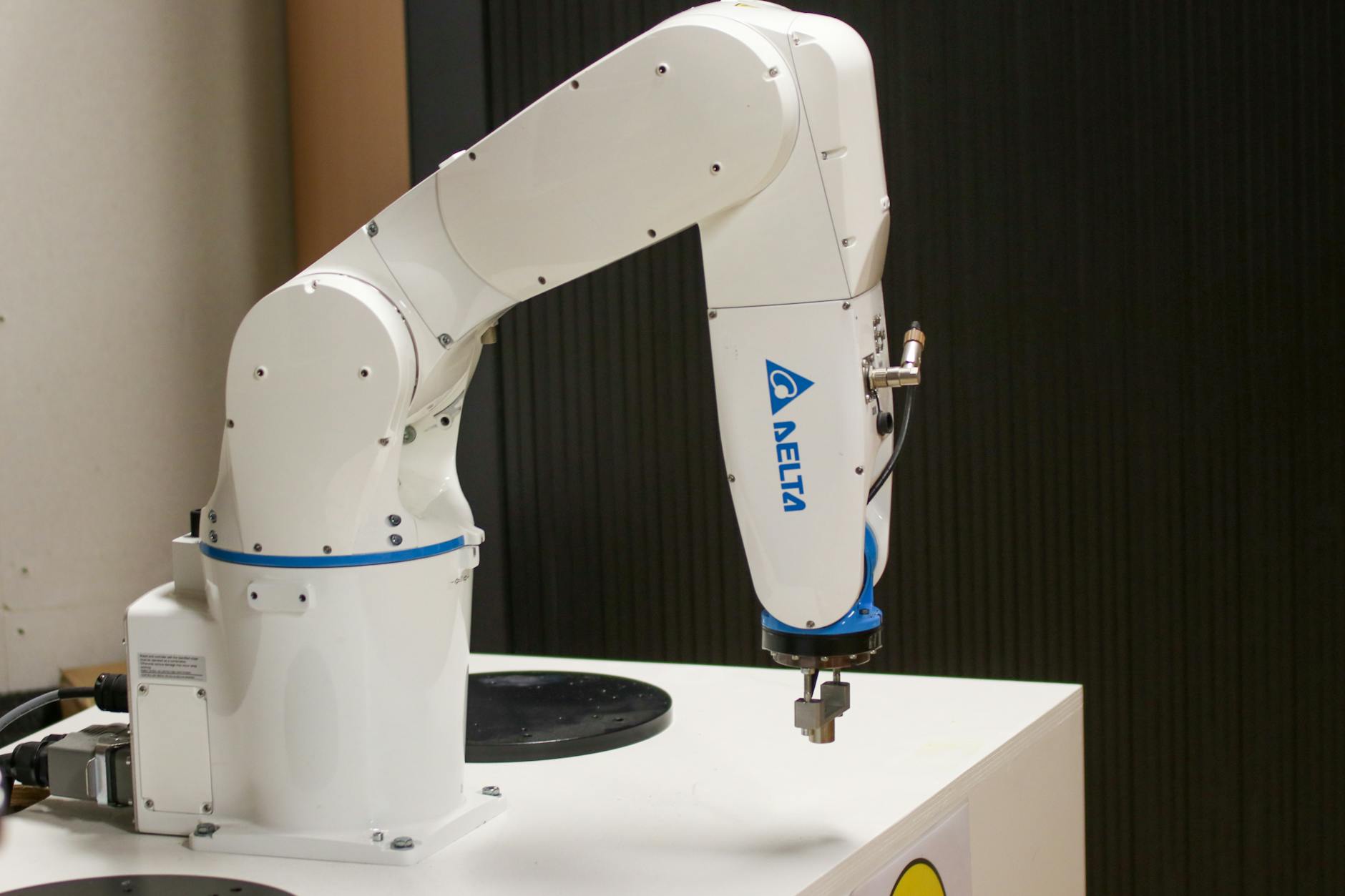
FANUC’s dominance stems from a combination of market scale, technological integration, and control over critical platform elements. The company manufactures a diverse portfolio spanning collaborative robots weighing as little as 11 kilograms to industrial arms handling payloads up to 2.3 tons, giving it comparable breadth to NVIDIA’s GPU lineup across different performance tiers. This range allows FANUC to serve startups automating small assembly lines as well as automotive giants building complete factory ecosystems. Like NVIDIA, which became indispensable to AI researchers and developers, FANUC has become the default choice for manufacturers seeking integrated automation solutions.
The parallel extends to ecosystem control. NVIDIA captures value not just through hardware but through software frameworks, developer tools, and partnerships with enterprises across industries. Similarly, FANUC captures value through robot hardware, specialized programming tools, integration services, and increasingly through software services and AI platforms. When a factory commits to FANUC robots, it becomes locked into a proprietary ecosystem—proprietary controllers, programming languages (FANUC’s Karel), and integration frameworks. This ecosystem lock-in, while sometimes criticized by customers, is a strength from a shareholder perspective and explains why FANUC commands premium valuations relative to competitors like ABB or KUKA.

The NVIDIA Partnership and AI Integration Strategy
FANUC’s December 2025 partnership with nvidia stands as the defining moment cementing its role as the AI infrastructure partner for manufacturing. The announcement triggered a 9.4% surge in FANUC stock to its highest level since July 2021, reflecting investor confidence that the partnership would reshape the robotics market. The collaboration integrates NVIDIA’s Isaac Sim simulation environment, Jetson edge processors, and Omniverse libraries directly into FANUC’s robot portfolio—essentially embedding NVIDIA’s AI stack into the hardware itself. This integration addresses a critical gap in manufacturing automation. Traditional industrial robots operate according to pre-programmed scripts and simple sensor feedback loops.
With NVIDIA’s technology embedded, FANUC robots can now run complex AI perception models at the edge, enabling capabilities like real-time object recognition, adaptive path planning, and collaborative decision-making between robots. A FANUC arm equipped with Isaac Sim can be trained and tested in a digital environment before deployment, reducing commissioning time and risk. This mirrors how developers use NVIDIA’s CUDA ecosystem to accelerate AI workloads—the partnership gives FANUC customers access to the same AI infrastructure that powers data centers and research labs, but deployed in physical form at the factory floor. One limitation worth noting: the integration is ongoing rather than immediately available across all products. FANUC is selectively rolling out AI-enhanced capabilities, particularly in newer models. Existing FANUC installations will require upgrades or replacement to benefit from the full NVIDIA integration, creating a multi-year transition period where older and newer systems coexist on factory floors.
The $90 Million Michigan Investment and U.S. Manufacturing Expansion
FANUC’s $90 million investment in an 840,000-square-foot Michigan facility announced in March 2026 signals confidence that U.S. manufacturers will continue increasing automation investments. The facility, expected to reach full production capacity in late 2027, will create 225 new manufacturing and support positions. This expansion mirrors NVIDIA’s pattern of investing in manufacturing capacity where demand is strongest—in this case, the American Midwest, where automotive, aerospace, and heavy equipment manufacturers are racing to adopt robotics. The timing and location are strategic. The facility positions FANUC to serve North American customers with shorter lead times and localized support, addressing a longstanding complaint from U.S. manufacturers that Japanese-based suppliers struggled to respond quickly to regional demand surges.
By manufacturing robots in Michigan rather than exporting from Japan, FANUC also gains potential advantages under evolving trade and industrial policy frameworks in North America. A manufacturer in Ohio can now receive FANUC robots with much shorter delivery windows, effectively reducing the friction that previously made smaller automation projects economically marginal. However, U.S. manufacturing expansion comes with higher labor costs, stricter regulatory compliance, and supply chain complexities compared to FANUC’s core operations in Japan. The company will need to successfully transfer manufacturing expertise to a U.S. workforce and navigate tariff changes that could impact component sourcing. Success here is not guaranteed and represents a meaningful execution risk alongside the opportunity.

Next-Generation Robot Portfolio and Physical Teleoperation
FANUC’s new product releases reflect a deliberate strategy to dominate across use cases. The lightweight CRX-3iA collaborative robot, weighing only 11 kilograms, targets high-mix, low-volume manufacturing environments where flexibility matters more than speed. Traditional industrial robots were designed for repetitive, high-volume tasks like welding or palletizing. FANUC’s newer collaborative robots instead enable human workers and robots to share workspace safely, adapting to variable product mixes without extensive reprogramming. A small electronics manufacturer could deploy the CRX-3iA to assemble different product variants in the same workspace, switching tasks with software updates rather than mechanical reconfiguration. Equally significant are new teleoperation capabilities with haptic feedback across select robotic arms.
This advancement enables remote operators to control robots with sensory feedback, making it feasible for a technician in one location to manipulate objects at a factory hundreds of miles away. This bridges the gap between full automation and manual labor, enabling human expertise to scale geographically. In assembly tasks requiring fine motor skills and real-time decision-making—where full autonomy remains economically impractical—teleoperation extends FANUC’s addressable market. The tradeoff here involves skill and infrastructure requirements. Teleoperation demands reliable, low-latency network connectivity and operators trained in the interface. A manufacturer in a region with poor internet infrastructure may find these capabilities inaccessible. Similarly, the complexity of deploying and maintaining these systems creates lock-in risk—once a factory trains operators on FANUC teleoperation systems, switching to a competitor becomes costly in human capital terms.
The FANUC Academy and Workforce Development Infrastructure
FANUC announced the expansion of its Academy training center in Auburn Hills, Michigan, billed as the largest robotics skills-development center in the United States, launching later in 2026. This move addresses a structural constraint in the robotics industry: a shortage of technicians and engineers trained to deploy, program, and maintain advanced automation systems. By creating a training center in the heart of the U.S. manufacturing base, FANUC captures a strategic advantage similar to how NVIDIA invested in AI bootcamps and developer ecosystems. The Academy serves a dual purpose. Directly, it trains employees and customers how to operate and maintain FANUC systems, building loyalty and reducing support costs.
Indirectly, it signals to manufacturers that adopting FANUC automation comes with access to skilled labor—a significant hurdle when considering major capital investments. Manufacturers worry not just about buying robots, but about staffing the positions to operate them reliably. FANUC’s Academy addresses that concern directly. Comparatively, competitors like Universal Robots (Universal Robots AB) have invested in partner networks, but FANUC’s direct ownership of training infrastructure gives it more control over curriculum and quality. One caveat: training infrastructure matters only if the market has appetite for it. If automation adoption stalls due to economic downturns or policy changes, the Academy becomes an underutilized asset. FANUC’s bet is that automation adoption accelerates in the coming years—a reasonable bet given reshoring trends and labor shortages, but not guaranteed.
Competitive Pressures and Market Dynamics
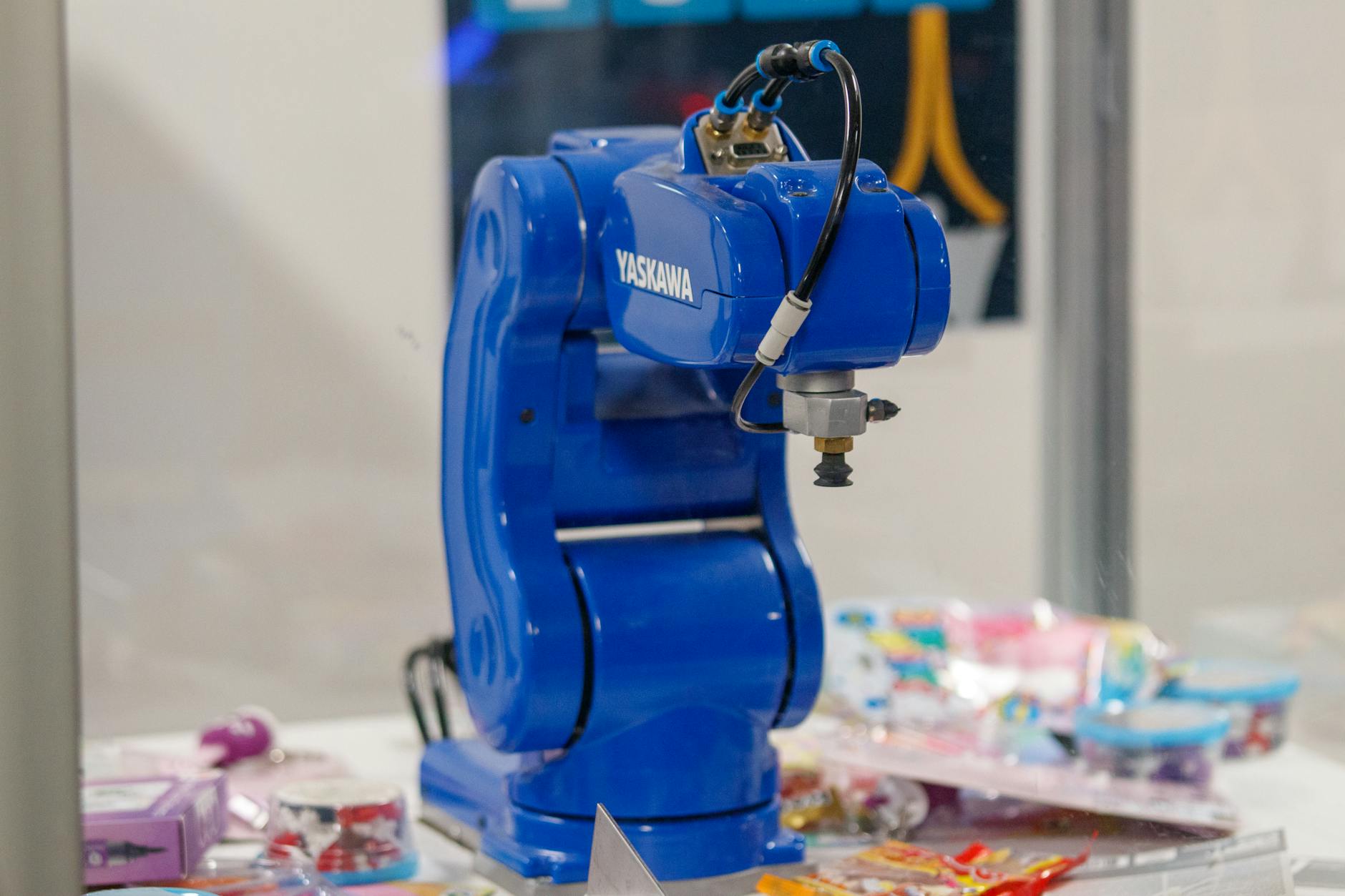
FANUC’s dominance doesn’t make it invulnerable. ABB, Yaskawa, KUKA, and Stäubli remain formidable competitors, each with regional strongholds and specialized capabilities. Chinese robot manufacturers like Estun and Aubo are aggressively pursuing lower-cost segments, pressuring FANUC’s margins in price-sensitive markets. Meanwhile, startups using mobile manipulation and vision-based AI are creating entirely new categories that don’t fit neatly into FANUC’s traditional portfolio.
The NVIDIA partnership addresses some of these competitive threats by tying FANUC to the fastest-moving AI ecosystem. But integration takes time, and competitors could pursue their own AI partnerships. For instance, ABB could partner with Google or Microsoft to integrate alternative AI stacks into its robots. The question isn’t whether FANUC will maintain technological leadership indefinitely, but whether its first-mover advantage in AI integration proves durable enough to sustain premium valuations and market share.
The Future of Physical AI in Manufacturing
Looking ahead, FANUC’s trajectory depends on the broader adoption of physical AI in manufacturing. The current moment resembles the early days of GPU computing—tremendous potential, clear use cases emerging, but still relatively early in the adoption curve. As factories worldwide increase automation investments and demand AI-enabled capabilities, platforms like FANUC that combine hardware, software, and ecosystem services will likely capture disproportionate value.
The company’s investments in Michigan manufacturing capacity, the NVIDIA partnership, and the Academy training expansion suggest management confidence that this growth will materialize. If automation adoption accelerates as expected, FANUC’s vertical integration—from robot design and manufacturing to software tools and customer training—will prove invaluable. The comparison to NVIDIA becomes apt not just in current market position, but in the structural role both companies play in enabling their respective revolutions: one in AI computing, one in automated manufacturing.
Conclusion
FANUC earns the nickname “the NVIDIA of industrial robotics” through market dominance, technological integration, strategic partnerships, and ecosystem control. The company’s $32.343 billion market capitalization, fiscal 2025 record revenue, and 150-basis-point operating margin expansion reflect a business in the right position as manufacturing automation accelerates globally. The NVIDIA partnership, U.S.
manufacturing expansion, and academy infrastructure investments signal a management team prepared for sustained growth in an industry still in relatively early stages of AI adoption. For manufacturers evaluating automation investments, FANUC remains the reference standard—the platform most likely to integrate future technologies and maintain vendor support decades into the future. Investors viewing FANUC should approach it similarly to how institutional investors approach NVIDIA: as a foundational platform company capturing value across an expanding industry, with the risk that long-term dominance depends on continued innovation and execution in a rapidly evolving market. The next five years will determine whether FANUC’s current positioning proves as durable as NVIDIA’s has been in AI computing.