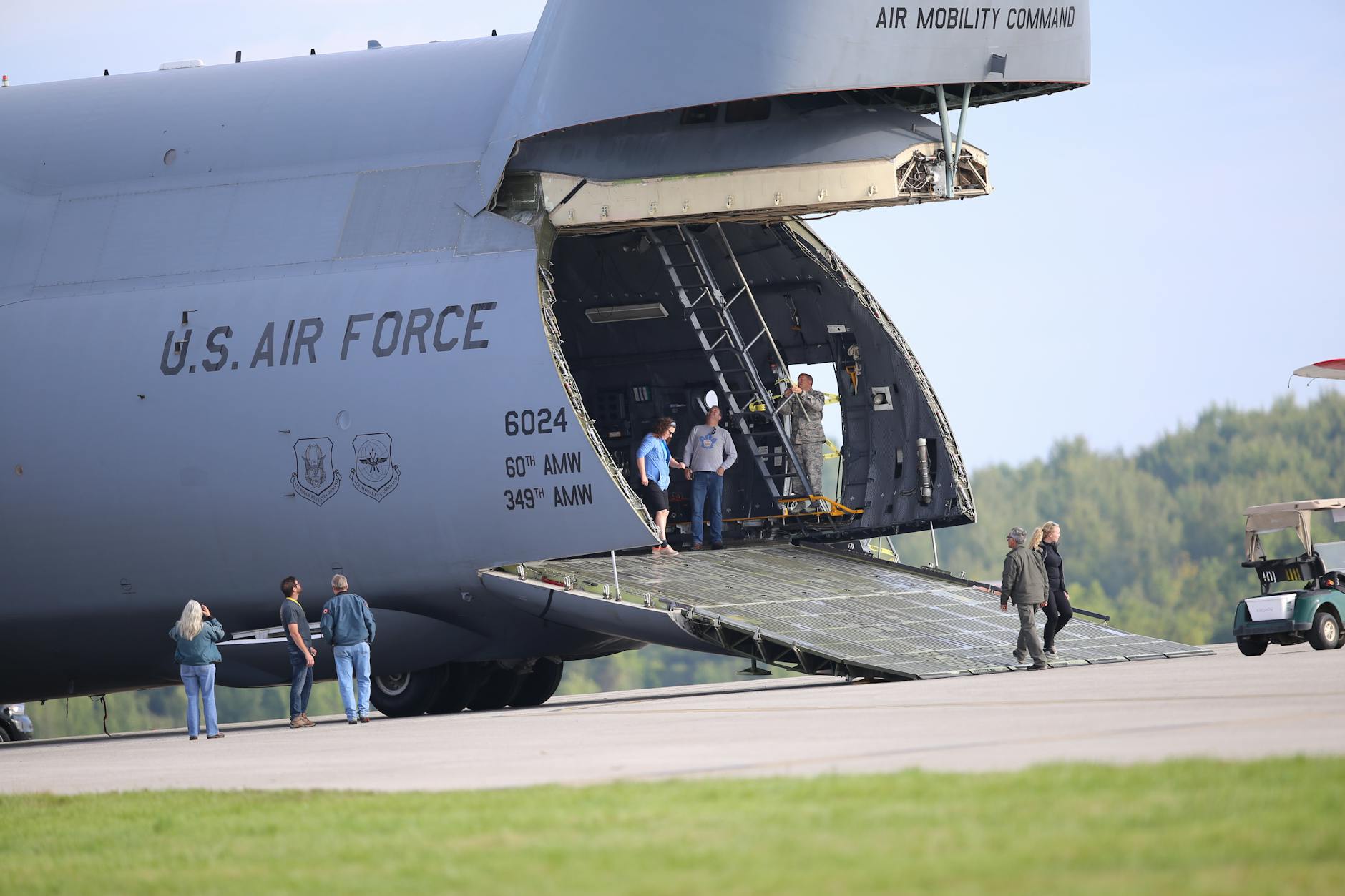

Artificial intelligence improves military logistics and supply chains by enabling predictive maintenance that reduces equipment downtime by up to 40 percent, optimizing route planning across contested environments, and automating inventory management that traditionally required thousands of personnel hours. The U.S. Department of Defense has already deployed AI systems like the Global Combat Support System that processes millions of supply transactions daily, identifying patterns that human analysts would miss and flagging potential shortages weeks before they become critical. These systems analyze historical data, real-time sensor feeds, and environmental conditions simultaneously to make decisions that would overwhelm traditional planning methods. The transformation extends beyond simple automation.
AI-driven logistics platforms can now simulate entire supply chain disruptions, test thousands of contingency scenarios in hours rather than months, and coordinate autonomous resupply vehicles across multiple theaters of operation. For example, the U.S. Army’s Logistics Modernization Program uses machine learning algorithms to predict demand for spare parts with 85 percent greater accuracy than previous statistical methods, directly translating to fewer emergency shipments and reduced costs. This article examines the specific mechanisms through which AI enhances military logistics, from demand forecasting and predictive maintenance to autonomous transportation and real-time decision support. It also addresses the limitations, including cybersecurity vulnerabilities and the challenges of operating AI systems in degraded communications environments where connectivity cannot be guaranteed.
Table of Contents
- What Role Does AI Play in Modernizing Military Supply Chain Operations?
- Predictive Maintenance: Reducing Equipment Downtime Through Machine Learning
- Autonomous Resupply Systems and AI-Controlled Transportation
- Demand Forecasting: How AI Predicts What Forces Need Before They Know
- Cybersecurity Risks in AI-Enabled Military Logistics Networks
- Integration Challenges: Making AI Work with Legacy Military Systems
- How to Prepare
- How to Apply This
- Expert Tips
- Conclusion
- Frequently Asked Questions
What Role Does AI Play in Modernizing Military Supply Chain Operations?
AI serves as the analytical backbone of modern military supply chains by processing volumes of data that exceed human cognitive capacity. A single aircraft carrier battle group generates terabytes of logistics data daily, including fuel consumption rates, ammunition expenditure, food supplies, medical inventory, and equipment status reports. Machine learning algorithms digest this information continuously, identifying consumption patterns and anomalies that signal emerging problems before they affect operational readiness. The distinction between AI-driven and traditional logistics becomes clear in contested environments. Conventional supply chain management relies on predetermined schedules and fixed routes, which become liabilities when adversaries can predict and target resupply convoys. AI systems dynamically adjust routing based on threat assessments, weather conditions, and real-time intelligence, selecting from thousands of possible paths to minimize risk while meeting delivery windows.
The U.S. Marine Corps tested such a system during Exercise Steel Knight 2023, reducing convoy exposure time by 28 percent compared to manually planned routes. However, AI integration does not eliminate human decision-making but rather augments it. Logistics officers still approve major routing changes, validate AI recommendations against their operational knowledge, and override algorithmic suggestions when circumstances warrant. The most effective implementations treat AI as a staff tool that generates options and highlights risks, not as an autonomous decision-maker that replaces command judgment. Organizations that have tried to fully automate logistics decisions without human oversight have encountered problems when AI systems optimized for efficiency conflicted with tactical priorities that algorithms could not fully comprehend.

Predictive Maintenance: Reducing Equipment Downtime Through Machine Learning
Predictive maintenance represents one of the highest-value applications of AI in military logistics because equipment failures during operations can prove catastrophic. Traditional maintenance schedules operate on fixed intervals””aircraft engines receive overhauls after a set number of flight hours regardless of actual condition. This approach results in either premature maintenance that wastes resources or delayed maintenance that risks failure. AI systems analyze sensor data from engines, hydraulic systems, and electronic components to predict failures based on actual wear patterns rather than statistical averages. The U.S. Air Force’s Condition-Based Maintenance Plus program demonstrates this capability at scale.
Sensors embedded in F-35 fighter jets transmit performance data to ground-based AI systems that compare current readings against failure signatures from the entire fleet. When an engine shows vibration patterns that preceded failures in other aircraft, the system alerts maintenance crews and automatically orders replacement parts before the component degrades further. This approach has reduced unscheduled maintenance events by 25 percent in early adopter units while extending the service life of expensive components. The limitation emerges with newer equipment that lacks historical failure data. Machine learning models require substantial training datasets to make accurate predictions, meaning AI-based predictive maintenance performs poorly for recently fielded systems until sufficient operational data accumulates. Military organizations must maintain traditional scheduled maintenance programs for new equipment while building the data foundation that enables predictive approaches. Additionally, sensor systems themselves require maintenance and calibration, creating a secondary logistics burden that organizations sometimes underestimate during initial implementation.
Autonomous Resupply Systems and AI-Controlled Transportation
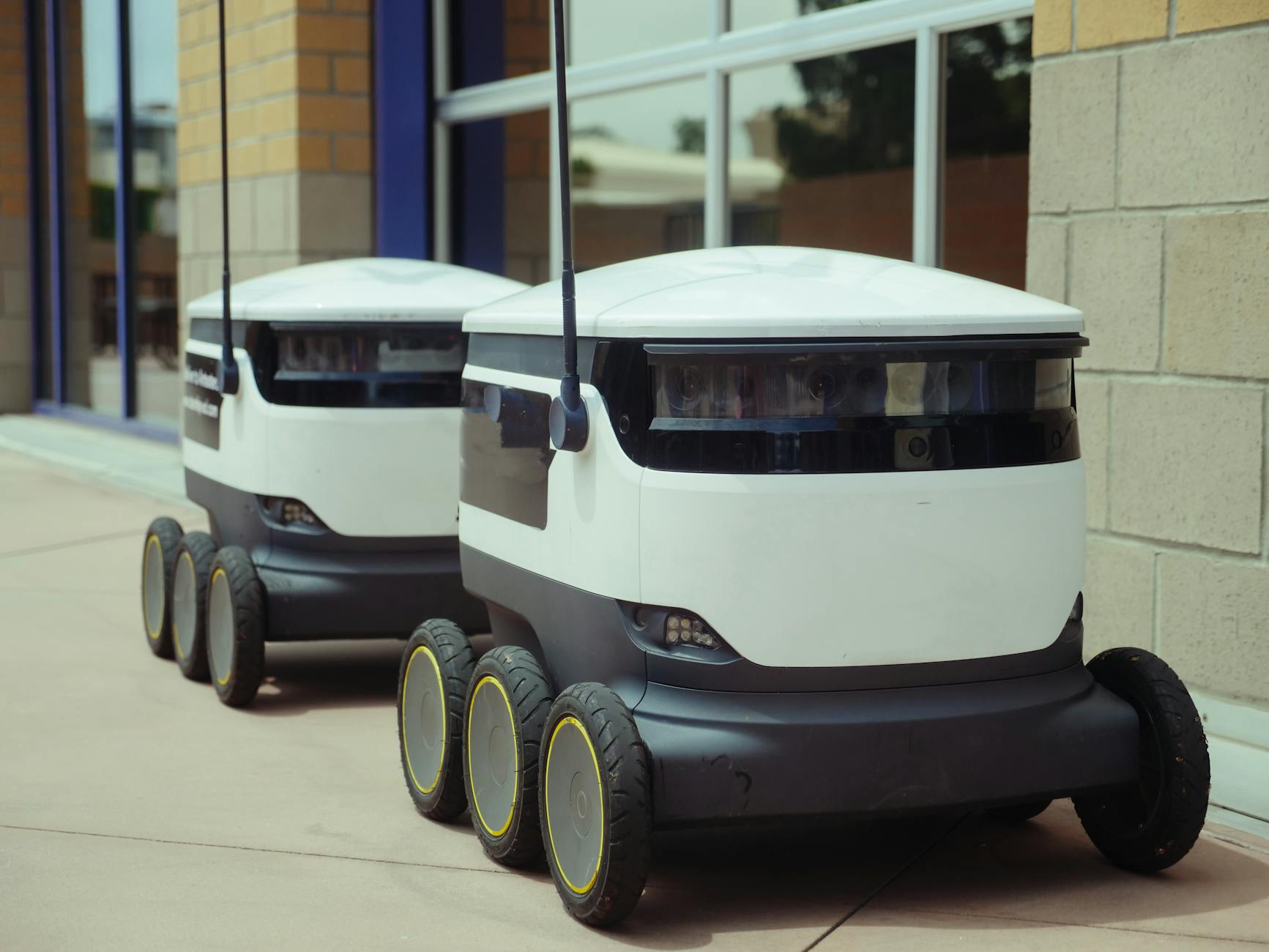
Autonomous vehicles guided by AI represent the next frontier in military logistics, promising to remove human operators from dangerous resupply missions while increasing delivery capacity. The U.S. Army’s Autonomous Ground Resupply program has tested convoys where lead vehicles operated by human drivers are followed by unmanned trucks that use AI to maintain formation, avoid obstacles, and respond to route changes. These systems performed successfully during testing at Fort Hood, completing resupply runs through simulated combat environments without human intervention in the following vehicles. Air resupply benefits equally from autonomy. The Marine Corps has experimented with autonomous helicopters that deliver supplies to forward positions without risking pilots in contested airspace.
These aircraft use AI to navigate terrain, identify landing zones, and avoid threats, operating at night or in adverse weather when manned missions would be too dangerous. A single autonomous helicopter delivered 4,200 pounds of supplies to a mountain outpost during testing in 2023, a mission that would have required significant planning and risk assessment for a crewed aircraft. The tradeoff involves reliability in communications-denied environments. Autonomous systems typically depend on GPS navigation and data links to command centers, both of which adversaries can jam or spoof. AI systems must therefore incorporate fallback navigation using terrain recognition, inertial measurement, and pre-loaded maps when external signals become unavailable. Current technology handles short-term communications loss adequately, but extended operations without connectivity remain problematic because autonomous vehicles cannot receive updated threat information or route changes. Military planners must therefore design missions assuming intermittent connectivity rather than counting on continuous AI guidance.

Demand Forecasting: How AI Predicts What Forces Need Before They Know
Traditional military supply planning relies heavily on historical tables and standard consumption rates””a division in combat is expected to use a certain amount of ammunition, fuel, and medical supplies based on past conflicts. AI-enabled demand forecasting improves upon this approach by incorporating real-time operational data, intelligence assessments, and environmental factors to generate predictions specific to current conditions rather than historical averages. The Defense Logistics Agency has deployed machine learning systems that analyze operational tempo, unit movement patterns, weather forecasts, and intelligence reports to adjust supply positioning continuously. During recent exercises, these systems predicted ammunition consumption within 8 percent of actual usage, compared to 25 percent variance under traditional methods. More importantly, the AI identified unexpected demand spikes””such as increased medical supply needs when operations shifted to urban terrain””that historical planning factors would have missed entirely.
A practical example illustrates the value: during a 2024 training rotation, AI analysis of vehicle telemetry data detected that tank formations were consuming fuel faster than standard rates predicted. Investigation revealed that recent software updates had changed engine management parameters. The AI system automatically adjusted future fuel positioning without requiring human analysts to identify and diagnose the anomaly. However, forecasting systems require clean data inputs, and military organizations often struggle with inconsistent reporting standards across units. AI predictions are only as good as the data feeding them, and garbage-in-garbage-out problems have undermined several early implementation efforts.
Cybersecurity Risks in AI-Enabled Military Logistics Networks
The integration of AI into military logistics creates attack surfaces that adversaries will attempt to exploit. AI systems depend on data integrity””if an adversary can corrupt sensor readings, falsify inventory reports, or inject misleading information into training datasets, the resulting AI recommendations could prove disastrously wrong. A logistics AI convinced that fuel reserves are adequate when they are actually depleted could lead to operational paralysis at critical moments. Adversarial machine learning represents a particularly sophisticated threat. Researchers have demonstrated that subtly modified inputs can cause image recognition systems to misidentify objects with high confidence. Applied to logistics, an adversary could potentially fool an autonomous supply vehicle into misidentifying a threat as a friendly checkpoint, or trick an inventory AI into misclassifying damaged goods as serviceable.
The U.S. military has established the Joint AI Center partially to address these vulnerabilities, developing testing protocols that subject AI systems to adversarial inputs before deployment. The warning for military organizations is clear: AI systems must be treated as critical infrastructure requiring protection equivalent to communications networks and command systems. Organizations that deploy AI logistics tools without corresponding cybersecurity investments create single points of failure that competent adversaries will target. This includes protecting not only the AI systems themselves but also the sensors, data networks, and human interfaces through which information flows. Several allied nations have experienced intrusions into logistics networks that, while not yet exploiting AI vulnerabilities specifically, demonstrate adversary interest in these systems.
Integration Challenges: Making AI Work with Legacy Military Systems
Military organizations operate equipment and information systems spanning decades of technology generations. An AI logistics platform must interface with Vietnam-era inventory tracking systems, 1990s-era enterprise resource planning software, and modern sensor networks simultaneously. This integration challenge often proves more difficult than developing the AI capabilities themselves.
The Department of Defense has invested heavily in middleware solutions that translate between legacy systems and modern AI platforms. The Business Enterprise Architecture program provides standardized data formats that allow AI tools to access information from diverse sources without requiring complete replacement of existing systems. However, data quality issues persist because legacy systems often store information in formats that require significant cleaning and normalization before AI algorithms can process them effectively. One service branch discovered that 30 percent of its historical maintenance records contained errors or inconsistencies that degraded AI prediction accuracy until manually corrected.
How to Prepare
- **Audit existing data quality and accessibility.** Identify all data sources relevant to logistics operations, assess their accuracy and completeness, and establish processes for ongoing data validation. Organizations frequently discover that their data is less reliable than assumed only after AI systems produce obviously wrong recommendations.
- **Establish baseline metrics for current performance.** Document existing supply chain performance including fill rates, delivery times, inventory accuracy, and maintenance response times. Without baselines, organizations cannot measure whether AI implementation actually improves operations.
- **Identify integration requirements with legacy systems.** Map all systems that must exchange data with AI platforms and assess technical requirements for connectivity. Plan for middleware development or acquisition where direct integration is impractical.
- **Develop workforce training programs.** Personnel must understand AI capabilities and limitations to use these tools effectively. Training should cover both technical operation and critical evaluation of AI recommendations.
- **Create governance frameworks for AI decision authority.** Define which decisions AI systems can make autonomously, which require human approval, and escalation procedures when AI recommendations conflict with operator judgment.
How to Apply This
- **Test AI systems under degraded conditions.** Validate that algorithms produce reasonable recommendations when connectivity is limited, data feeds are interrupted, or sensor coverage is incomplete. Systems that work perfectly in ideal conditions often fail when operational stresses are introduced.
- **Establish human override procedures.** Document clear processes for operators to reject AI recommendations and implement alternative solutions. Ensure that overrides are logged for post-operation analysis to improve future AI performance.
- **Pre-position computational resources.** AI systems require processing power that may not be available in forward environments. Determine whether edge computing devices can run necessary algorithms or whether reach-back connectivity is required.
- **Coordinate AI outputs with existing command processes.** Ensure that AI-generated logistics information feeds into briefing formats and decision cycles that commanders already use. New tools that require separate workflows often go unused during high-tempo operations.
Expert Tips
- Prioritize AI applications where data quality is already high rather than attempting to fix data problems and implement AI simultaneously. Maintenance records for aircraft and ships typically offer better data quality than ground vehicle or small arms inventories.
- Do not implement AI predictive maintenance for equipment still under warranty or manufacturer support contracts, as the manufacturer’s maintenance schedules often contractually override operational data.
- Build relationships with commercial logistics companies that have deployed similar AI capabilities. The private sector has solved many technical problems that military organizations are just encountering.
- Expect initial AI recommendations to require significant human validation. Algorithms improve as they accumulate operational data, but early deployment phases will surface errors that training environments did not reveal.
- Maintain fallback manual processes for all AI-enabled functions. System failures, cyberattacks, or communications loss can render AI tools unavailable precisely when they are most needed.
Conclusion
Artificial intelligence offers transformative potential for military logistics and supply chains, enabling predictive maintenance that extends equipment life while reducing downtime, demand forecasting that positions supplies before units know they need them, and autonomous transportation that removes personnel from dangerous resupply missions. Organizations implementing these capabilities are seeing measurable improvements in readiness rates, cost efficiency, and operational flexibility that traditional logistics methods cannot match.
Realizing these benefits requires disciplined preparation including data quality improvements, legacy system integration, workforce training, and robust cybersecurity. Organizations should begin with focused pilot programs that demonstrate value in specific functional areas before attempting enterprise-wide transformation. The technology is mature enough for operational deployment, but success depends on treating AI as a tool that augments human judgment rather than replacing it.
Frequently Asked Questions
How long does it typically take to see results?
Results vary depending on individual circumstances, but most people begin to see meaningful progress within 4-8 weeks of consistent effort. Patience and persistence are key factors in achieving lasting outcomes.
Is this approach suitable for beginners?
Yes, this approach works well for beginners when implemented gradually. Starting with the fundamentals and building up over time leads to better long-term results than trying to do everything at once.
What are the most common mistakes to avoid?
The most common mistakes include rushing the process, skipping foundational steps, and failing to track progress. Taking a methodical approach and learning from both successes and setbacks leads to better outcomes.
How can I measure my progress effectively?
Set specific, measurable goals at the outset and track relevant metrics regularly. Keep a journal or log to document your journey, and periodically review your progress against your initial objectives.
When should I seek professional help?
Consider consulting a professional if you encounter persistent challenges, need specialized expertise, or want to accelerate your progress. Professional guidance can provide valuable insights and help you avoid costly mistakes.
What resources do you recommend for further learning?
Look for reputable sources in the field, including industry publications, expert blogs, and educational courses. Joining communities of practitioners can also provide valuable peer support and knowledge sharing.