

Artificial intelligence could dramatically improve missile defense systems by reducing detection-to-interception times from minutes to seconds, enabling real-time trajectory prediction for hypersonic threats, and coordinating multi-layered defense networks that would overwhelm human operators. The core advantage lies in AI’s ability to process radar data, satellite feeds, and sensor inputs simultaneously, then calculate optimal interception solutions faster than any human team could manage. For example, the US Missile Defense Agency’s current Ground-based Midcourse Defense system requires human operators to verify threats and authorize responses, a process that consumes precious minutes.
AI-driven systems could compress this decision loop while maintaining human oversight for launch authorization, addressing the fundamental challenge that modern missiles, particularly hypersonic glide vehicles traveling at Mach 5 or faster, simply move too quickly for traditional command structures. The integration of AI into missile defense represents one of the most consequential applications of machine learning in military systems, with implications for global security, arms control, and the future of deterrence theory. This article examines how AI algorithms could enhance threat detection and classification, the role of machine learning in predicting complex missile trajectories, the challenges of integrating AI with existing defense infrastructure, and the serious limitations and risks that accompany these capabilities. Understanding both the potential and the pitfalls of AI-enhanced missile defense is essential for anyone following developments in defense technology and international security.
Table of Contents
- How Could AI Transform Missile Threat Detection and Classification?
- Machine Learning and Hypersonic Missile Trajectory Prediction
- Autonomous Coordination of Multi-Layered Defense Networks
- Integrating AI with Legacy Defense Infrastructure
- Risks of AI Dependency in Strategic Defense Systems
- International Stability and Arms Control Implications
- How to Prepare
- How to Apply This
- Expert Tips
- Conclusion
- Frequently Asked Questions
How Could AI Transform Missile Threat Detection and Classification?
Traditional missile defense radar systems generate enormous volumes of data that human operators must interpret under extreme time pressure. A single phased-array radar can produce gigabytes of tracking data per second, and distinguishing between actual warheads, decoys, debris, and atmospheric phenomena requires pattern recognition that pushes human cognitive limits. AI systems trained on decades of test data and simulated attack scenarios can classify incoming objects with greater accuracy and consistency than human operators, particularly when facing saturation attacks involving multiple missiles and countermeasures designed to confuse defenders. The difference becomes stark when comparing response timelines. Current early warning systems like the US Space-Based Infrared System can detect missile launches within seconds, but the subsequent process of characterizing the threat, predicting its target, and coordinating a response involves multiple human decision points.
The Soviet Union’s 1983 false alarm incident, where officer Stanislav Petrov correctly overruled automated systems that had misidentified sunlight reflections as incoming American missiles, illustrates both the danger of over-relying on automation and the burden placed on human operators. Modern AI systems using multi-sensor fusion could cross-reference satellite infrared data with ground radar returns, atmospheric analysis, and intelligence assessments to reduce false alarm rates while accelerating genuine threat identification. However, AI detection systems face a fundamental limitation: they can only recognize patterns present in their training data. An adversary developing novel decoy technologies, unconventional flight profiles, or previously unseen countermeasures could potentially exploit gaps in AI training sets. This creates an ongoing cat-and-mouse dynamic where defensive AI must continuously learn and adapt, a process that introduces its own risks if updates alter system behavior in unexpected ways during actual crises.
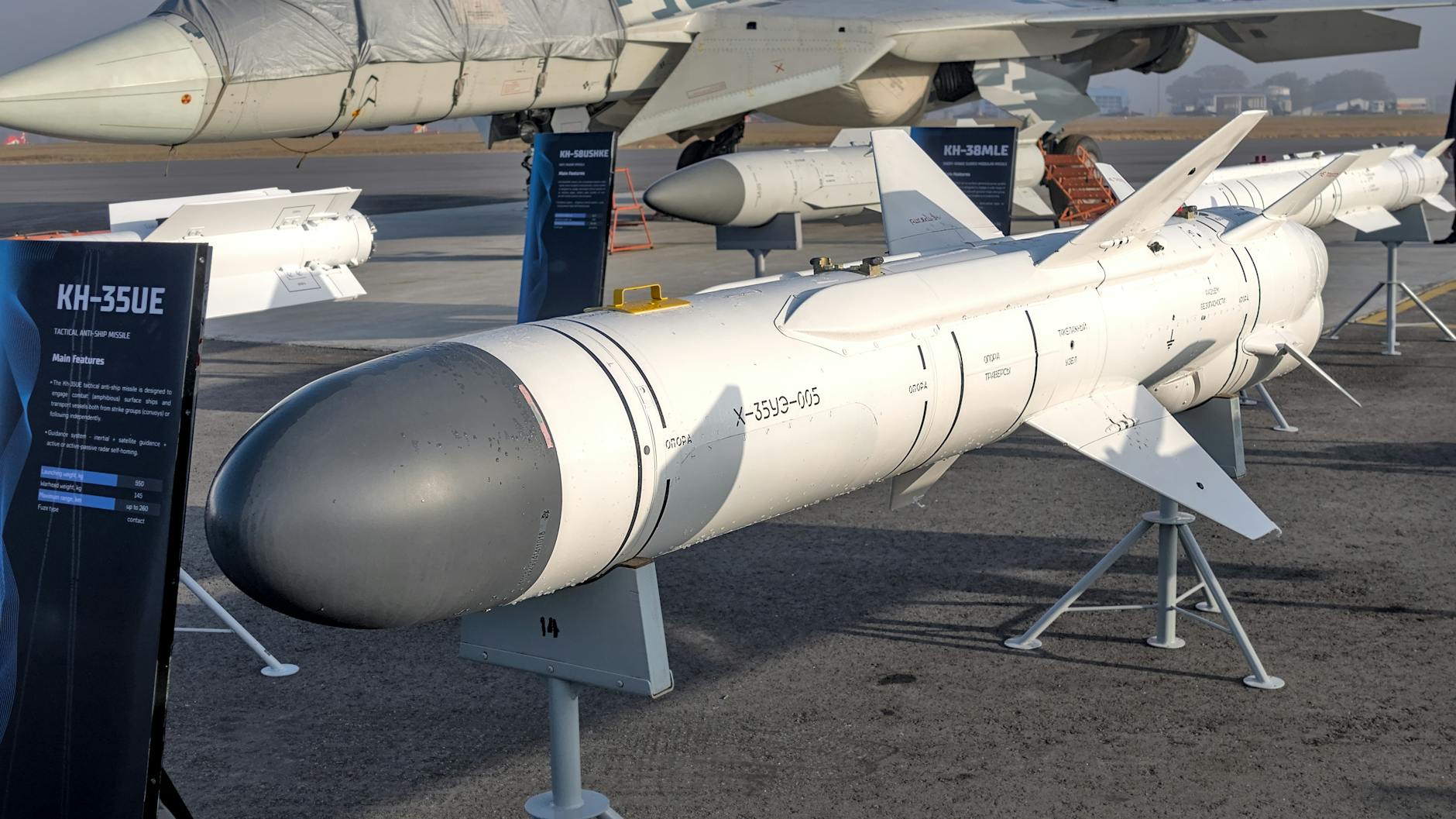
Machine Learning and Hypersonic Missile Trajectory Prediction
Hypersonic weapons represent the most challenging threat for missile defense precisely because their flight paths defy traditional ballistic calculations. Unlike intercontinental ballistic missiles that follow predictable parabolic arcs, hypersonic glide vehicles can maneuver laterally, change altitude, and alter their apparent target throughout flight. machine learning algorithms offer a potential solution by identifying subtle patterns in early flight behavior that correlate with eventual trajectories, essentially learning to predict the unpredictable through analysis of thousands of simulated flight profiles. The technical approach involves training neural networks on physics simulations that model hypersonic vehicle aerodynamics, atmospheric conditions, and maneuvering constraints. While a hypersonic glide vehicle can theoretically travel anywhere within its energy envelope, practical limitations on heat management, structural stress, and fuel consumption create patterns that sophisticated AI might detect.
DARPA’s Glide Breaker program and the Missile Defense Agency’s Hypersonic and Ballistic Tracking Space Sensor initiative both incorporate machine learning components aimed at this prediction challenge. Early results suggest AI can narrow the probable target area significantly within the first minutes of detected flight, though the technology remains developmental. The critical limitation here involves the training data problem. No nation has experienced an actual hypersonic attack, meaning all training data comes from simulations and limited test flights. If adversary systems perform differently than simulations predict, either due to superior engineering or deliberate efforts to confuse defenders, AI prediction models could fail precisely when they are needed most. military planners must account for this uncertainty by maintaining layered defenses that do not depend entirely on early trajectory prediction, treating AI as a decision aid rather than an infallible oracle.
Autonomous Coordination of Multi-Layered Defense Networks
Modern missile defense architectures employ multiple interceptor types positioned at different ranges and altitudes, from ship-based SM-3 missiles capable of exo-atmospheric interception to terminal-phase systems like THAAD and Patriot. Coordinating these layers against a complex attack, deciding which interceptors engage which targets and in what sequence, presents a combinatorial optimization problem that grows exponentially with the number of threats and available weapons. AI systems excel at precisely this type of rapid optimization, potentially managing engagements across dozens of platforms and hundreds of interceptors simultaneously. The Israeli Iron Dome system provides a limited but instructive example of AI-assisted engagement management. The system’s battle management computer classifies incoming rockets, predicts impact points, and automatically determines whether each rocket will strike populated areas or land harmlessly in open terrain.
This selective engagement approach conserves expensive interceptors while protecting civilians, a calculation performed in seconds that would be impossible for human operators to replicate consistently during saturation attacks. Scaling this concept to theater or strategic missile defense would require substantially more sophisticated AI, but the fundamental principle of automated engagement optimization has proven effective. A specific coordination challenge involves deconfliction between national and allied systems. NATO’s integrated air and missile defense must account for interceptors from multiple countries with different rules of engagement, sensor capabilities, and command relationships. AI systems could potentially manage this complexity by maintaining real-time awareness of all available assets and optimizing engagements across the alliance, but this requires unprecedented data sharing and interoperability. Political and security concerns about sharing sensitive tracking data with AI systems that partners control create obstacles that technology alone cannot resolve.

Integrating AI with Legacy Defense Infrastructure
Deploying AI capabilities within existing missile defense networks requires bridging decades-old computer systems with modern machine learning platforms, a technical challenge complicated by the extreme reliability requirements of nuclear-age defense systems. The US military’s strategic systems still rely partly on infrastructure designed in the 1960s and 1970s, including the Cheyenne Mountain complex and communication networks built for survivability rather than computational speed. Simply replacing these systems risks introducing new vulnerabilities while abandoning battle-tested reliability. The integration tradeoff involves choosing between edge computing, where AI processing occurs on individual sensors and platforms, versus centralized architectures that aggregate data for more comprehensive analysis. Edge computing reduces latency and maintains functionality if communications are disrupted, but limits the AI’s ability to correlate information across multiple sources.
Centralized processing enables more sophisticated multi-sensor fusion and coordination but creates potential single points of failure and requires high-bandwidth, low-latency communication links that adversaries might target. Most current approaches pursue hybrid architectures that distribute some AI capabilities to the edge while maintaining centralized oversight and coordination. Testing presents another significant challenge. Missile defense systems undergo rigorous validation, but true AI performance can only be verified against realistic attack scenarios that, by definition, have never occurred. Simulation testing, while valuable, cannot fully replicate the chaos, electronic warfare environment, and unexpected behaviors of actual combat. This creates an inherent uncertainty about whether AI systems will perform as expected when transitioning from testing to genuine crisis, a concern that applies to all military AI but carries particular weight for systems involved in nuclear-related decision making.
Risks of AI Dependency in Strategic Defense Systems
The most serious concern surrounding AI missile defense involves the potential for algorithmic failures during crises to trigger catastrophic escalation. If an AI system misclassifies a civilian aircraft or space launch as an incoming attack, or if it fails to detect an actual threat, the consequences could include inappropriate military responses or successful strikes on defended populations. Unlike commercial AI applications where errors cause inconvenience or financial loss, missile defense AI failures could contribute to nuclear escalation spirals that cost millions of lives. Adversarial AI attacks represent a specific threat that defenders must anticipate. Machine learning systems can be fooled by carefully crafted inputs designed to trigger misclassification, a technique known as adversarial perturbation.
In the missile defense context, this might involve decoys engineered to confuse AI classifiers, electronic warfare signals designed to corrupt sensor data, or cyber attacks that manipulate the training data or model weights that AI systems depend upon. Defending against these attacks requires ongoing security research and the assumption that sophisticated adversaries are actively working to subvert AI defenses. A warning for defense planners: over-reliance on AI creates brittleness. Systems that perform superbly against expected threats may fail catastrophically against novel attacks, and the speed of AI decision-making can transform small errors into major disasters before human oversight can intervene. Maintaining meaningful human control over AI-assisted defense systems, while preserving the speed advantages that make AI valuable, requires careful system design that treats AI recommendations as inputs to human decisions rather than autonomous actions for the most consequential choices.

International Stability and Arms Control Implications
AI-enhanced missile defense could alter strategic stability calculations in ways that increase rather than decrease nuclear risk. The logic of nuclear deterrence depends partly on the assumption that first strikes cannot eliminate an adversary’s retaliatory capability. If one nation develops AI-enabled defenses that appear capable of neutralizing an opponent’s second-strike forces, that opponent faces pressure to launch early in a crisis rather than risk losing their deterrent. Russia and China have explicitly cited US missile defense developments as justification for their own offensive weapon modernization, including hypersonic systems designed to evade defenses.
Arms control frameworks have struggled to address missile defense since the US withdrawal from the Anti-Ballistic Missile Treaty in 2002, and AI integration further complicates potential agreements. Verifying limits on AI capabilities is substantially harder than counting missiles or launchers. The US-Russia Strategic Stability Dialogue has touched on AI and missile defense, but fundamental disagreements about the defensive or offensive character of these systems persist. For example, Russia views US missile defense installations in Europe as threatening despite their stated purpose of countering Iranian missiles, a perception unlikely to change regardless of AI integration.
How to Prepare
- Build foundational knowledge in both missile defense systems and machine learning architectures, as effective contribution requires understanding the intersection rather than either domain in isolation.
- Study historical missile defense programs and their failures, including the Strategic Defense Initiative’s technical obstacles and the limitations revealed in combat by Patriot systems during the Gulf War, to understand recurring challenges that AI must overcome.
- Monitor Defense Department budget requests and contract awards, particularly from the Missile Defense Agency, DARPA, and service-specific programs, as funding patterns reveal actual priorities beyond public statements.
- Engage with the academic and think tank literature on strategic stability, as technical capabilities must be understood within their geopolitical context to assess real-world implications.
- Follow developments in adversary capabilities, particularly Russian and Chinese hypersonic programs and their stated doctrines, since defensive AI requirements depend on the threats it must address.
How to Apply This
- When evaluating AI missile defense claims, demand specificity about training data sources, testing conditions, and performance metrics rather than accepting general assertions about machine learning capabilities.
- Apply adversarial thinking by asking how an intelligent opponent might exploit, deceive, or degrade the AI system being described, rather than assuming AI will function as designed against adaptive threats.
- Consider the full kill chain from detection through interception, identifying where AI provides genuine advantages versus where human judgment remains essential for reliability or legitimacy.
- Assess integration challenges honestly, recognizing that connecting AI capabilities to legacy systems and multinational networks involves bureaucratic and political obstacles alongside technical ones.
Expert Tips
- Focus on the data pipeline as much as the algorithms. AI missile defense is ultimately constrained by sensor capabilities, data quality, and information sharing arrangements rather than theoretical machine learning performance.
- Do not assume AI necessarily favors defenders. The same technologies that enhance missile defense can improve offensive missiles through better targeting, countermeasure optimization, and autonomous maneuvering.
- Track testing programs carefully, as the gap between laboratory demonstrations and operational deployment often spans decades in missile defense due to the extreme reliability requirements.
- Consider second-order effects on adversary behavior, since even imperfect AI defenses may prompt offensive countermeasures that increase overall risk.
- Maintain skepticism about deployment timelines. Defense contractors and program advocates consistently overestimate how quickly AI capabilities will reach operational status, and missile defense history is littered with optimistic projections that failed to materialize.
Conclusion
Artificial intelligence offers genuine potential to improve missile defense through faster threat detection, better trajectory prediction, and optimized coordination of layered defenses. The technical capabilities are real and advancing steadily, driven by broader progress in machine learning and the specific pressures created by hypersonic weapon development. Systems that process sensor data faster than human cognition allows and optimize complex engagement decisions across multiple platforms could meaningfully enhance defensive capabilities against the most challenging modern threats. However, realizing this potential requires navigating significant technical limitations, integration challenges, and strategic risks.
AI systems trained on simulations may fail against novel real-world attacks. Over-reliance on algorithmic decision-making could introduce new failure modes with catastrophic consequences. And improved defenses might destabilize deterrence relationships in ways that increase overall nuclear risk. The path forward demands continued investment in AI research alongside honest assessment of limitations, meaningful human oversight mechanisms, and diplomatic engagement with adversaries whose threat perceptions these systems inevitably affect. The question is not simply whether AI can improve missile defense, but whether it can do so in ways that make the world genuinely safer.
Frequently Asked Questions
How long does it typically take to see results?
Results vary depending on individual circumstances, but most people begin to see meaningful progress within 4-8 weeks of consistent effort. Patience and persistence are key factors in achieving lasting outcomes.
Is this approach suitable for beginners?
Yes, this approach works well for beginners when implemented gradually. Starting with the fundamentals and building up over time leads to better long-term results than trying to do everything at once.
What are the most common mistakes to avoid?
The most common mistakes include rushing the process, skipping foundational steps, and failing to track progress. Taking a methodical approach and learning from both successes and setbacks leads to better outcomes.
How can I measure my progress effectively?
Set specific, measurable goals at the outset and track relevant metrics regularly. Keep a journal or log to document your journey, and periodically review your progress against your initial objectives.
When should I seek professional help?
Consider consulting a professional if you encounter persistent challenges, need specialized expertise, or want to accelerate your progress. Professional guidance can provide valuable insights and help you avoid costly mistakes.
What resources do you recommend for further learning?
Look for reputable sources in the field, including industry publications, expert blogs, and educational courses. Joining communities of practitioners can also provide valuable peer support and knowledge sharing.