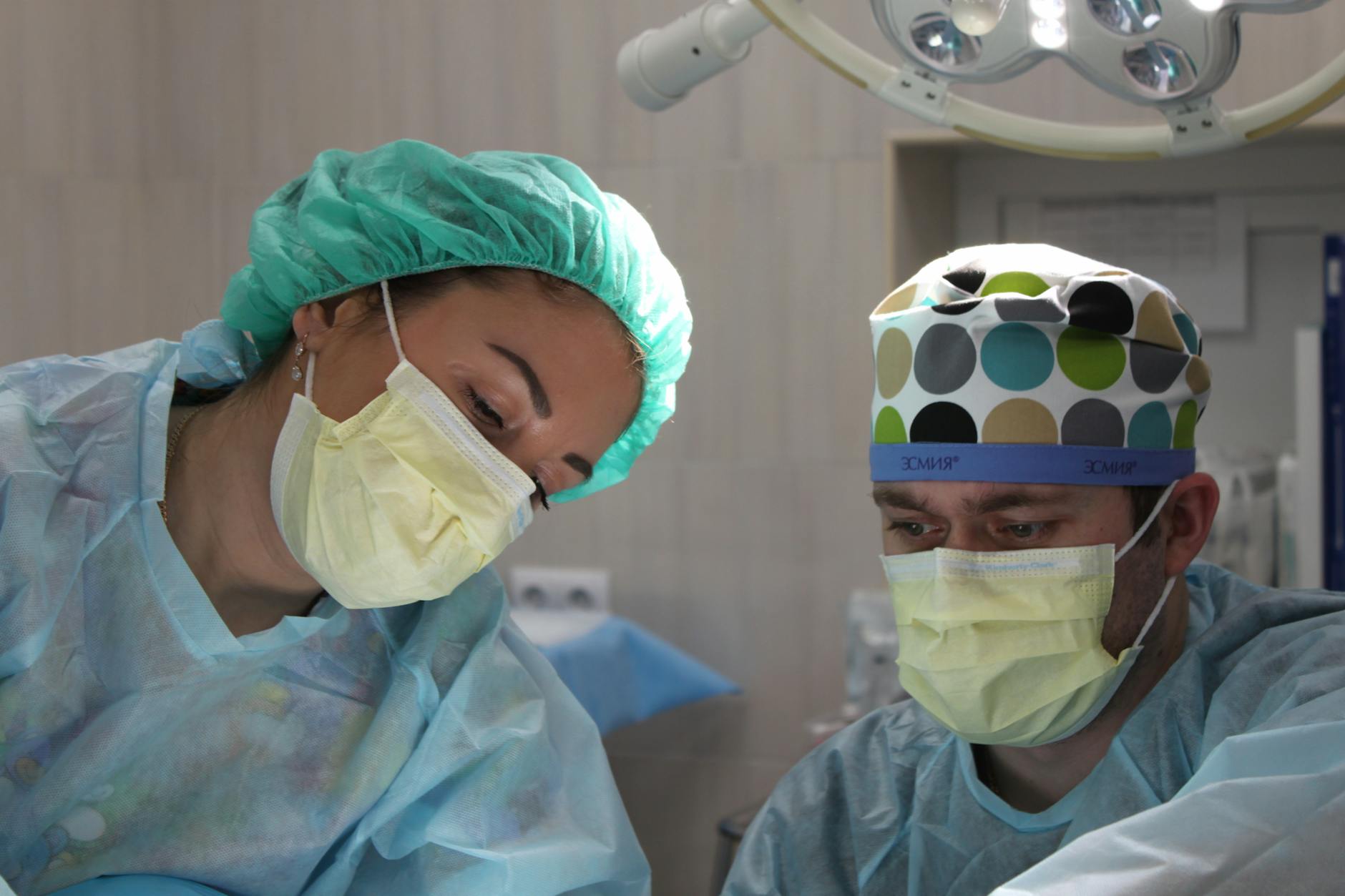

Intuitive Surgical (NASDAQ: ISRG) has earned the comparison to Google not because it operates search engines or data centers, but because it dominates its market with the same overwhelming force that Google commands in search. The company controls approximately 80% of the global surgical robotics market, its da Vinci systems sit in over 9,000 hospitals worldwide, and it has built an ecosystem so entrenched that competitors struggle to gain meaningful traction even after decades of trying. When surgeons train on robotic systems during their residencies, they train on da Vinci. When hospitals evaluate surgical robots, da Vinci becomes the benchmark against which everything else is measured. This creates a self-reinforcing cycle of dominance that mirrors how Google became synonymous with internet search itself.
The comparison extends beyond market share to business model. Like Google, Intuitive Surgical generates substantial recurring revenue from its installed base. Every da Vinci procedure requires proprietary instruments that must be replaced after a set number of uses, generating roughly $2 billion annually in instrument and accessory revenue alone. Hospitals that invest millions in da Vinci systems become locked into this consumables ecosystem, much as businesses that build their operations around Google’s cloud services find switching costs prohibitively high. A cardiac surgery center in Cleveland that spent $2.5 million on a da Vinci Xi system and trained its entire surgical staff on the platform faces years of transition costs and productivity losses if it considers alternatives. This article examines why Intuitive Surgical achieved this dominant position, how its competitive moat functions, where vulnerabilities exist, and what the future holds as new entrants like Medtronic and Johnson & Johnson attempt to carve out their own territories in the surgical robotics space.
Table of Contents
- Why Has ISRG Dominated the Surgical Robotics Market for Over Two Decades?
- The da Vinci Ecosystem: How Recurring Revenue Creates an Unassailable Moat
- Competitors at the Gate: Can Medtronic, J&J, or Others Break ISRG’s Monopoly?
- The Surgeon’s Perspective: Why Doctors Choose da Vinci Over Alternatives
- Financial Performance: Understanding ISRG’s Premium Valuation
- International Expansion: Where ISRG Sees Its Next Phase of Growth
- The Future of Surgical Robotics: AI, Autonomy, and ISRG’s Next Chapter
- Conclusion
Why Has ISRG Dominated the Surgical Robotics Market for Over Two Decades?
Intuitive Surgical’s dominance traces back to timing, regulatory strategy, and aggressive intellectual property accumulation. The company received FDA clearance for its original da Vinci system in 2000, years before competitors could bring viable alternatives to market. This head start allowed Intuitive to file thousands of patents covering everything from instrument articulation mechanisms to software interfaces, creating a thicket of intellectual property that competitors must navigate carefully or license expensively. By some estimates, Intuitive holds over 4,000 patents globally, many of which cover fundamental aspects of robotic-assisted surgery that any competitor would need to replicate. The training infrastructure compounds this advantage in ways that are difficult to quantify but impossible to ignore. medical schools, teaching hospitals, and residency programs have built their robotic surgery curricula around da Vinci systems. A surgeon completing a urology residency at Johns Hopkins or a gynecological oncology fellowship at MD Anderson learns robotic techniques on da Vinci consoles.
When that surgeon joins a practice and requests robotic capabilities, they request what they know. This creates generational entrenchment that competitors cannot easily overcome regardless of how superior their technology might be on paper. Hospital administrators face a different but equally powerful lock-in mechanism. A major academic medical center might operate fifteen da Vinci systems across multiple specialties, representing tens of millions in capital investment. The institution has developed workflows, training programs, credentialing processes, and marketing campaigns around da Vinci capabilities. Switching to a competitor means not just purchasing new hardware but rebuilding institutional infrastructure that took years to develop. This explains why even hospitals dissatisfied with Intuitive’s pricing or service rarely defect entirely to competing platforms.

The da Vinci Ecosystem: How Recurring Revenue Creates an Unassailable Moat
Intuitive surgical‘s financial model deserves particular attention because it reveals how the company maintains pricing power that would be impossible in a more competitive market. The company segments revenue into three categories: systems (the robots themselves), instruments and accessories (the consumables), and services (maintenance contracts and training). In 2023, instruments and accessories generated approximately $4.3 billion, representing about 58% of total revenue. This recurring revenue stream grows automatically as the installed base expands and procedure volumes increase, without requiring Intuitive to sell additional systems. The instruments themselves incorporate usage limits enforced through electronic tracking. A da Vinci EndoWrist instrument, for example, might be designed to function for only ten procedures before the system refuses to operate it. Hospitals cannot simply sterilize and reuse instruments indefinitely.
This design decision, which Intuitive justifies on patient safety grounds, ensures a predictable and growing consumables business. A busy surgical center performing 1,500 robotic procedures annually might spend $1 million or more on instruments alone, in addition to system purchase costs and service contracts. However, this model creates tension with healthcare systems under pressure to reduce costs. Some hospital administrators have begun questioning whether the clinical outcomes from robotic surgery justify the substantial premium over traditional laparoscopic approaches. Studies comparing robotic and laparoscopic prostatectomy, for instance, have shown similar oncological outcomes, though robotic approaches may offer advantages in blood loss and hospital stay duration. If payers begin demanding evidence of cost-effectiveness rather than accepting robotic surgery as the default premium option, Intuitive’s pricing power could face pressure. The company has responded by expanding into procedures where robotic assistance provides more clear-cut advantages, such as complex thoracic and head-and-neck surgeries.
Competitors at the Gate: Can Medtronic, J&J, or Others Break ISRG’s Monopoly?
The surgical robotics competitive landscape has grown more crowded in recent years, though no competitor has yet achieved the scale necessary to seriously threaten Intuitive’s dominance. Medtronic’s Hugo RAS system received FDA clearance in 2021 and CE marking in Europe, offering a modular design that allows hospitals to purchase individual robotic arms rather than committing to a full system. Johnson & Johnson’s Ottava platform, developed through its Auris Health subsidiary, has targeted general surgery with a system designed for greater flexibility and lower acquisition costs. Chinese company CMR Surgical has placed its Versius system in hospitals across Europe and Asia, emphasizing portability and ease of use. Each competitor brings a differentiated approach to market. Medtronic leverages its existing relationships with hospital purchasing departments and can bundle robotic systems with other surgical products. Johnson & Johnson brings deep expertise in surgical instruments and the financial resources to sustain losses during market development.
CMR Surgical offers a system that can be moved between operating rooms more easily than the larger da Vinci installations. Yet none has achieved procedure volumes or installed base numbers that would suggest imminent disruption of Intuitive’s position. The challenge for competitors extends beyond technology to economics. Intuitive’s scale allows it to spread research and development costs across millions of procedures, while competitors must make substantial investments before achieving meaningful revenue. A new entrant might need to sell systems at a loss for years while building the installed base necessary for profitable consumables revenue. Intuitive can respond to competitive pressure with selective price reductions or enhanced service offerings, knowing that its established position allows it to sustain temporary margin compression that might be fatal to smaller competitors. This dynamic explains why many industry analysts expect a future with two or three major players rather than the highly fragmented market that characterizes most medical device categories.
The Surgeon’s Perspective: Why Doctors Choose da Vinci Over Alternatives
Surgeons who have operated both da Vinci and competing systems often cite the maturity of Intuitive’s platform as a decisive factor. The wristed instruments that give da Vinci its trademark dexterity have been refined through multiple generations over two decades. The 3D visualization system, while technologically similar to competitors’ offerings, benefits from years of ergonomic optimization. Perhaps most importantly, the software that translates surgeon hand movements into instrument motion has been tuned through millions of procedures, eliminating subtle lag and tremor issues that can affect newer systems. Training availability creates another practical advantage. A surgeon considering adding robotic techniques to their practice can access Intuitive’s training centers on multiple continents, with standardized curricula and proctoring programs. The company offers simulation-based training that allows surgeons to develop skills before operating on patients.
Competing systems may offer theoretically equivalent training, but the logistics of accessing that training and finding experienced proctors prove more challenging. A gynecologic surgeon in Phoenix who wants to learn robotic myomectomy can easily find da Vinci training and local colleagues who can mentor them through initial cases. Finding equivalent support for a competitor’s system might require significant travel and schedule coordination. The limitations of this surgeon-centric view deserve acknowledgment. Surgeons may prefer da Vinci partly because it is what they know, not because it is objectively superior for all procedures. Hospital administrators must balance surgeon preferences against institutional economics, and some have begun pushing back on surgeon requests for robotic capabilities that cannot be justified by patient outcomes data. The tension between surgeon preference and system-level cost optimization will likely intensify as healthcare payment models continue shifting toward value-based arrangements that reward efficiency.
Financial Performance: Understanding ISRG’s Premium Valuation
Intuitive Surgical trades at valuations that would seem extreme for a medical device company but make more sense when viewed through a technology lens. The company’s price-to-earnings ratio typically exceeds 50, compared to 15-25 for most large-cap medical device firms. This premium reflects both the company’s growth trajectory and its perceived competitive moat. Revenue has grown from approximately $2.7 billion in 2015 to over $7.1 billion in 2023, representing compound annual growth exceeding 12% over a period when many medical device companies struggled to achieve mid-single-digit expansion. The company’s profitability metrics reinforce the Google comparison. Gross margins consistently exceed 65%, driven by the high-margin instruments and accessories business.
Operating margins hover around 25%, leaving substantial resources for research and development investment that totaled over $900 million in 2023. This level of R&D spending exceeds the total revenue of most surgical robotics competitors, illustrating the scale advantage that Intuitive brings to technology development. The company can pursue multiple development programs simultaneously while competitors must make difficult prioritization choices. Investors should recognize that this premium valuation depends on continued dominance. If competitors successfully capture meaningful market share, particularly in high-growth international markets, the narrative supporting Intuitive’s valuation multiple would require revision. The company’s stock has historically shown volatility around competitive announcements and regulatory decisions affecting new entrants. A material erosion of market share, even from 80% to 60%, could trigger significant multiple compression given current expectations for continued dominance.

International Expansion: Where ISRG Sees Its Next Phase of Growth
The United States accounts for approximately 70% of Intuitive’s installed base, reflecting both the country’s healthcare spending levels and the company’s American origins. This concentration represents both a current strength and a future opportunity. International markets, particularly China and other Asian countries experiencing healthcare infrastructure investment, offer growth potential that could extend Intuitive’s expansion trajectory for another decade or more. China presents the largest opportunity and the most significant challenges. The country’s healthcare authorities have generally supported surgical robotics adoption, and hospitals in major cities have acquired da Vinci systems in growing numbers. However, Chinese regulators have also encouraged domestic surgical robotics development, and several Chinese companies have introduced competing systems that benefit from government procurement preferences and substantially lower pricing.
Intuitive must navigate a market where policy could shift against foreign medical device suppliers at any time. The company has established manufacturing presence in China and pursued partnerships with local institutions, but regulatory and competitive risks remain elevated compared to developed markets. European expansion has proceeded more steadily, though with regional variation. Germany’s hospital system has embraced surgical robotics broadly, while the United Kingdom’s National Health Service has been more cautious about the cost-effectiveness of robotic approaches. Intuitive’s international strategy requires adapting to healthcare systems with different reimbursement models, purchasing processes, and clinical practice patterns. A sales approach that succeeds in American hospitals where surgeons have substantial influence over capital equipment decisions may require modification in systems where centralized purchasing authorities make technology adoption choices.
The Future of Surgical Robotics: AI, Autonomy, and ISRG’s Next Chapter
Intuitive Surgical’s roadmap points toward increasing intelligence in surgical systems, though the company has carefully avoided promising autonomous surgery that would raise regulatory and liability concerns. Current da Vinci systems remain firmly surgeon-controlled, but incorporate growing amounts of computer vision, machine learning, and data analytics. The company’s Ion system, designed for lung biopsy navigation, demonstrates how AI can guide instruments through complex anatomy to reach targets that would be difficult to access with conventional techniques. The most significant near-term opportunity may lie in surgical data rather than hardware. Intuitive’s installed base generates enormous quantities of surgical video, instrument telemetry, and outcome data.
This dataset could enable training of algorithms that provide real-time guidance to surgeons, identify anatomical structures, or predict postoperative complications. The company that successfully develops AI-assisted surgery capabilities could establish an entirely new competitive dimension, where the value lies in software rather than electromechanical systems. However, the transition to AI-enabled surgery introduces risks that Intuitive has carefully managed in its traditional business. Liability for algorithm recommendations, regulatory pathways for adaptive surgical AI, and surgeon acceptance of computer guidance all present challenges that have not been fully resolved. Intuitive’s conservative approach to autonomy claims reflects both genuine technical limitations and strategic risk management. The company appears content to maintain its dominant position in surgeon-controlled robotic surgery while investing in AI capabilities that can be introduced incrementally as regulatory and clinical acceptance develops.
Conclusion
Intuitive Surgical has earned its comparison to Google through market dominance that stems from first-mover advantage, intellectual property accumulation, training infrastructure capture, and a business model that generates powerful recurring revenue from an entrenched installed base. The company’s position appears defensible over the medium term, as competitors face the daunting challenge of overcoming switching costs while matching Intuitive’s scale and surgeon familiarity advantages. The longer-term outlook introduces more uncertainty. Healthcare systems under cost pressure may demand stronger evidence that robotic surgery justifies its premium.
Competitors backed by major medical device companies have resources to sustain extended market development efforts. International markets present both growth opportunities and regulatory risks. And the emergence of AI-enabled surgical guidance could eventually shift competitive dynamics toward software capabilities where Intuitive’s hardware advantages matter less. Investors and industry observers should monitor procedure growth rates, competitive market share data, and international expansion progress as leading indicators of whether Intuitive Surgical will maintain its Google-like dominance or eventually face meaningful disruption.