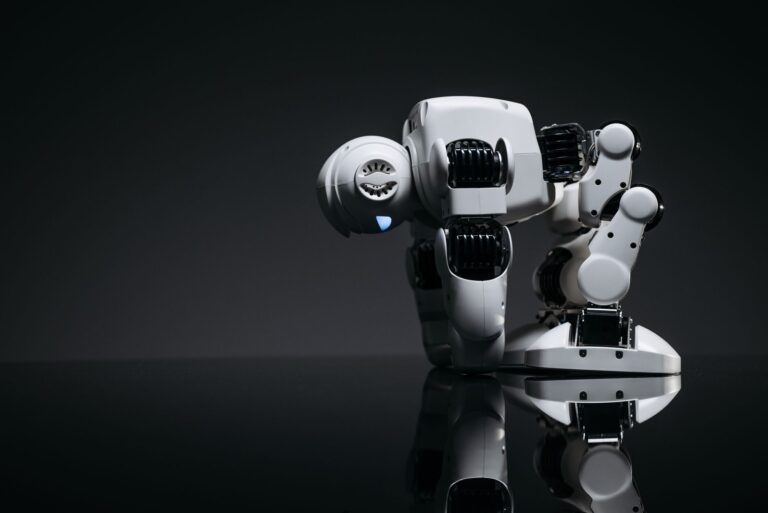

LAES represents a picks-and-shovels play in the cyber robotics space—a company that supplies the foundational components and systems that enable other companies to build and operate advanced robotic and automation solutions. Rather than competing directly in the end-market robotics products, LAES provides the critical infrastructure, controls, and integration technology that manufacturers and enterprises rely on to deploy cyber-physical systems at scale. This positioning mirrors the classic investment principle of selling tools to prospectors during a gold rush: while everyone focuses on the robots themselves, LAES profits from the essential equipment that makes those robots functional.
The cyber robotics market is experiencing substantial growth as industries from manufacturing to logistics to energy infrastructure increasingly deploy autonomous and semi-autonomous systems. LAES has positioned itself as a critical enabler in this ecosystem, providing the sensors, control systems, software platforms, and integration services that translate robot hardware into practical industrial solutions. For investors and industry observers, understanding LAES as a picks-and-shovels opportunity means recognizing that the company’s growth is directly tied to the expansion of the broader cyber robotics market—even if LAES itself remains relatively invisible to end consumers.
Table of Contents
- How Does LAES Function as a Picks-and-Shovels Cyber Robotics Provider?
- The Technology Stack That Powers LAES’s Position
- Where Cyber Robotics Are Being Deployed Today
- Evaluating LAES as an Investment Thesis
- Key Risks and Technological Obsolescence
- Real-World Integration Examples and Use Cases
- Future Outlook for LAES and the Cyber Robotics Ecosystem
- Conclusion
How Does LAES Function as a Picks-and-Shovels Cyber Robotics Provider?
In the robotics and automation industry, the picks-and-shovels archetype refers to companies that don’t build the final product but instead supply the critical enabling technologies. laes fits this model by providing control systems, sensors, software middleware, and integration platforms that robotics companies depend on to function. A manufacturer building an autonomous warehouse system, for example, might license LAES technology to coordinate fleet movements, or a drone manufacturer might integrate LAES sensor fusion algorithms. The end customer sees the robot, but LAES’s technology is embedded in its operation.
This business model has several advantages over direct product competition. First, LAES can serve multiple competing robotics manufacturers without needing to choose sides in the market. Second, their revenues scale across an entire ecosystem rather than depending on a single product line’s success. Third, switching costs create stickiness—once a robotics company integrates LAES systems into its platform, replacing that integration becomes expensive and risky. However, this also means LAES’s success depends on broad adoption across the cyber robotics sector, not on any single robot achieving market dominance.

The Technology Stack That Powers LAES’s Position
LAES’s core offerings typically include real-time operating systems and firmware, sensor fusion and perception algorithms, edge computing platforms, and cloud connectivity layers. These technologies sit between raw hardware (motors, sensors, actuators) and high-level applications (fleet management, task scheduling, user interfaces). For a collaborative robot manufacturer, LAES might provide the safety-critical control layer that enables human-robot interaction. For an autonomous vehicle platform, LAES might supply the sensor integration and localization engines.
A significant limitation of the picks-and-shovels model is dependency on market adoption. If the cyber robotics market experiences a slowdown, LAES’s revenue declines even if the company executes perfectly. Additionally, LAES faces intense competition from larger technology firms that can bundle similar capabilities into their own products. Microsoft, NVIDIA, and other major tech companies are developing robotics software stacks and ecosystem plays that could disintermediate companies like LAES. Another consideration is the rapid pace of technological change—advances in AI, machine learning, and edge computing could render certain LAES offerings obsolete if the company fails to innovate quickly enough.
Where Cyber Robotics Are Being Deployed Today
The cyber robotics market is already generating real-world deployments across several sectors. In manufacturing, collaborative robots and autonomous material handling systems are reducing labor costs and improving throughput. Amazon’s acquisition and deployment of robotic warehouse systems, while not exclusively LAES-dependent, represents the scale at which these technologies operate. In logistics, autonomous forklifts and delivery vehicles are moving through warehouses and increasingly outdoor environments.
In energy and utilities, remotely operated and semi-autonomous robots perform inspections and maintenance on power lines and infrastructure that would otherwise require expensive human deployment. Healthcare represents another emerging application area where cyber robotics are being integrated into surgical systems, patient lifting devices, and laboratory automation. A hospital implementing LAES-powered robotic systems might improve consistency and reduce contamination in a surgical suite. These applications demonstrate that the market LAES serves is not hypothetical—it is actively growing and generating billions in capital investment.

Evaluating LAES as an Investment Thesis
From an investment standpoint, the picks-and-shovels thesis around LAES offers both appeal and tradeoffs. The appeal is clear: if the cyber robotics market reaches the scale that analysts project, LAES’s technology could be embedded in millions of robot systems, generating recurring revenue from licensing, support, and integration services. The company avoids the capital-intensive manufacturing and customer support burden that end-market robotics companies face. Growth in this model can be quite attractive because the marginal cost of serving additional robotics customers is low relative to the revenue generated. The tradeoff is predictability and control.
LAES depends on the success of its partners in the robotics ecosystem. If robot adoption stalls or consolidates around a competitor’s preferred technology, LAES could face margin pressure or revenue headwinds despite executing well. Additionally, the valuation of picks-and-shovels companies often assumes continued market growth. A slowdown in robotics deployment—due to economic conditions, regulatory challenges, or supply chain disruptions—would immediately impact LAES’s stock price. Finally, LAES’s business model assumes that its technology remains sufficiently differentiated to justify integration costs; commoditization of certain components could compress margins over time.
Key Risks and Technological Obsolescence
One major risk facing LAES is the rate of consolidation in the robotics industry. As robotics companies mature and grow larger, they tend to internalize capabilities that were previously outsourced to technology providers. Google acquired robotics companies to build in-house expertise. Tesla has built its own manufacturing control systems. If LAES’s primary customers begin to develop equivalent technology internally, demand for LAES’s products could decline sharply.
This is a particular concern in competitive markets where differentiation is the only path to premium pricing. Another limitation is the complexity and diversity of the cyber robotics ecosystem. Unlike smartphones or automobiles, there is no single dominant robotics platform architecture. Different applications—warehouse robots, surgical robots, autonomous vehicles, industrial arms—have fundamentally different requirements. LAES must continuously develop new offerings and integrate with new hardware platforms, which increases R&D costs and creates opportunities for specialized competitors to outflank them in specific niches. Additionally, open-source alternatives in some areas (ROS, or Robot Operating System) provide free software stacks that can reduce demand for commercial offerings.

Real-World Integration Examples and Use Cases
Consider a practical example: a third-party logistics (3PL) company implementing an autonomous warehouse. They might select a robot hardware provider—say, a company building autonomous mobile robots (AMRs). But those AMRs need to integrate with the warehouse management system, coordinate with human workers, and avoid collisions in a dynamic environment. LAES could provide the perception, localization, and fleet coordination software that makes this integration possible.
The 3PL company benefits from a faster time-to-deployment and more reliable operation. LAES benefits from a recurring licensing fee and support contract that spans years. In the manufacturing context, a tier-one automotive supplier implementing collaborative robots on an assembly line would similarly benefit from LAES’s safety-certified control systems and integration middleware. These aren’t flashy applications, but they represent the bread-and-butter demand that sustains picks-and-shovels companies.
Future Outlook for LAES and the Cyber Robotics Ecosystem
Looking forward, the cyber robotics market is likely to grow substantially over the next decade as labor shortages, rising wages, and automation costs decline. LAES’s positioning as a critical enabler suggests that the company could participate in this growth regardless of which specific robotics companies or applications ultimately dominate. However, this optimistic scenario assumes that LAES successfully maintains technological relevance and fends off competition from larger technology firms and open-source alternatives.
The wild card is artificial intelligence and machine learning. If advances in AI enable robots to become dramatically more capable and autonomous, this could accelerate adoption and increase the value of middleware and control systems. Conversely, if certain AI capabilities become commoditized and embedded in generic cloud platforms, this could reduce the uniqueness of LAES’s offerings. LAES’s ability to integrate cutting-edge AI into its platform stack may ultimately determine whether it remains a critical pick-and-shovel or becomes a legacy supplier in the robotics ecosystem.
Conclusion
LAES embodies the picks-and-shovels investment thesis applied to cyber robotics: a company that profits from the infrastructure and enabling technologies that support the broader robotics industry rather than competing directly in end products. The opportunity is real, grounded in genuine market growth in automation and robotics deployment across manufacturing, logistics, healthcare, and infrastructure sectors. For investors or businesses evaluating LAES, the key insight is that growth depends directly on the health of the broader cyber robotics ecosystem. However, this dependency also represents the primary risk.
LAES faces technological disruption, competitive consolidation, and the possibility that major customers will internalize the capabilities LAES provides. Success for LAES requires continuous innovation, successful adaptation to diverse robotics applications, and the ability to maintain technological differentiation. Understanding LAES means understanding that its fortunes are tied not to its own quarterly performance alone, but to the trajectory of the entire cyber robotics market. For those betting on robotics and automation as multi-decade growth trends, LAES merits careful evaluation as a leveraged play on that thesis.