
LAES is the security ticker symbol for SEALSQ Corp, a semiconductor and cybersecurity company that provides embedded post-quantum cryptography and hardware-based security solutions for autonomous devices. The company addresses a critical gap in autonomous systems: these devices must operate independently, make critical decisions, and communicate without human oversight, yet they remain vulnerable to both current and future quantum computing threats. SEALSQ’s approach embeds quantum-resistant cryptography directly into silicon hardware, creating an immutable root of trust that cannot be altered, bypassed, or extracted—even by advanced AI-driven attacks.
The threat landscape for autonomous systems has evolved rapidly. Robotics, autonomous vehicles, drones, and industrial automation systems all rely on cryptographic protocols to authenticate commands and protect sensitive data. A single compromised autonomous vehicle or factory robot could cascade into safety failures and operational collapse. SEALSQ’s security layer addresses this by integrating post-quantum algorithms, hardware security roots of trust, and secure key storage into the silicon itself—not as an afterthought, but as a foundational pillar of the device’s operation.
Table of Contents
- Why Post-Quantum Cryptography Matters for Autonomous Systems
- The Hardware Root of Trust in Silicon
- Post-Quantum Cryptography as a Foundational Pillar of Physical AI
- Building Quantum-Resistant Autonomous Vehicle Infrastructure
- The AI Threat Timeline and Cryptographic Agility
- Quantum Computing’s Role in the Security Vertical Stack
- The Future of Autonomous System Security
- Conclusion
Why Post-Quantum Cryptography Matters for Autonomous Systems
Current encryption standards, widely deployed across autonomous devices today, depend on the mathematical difficulty of breaking specific cryptographic problems. A sufficiently powerful quantum computer could theoretically crack these protections in hours, rendering years of deployed security infrastructure obsolete overnight. This isn’t speculation—it’s why government agencies and standards organizations worldwide have already begun certifying post-quantum cryptography alternatives. Autonomous devices present a unique cryptographic challenge: they often operate in remote or hostile environments where physical security cannot be guaranteed, yet they must authenticate commands, transmit sensor data, and coordinate with other systems.
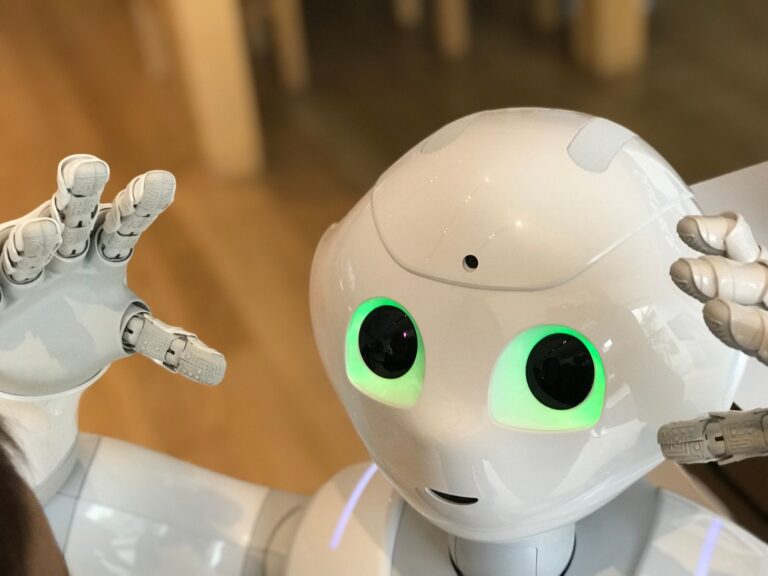
A factory robot that accepts tampered commands could damage expensive equipment or injure workers. An autonomous vehicle accepting compromised GPS coordinates could veer into traffic. SEALSQ’s approach embeds quantum-resistant algorithms directly into the hardware during manufacturing, ensuring that the security layer cannot be removed or downgraded by software patches or remote attacks. In January 2026, SEALSQ demonstrated this capability at the Physical AI Roundtable in Davos using WISeRobot, integrating quantum-resistant algorithms, hardware roots of trust, and secure key storage into a robotic system.

The Hardware Root of Trust in Silicon
SEALSQ builds security at the silicon level, manufacturing cryptographic roots of trust directly into semiconductor devices. This approach differs fundamentally from software-based security, which can be circumvented through privilege escalation, memory exploitation, or code injection. Once silicon is manufactured with a hardware root of trust, that trust cannot be altered or extracted without physically destroying the device. The company leverages 1.75 billion deployed secure semiconductor devices globally as the foundation for its quantum-resilient infrastructure.
These devices serve as anchors for a broader security architecture spanning autonomous systems, industrial equipment, and connected infrastructure. However, hardware-based security has limitations: it increases manufacturing costs, requires careful supply chain validation, and cannot be updated once deployed. If a vulnerability is discovered in a quantum-resistant algorithm years after deployment, devices in the field remain locked to that algorithm. This makes the algorithm selection process critically important and explains why SEALSQ has invested heavily in validating post-quantum standards through organizations like NIST.
Post-Quantum Cryptography as a Foundational Pillar of Physical AI
In February 2026, SEALSQ unveiled its strategic vision, positioning embedded security and post-quantum cryptography as foundational pillars of Physical AI—systems that perceive and interact with the physical world. This positioning reflects a fundamental shift in how the industry thinks about autonomous systems security. Rather than treating cryptography as a utility to be bolted on after design, SEALSQ argues it should be architected into the silicon from the beginning. Physical AI systems like autonomous vehicles, industrial robots, and autonomous drones make real-time decisions that affect the physical world.
A compromised autonomous vehicle might refuse valid commands or execute malicious ones. A factory robot might operate outside its safe parameters. These are not merely data breaches—they are safety failures with physical consequences. SEALSQ’s approach recognizes that security and safety are intertwined in autonomous systems. In October 2025, SEALSQ and IC’Alps announced a unified partnership to deliver integrated post-quantum cybersecurity and functional safety for autonomous vehicles, treating cryptographic security not as separate from safety systems but as integral to them.
Building Quantum-Resistant Autonomous Vehicle Infrastructure
Autonomous vehicles represent one of the most security-critical applications of autonomous technology. These systems must authenticate commands from cloud services, validate sensor data integrity, and ensure that firmware updates are legitimate. A quantum-capable adversary with access to recorded encrypted communications could potentially decrypt historical traffic, then use that knowledge to forge future commands or updates.
SEALSQ’s partnership with IC’Alps demonstrates a practical approach to this problem: integrating post-quantum cryptography directly into the vehicle’s hardware security module, then combining this with functional safety systems that can detect and reject anomalous commands. The tradeoff, however, is complexity. Adding post-quantum algorithms to an already-dense automotive embedded system increases computational requirements, power consumption, and development time. OEMs must weigh the security benefits against these operational costs, particularly for vehicle platforms with tight power budgets.
The AI Threat Timeline and Cryptographic Agility
The threat timeline for quantum computing remains uncertain. Optimistic estimates suggest practical quantum computers may emerge within 10-15 years; more conservative estimates extend this to 20-30 years. This uncertainty creates a strategic challenge: organizations must prepare defenses now for threats that may not materialize for a decade, while also managing the costs of upgrading infrastructure. In April 2026, following Anthropic’s Mythos breakthrough in AI capabilities, SEALSQ emphasized the advancing threat of AI-driven cryptanalytic attacks, releasing a statement highlighting the need to advance post-quantum cryptography in silicon to counter these emerging threats.
One limitation of hardware-based security is the difficulty of cryptographic agility—the ability to swap out algorithms if a vulnerability is discovered or a better alternative emerges. Software systems can be patched; silicon devices cannot. SEALSQ addresses this by designing hardware architectures that support multiple quantum-resistant algorithms simultaneously, allowing some flexibility without requiring hardware replacement. However, this approach increases silicon complexity and cost, representing a real tradeoff between future-proofing and immediate affordability.

Quantum Computing’s Role in the Security Vertical Stack
SEALSQ’s vision extends beyond defending against quantum threats—the company is building quantum computing infrastructure itself. In April 2026, SEALSQ announced it would launch a comprehensive quantum vertical stack spanning from silicon root of trust to distributed quantum computing and orbital cloud infrastructure, scheduled for Q3 2026.
This stack represents an unusual vertical integration: the same company defending against quantum threats is building quantum hardware and infrastructure. The reasoning reflects a deeper strategic insight: organizations that control both quantum-resistant cryptography and quantum computing infrastructure will have unique visibility into threat vectors and can build defenses proactively. SEALSQ’s portfolio company EeroQ demonstrated this capability in April 2026 by connecting EeroQ’s electron-on-helium quantum hardware with Conductor Quantum’s orchestration software and NVIDIA’s Ising AI models, showing an early glimpse of what a vertically integrated quantum infrastructure might achieve.
The Future of Autonomous System Security
The security requirements for autonomous systems are outpacing the capabilities of traditional cybersecurity approaches. As these systems become more distributed, more intelligent, and more consequential, the attack surface expands. A single compromised device could become a foothold for attacking entire fleets or industrial networks.
The cryptographic layer must be resilient enough to survive decades of technological change, including the emergence of quantum computing. SEALSQ’s positioning reflects this reality: rather than viewing quantum cryptography as a future problem, the company is treating it as a present necessity for systems designed today that will operate for decades. The convergence of embedded security in silicon, post-quantum cryptography, and integrated quantum infrastructure suggests that future autonomous systems will be built on fundamentally different security assumptions than today’s devices. Organizations deploying or designing autonomous systems now should begin evaluating post-quantum cryptography requirements, not as optional upgrades but as essential components of their security architecture.
Conclusion
LAES—SEALSQ Corp’s security solution for autonomous devices—addresses a fundamental vulnerability in systems designed to operate autonomously and independently. By embedding post-quantum cryptography directly into silicon hardware, the company creates an immutable root of trust that protects against both current and future quantum threats. This approach shifts security from being a software afterthought to a foundational architectural principle.
For organizations deploying autonomous systems—whether autonomous vehicles, industrial robots, or distributed sensors—the implications are clear: security resilience now depends on hardware-level protections designed for threats that may not materialize for years. SEALSQ’s comprehensive quantum vertical stack, announced for Q3 2026, signals a maturation of post-quantum cryptography from research topic to deployed infrastructure. The era of quantum-resistant autonomous systems has begun.