
MDA Ltd., the Canadian aerospace company headquartered in Brampton, Ontario, has earned the unofficial title of “the Google of space robotics” through its near-monopoly on critical orbital manipulation technology. Just as Google dominates internet search with infrastructure that billions depend on daily, MDA’s robotic systems have become the indispensable backbone of human activity in space””most notably through Canadarm and Canadarm2, which have supported every Space Shuttle mission requiring robotic operations and continue to maintain the International Space Station today. The comparison to Google runs deeper than market dominance. MDA has built an ecosystem where its technology becomes the default choice not through aggressive marketing but through proven reliability and integration depth.
When NASA needed a robotic arm for the Space Shuttle program in 1981, MDA (then Spar Aerospace) delivered. When the ISS required a more sophisticated system, MDA built Canadarm2. When satellite servicing emerged as a commercial frontier, MDA developed the technology. This pattern of being first, being reliable, and being deeply embedded in critical infrastructure mirrors Google’s trajectory in web services. This article examines how MDA achieved this position, the technology that sustains it, the competitive threats emerging from companies like Maxar and Northrop Grumman, and what the future holds as space robotics becomes essential to lunar exploration and orbital manufacturing.
Table of Contents
- Why Is MDA Considered the Dominant Force in Space Robotics?
- What Technology Powers MDA’s Space Robotic Systems?
- How Does MDA’s Satellite Servicing Technology Extend Its Market Position?
- What Role Will MDA Play in Lunar and Deep Space Exploration?
- What Are the Limitations and Competitive Threats to MDA’s Position?
- How Does MDA’s Business Model Support Continued Innovation?
- What Does the Future Hold for Space Robotics and MDA’s Position?
- Conclusion
Why Is MDA Considered the Dominant Force in Space Robotics?
MDA’s dominance stems from an unbroken track record spanning over four decades. The original Canadarm performed flawlessly across 90 Space Shuttle missions from 1981 to 2011, deploying satellites, capturing spacecraft, and supporting spacewalks without a single mission-critical failure. This operational history created institutional trust that competitors simply cannot replicate””when a single robotic malfunction could doom a billion-dollar mission or endanger human lives, space agencies default to proven technology. The company’s position strengthened considerably with Canadarm2 on the International Space Station.
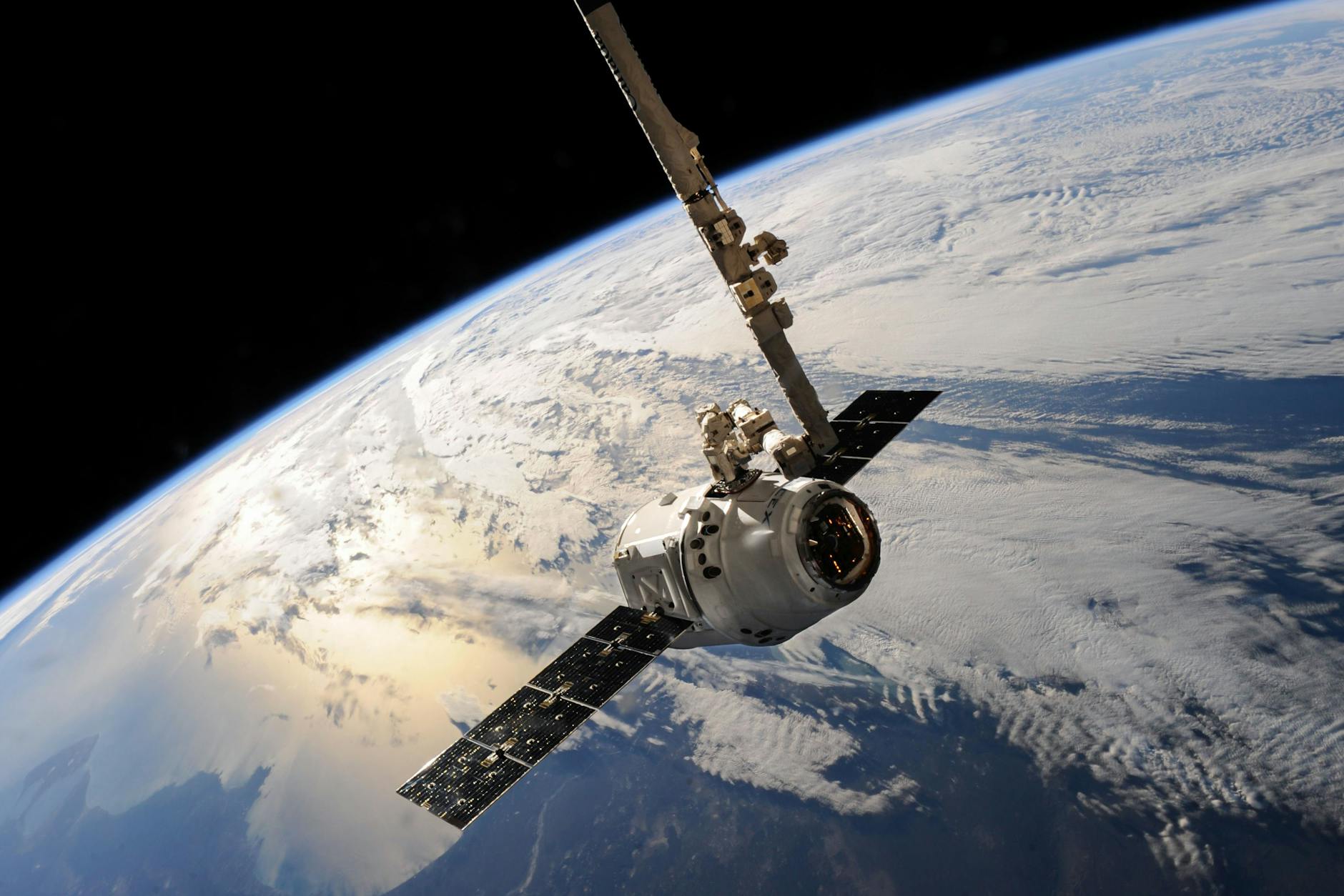
Unlike its predecessor, Canadarm2 can move end-over-end along the station’s exterior, relocate itself to different power and data points, and operate with greater autonomy. It has performed over 100 captures of visiting spacecraft, including every SpaceX Dragon cargo mission. This continuous operational presence means MDA engineers maintain institutional knowledge that would take competitors years to develop independently. However, dominance in government contracts does not automatically translate to commercial markets. MDA’s challenge lies in adapting technology designed for cost-is-secondary government programs to price-sensitive commercial satellite servicing ventures, where customers compare proposals on economics as much as capability.

What Technology Powers MDA’s Space Robotic Systems?
The engineering behind MDA’s robotic arms combines multiple specialized subsystems that have evolved through iterative improvement. Canadarm2’s core capability comes from its seven motorized joints””mimicking a human shoulder, elbow, and wrist””driven by brushless DC motors selected for their reliability in the thermal extremes of space, where temperatures swing from -157°C to +121°C during each 90-minute orbital day-night cycle. Force-moment sensors at each end effector provide tactile feedback that allows operators or autonomous systems to detect contact forces as subtle as a few Newtons. This sensitivity proves essential when capturing a free-flying spacecraft traveling at 28,000 kilometers per hour relative to Earth but only centimeters per second relative to the station.
The latching end effector uses four wire snares that close around a grapple fixture, providing a secure mechanical connection that can support loads up to 116,000 kilograms during station reboosts. The control systems represent decades of software refinement. Modern MDA robotics incorporate machine vision, predictive algorithms, and increasingly autonomous operation modes””though human operators retain override authority for all critical maneuvers. One limitation worth noting: the current systems were designed before radiation-hardened AI processors became available, meaning full autonomy remains constrained by processing power and bandwidth to ground control.
How Does MDA’s Satellite Servicing Technology Extend Its Market Position?
MDA has leveraged its ISS experience to enter the emerging satellite servicing market, where robots repair, refuel, or relocate spacecraft already in orbit. The company’s work on the Restore-L mission (now called OSAM-1 under NASA) demonstrates this transition. This mission will send a robotic spacecraft to refuel Landsat 7, proving technologies that could eventually service hundreds of communication satellites in geostationary orbit worth billions in replacement costs. The commercial case for satellite servicing rests on simple economics.
A geostationary communication satellite costs $200-400 million to build and $100-150 million to launch. If a $50 million servicing mission can extend that satellite’s operational life by five years, the value proposition becomes compelling. MDA’s experience manipulating objects in orbit positions it to capture this market, though competitors like Northrop Grumman’s MEV (Mission Extension Vehicle) have already demonstrated commercial satellite life extension. A specific example illustrates both the opportunity and the challenge: Intelsat contracted with Northrop Grumman to dock MEV-1 with Intelsat 901 in 2020, extending the satellite’s life by five years. MDA must demonstrate that its robotic approach””using arms rather than whole-spacecraft docking””offers superior flexibility for tasks beyond simple stationkeeping, such as component replacement or debris removal.
What Role Will MDA Play in Lunar and Deep Space Exploration?
NASA’s Artemis program and the planned Lunar Gateway station create the next major opportunity for MDA’s space robotics. The company won a contract to provide Canadarm3 for the Gateway, a small space station that will orbit the Moon and serve as a staging point for lunar surface missions. This contract ensures MDA’s technology will be central to human deep space exploration for the next two decades. Canadarm3 introduces significant advances over its predecessors. The system must operate with much greater autonomy due to communication delays between the Moon and Earth””up to three seconds each way, making real-time teleoperation impractical for precise maneuvers.
The arm will conduct inspections, capture visiting spacecraft, and assist astronauts during extravehicular activities with minimal ground intervention. The tradeoff between autonomy and human control presents genuine technical challenges. Greater autonomy requires more sophisticated onboard processing and decision-making, but also raises questions about failure modes. When Canadarm2 encounters an anomaly, ground controllers can pause operations and deliberate for hours. Canadarm3 must handle many contingencies independently, requiring extensive testing of edge cases and failure recovery procedures.
What Are the Limitations and Competitive Threats to MDA’s Position?
Despite its dominant position, MDA faces structural vulnerabilities. The company’s revenue concentration in government contracts””particularly from the Canadian Space Agency, NASA, and the U.S. Department of Defense””exposes it to budget cycles and political priorities beyond its control. When government space spending contracts, as it did in the years following Space Shuttle retirement, MDA’s core business suffers directly. Emerging competitors approach space robotics from different angles.
Maxar Technologies (MDA’s former parent company, now independent) retains significant space robotics expertise. GITAI, a Japanese-American startup, has demonstrated robotic arms on the ISS and targets commercial space stations as customers. Motiv Space Systems supplies robotic arms for NASA’s Mars rovers and lunar programs. Each competitor chips away at segments MDA once dominated alone. A critical warning for industry observers: MDA’s historical advantage in human-rated systems (robots safe to operate near astronauts) matters less as commercial space shifts toward uncrewed operations. Satellite servicing, debris removal, and in-space manufacturing may not require the extreme safety margins built into ISS hardware, potentially allowing less experienced competitors to undercut MDA on cost.
How Does MDA’s Business Model Support Continued Innovation?
MDA generates revenue through a combination of government contracts, commercial satellite systems, and Earth observation services””the latter through its Radarsat constellation. This diversification provides cash flow stability that pure robotics companies lack, allowing sustained R&D investment even during gaps between major robotics contracts.
The company’s 2021 return to public markets (after a period of private equity ownership) provided capital for expansion. MDA used this position to acquire DigitalGlobe’s MDA division capabilities and invest in manufacturing capacity for both robotic systems and satellite components. This vertical integration””building complete spacecraft systems rather than just robotic subsystems””mirrors the platform approach that made Google dominant in digital services.
What Does the Future Hold for Space Robotics and MDA’s Position?
The next decade will determine whether MDA maintains its “Google of space robotics” status or becomes one competitor among many in a commoditized market. Three developments will prove decisive: success with Canadarm3 on the Lunar Gateway, capturing meaningful market share in commercial satellite servicing, and adapting to the rise of private space stations that may favor smaller, cheaper robotic solutions.
The analogy to Google remains instructive. Google maintained search dominance not through the original PageRank algorithm but through continuous improvement, ecosystem integration, and willingness to cannibalize its own products. MDA must similarly evolve””treating its ISS heritage as a foundation rather than a completed achievement, while developing robotic systems for a space economy that will look fundamentally different by 2035.
Conclusion
MDA earned its reputation as the Google of space robotics through four decades of reliable performance on missions where failure was not an option. From the original Canadarm through Canadarm2 and now Canadarm3, the company built institutional expertise and customer trust that competitors cannot easily replicate. This position extends into satellite servicing, lunar exploration, and eventually orbital manufacturing””sectors where manipulation technology becomes essential infrastructure.
The comparison to Google also suggests caution. Dominant positions attract competition, and technological moats erode over time. MDA’s future depends on executing complex programs like Canadarm3 while simultaneously adapting to commercial markets with different economics than government contracting. Companies and investors watching the space robotics sector should track MDA’s Lunar Gateway milestones and satellite servicing contract wins as leading indicators of whether the company maintains its singular position or cedes ground to emerging challengers.