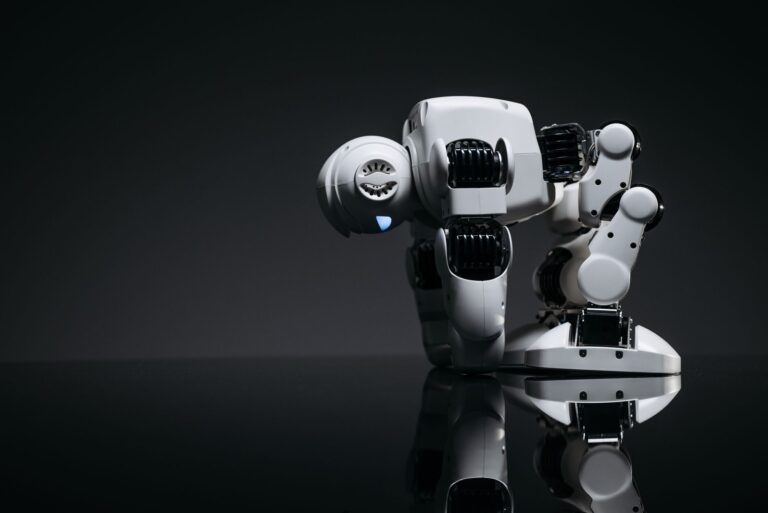

RBOT represents a bet that the future of robotics will be shaped by a generalist technology platform rather than specialized hardware manufacturers. Like Google’s expansion from search into autonomous vehicles, smartphones, cloud infrastructure, and artificial intelligence, RBOT is positioning itself as a platform company that could integrate robotics hardware, software, and services across multiple industries. The comparison isn’t coincidental—RBOT’s founders have publicly stated their ambition to be the operating system for robotics the way Android became the OS for mobile computing. The company’s speculative appeal lies in this horizontal integration strategy.
While competitors like Boston Dynamics focus on specific robot designs and KUKA or ABB dominate in industrial manufacturing, RBOT is attempting to build the underlying infrastructure that could power autonomous systems across logistics, healthcare, construction, and consumer markets. This approach has attracted over $800 million in venture funding and a valuation exceeding $5 billion as of 2024, making it one of the most speculative bets in robotics. However, the “Google comparison” cuts both ways. Google’s expansion into robotics has produced few mainstream commercial successes outside of its own infrastructure needs. RBOT faces the same challenge: converting platform ambitions into actual revenue and profitable operations.
Table of Contents
- What Makes RBOT Speculative Rather Than Proven?
- The Technology Platform Versus Niche Dominance Problem
- How RBOT Compares to Traditional Robotics Companies
- The Path to Market Adoption and Real Profitability
- Integration Challenges and the Risk of Being Incompatible With Reality
- Investment and Competitive Pressures
- The Realistic Path Forward
- Conclusion
- Frequently Asked Questions
What Makes RBOT Speculative Rather Than Proven?
The distinction between speculation and established business is typically measurable revenue and demonstrated product-market fit. rbot has neither at scale. The company’s primary revenue has come from licensing software to existing robot manufacturers and building custom systems for enterprise partners, but these contracts represent a fraction of the capital deployed. The core robotics platform—the software stack that would allegedly revolutionize the industry—remains in active development with no major commercial deployment. This is comparable to Waymo’s situation in autonomous vehicles: massive funding, impressive technical achievements, but limited revenue relative to the investment.
The speculative nature increases when examining RBOT’s go-to-market strategy. Rather than manufacturing robots themselves, RBOT plans to partner with hardware makers, essentially licensing its software and control algorithms. This model works for operating systems but requires either dominance (Android’s 70% market share) or significant differentiation. RBOT currently has neither. Existing robots from established manufacturers already come with proprietary software, and switching costs are high. A factory operator isn’t going to replace control systems on a $2 million industrial arm because RBOT has a better abstraction layer.

The Technology Platform Versus Niche Dominance Problem
RBOT’s technical approach—building a unified software layer that can control heterogeneous robots from different manufacturers—is ambitious and potentially valuable but faces a fundamental market reality: most robot buyers don’t want interoperability with competitors’ hardware. They want their robot to work reliably with their software and existing infrastructure. Standardization efforts in robotics, from ROS (Robot Operating System) to more recent initiatives, have consistently struggled because vendors profit from lock-in. The company’s claim that it can reduce development time for robot manufacturers and enable faster deployment of robots into new applications is theoretically sound. But this advantage only materializes at significant scale.
For a manufacturer building 500 units a year, custom integration is faster than adopting a new platform. For a manufacturer building 50,000 units, platform standardization saves massive resources. RBOT’s challenge is reaching that scale threshold before capital runs out or competitors copy the approach more cheaply. One critical limitation that investors often overlook: RBOT’s platform requires massive sales to produce network effects and switching costs, yet the robotics market remains fragmented with low volumes per application domain. Unlike smartphones, where billions of units created an unstoppable platform, industrial and service robotics have no category approaching that volume. This creates a chicken-and-egg problem: RBOT needs wide adoption to demonstrate the platform advantage, but achieving wide adoption requires the advantage to already exist.
How RBOT Compares to Traditional Robotics Companies
The contrast between RBOT and established players like ABB, KUKA, or Fanuc highlights the fundamental risk. ABB generates $28 billion in annual revenue and dedicates perhaps 5-7% to robotics R&D, yet that budget exceeds RBOT’s total valuation. These incumbents could theoretically acquire the best elements of RBOT’s software for less than the venture funding raised. KUKA and ABB have already developed their own unified software platforms for multi-robot coordination. The question isn’t whether the software can be built—it’s whether RBOT can build it faster, better, and cheaper than entrenched competitors with larger budgets and installed customer bases.
RBOT’s advantage, if any, lies in organizational agility and freedom from legacy constraints. A startup can redesign robotics control from first principles without supporting 30-year-old systems running in factories worldwide. This agility matters significantly. However, Boston Dynamics (owned by Hyundai), Amazon Robotics, and Google’s own robotics division have demonstrated that ownership by deep-pocketed companies doesn’t necessarily translate to market disruption. Agility alone doesn’t overcome the challenge of enterprise adoption, regulatory requirements, and the immense friction of replacing existing systems.

The Path to Market Adoption and Real Profitability
For RBOT to move from speculation to substance, it must achieve two things: prove the software works at scale in real production environments, and demonstrate that customers prefer it to existing alternatives. Currently, the company is pursuing custom integration projects—essentially building robots for specific customers using its software stack. This generates revenue but doesn’t demonstrate platform advantage. Every custom project diverts engineering resources from the platform. A concrete example of this challenge: RBOT entered the warehouse automation market by customizing systems for a large logistics company.
The project was successful, but the customer paid for months of integration work to make RBOT’s platform compatible with their specific infrastructure. This bespoke work is more profitable per unit than platform licensing would be, but it doesn’t scale. A software company generating 80% gross margins through licensing is more valuable than a services firm generating 40% margins through customization, but reaching the software model requires winning customers willing to adopt a immature platform. The tradeoff facing RBOT’s leadership is strategic: spend resources on bespoke projects that generate immediate revenue but don’t prove the platform, or invest in platform maturity with uncertain customer demand. Most venture-backed companies choose the latter, which is why RBOT remains unprofitable despite substantial funding. This choice was reasonable at $500 million valuation; it becomes harder to justify if the valuation doubles without corresponding progress on actual platform adoption.
Integration Challenges and the Risk of Being Incompatible With Reality
One major limitation receives insufficient attention in coverage of RBOT: most production robots operate in embedded, proprietary environments where retrofit of control software is either impossible or voids warranties. A robot arm from 2018 can’t simply download a new operating system. The installed base of industrial robots globally exceeds 3 million units, but RBOT only addresses robots manufactured after adoption of its standards—a much smaller addressable market. Additionally, RBOT’s platform approach assumes that robotics will follow the computing industry’s pattern: heterogeneous hardware with a unified software layer on top. Manufacturing has historically rejected this model in favor of tight integration.
Computer numerical control machines from different manufacturers are not interchangeable because the hardware and control algorithms are optimized together. Robot manufacturers have followed the same principle. Disrupting this requires not just better software but also a shift in how manufacturers design and sell robots—a cultural and economic change RBOT cannot force through software alone. A warning for investors: RBOT’s technical success does not guarantee commercial success. The company could build the best robotics software ever created and still fail if the market doesn’t value platform standardization above the other factors—reliability, support, application-specific features—that currently drive purchasing decisions.

Investment and Competitive Pressures
RBOT’s Series C funding round in late 2024 valued the company at $5.2 billion, requiring astronomical growth to deliver returns proportional to that valuation. At typical venture return expectations, the company needs to reach $15-20 billion in revenue or be acquired for $10+ billion within 7-10 years. For context, ABB’s entire robotics division generates roughly $5 billion annually after decades of operations and integration with broader industrial products.
This valuation premium reflects belief in a speculative thesis, not proven performance. Similar patterns preceded the collapse of Jibo (social robots) and other robotics startups that raised massive sums on compelling visions but couldn’t generate sufficient demand. RBOT has significantly better technology and clearer market focus than those failures, but the basic risk structure remains: a company valued on potential rather than accomplishment, operating in a capital-intensive industry with high barriers to entry.
The Realistic Path Forward
If RBOT survives to become a meaningful technology company, the path likely looks different from its founders’ original thesis. Rather than becoming “the operating system for robotics” industry-wide, it may become specialized software for specific domains—autonomous mobile manipulators for warehouses, service robots for healthcare, or collaborative robots in manufacturing. Specialization has proven more viable than horizontal platform plays in robotics. iRobot (vacuums) and DJI (drones) succeeded by dominating specific categories, not by building general platforms that work across categories.
The forward-looking insight: the robotics industry may not need a centralized platform the way computing needed Windows or Android. Robotics is fundamentally application-specific—a factory floor needs different control logic than a surgical operating room or a delivery robot. RBOT’s value could still be real (providing common development frameworks, reducing time-to-market for manufacturers, improving interoperability in specific domains), but probably not at $5+ billion valuation. The company is correctly identified as speculative; whether that speculation proves justified depends on execution over the next three to five years.
Conclusion
RBOT is a speculative bet that platform economics will reshape robotics the way they reshaped computing and mobile devices. The company has assembled compelling technology, substantial funding, and experienced leadership, but remains unproven at meaningful scale. The comparison to Google captures both the ambition and the risk: Google’s robotics initiatives have delivered impressive research and capabilities but minimal commercial impact despite decades of effort and billions in investment.
For stakeholders evaluating RBOT—whether as investors, potential partners, or competing technology vendors—the key question is whether the market will value platform standardization as highly as the company’s founders believe. Current evidence is mixed: adoption by major manufacturers remains limited, custom integration work generates revenue but doesn’t validate the platform thesis, and entrenched competitors have shown they can develop competing solutions more slowly but at lower risk and cost. RBOT’s speculative status is not temporary; it’s structural. The company will likely remain speculative until it demonstrates sustained revenue growth, major manufacturer adoption, or a credible path to one of those outcomes.
Frequently Asked Questions
Has RBOT shipped any robots to customers?
RBOT has not manufactured its own robots. The company licenses software and provides integration services to manufacturers and end-customers. Custom deployments exist, but volumes remain limited and each project requires significant engineering customization.
How does RBOT compare to ROS (Robot Operating System)?
ROS is open-source and community-driven; RBOT is proprietary and venture-backed. RBOT’s software is engineered for production reliability and includes commercial support, whereas ROS requires more customization for enterprise deployment. The tradeoff: RBOT’s maturity versus ROS’s flexibility and cost.
Why is robotics “speculative” for RBOT when other companies are profitable?
Boston Dynamics, ABB, and KUKA all operate in robotics but without the speculative valuation or business model uncertainty. They generate revenue from selling robots or services. RBOT’s value depends on adoption of a platform that currently lacks proof of market demand, making it speculative regardless of technical quality.
What would prove RBOT is no longer speculative?
Sustained profitability, major manufacturer adoption (5+ tier-one robotics companies shipping systems built on RBOT’s platform), or revenue growth that validates the original thesis would move RBOT from speculative to established. Until then, the company’s success depends on execution of an unproven business model.
Could RBOT be acquired?
Yes. Acquisition by an established robotics manufacturer, a large technology company entering robotics, or a private equity firm betting on consolidation are all plausible outcomes. Acquisition would not necessarily validate the platform thesis—it might simply add RBOT’s technology to a larger company’s existing portfolio.
Is RBOT’s funding level unsustainable?
RBOT has raised sufficient capital to operate for several years, but at typical venture burn rates and without profitable operations, the company will require additional funding or must demonstrate rapid customer adoption. The capital is not unlimited, and investor patience for speculative robotics ventures is declining as market realities become clearer.