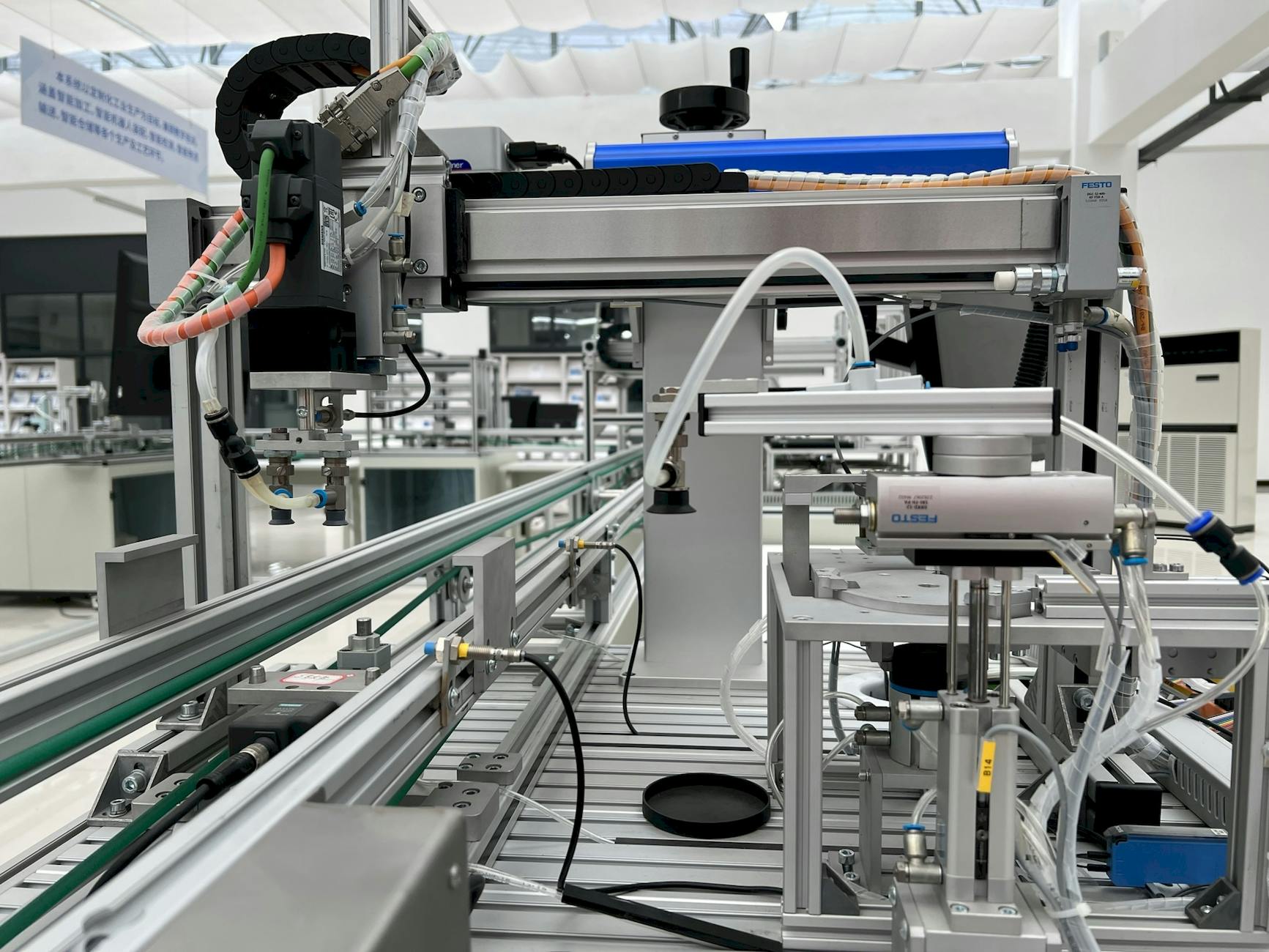

Rockwell Automation (NYSE: ROK) has earned comparisons to Google in the industrial automation sector not because of search algorithms, but because of its dominant market position and comprehensive ecosystem approach. Just as Google became the default starting point for internet search, Rockwell has become the default infrastructure provider for North American manufacturing—the company whose programmable logic controllers, software platforms, and control systems form the backbone of factory operations from automotive plants to food processing facilities. With a market capitalization of $48.38 billion and operations spanning more than 100 countries, the Milwaukee-based company has built what amounts to an operating system for industrial production. The comparison has limits, of course.
Rockwell doesn’t enjoy Google-level market share globally—Siemens dominates in Europe, and several competitors vie for position in Asia. But in North America, Rockwell’s installed base of PLCs and control systems creates the kind of switching costs and ecosystem lock-in that makes the Google analogy meaningful. When a factory runs on Rockwell hardware, expanding or upgrading that facility typically means buying more Rockwell equipment. This article examines why Rockwell has achieved this position, what its financial performance reveals about industrial automation demand, and whether the company can maintain its dominance as manufacturing undergoes digital transformation.
Table of Contents
- Why Is Rockwell Automation Called the Google of Industrial Automation?
- Rockwell’s Financial Performance Signals Industrial Recovery
- The Competitive Landscape: Rockwell Versus Global Rivals
- How Manufacturers Evaluate Rockwell for Digital Transformation
- Risks and Limitations of the Rockwell Investment Thesis
- CEO Blake Moret’s Strategic Vision
- The Industrial Automation Market’s Future Trajectory
- Conclusion
Why Is Rockwell Automation Called the Google of Industrial Automation?
The “google of industrial Automation” framing captures something specific about Rockwell’s business model: platform dominance through ecosystem control. Rockwell’s three business segments—Intelligent Devices, Software & Control, and Lifecycle Services—mirror the integrated approach that made Google successful. The company doesn’t just sell discrete products; it sells an interconnected system where each component works best with other Rockwell components. A factory using Allen-Bradley PLCs (Rockwell’s flagship brand) naturally gravitates toward Rockwell’s FactoryTalk software suite, which then creates demand for Rockwell’s configuration and maintenance services. This ecosystem approach shows up clearly in the company’s segment revenue expectations. For the first quarter of fiscal year 2026, analysts expect Intelligent Devices to generate $958.27 million (up 18.9% year-over-year), while Software & Control should contribute $592.47 million (up 12%).
The hardware remains the foundation, but software increasingly captures the value. Unlike selling a PLC once, software subscriptions generate recurring revenue and deepen customer relationships. Rockwell’s 26,000 employees focus heavily on ensuring that once a manufacturer enters the Rockwell ecosystem, leaving becomes prohibitively expensive and operationally risky. However, this comparison breaks down in important ways. Google’s dominance stems partly from network effects—more users make the service better for everyone. Rockwell’s position relies more on switching costs and specialized expertise. A manufacturer choosing between Rockwell and Siemens isn’t selecting based on which platform more people use; they’re evaluating technical fit, regional support infrastructure, and the substantial cost of retraining maintenance staff on a different system.
Rockwell’s Financial Performance Signals Industrial Recovery
The numbers tell a recovery story. Rockwell shares surged more than 12% following the fiscal Q1 2026 report, which showed evidence that the industrial destocking cycle has bottomed out. Over the past year, ROK stock has climbed 60.9%, substantially outperforming the broader industrial automation sector’s 35.7% gain. The stock recently hit an all-time high of $426.73 on January 29, 2026, and closed at $421.65 the following day. For investors tracking manufacturing health, Rockwell functions as a leading indicator—when factories plan expansions, Rockwell order books fill up first. The upcoming Q1 fiscal 2026 earnings announcement on February 5, 2026, carries high expectations. Analysts project earnings per share of $2.54, representing 38.8% year-over-year growth, on revenue of $2.09 billion (a 10.9% increase).
Management has guided full-year fiscal 2026 EPS between $11.20 and $12.20, while analysts consensus sits at $12.08—suggesting confidence in continued recovery. Rockwell has beaten Zacks estimates in each of the trailing four quarters, with an average surprise of 12.3%. The limitation here involves valuation. At a trailing PE ratio of 56.03 and trailing twelve-month EPS of just $7.68, Rockwell trades at a significant premium to the broader market. Investors are paying for expected growth, not current earnings. If the industrial recovery stalls or reshoring benefits don’t materialize as expected, that premium could compress quickly. The stock price assumes execution, not just potential.
The Competitive Landscape: Rockwell Versus Global Rivals
Rockwell’s primary competitors—Siemens, ABB, Emerson, Schneider Electric, and Honeywell—each bring distinct strengths to the industrial automation market. Siemens offers deeper European market penetration and broader industrial conglomerate resources. ABB leads in robotics and electrification. Emerson has specialized process automation expertise. This isn’t a winner-take-all market; different regions and industry verticals favor different vendors. Consider a practical example: an American automotive manufacturer expanding production would likely default to Rockwell because of existing plant infrastructure, supplier relationships, and maintenance staff expertise.
But a German automaker building a new facility in the United States might bring Siemens equipment to maintain consistency with European operations. The decision often depends less on pure technical capability than on organizational history and support infrastructure. Rockwell’s fiscal 2025 annual revenue of $8.34 billion (0.94% growth) positions it as a significant but not dominant global player. Siemens’ Digital Industries segment alone generates substantially more revenue. Rockwell’s strength lies in depth rather than breadth—concentrated market share in specific regions and applications rather than global presence across all industrial sectors. The analyst consensus reflects this positioning: 2 Strong Buy ratings, 9 Buy ratings, and 10 Hold ratings suggest confidence tempered by awareness of competitive and valuation risks.

How Manufacturers Evaluate Rockwell for Digital Transformation
The pitch to manufacturers centers on digitization at scale. Rockwell positions itself as the bridge between traditional operational technology (PLCs, sensors, motors) and modern information technology (cloud analytics, machine learning, digital twins). A food processing company, for instance, might start with Rockwell PLCs controlling packaging lines, then add sensors to track temperature and throughput, then implement FactoryTalk analytics to predict maintenance needs and optimize production schedules. The tradeoff manufacturers face involves short-term costs versus long-term flexibility. Rockwell’s integrated approach minimizes integration headaches—components designed to work together typically do work together.
But this convenience comes with vendor lock-in risks. A manufacturer seeking best-in-class components from multiple vendors faces significant integration work, but retains negotiating leverage and avoids single-vendor dependency. Neither approach is universally correct; the right choice depends on internal engineering capabilities and strategic priorities. Lifecycle Services, Rockwell’s third segment, addresses this complexity directly by providing implementation support, training, and ongoing maintenance. Analysts expect this segment to generate $521.51 million in Q1 2026, actually declining 4.5% year-over-year. This decrease likely reflects timing of project completions rather than fundamental weakness, but it highlights that services revenue depends heavily on customer project cycles rather than the steadier demand patterns of hardware and software.
Risks and Limitations of the Rockwell Investment Thesis
The premium valuation creates the most obvious risk. At 56 times trailing earnings, Rockwell stock prices in substantial growth that hasn’t yet materialized in reported numbers. If industrial spending disappoints, if reshoring benefits flow to competitors, or if digital transformation proceeds more slowly than expected, the multiple could compress even as earnings grow modestly. Investors aren’t buying current results; they’re buying a vision of accelerating industrial digitization with Rockwell as the primary beneficiary. Technological disruption presents a longer-term concern.
The PLC—Rockwell’s historical core product—emerged in the 1960s and 1970s as a replacement for relay-based control systems. Software-defined automation, edge computing, and cloud-native industrial applications could eventually reduce the centrality of traditional hardware-centric architectures. Rockwell is investing heavily in software and cloud capabilities precisely to address this transition, but the company’s installed base advantage matters less if the industry shifts to fundamentally different architectures. Geographic concentration also warrants attention. Rockwell’s strength in North America becomes a limitation when global manufacturers seek vendors with consistent capabilities across all regions. A multinational corporation standardizing on a single automation platform might hesitate to choose Rockwell if Asian operations require the company’s comparatively thinner support infrastructure in those markets.
CEO Blake Moret’s Strategic Vision
Chairman and CEO Blake Moret will present at Citi’s 2026 Global Industrial Tech and Mobility Conference on February 17, 2026, in Miami Beach. These investor presentations typically emphasize the company’s positioning for reshoring trends, digital transformation opportunities, and software growth initiatives.
Moret has led Rockwell since 2016, steering the company through both the challenges of industrial cyclicality and the opportunities of increasing manufacturing digitization. The management narrative focuses on total addressable market expansion—the idea that Rockwell can grow not just by taking market share but by expanding the scope of what manufacturers automate. When a factory adds sensors to equipment that previously ran uninstrumented, or implements predictive maintenance software where scheduled maintenance previously sufficed, Rockwell’s opportunity set grows even without displacing competitors.
The Industrial Automation Market’s Future Trajectory
Industrial automation spending correlates strongly with manufacturing capital expenditure cycles, which in turn respond to economic conditions, trade policy, and technology investment trends. The “reshoring” narrative—companies bringing manufacturing back to North America—provides a potential tailwind for Rockwell given its regional strength. However, this trend’s actual magnitude remains uncertain, and capital-intensive manufacturing moves slowly.
Looking forward, Rockwell’s ability to capture software and services revenue will likely matter more than hardware growth for long-term returns. The company’s guidance of $11.20 to $12.20 EPS for fiscal 2026 implies substantial improvement from fiscal 2025’s $10.53, but achieving the high end requires both volume recovery in hardware and continued software penetration. The industrial internet of things, AI-driven manufacturing optimization, and autonomous production systems represent Rockwell’s growth frontier—adjacent markets where the company’s existing customer relationships and domain expertise create natural expansion opportunities.
Conclusion
Rockwell Automation merits attention as the dominant North American industrial automation provider, though the “Google of Industrial Automation” comparison requires careful qualification. The company’s ecosystem approach, deep installed base, and integrated hardware-software-services model create meaningful competitive advantages in its core markets. Recent stock performance and upcoming earnings expectations reflect optimism about industrial recovery and digital transformation demand.
For investors and industry observers, the key question involves valuation relative to growth. At current multiples, Rockwell stock prices in significant improvement in both industrial spending and company-specific execution. The investment thesis depends on believing that manufacturing digitization will accelerate, that Rockwell will capture its share of that spending, and that current earnings represent a cyclical trough rather than a normalized run rate. Those with direct exposure to manufacturing trends—whether as investors, suppliers, or customers—should monitor Rockwell’s results as a bellwether for broader industrial health.