
Richtech Robotics (NASDAQ: RR) has emerged as one of the most ambitious players in the commercial service robotics sector, drawing comparisons to Tesla for its vertically integrated approach to automating hospitality, healthcare, and food service industries. The Las Vegas-based company, founded in 2016, has deployed over 400 robots across the United States and recently expanded into humanoid robotics with its Dex platform””a move that mirrors Tesla’s own pivot into humanoid automation with Optimus. Whether the Tesla comparison holds up depends largely on whether RR can replicate Tesla’s playbook of premium positioning, technological integration, and eventual mass-market scaling.
The company’s trajectory accelerated significantly in 2025, earning inclusion in both the Russell 2000 and Russell 3000 indices in June, followed by a strategic partnership with Microsoft announced in January 2026 to integrate agentic AI through Azure into its flagship ADAM robot. With clients ranging from the Texas Rangers’ Globe Life Field to Golden Corral and Hilton properties, RR has moved beyond proof-of-concept into genuine commercial deployment. This article examines what makes the Tesla comparison apt, where it falls short, and what investors and industry observers should understand about this emerging robotics company.
Table of Contents
- What Makes Richtech Robotics the “Tesla of Service Robots”?
- The Robot-as-a-Service Model: A Different Kind of Revenue Engine
- Humanoid Robots Enter the Picture with Dex
- Real-World Deployments: From Stadiums to Hotels
- Stock Volatility and Market Skepticism
- The Microsoft Partnership and Agentic AI
- What Comes Next for Service Robotics
- Conclusion
What Makes Richtech Robotics the “Tesla of Service Robots”?
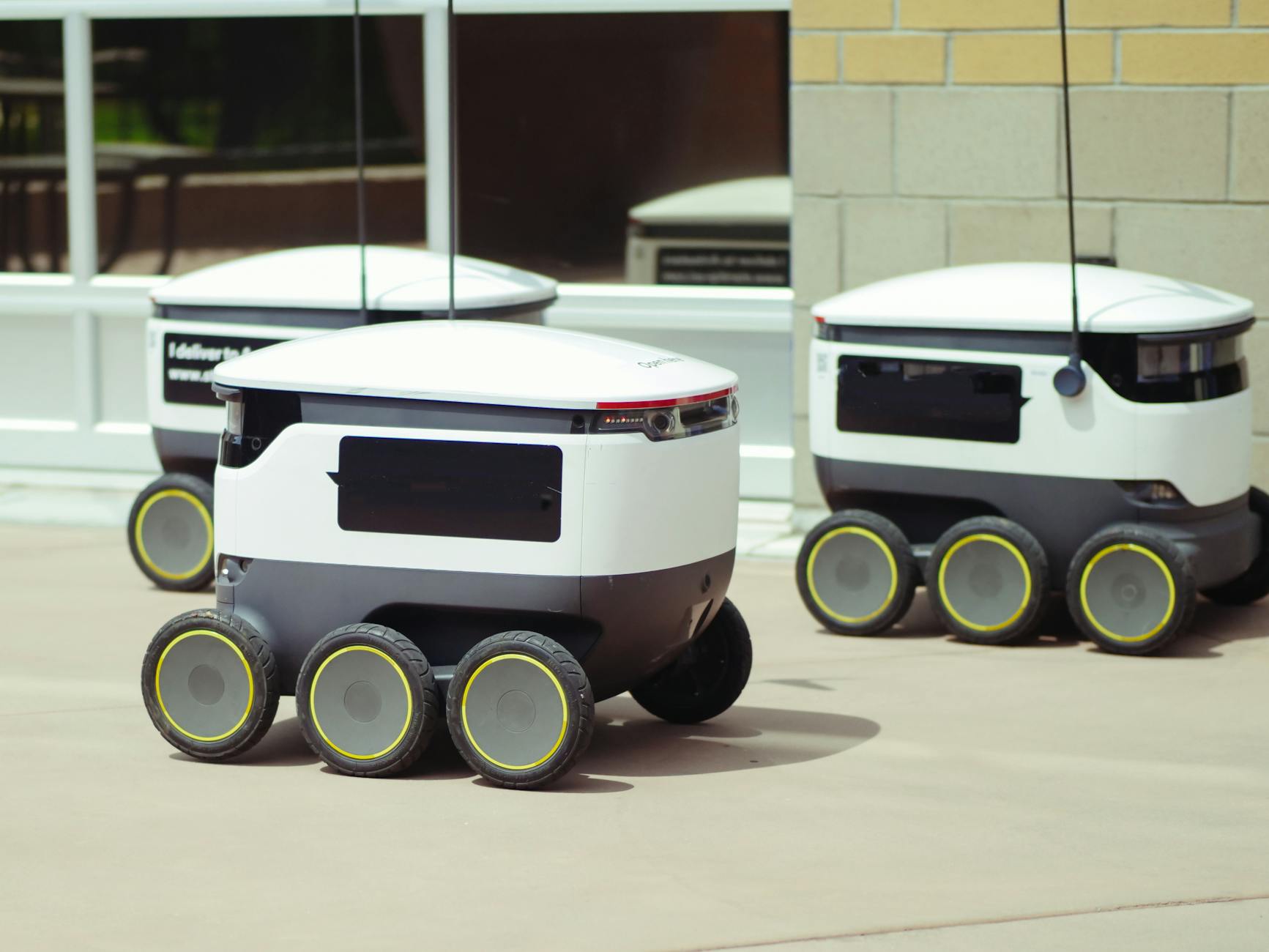
The Tesla comparison centers on RR’s approach to building a comprehensive ecosystem rather than single-purpose machines. Like Tesla, which produces everything from battery cells to software interfaces, Richtech Robotics manufactures robots spanning multiple use cases: the ADAM and Scorpion for food and beverage automation, Matradee for server assistance, Medbot for hospital logistics, Skylark for hotel service, DUST-E for commercial cleaning, and Titan for heavy payload transport. This breadth suggests a platform strategy rather than a niche product focus. The comparison gains further traction from RR’s embrace of AI partnerships. Tesla leveraged its own Dojo supercomputer and AI training infrastructure; RR has aligned with nvidia for its food and beverage robots and more recently with Microsoft’s AI Co-Innovation Labs.
The Microsoft deal, announced January 27, 2026, specifically targets agentic AI integration””meaning robots that can reason through complex tasks rather than simply executing pre-programmed routines. This positions RR at the intersection of robotics hardware and frontier AI capabilities. However, comparing any company to Tesla carries inherent risk. Tesla achieved its market position through years of capital-intensive scaling, a charismatic founder with unusual risk tolerance, and timing that caught the automotive industry flat-footed. RR operates in a far more fragmented market with established competitors and faces the challenge of proving that service robots can deliver genuine return on investment for operators rather than serving as expensive novelties.
- —

The Robot-as-a-Service Model: A Different Kind of Revenue Engine
Richtech Robotics has transitioned to a Robot-as-a-Service (RaaS) subscription model, fundamentally changing its relationship with customers. Rather than large upfront capital purchases, clients pay ongoing fees that include maintenance, software updates, and operational support. This mirrors the broader industry shift toward subscription economics and, theoretically, creates more predictable recurring revenue while lowering barriers to adoption. The RaaS approach makes particular sense in hospitality and food service, where margins are thin and operators hesitate to make major capital expenditures on unproven technology. A restaurant owner considering a Matradee server assistant robot faces less risk if the commitment is monthly rather than a five-figure purchase.
The model also allows RR to maintain closer relationships with deployed robots, gathering operational data that can improve future iterations. The limitation here involves unit economics at scale. Subscription models work when customer acquisition costs are low and lifetime value is high. If robots require frequent maintenance, if churn rates are elevated because operators don’t see sufficient labor savings, or if the hardware depreciation outpaces subscription revenue, the RaaS model becomes a liability rather than an asset. RR has not disclosed detailed metrics on customer retention or per-robot profitability, making it difficult to assess whether the model is genuinely working or simply deferring recognition of hardware sale challenges.
- —
Humanoid Robots Enter the Picture with Dex
The unveiling of Dex on October 28, 2025, marked RR’s entry into the humanoid robotics race””a space that has attracted tesla, Figure AI, Agility Robotics, and numerous well-funded startups. Dex is described as a mobile humanoid robot designed for industrial applications, and the company demonstrated it at CES 2026 in January. This represents a significant strategic expansion beyond the company’s established wheeled service robots. Humanoid robots carry both promise and peril. The promise lies in versatility: a robot with human-like form can theoretically navigate environments designed for humans, use human tools, and adapt to varied tasks without requiring facility modifications.
The peril involves complexity””humanoid locomotion, manipulation, and balance represent some of the hardest problems in robotics, and many well-funded efforts have failed to achieve commercial viability. For RR specifically, Dex raises questions about focus. The company has proven competency in wheeled service robots for specific commercial applications. Humanoid robotics demands different engineering expertise, substantially higher R&D investment, and longer timelines to commercial deployment. Whether RR has the resources and organizational capacity to compete simultaneously in both domains remains uncertain. The Tesla comparison becomes relevant again here: Tesla similarly expanded from cars to energy storage to robotics, but it did so with dramatically larger cash reserves and engineering teams.
- —
Real-World Deployments: From Stadiums to Hotels
The most compelling evidence for RR’s viability comes from its deployment footprint. The partnership with the Texas Rangers at Globe Life Field puts robots in a high-visibility venue where performance failures would be immediately apparent and reputationally damaging. Similarly, the Vegas Golden Knights partnership for the 2025-2026 season demonstrates willingness from major sports franchises to experiment with service robotics in live event contexts. Hotel deployments through Hilton properties represent another validation point. Hotel operations involve predictable workflows””room service delivery, housekeeping supply transport, guest amenity requests””that map well to robotic automation.
The Skylark robot addresses this use case, and successful hotel deployments could create reference cases that accelerate adoption across the hospitality industry. The tradeoff involves customization versus standardization. Each deployment environment differs: stadium concourses have different traffic patterns than hotel corridors, restaurant floor plans vary wildly, and healthcare facilities have distinct regulatory requirements. RR must either build highly adaptable robots that can handle varied environments or develop specialized configurations for each vertical. The former requires substantial AI investment; the latter limits scalability. How the company navigates this tension will significantly impact its growth trajectory.
- —
Stock Volatility and Market Skepticism
RR’s stock has demonstrated significant volatility, reaching a 52-week high of $6.76 in October 2025 following the Dex announcement. The Microsoft partnership news in January 2026 triggered another surge. This pattern reflects a market that responds strongly to announcements but remains uncertain about fundamental business performance. Small-cap robotics stocks frequently experience this dynamic. Investors hungry for exposure to automation megatrends have limited options, and companies like RR benefit from scarcity premiums.
However, announcement-driven rallies can mask underlying challenges: customer acquisition difficulties, hardware reliability issues, competitive pressure, or cash burn rates that require continual financing. Prospective investors should approach the Tesla comparison with appropriate skepticism. Tesla achieved profitability only after years of losses, near-bankruptcy experiences, and controversial leadership decisions. The comparison flatters RR’s ambition but also implies a long, capital-intensive journey with uncertain outcomes. The Russell index inclusion provides some institutional credibility and forces passive funds to hold positions, but it does not validate the underlying business model.
- —
The Microsoft Partnership and Agentic AI
The January 2026 Microsoft collaboration specifically targets integration of agentic AI into RR’s robotic systems through Azure AI services. Agentic AI refers to systems capable of autonomous reasoning and multi-step task execution””a significant advancement over traditional robotic programming that relies on explicit instructions for each action.
For the ADAM food and beverage robot, agentic AI could enable handling of exceptions and unusual requests without human intervention. A traditional robot might fail when encountering an unexpected ingredient or container; an agentic system could potentially reason through the problem and adapt. This represents genuine technical differentiation if successfully implemented.
- —
What Comes Next for Service Robotics
The service robotics industry stands at an inflection point where labor costs, AI capabilities, and hardware reliability are converging to make commercial deployment economically viable. RR has positioned itself across multiple verticals and secured partnerships with technology leaders and high-profile customers. Whether this translates into sustainable profitability remains the central question.
The Tesla comparison ultimately serves as aspiration rather than description. RR has demonstrated ambition, secured meaningful deployments, and attracted institutional attention. Achieving Tesla-like market impact would require scaling from 400 deployments to tens of thousands, proving unit economics work at scale, and maintaining technological leadership against well-funded competitors. The next several years will determine whether the comparison was prescient or premature.
- —
Conclusion
Richtech Robotics represents one of the more serious attempts to build a comprehensive service robotics company in the United States. The combination of diverse product lines, strategic partnerships with Microsoft and NVIDIA, and real deployments at recognizable venues like Globe Life Field and Hilton properties distinguishes RR from vaporware competitors. The Robot-as-a-Service model, if unit economics prove favorable, could enable rapid scaling without requiring customers to make major capital commitments. The risks are equally real.
Humanoid robotics expansion with Dex diverts resources from proven wheeled platforms. Stock volatility suggests market uncertainty about fundamentals. And the Tesla comparison, while flattering, sets expectations that few companies can meet. Observers should watch customer retention rates, deployment growth beyond announcements, and whether the Microsoft AI integration delivers measurable operational improvements. These metrics, rather than stock price movements, will determine whether RR earns its ambitious comparison.