
SERV is a robotics-as-a-service platform that allows businesses to deploy autonomous delivery robots without purchasing, maintaining, or operating their own fleet. Think of it as a shared infrastructure layer for sidewalk robots””companies can request a delivery, and SERV dispatches an available robot from its network, handles the navigation, and manages the entire operation. The model mirrors how Uber revolutionized transportation by separating vehicle ownership from vehicle use, applying the same logic to last-mile robotic delivery. The practical application is already visible in select markets.
A local pharmacy needing to deliver prescriptions within a three-mile radius can plug into SERV’s API, trigger a delivery request, and have a robot arrive at the customer’s door without ever touching the hardware. This removes the capital expenditure barrier that has kept autonomous delivery limited to large corporations like Amazon or Starship Technologies. SERV’s approach democratizes access to robotic delivery infrastructure. This article examines how SERV’s platform functions, the economics that make it viable, where limitations exist, and what this model means for the broader robotics industry. We will also look at how municipalities are responding to increased sidewalk robot traffic and what businesses should consider before integrating robotic delivery into their operations.
Table of Contents
- How Does SERV’s Robot-Sharing Model Actually Work?
- The Economics Behind Robotic Delivery as a Service
- Navigating Regulations and Sidewalk Access for Autonomous Robots
- What Types of Businesses Benefit Most from Robot Delivery Platforms?
- Technical Limitations and Weather-Related Challenges
- Security and Theft Prevention in Autonomous Delivery
- The Future of Shared Robotic Infrastructure
- Conclusion
How Does SERV’s Robot-Sharing Model Actually Work?
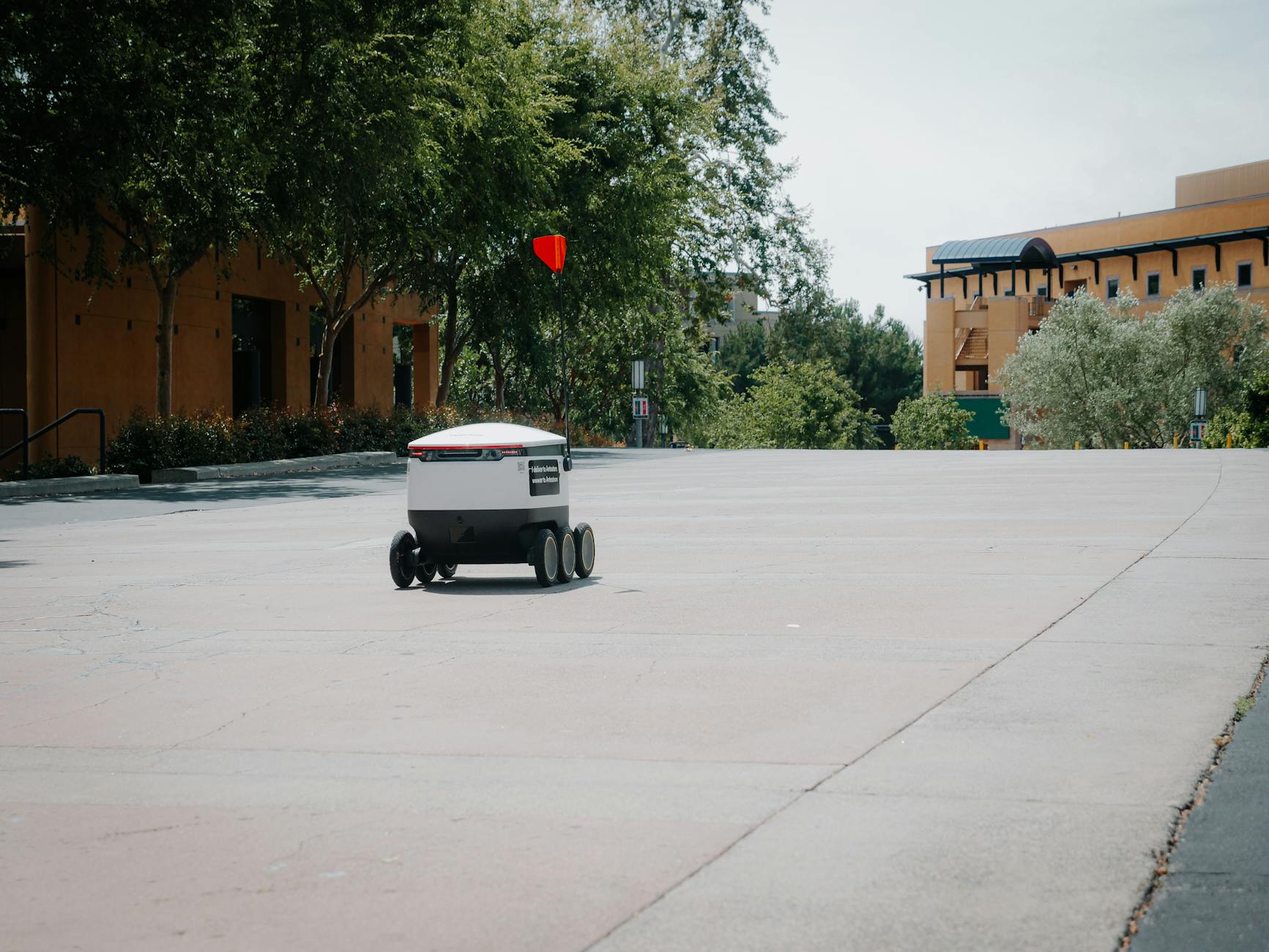
serv operates a centralized fleet of autonomous delivery robots positioned strategically across service areas. When a business requests a delivery through the platform, the system identifies the nearest available robot, calculates the optimal route, and dispatches the unit. The robot travels on sidewalks and crosswalks using a combination of cameras, LIDAR, and GPS to navigate around pedestrians, obstacles, and changing environments. The business pays per delivery rather than investing in hardware. Pricing typically scales based on distance, weight, and delivery urgency. For a restaurant sending a meal two blocks away, the cost might run between three and five dollars.
For a hardware store delivering a twenty-pound package across town, the fee increases accordingly. This variable cost structure converts what would be a fixed asset into an operational expense, which accountants and CFOs tend to appreciate. Compared to traditional delivery services, the economics become compelling at scale. A human courier costs roughly fifteen to twenty-five dollars per hour in most urban markets, limiting how many deliveries they can profitably complete. SERV’s robots operate continuously””weather permitting””without breaks, benefits, or tips. However, they move slower than human couriers, typically maxing out at four miles per hour, which makes them unsuitable for time-sensitive deliveries over longer distances.
The Economics Behind Robotic Delivery as a Service
The unit economics of sidewalk robots have reached an inflection point. First-generation delivery robots cost upwards of fifty thousand dollars each and required dedicated operators monitoring their progress remotely. Current models have dropped to roughly fifteen thousand dollars with improved autonomy, meaning a single remote operator can supervise fifteen to twenty robots simultaneously. SERV’s business model works because utilization rates matter more than ownership costs. A robot sitting in a warehouse generates zero revenue.
A robot completing eight to twelve deliveries per day across multiple business clients generates enough to cover depreciation, maintenance, and platform overhead while returning profit. By aggregating demand from dozens of businesses in a service area, SERV keeps robots moving rather than idle. However, the model struggles in low-density areas. Suburban neighborhoods with houses spread across large lots mean longer travel times between deliveries and fewer potential customers per square mile. SERV has concentrated initial deployments in urban cores and college campuses where delivery density justifies robot positioning. Businesses in sprawling suburban commercial districts may find that human drivers remain more cost-effective for their specific geography.
Navigating Regulations and Sidewalk Access for Autonomous Robots
Municipal regulations present the most significant variable in SERV’s expansion plans. Some cities have embraced sidewalk robots with minimal restrictions””Pittsburgh and Miami have been particularly accommodating. Others, like San Francisco, initially banned delivery robots from sidewalks entirely before eventually permitting limited operations under strict conditions. The regulatory patchwork creates operational complexity. In jurisdictions requiring human escorts, the economic advantage of autonomous delivery disappears.
Where robots must yield to all pedestrians and come to complete stops at every intersection, delivery times extend dramatically. SERV must negotiate operating permits city by city, often committing to insurance requirements, speed limits, operating hours, and maximum fleet sizes. A specific example illustrates the challenge: In Tempe, Arizona, SERV robots can operate on sidewalks and crosswalks throughout the city with relatively few restrictions. Twenty miles away in Scottsdale, different ordinances apply. A business with locations in both cities cannot assume uniform service availability. This fragmentation will likely persist until state or federal guidelines establish baseline standards for autonomous sidewalk vehicles.
What Types of Businesses Benefit Most from Robot Delivery Platforms?
Quick-service restaurants and pharmacies have emerged as early adopters with the clearest value proposition. These businesses handle high volumes of small, lightweight deliveries within tight geographic radiuses. A pharmacy fulfilling prescription refills within a two-mile delivery zone fits the robot delivery model almost perfectly””predictable package sizes, non-perishable contents, and customers who can wait thirty to forty-five minutes for arrival. Grocery stores present a more complicated case. Order sizes vary dramatically, requiring multiple robot trips for larger purchases. Temperature-sensitive items need climate-controlled compartments, which not all robots in SERV’s fleet currently offer.
The economics work for convenience runs””a customer ordering milk, bread, and eggs””but fall apart for weekly stock-up shops filling ten grocery bags. Comparing robot delivery to existing alternatives reveals clear tradeoffs. Against services like DoorDash or Uber Eats, robots eliminate the tipping uncertainty that frustrates some customers but introduce longer delivery windows. Against in-house delivery staff, robots reduce labor management headaches but require integration with new technology platforms. Against customer pickup, robots add convenience but also add cost. No single solution dominates across all scenarios, which is why SERV positions itself as one option within a broader delivery ecosystem rather than a complete replacement for existing methods.
Technical Limitations and Weather-Related Challenges
Sidewalk robots face environmental constraints that human couriers handle without thought. Rain degrades sensor performance, particularly for camera-based systems where water droplets obscure lenses. Snow and ice create traction problems and hide curb edges that robots use for navigation. Extreme heat affects battery performance and can damage temperature-sensitive cargo. SERV’s fleet includes weather-resistant models, but resistance differs from immunity. During heavy precipitation, the platform may delay dispatches or route robots through covered walkways when available.
In cities experiencing significant winter weather, service reliability drops substantially from December through February. Businesses relying on robot delivery as their primary fulfillment method need backup plans for weather events. A related limitation involves accessibility infrastructure. Robots require curb cuts to transition between sidewalks and crosswalks. In older neighborhoods where curb cuts are inconsistent or absent, robots cannot complete routes that would be trivial for human carriers. Similarly, buildings without ground-floor access points””apartment complexes requiring elevator access, for instance””cannot receive robot deliveries directly to their doors. The last fifty feet often proves harder than the previous fifty blocks.
Security and Theft Prevention in Autonomous Delivery
Early skeptics assumed sidewalk robots would be constant theft targets. In practice, vandalism and theft rates have remained lower than projected, though not zero. SERV robots incorporate several deterrent features: 360-degree cameras that record continuously, loud alarms triggered by tampering attempts, GPS tracking that continues even if a robot is lifted into a vehicle, and locking cargo compartments that only open with authenticated codes.
The bigger security concern involves package contents after delivery. A robot can confirm arrival at a delivery address and document that it opened its cargo compartment, but it cannot prevent a neighbor from grabbing the package thirty seconds later. This porch piracy problem affects all delivery methods, though robots lack the human judgment to notice suspicious bystanders or choose alternative drop locations on the fly.
The Future of Shared Robotic Infrastructure
SERV’s model points toward a broader shift in how businesses access automation technology. Rather than each company building proprietary robotic capabilities””with associated engineering teams, maintenance facilities, and regulatory expertise””shared platforms allow businesses to purchase outcomes rather than assets. This mirrors the cloud computing transition where companies stopped building data centers and started renting compute capacity from AWS or Azure.
The sidewalk delivery application may prove to be just the beginning. The same shared-fleet logic applies to security patrol robots, inventory scanning robots in retail environments, and cleaning robots in commercial buildings. If SERV demonstrates that robotics-as-a-service can achieve sustainable unit economics in delivery, expect similar platforms to emerge across other robotic applications. The question is no longer whether robots will become commonplace in daily commerce, but who will own and operate them.
Conclusion
SERV represents a genuine evolution in how robotic delivery reaches the market. By removing the ownership burden from businesses that want robotic delivery capabilities, the platform makes autonomous last-mile logistics accessible to pharmacies, restaurants, and retailers that could never justify building their own fleets. The shared infrastructure model improves utilization rates, spreads regulatory compliance costs across many clients, and converts capital expenditure into predictable operating expenses.
Businesses considering SERV or similar platforms should evaluate their delivery profiles honestly. High-frequency, short-distance, lightweight deliveries in robot-friendly municipalities present the clearest opportunity. Companies with sprawling delivery zones, heavy packages, or locations in restrictive regulatory environments may find the technology premature for their needs. The sidewalk robot revolution is real, but like most revolutions, it is arriving neighborhood by neighborhood rather than all at once.