
TER, Inc. (formerly known as Teradyne) represents one of the most strategic infrastructure investments in the automation sector today. The company sits at the intersection of semiconductor testing and industrial automation, providing the essential equipment that enables both chip manufacturing and robotic deployment at scale. For investors and industry observers looking to gain exposure to automation without betting on a single robot manufacturer or AI startup, TER offers a picks-and-shovels approach””profiting from the broad adoption of automation technologies regardless of which end applications ultimately win. The company’s dual business model is what makes it particularly compelling.
Teradyne dominates approximately 50 percent of the global automatic test equipment market, supplying the machines that validate semiconductors before they ship. Simultaneously, through its acquisitions of Universal Robots, MiR (Mobile Industrial Robots), and AutoGuide, the company has assembled a portfolio of collaborative and mobile robots targeting warehouse logistics, manufacturing assembly, and material handling. When a new chip fabrication plant opens in Arizona or a logistics company automates its distribution center in Germany, TER equipment is often involved on both ends of that transaction. This article examines why TER has positioned itself as infrastructure rather than a pure-play robotics company, the advantages and risks of this approach, and what the company’s trajectory suggests about the broader automation market. We’ll look at the financials, the competitive dynamics in both semiconductor testing and collaborative robotics, and the strategic logic behind Teradyne’s acquisition spree over the past decade.
Table of Contents
- Why Is TER Considered an Infrastructure Play Rather Than a Robotics Company?
- How Does Teradyne’s Semiconductor Testing Business Support Its Automation Ambitions?
- What Role Do Universal Robots and MiR Play in TER’s Growth Strategy?
- When Does the TER Infrastructure Thesis Break Down?
- How Is TER Positioned Relative to Pure-Play Robotics Investments?
- What Are the Key Financial Metrics for Evaluating TER’s Automation Progress?
- What Does TER’s Trajectory Suggest About Automation’s Future?
- Conclusion
Why Is TER Considered an Infrastructure Play Rather Than a Robotics Company?
Infrastructure plays in technology historically deliver more consistent returns than companies competing directly in application markets, and ter has deliberately structured itself to occupy this position. The semiconductor test equipment business generates substantial cash flow with relatively predictable demand tied to chip production volumes rather than the success of any particular chip design. When TSMC, Samsung, or intel ramps production””regardless of whether those chips go into smartphones, cars, or data centers””Teradyne’s test equipment is needed to verify quality. The robotics side of the business follows similar logic. Universal Robots doesn’t compete with Fanuc or ABB for large-scale industrial automation projects requiring custom engineering. Instead, UR targets the long tail of automation opportunities: small manufacturers, laboratories, machine tending applications, and tasks where a six-axis arm costing under $50,000 can be deployed without safety caging.
This addressable market is enormous precisely because it was previously uneconomical to automate. MiR’s autonomous mobile robots serve a comparable function in logistics, handling internal transport that was too variable or low-volume for fixed conveyor infrastructure. The infrastructure framing matters because it implies durability. Teradyne isn’t betting that one type of robot will dominate or that a specific AI model will prove superior. The company is betting that testing will remain essential to chip manufacturing and that flexible automation will continue displacing manual labor in contexts where traditional industrial robots never made sense. Both assumptions have held for decades.

How Does Teradyne’s Semiconductor Testing Business Support Its Automation Ambitions?
Teradyne’s semiconductor test division generates roughly 70 percent of total revenue and an even higher proportion of operating profit. This business funds the company’s patient expansion in robotics, where margins remain thinner and growth requires sustained investment. In 2023, the test equipment segment produced operating margins above 30 percent, while the robotics divisions operated closer to breakeven after accounting for R&D and go-to-market expenses. The test business also provides countercyclical ballast. Semiconductor demand fluctuates with consumer electronics cycles, automotive production, and data center buildouts, but test equipment demand often lags these cycles.
When chip shortages emerge, as they did in 2021 and 2022, foundries invest heavily in capacity””including test equipment””to capture revenue. When demand softens, test equipment orders decline more gradually because quality requirements don’t relax even when volumes fall. However, this reliance on semiconductor testing creates concentration risk. If the semiconductor industry shifts toward chiplet architectures that require different testing approaches, or if Chinese domestic test equipment suppliers capture meaningful market share, Teradyne’s core business could face pressure. The company has historically maintained technological leadership, but competitors like Advantest have closed gaps in specific market segments. Investors treating TER as pure automation exposure should understand that semiconductor testing performance still dominates the income statement.
What Role Do Universal Robots and MiR Play in TER’s Growth Strategy?
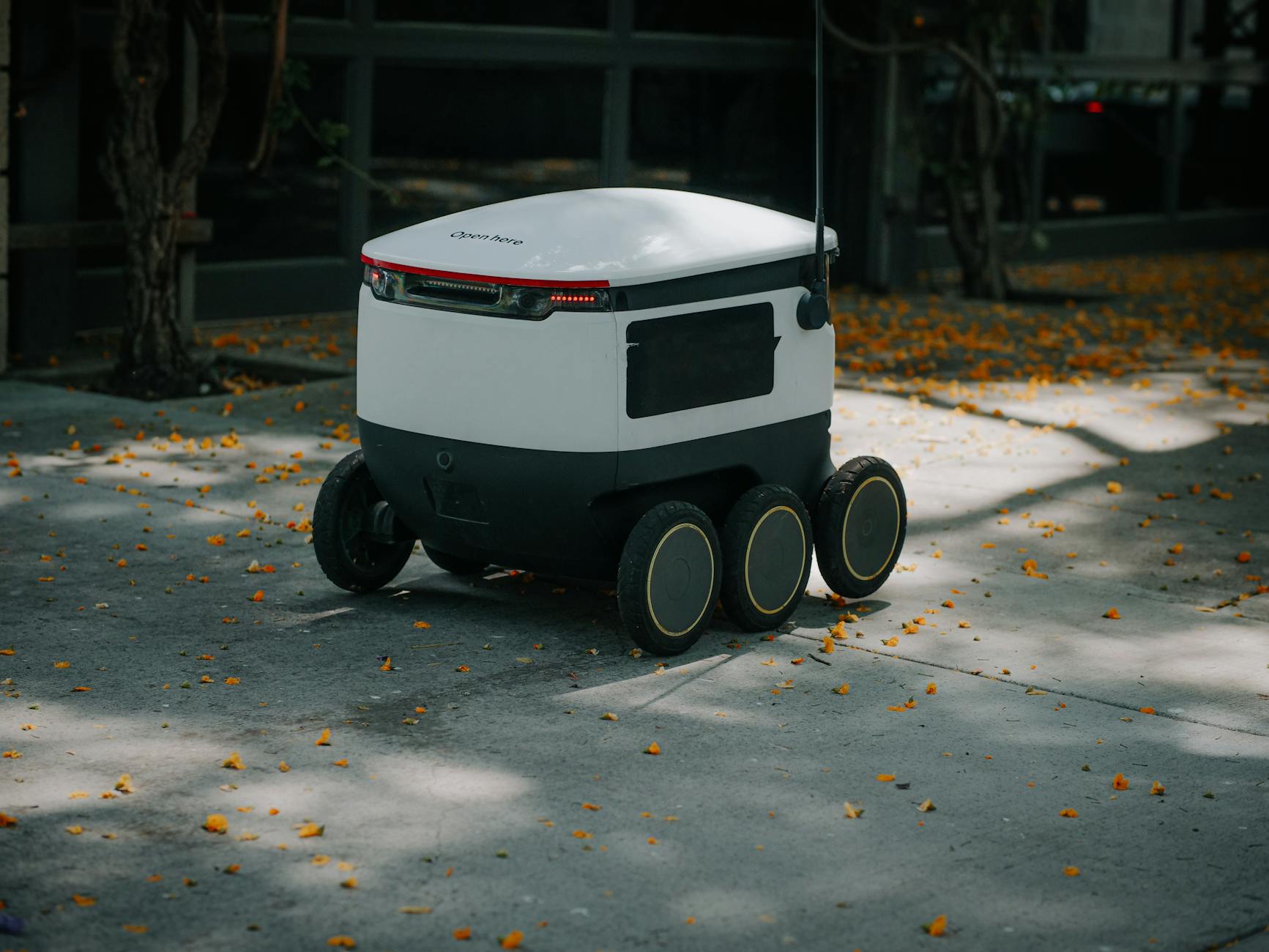
Universal robots pioneered the collaborative robot category and remains the market leader with installed base exceeding 75,000 units globally. The cobots””designed to work alongside humans without safety caging””have found applications ranging from CNC machine tending to laboratory sample handling to palletizing finished goods. UR’s business model emphasizes ease of programming and a robust ecosystem of third-party end effectors, vision systems, and software integrations. MiR complements UR by addressing material transport within facilities. Rather than building fixed conveyor systems or relying on human-operated forklifts, MiR’s autonomous mobile robots navigate dynamically around obstacles, queuing at pickup and delivery points.
The company has deployed in hospitals, semiconductor fabs, and automotive assembly plants. A typical implementation might see MiR robots replacing the point-to-point transport previously handled by workers pushing carts””labor that’s increasingly difficult to hire and retain. The strategic logic connects these acquisitions: Universal Robots handles manipulation tasks at fixed workstations while MiR handles transport between stations. Teradyne has begun integrating the platforms, mounting UR arms on MiR bases to create mobile manipulation systems capable of moving between locations and performing tasks at each. This integrated capability competes with emerging players like Fetch Robotics (now part of Zebra Technologies) and Boston Dynamics’ Stretch platform, though Teradyne’s modular approach offers flexibility that purpose-built solutions may lack.
When Does the TER Infrastructure Thesis Break Down?
The infrastructure thesis assumes that Teradyne’s products remain essential rather than becoming commoditized or disrupted. Several scenarios could challenge this assumption. In semiconductor testing, the rise of system-level testing integrated into chip packaging could reduce demand for standalone test equipment. Advanced packaging techniques that embed multiple chiplets into single packages may shift testing requirements in ways that favor new entrants or vertical integration by foundries. In robotics, the threat is different.
Universal Robots created the cobot category but now faces competition from Fanuc, ABB, Yaskawa, and dozens of Chinese manufacturers offering similar form factors at lower prices. UR has maintained pricing power through software quality and ecosystem strength, but hardware commoditization appears inevitable over a ten-year horizon. The question is whether Teradyne can shift value capture toward software, services, and system integration before hardware margins compress. The comparison that concerns long-term investors is Cisco in networking. Cisco built an infrastructure business providing routers and switches essential to internet growth, but eventually saw hardware commoditized while value migrated to software and cloud services. Teradyne’s robotics divisions are investing in fleet management software, simulation tools, and AI-powered programming interfaces partly to avoid this fate””but success is not guaranteed.
How Is TER Positioned Relative to Pure-Play Robotics Investments?
Investors seeking automation exposure can choose between Teradyne’s diversified approach and pure-play robotics companies like Rockwell Automation, Cognex, or emerging players like Symbotic. Each approach carries different risk profiles. Teradyne’s semiconductor testing business provides earnings stability but dilutes automation growth metrics. Pure-plays offer concentrated exposure but face higher volatility and often trade at substantial premiums to current earnings. Teradyne’s valuation typically reflects its semiconductor testing business with robotics treated as an option on future growth.
During periods when Universal Robots reports strong results, the stock can rerate as investors assign higher multiples to the automation segments. When cobot demand softens””as it did during pandemic-related uncertainty and again during 2023’s manufacturing slowdown””the robotics business gets minimal valuation credit. This dynamic creates opportunities for investors willing to hold through cycles. Buying TER when robotics sentiment is negative means acquiring the automation business cheaply, with semiconductor testing providing downside protection. The tradeoff is patience: Teradyne has guided toward robotics achieving meaningful scale by the late 2020s, but near-term results can disappoint without invalidating the long-term thesis.
What Are the Key Financial Metrics for Evaluating TER’s Automation Progress?
Tracking Teradyne’s automation trajectory requires looking beyond consolidated financials. The company reports segment results that separate Industrial Automation (Universal Robots, MiR, AutoGuide) from Semiconductor Test and other smaller segments. Key metrics include cobots shipped, average selling prices, services revenue as a percentage of total robotics revenue, and operating margin progression in the automation segment.
Universal Robots has targeted 50,000 unit annual shipments as a milestone for achieving operating leverage, though the timeline has slipped as macroeconomic headwinds affected capital equipment spending. Services and recurring revenue””including software subscriptions, training, and maintenance contracts””matter because they indicate whether Teradyne can build durable customer relationships rather than selling discrete hardware transactions. Current services mix remains below 20 percent of robotics revenue, compared to 30-40 percent for mature automation businesses.
What Does TER’s Trajectory Suggest About Automation’s Future?
Teradyne’s experience provides a real-world test of whether collaborative robots can achieve mass adoption outside traditional manufacturing. After a decade of investment, Universal Robots has proven the technology works and identified viable applications, but growth has been slower than early projections suggested. This pattern””workable technology meeting slower-than-expected adoption””characterizes much of the automation industry.
The lesson isn’t that automation is failing but that infrastructure buildouts require patience. Manufacturing facilities operate on multi-decade investment cycles, and new automation approaches must prove reliability before achieving widespread deployment. Teradyne’s willingness to sustain investment through slow periods, funded by semiconductor testing profits, gives it advantages over venture-backed competitors facing pressure for faster returns. Whether this patience produces superior long-term returns depends on execution, competitive dynamics, and factors beyond any single company’s control.
Conclusion
Teradyne offers a differentiated path to automation exposure by combining market-leading positions in semiconductor testing with a growing portfolio of collaborative and mobile robots. The infrastructure framing captures something real: TER profits from automation adoption broadly rather than betting on specific applications or end markets. This diversification provides stability but requires investors to accept that robotics growth will be measured in years rather than quarters.
The practical question for investors is whether Teradyne’s robotics businesses can achieve the scale necessary to matter financially before hardware commoditization erodes margins. The semiconductor testing business buys time for this transition, but the automation segment must eventually stand on its own merits. Monitoring quarterly segment results, services revenue trends, and competitive positioning provides the clearest view into whether the infrastructure thesis is working.