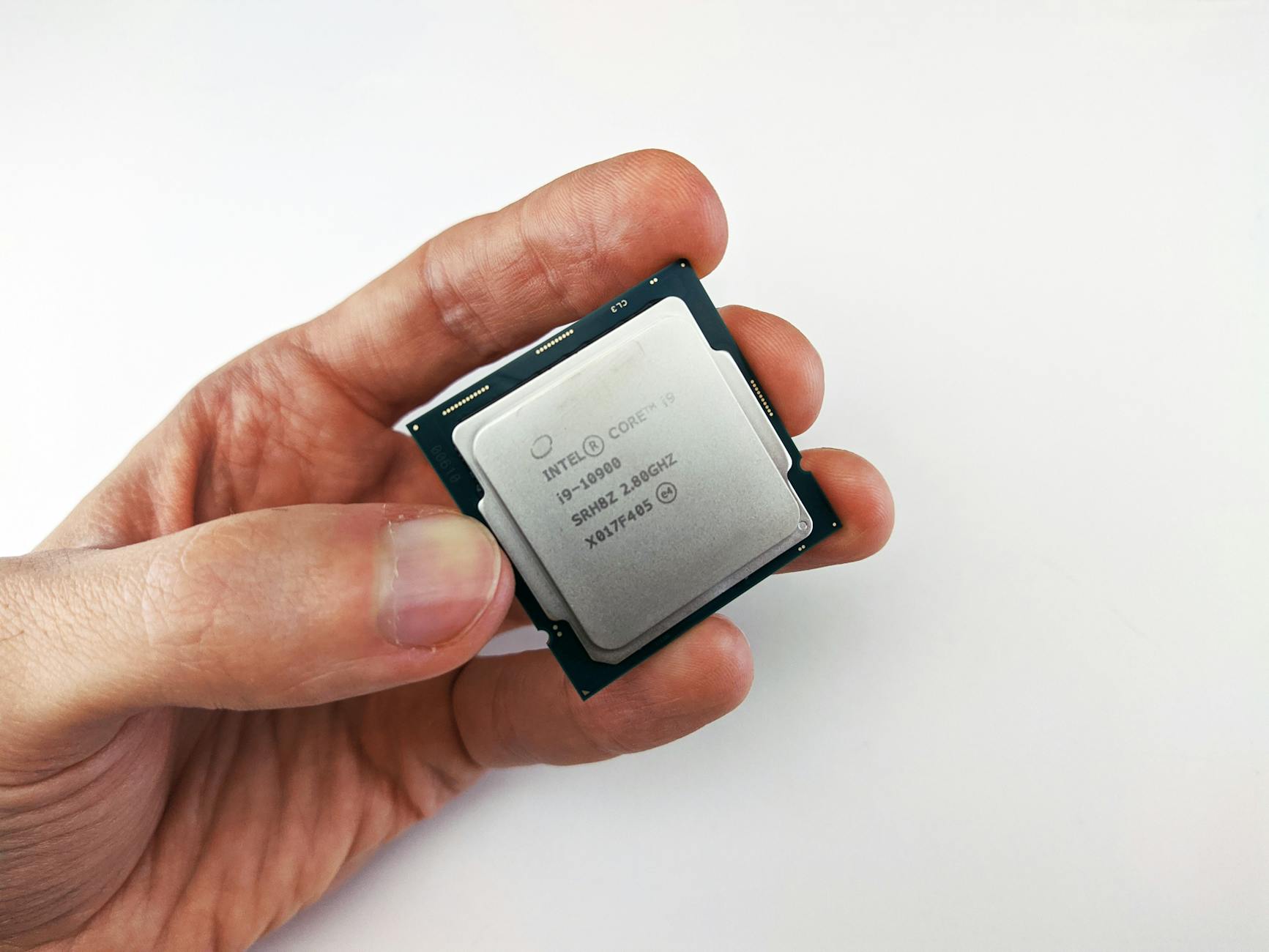

Teradyne (NASDAQ: TER) has earned its reputation as the Intel of robotics hardware by building the foundational testing and automation infrastructure that powers the semiconductor and robotics industries. Much like Intel provides the processors that run countless devices, Teradyne’s automated test equipment validates the chips inside everything from smartphones to data centers, while its robotics subsidiaries””Universal Robots and Mobile Industrial Robots””supply the collaborative robots deployed in warehouses and factories worldwide. The company’s Q3 2025 revenue of $769 million, with $606 million from semiconductor testing alone, demonstrates its critical position in the technology supply chain.
The Intel comparison extends beyond market position to strategic acquisitions. Teradyne’s 2015 purchase of Universal Robots for $285 million gave the North Reading, Massachusetts-based company a foothold in collaborative robotics that continues paying dividends. The Danish cobot manufacturer now supplies robotic limbs for Amazon’s breakthrough Vulcan warehouse robot””a system capable of sensing touch while handling picking and stowing tasks across Amazon’s fulfillment network. This article examines how Teradyne built its dual dominance in testing and robotics, the financial realities behind the hype, the Amazon partnership that could reshape its revenue, and the challenges the company faces as it pushes toward profitability in its robotics segment by 2027.
Table of Contents
- Why Is Teradyne Considered the Intel of Robotics Hardware?
- Teradyne’s Robotics Segment: Universal Robots and MiR Performance
- The Amazon Vulcan Partnership and Revenue Potential
- Teradyne’s Semiconductor Test Business and AI-Driven Growth
- NVIDIA Integration and the UR AI Accelerator
- New U.S. Manufacturing Hub in Michigan
- Financial Outlook and Investor Considerations
- Conclusion
Why Is Teradyne Considered the Intel of Robotics Hardware?
The comparison to Intel stems from Teradyne’s position as essential infrastructure that most consumers never see. Intel’s processors power computers without most users knowing the brand inside their machine. Similarly, Teradyne’s test equipment validates chips from Samsung, Qualcomm, Intel itself, Analog Devices, Texas Instruments, and IBM before those components reach any device. When a smartphone passes quality control, Teradyne equipment likely played a role. The company’s Magnum 7H tester illustrates this foundational role. As High Bandwidth Memory becomes critical for nvidia and AMD GPUs powering AI applications, someone needs to test that memory at massive scale.
Teradyne fills that gap. Q4 2025 guidance of $920 million to $1,000 million””representing 27% year-over-year growth””reflects surging demand tied directly to AI infrastructure buildout. However, the Intel comparison has limits. Intel designs and manufactures processors as an integrated operation. Teradyne tests other companies’ chips and builds robots, making it more of a picks-and-shovels play than a direct analog. Investors expecting Intel-style market dominance in a single product category will find Teradyne’s diversified model different in character.

Teradyne’s Robotics Segment: Universal Robots and MiR Performance
teradyne’s robotics business generated $365 million in 2024, split between Universal Robots at $293 million and Mobile industrial Robots at $72 million. These numbers represent a meaningful but still minority portion of total company revenue. The robotics segment recorded $75 million in Q3 2025 alone, though this reflects a nearly 10% year-over-year decline across recent reporting cycles. Universal Robots cobots handle machine tending, packaging, gluing, painting, polishing, and assembly tasks across industries. Their collaborative design allows deployment alongside human workers without safety caging””a significant advantage over traditional industrial robots.
MiR focuses on autonomous mobile robots that transport materials through warehouses and manufacturing floors. The decline in robotics revenue warrants attention. Economic uncertainty in manufacturing sectors, particularly in Europe and Asia, has slowed cobot adoption rates. Companies considering automation investments have delayed purchases amid interest rate pressures and demand uncertainty. Teradyne has set an EBITDA profitability target for the robotics segment by 2027, acknowledging that the division currently operates below optimal margins. If macroeconomic headwinds persist, that timeline could extend.
The Amazon Vulcan Partnership and Revenue Potential
Amazon’s Vulcan robot represents Teradyne’s highest-profile robotics opportunity. Introduced in May 2025, Vulcan is Amazon’s first warehouse robot with a “sense of touch,” capable of picking and stowing tasks that previously required human hands. Universal Robots supplies the robotic limbs that give Vulcan its physical capabilities. The potential scale is substantial. Amazon stows approximately 14 billion items by hand annually.
If the company automates up to 80% of that volume, estimates suggest Universal Robots could capture roughly $400 million in revenue from this single customer. That figure would more than double Universal Robots’ 2024 revenue and transform the economics of Teradyne’s robotics segment. This partnership carries concentration risk. Dependence on a single customer for transformative revenue creates vulnerability if Amazon shifts suppliers, develops in-house alternatives, or scales back automation investment. Amazon has historically built internal capabilities after working with external partners, a pattern worth monitoring. The $400 million estimate also assumes aggressive automation adoption; actual deployment timelines and volumes remain uncertain.
Teradyne’s Semiconductor Test Business and AI-Driven Growth
The semiconductor test segment remains Teradyne’s core business, generating $606 million of the company’s $769 million Q3 2025 revenue. This segment provides the financial stability that allows robotics investment to continue despite near-term profitability challenges. Major chipmakers outsource testing validation to Teradyne because building equivalent in-house capability requires specialized expertise and capital investment that distracts from core processor development. The arrangement mirrors why automakers buy tires from Goodyear rather than manufacturing their own””specialization creates efficiency. Teradyne’s customer roster including Samsung, Qualcomm, and Texas Instruments reflects the breadth of this dependency.
AI infrastructure spending has accelerated semiconductor test demand. High Bandwidth Memory testing through systems like Magnum 7H serves the explosive growth in GPU production for data centers and AI training. Q4 2025 guidance projecting 25% sequential revenue growth reflects this dynamic. However, AI spending cycles have historically shown volatility. If data center buildout slows or chip inventory accumulates, testing demand could contract faster than robotics revenue grows.
NVIDIA Integration and the UR AI Accelerator
Teradyne’s partnership with NVIDIA represents a strategic bet that AI-enhanced robotics will drive the next adoption wave. The company has integrated NVIDIA technology into Universal Robots arms for path planning that runs 50-80 times faster than traditional approaches. This speed improvement translates to cobots that adapt to changing environments rather than following pre-programmed routines. The UR AI Accelerator toolkit enables real-time spatial reasoning for adaptive robot workers.
Rather than programming precise coordinates for every movement, manufacturers can deploy cobots that recognize objects, plan efficient paths, and adjust to variations in workpiece positioning. This capability addresses a persistent barrier to cobot adoption: the programming complexity that requires specialized integrators. These AI features remain early-stage. The performance claims require validation across diverse industrial environments, and adoption depends on customers understanding how to implement adaptive behaviors in their specific workflows. Manufacturers accustomed to traditional automation may need training and support before realizing productivity gains””resources that affect Teradyne’s cost structure as it pursues 2027 profitability.

New U.S. Manufacturing Hub in Michigan
Teradyne is investing $32 million in a new U.S. operations hub in Wixom, Michigan, scheduled to open late 2026. The 67,000 square foot facility will house manufacturing, training, service, and demonstration capabilities while creating 230 jobs.
This investment reflects broader reshoring trends in manufacturing and responds to customer preferences for North American support. Companies implementing automation increasingly want local technical resources rather than depending on overseas service teams operating across time zones. The Wixom facility positions Teradyne to capture customers prioritizing supply chain resilience.
Financial Outlook and Investor Considerations
Teradyne’s Q3 2025 results showed GAAP net income of $119.6 million ($0.75 per diluted share) and non-GAAP net income of $135.9 million ($0.85 per diluted share). The company’s Q4 2025 earnings call on February 2, 2026 will provide updated guidance as AI-related demand continues evolving. The investment thesis depends on which business segment an investor emphasizes.
The semiconductor test business offers mature, profitable exposure to chip industry growth. The robotics segment provides higher growth potential but operates below target margins with profitability projected for 2027. The Amazon partnership could accelerate robotics returns significantly, though execution and timeline risks remain. Investors should weigh these dynamics against their own risk tolerance and time horizon.
Conclusion
Teradyne has built a distinctive position spanning two essential technology sectors. Its semiconductor test equipment validates chips powering AI infrastructure, smartphones, and data centers, while Universal Robots and MiR provide collaborative automation for warehouses and factories. The company’s dual focus creates both stability and optionality that few competitors match.
The path forward involves executing on multiple fronts simultaneously: capturing AI-driven semiconductor test demand, converting the Amazon Vulcan opportunity into sustained revenue, achieving robotics profitability by 2027, and commissioning the Michigan manufacturing hub. Success across these initiatives would validate the Intel comparison. Stumbles in any area would test whether Teradyne’s diversification provides resilience or diffusion. The Q4 2025 earnings call and subsequent quarters will clarify which narrative prevails.