
No, UAVS — the company now doing business as EagleNXT — is not “the Google of agricultural robotics.” That phrase has circulated in speculative investor communities and promotional content, but no credible industry source, analyst report, or agricultural trade publication has used it to describe AgEagle Aerial Systems. The company trades on NYSE American under the ticker UAVS at roughly $1.05 per share as of March 2026, posted $13.39 million in annual revenue for 2024, and is currently working to regain NYSE listing compliance. Google generated over $300 billion in revenue last year. The comparison does not hold up under any serious scrutiny.
That said, UAVS is a real company doing real work in agricultural drone technology, and dismissing it entirely would be a mistake. Founded in 2010 and now headquartered in Allen, Texas, EagleNXT operates across drones, sensors, and software-as-a-service, with products like senseFly fixed-wing UAVs, MicaSense multispectral cameras, and the Ground Control cloud-based drone fleet management platform. The company has logged more than one million flights globally and holds FAA approvals for Operations Over People and Beyond Visual Line of Sight — certifications that many competitors still lack. This article breaks down what UAVS actually does, where it fits in the agricultural robotics landscape, the financial realities investors should understand, and whether the company has a credible path forward.
Table of Contents
- Is UAVS Really the Google of Agricultural Robotics?
- What Does EagleNXT Actually Build and Sell?
- The Financial Picture Investors Need to Understand
- How UAVS Stacks Up Against Agricultural Drone Competitors
- The Defense Pivot and What It Means for the Ag-Tech Story
- The Regulatory Moat That Actually Matters
- Where Agricultural Drone Technology Goes From Here
- Conclusion
- Frequently Asked Questions
Is UAVS Really the Google of Agricultural Robotics?
The short answer is no, and the longer answer explains why the comparison gained traction anyway. In the early days of any emerging sector, investors and promoters look for familiar analogies to generate excitement. Calling a small agricultural drone company “the Google of” its field implies market dominance, an unassailable data moat, and the kind of platform-level control that reshapes an industry. uavs has none of these things. Its $12.64 million in trailing twelve-month revenue as of September 2025 — which was actually down 6.34 percent year over year — puts it in the micro-cap category, not anywhere near platform dominance. Where the comparison might have originated is in the company’s vertical integration approach. UAVS builds the drones (senseFly), manufactures the sensors (MicaSense multispectral cameras), and runs the software layer (Ground Control fleet OS).
That hardware-plus-data-plus-software stack is structurally similar to how Google combined search infrastructure, data collection, and ad-serving software into a self-reinforcing ecosystem. But structural similarity is not the same as market position. For context, China-based competitor XAG has accumulated over 9.3 million flight hours since 2022 alone and holds one of the largest agricultural drone patent portfolios in the world. UAVS has passed one million total flights across its entire history. The scale difference is enormous. The lesson for investors and industry observers is straightforward: be deeply skeptical of any analogy that compares a small-cap company to one of the most valuable corporations in history. Evaluate UAVS on its own merits — its technology, its financial trajectory, and its competitive positioning — not on promotional framing.
What Does EagleNXT Actually Build and Sell?
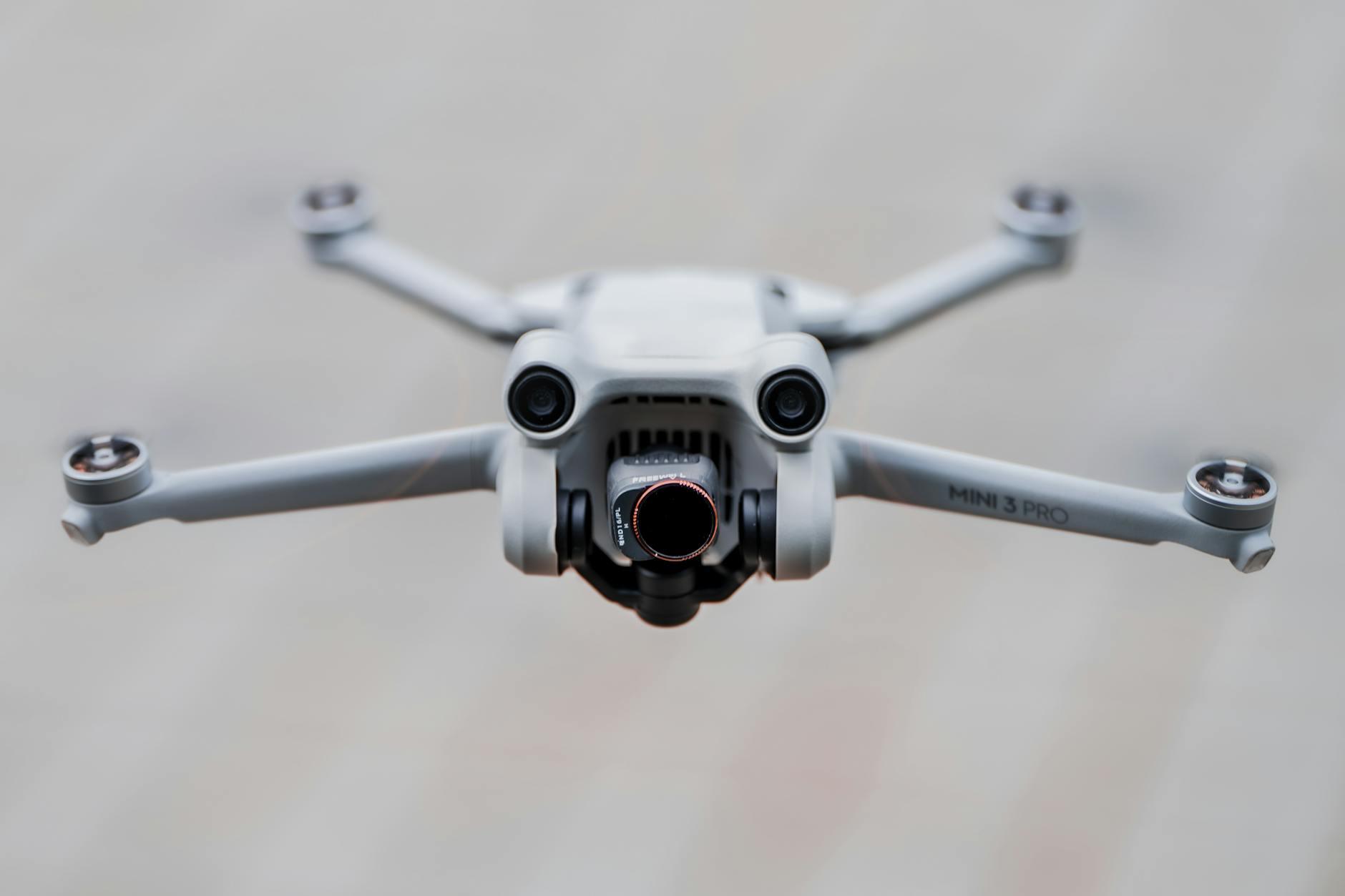
EagleNXT operates across three segments that are designed to work together. The drone hardware side centers on senseFly, a line of fixed-wing mapping UAVs that are particularly well suited for covering large agricultural parcels efficiently. Unlike multirotors, fixed-wing drones can stay aloft longer and survey more acreage per flight, which matters when you are mapping a thousand-acre farm rather than inspecting a single greenhouse. The sensor segment is built around MicaSense, which produces multispectral and thermal imaging cameras that attach to UAVs and capture data across light wavelengths invisible to the human eye. This data reveals crop stress, irrigation problems, and nutrient deficiencies weeks before they become visible. The third segment, Ground Control, is a cloud-based SaaS platform for planning drone missions, managing fleets, and processing the imagery data that comes back. The industries served extend well beyond agriculture.
EagleNXT’s technology is also used in military and defense applications, public safety, surveying and mapping, and utilities inspection. This diversification matters because agricultural drone adoption, while growing, remains uneven. Many mid-size farms still cannot justify the cost of a dedicated drone program, which means companies that rely solely on ag sales face lumpy revenue cycles. However, diversification also means that EagleNXT’s agricultural focus is diluted — the company is not solely an ag-robotics business, which further undermines the “Google of agricultural robotics” framing. One notable technical achievement is the company’s EASA C2 certification in Europe, which opens up commercial drone operations across the European Union under standardized rules. Combined with its FAA Beyond Visual Line of Sight approval in the United States, EagleNXT has regulatory clearances that many smaller drone startups have not yet obtained. Regulatory approval is a genuine competitive advantage in an industry where flight restrictions remain one of the biggest barriers to adoption.
The Financial Picture Investors Need to Understand
The numbers tell a more complicated story than any promotional tagline. UAVS posted $13.39 million in total revenue for fiscal year 2024. By the trailing twelve months ending September 2025, that figure had declined to $12.64 million, a 6.34 percent year-over-year drop. For a company that is supposed to be riding the wave of agricultural technology adoption, declining revenue is a significant red flag. The stock’s 52-week range of $0.724 to $3.605 reflects the kind of volatility that is characteristic of speculative small-caps, not stable growth companies. There are some bright spots in the segment data.
Q3 2025 drone segment revenue came in at $6.03 million, up $1.38 million from the prior period, which suggests that hardware sales may be stabilizing or recovering. But one quarter does not make a trend, and investors should want to see sustained growth across multiple quarters before drawing conclusions. The NYSE compliance situation adds another layer of risk. In 2025, UAVS received a non-compliance notification regarding stockholders’ equity listing standards. The company submitted a remediation plan and has until October 23, 2026 to regain compliance. If it fails to do so, the stock could be delisted from NYSE American, which would severely limit liquidity and institutional investor access. Delisting risk is not a death sentence — companies do regain compliance — but it is a material concern that anyone evaluating UAVS as an investment must factor into their analysis.

How UAVS Stacks Up Against Agricultural Drone Competitors
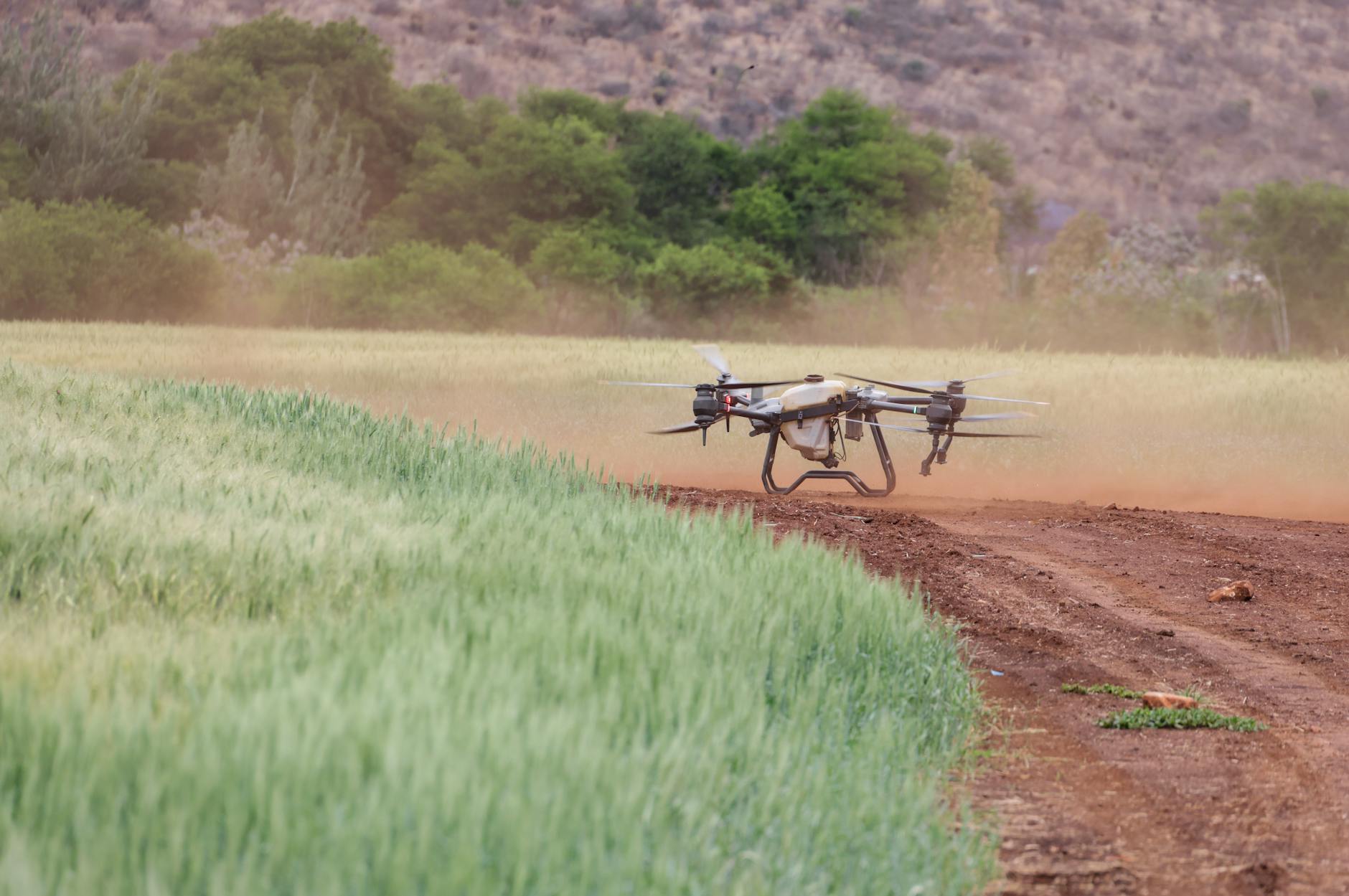
The agricultural drone market is projected to exceed $10 billion globally by 2030, which means there is a large addressable market. The question is how much of that market EagleNXT can realistically capture. The company was listed alongside Deepfield Robotics and AGCO Corporation in a 2021 PR Newswire industry report on agricultural robots, which places it in the conversation but does not indicate market leadership. The most instructive comparison is with XAG, the Chinese agricultural drone giant. XAG has accumulated over 9.3 million flight hours since 2022, operates across dozens of countries, and has built a massive patent portfolio around autonomous spraying and seeding. EagleNXT’s strength, by contrast, is in imaging and data collection rather than active field operations like spraying.
These are different use cases — MicaSense cameras help farmers see problems, while XAG drones help farmers treat problems — but in terms of revenue scale and operational footprint, XAG dwarfs UAVS. DJI’s agricultural division, Parrot’s ANAFI series, and companies like Sentera also compete in the multispectral imaging space that is central to EagleNXT’s value proposition. The tradeoff for investors is between EagleNXT’s regulatory advantages and vertical integration in Western markets versus the sheer scale and cost advantages of Asian competitors. If U.S. and European regulatory frameworks continue to favor domestically certified platforms — and the company’s inclusion on the U.S. Department of Defense’s Blue UAS list suggests this is a real possibility — then EagleNXT has a defensible niche. But a defensible niche is a far cry from Google-like dominance.
The Defense Pivot and What It Means for the Ag-Tech Story
On March 6, 2026, EagleNXT announced a strategic investment in Israel-based Aerodrome Group Ltd. to strengthen its autonomy and precision strike capabilities, with a right to form a U.S.-based joint venture spanning defense, public safety, agriculture, and commercial UAS markets. This is a notable strategic shift. A company that built its identity around agricultural drones and crop sensors is now investing in precision strike technology and defense autonomy. For agricultural stakeholders, this pivot introduces uncertainty. Defense contracts can be lucrative and could provide the revenue stability that agriculture alone has not delivered.
But they also demand different engineering priorities, different sales cycles, and different regulatory relationships. A company splitting its focus between helping farmers monitor soybean fields and providing autonomous strike capabilities to military customers is not necessarily going to excel at both. The Blue UAS list inclusion — which certifies drones as safe for Department of Defense use because they are free of Chinese-manufactured components — does give EagleNXT a legitimate pathway into government procurement. However, investors should watch closely to see whether defense revenue actually materializes or whether this remains aspirational. The broader warning here applies to any small-cap company making strategic pivots: diversification can be a sign of growth or a sign of desperation. When a company with declining core revenue announces investments in an entirely new market segment, the burden of proof is on management to demonstrate that they can execute in both domains simultaneously.
The Regulatory Moat That Actually Matters
One area where EagleNXT has built genuine differentiation is regulatory certification. The company holds FAA approval for Operations Over People, FAA Beyond Visual Line of Sight authorization, EASA C2 certification in Europe, and Blue UAS list status with the U.S. Department of Defense.
Each of these approvals required extensive testing, documentation, and compliance work that smaller competitors have not completed. This matters because the agricultural drone industry is moving from early-adopter experimentation toward regulated commercial deployment at scale. As insurance companies, government agencies, and large agribusinesses begin requiring certified platforms for liability and compliance reasons, companies with pre-existing regulatory approvals will have a significant head start. It is not the kind of flashy competitive advantage that generates investor excitement, but it may be the most durable asset EagleNXT has.
Where Agricultural Drone Technology Goes From Here
The global agricultural drone market’s projected growth to over $10 billion by 2030 reflects a genuine transformation in how farming works. Precision agriculture — using data to optimize inputs like water, fertilizer, and pesticides on a per-acre or even per-plant basis — is no longer experimental. It is increasingly standard practice on large commercial operations. Multispectral imaging, the core of EagleNXT’s MicaSense product line, is a foundational technology in this shift.
Whether EagleNXT will be a major beneficiary of this growth or get squeezed out by larger, better-funded competitors remains an open question. The company has the technology stack, the regulatory approvals, and the operational track record of over one million flights. What it lacks is scale, financial stability, and the kind of market position that would justify comparisons to the most dominant technology companies in history. The next twelve to eighteen months — as the NYSE compliance deadline approaches in October 2026 and defense investments either pay off or do not — will likely determine whether EagleNXT survives as an independent company, gets acquired, or fades into the long list of promising small-caps that never quite made it.
Conclusion
UAVS, now operating as EagleNXT, is a legitimate agricultural drone and sensor company with real technology, meaningful regulatory certifications, and a vertically integrated product stack spanning hardware, imaging, and software. It is not, however, “the Google of agricultural robotics” by any credible measure. With $12-13 million in annual revenue, declining year-over-year sales, NYSE compliance concerns, and a strategic pivot toward defense applications, the company’s future is genuinely uncertain.
Investors drawn in by promotional comparisons to tech giants should ground their analysis in the actual financial data and competitive landscape. For those interested in the agricultural robotics space more broadly, the sector’s fundamentals remain strong. The convergence of drone technology, multispectral imaging, AI-driven analytics, and increasingly supportive regulatory frameworks is creating real value for farmers worldwide. EagleNXT may participate in that value creation, but prospective investors and industry partners should evaluate the company based on its balance sheet, its competitive position relative to players like XAG and DJI, and whether its management can execute on both agricultural and defense strategies simultaneously — not on aspirational taglines.
Frequently Asked Questions
What does UAVS stock trade at currently?
As of March 2026, UAVS trades at approximately $1.05 on NYSE American, with a 52-week range of $0.724 to $3.605.
Is UAVS at risk of being delisted?
Yes. The company received a NYSE non-compliance notification in 2025 regarding stockholders’ equity standards and has until October 23, 2026 to regain compliance. Failure to do so could result in delisting.
What products does EagleNXT sell for agriculture?
The company offers senseFly fixed-wing mapping drones, MicaSense multispectral and thermal cameras for crop analysis, and Ground Control, a cloud-based SaaS platform for drone fleet management and data processing.
Who are UAVS’s main competitors in agricultural drones?
Key competitors include XAG (a major Chinese agricultural drone company with over 9.3 million flight hours since 2022), DJI’s agricultural division, Parrot, and Sentera. AGCO Corporation and Deepfield Robotics also operate in the broader agricultural robotics space.
What is the Blue UAS list?
The Blue UAS list is a U.S. Department of Defense certification indicating that a drone platform is free of Chinese-manufactured components and approved for government use. EagleNXT’s inclusion on this list gives it access to defense and government procurement opportunities.