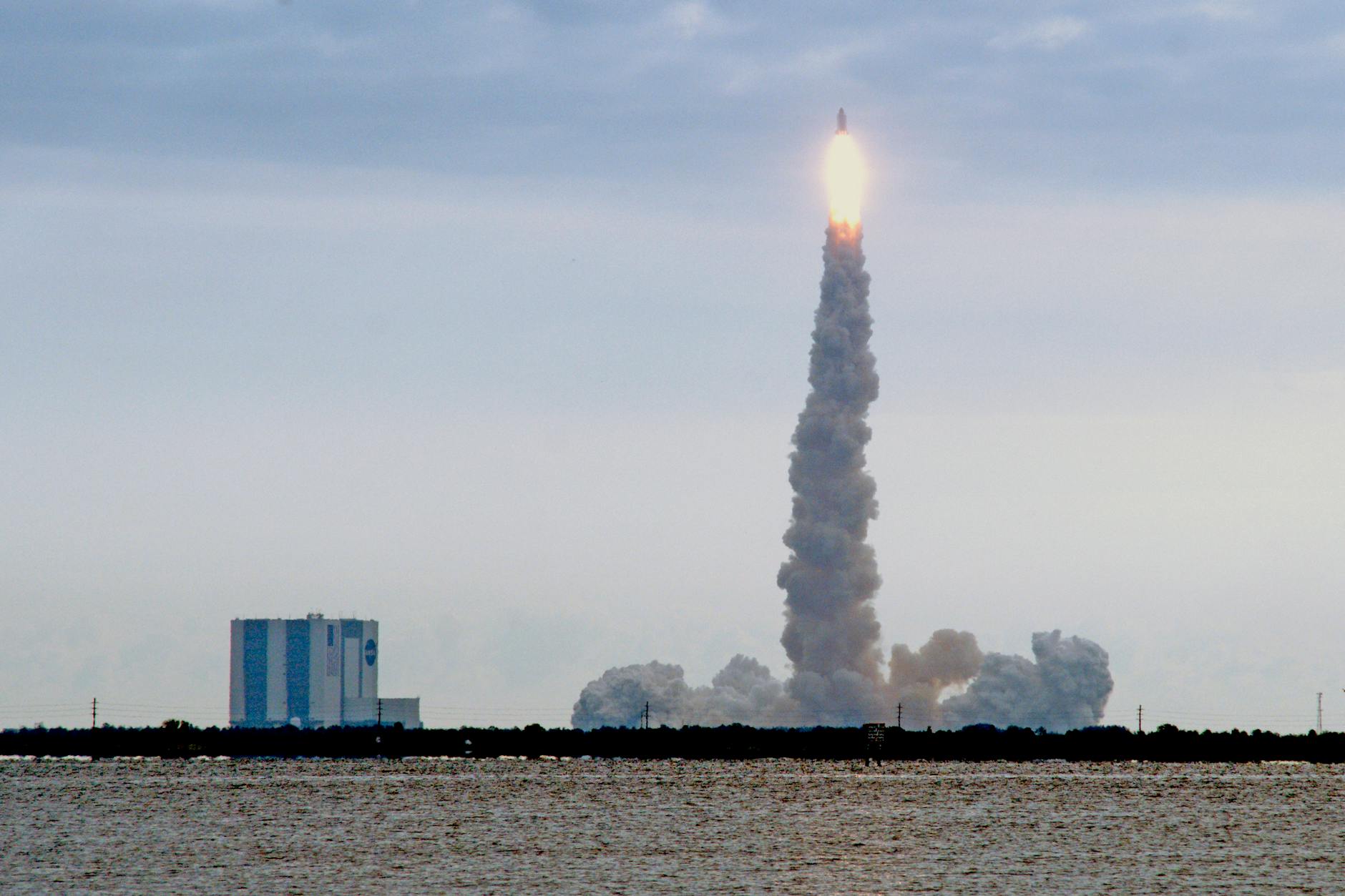

Artificial intelligence systems now detect missile launches within seconds of ignition by analyzing infrared satellite imagery, radar signatures, and acoustic sensor data simultaneously””a task that previously required human analysts minutes or hours to complete. The U.S. Space Force’s Space-Based Infrared System (SBIRS), enhanced with machine learning algorithms, can identify the heat signature of a ballistic missile launch and classify the threat type in under 60 seconds, providing critical early warning that enables defensive countermeasures. This real-time detection capability represents a fundamental shift from Cold War-era systems that relied heavily on human interpretation of sensor data.
The integration of AI into missile defense encompasses multiple detection modalities working in concert. Satellite constellations scan for infrared signatures while ground-based radars track trajectories, and AI systems fuse this data to predict impact points and recommend responses. For example, Israel’s Iron Dome system uses neural networks to calculate incoming rocket trajectories in milliseconds, determining which threats require interception and which will land in unpopulated areas””a decision process that would be impossible for human operators given the short engagement windows. This article examines how these AI detection systems function, their technical requirements, current limitations, and the trajectory of development across military organizations worldwide. We will explore specific implementations from the United States, Israel, and other nations, along with the challenges of false positive reduction and system reliability.
Table of Contents
- How Does AI Enable Real-Time Missile Launch Detection?
- Sensor Fusion and Multi-Domain Detection Architecture
- Machine Learning Approaches to Trajectory Prediction
- Balancing Speed and Accuracy in Threat Classification
- Adversarial AI and Detection System Vulnerabilities
- Commercial Space and Distributed Detection Networks
- How to Prepare
- How to Apply This
- Expert Tips
- Conclusion
- Frequently Asked Questions
How Does AI Enable Real-Time Missile Launch Detection?
AI enables real-time missile detection by processing massive sensor datasets through trained neural networks that recognize threat signatures faster than any human analyst could. Traditional detection systems generated alerts that required human verification, creating delays measured in minutes. Modern AI systems perform pattern recognition, classification, and threat assessment in parallel processes, compressing the detection-to-alert timeline to seconds. The technical architecture typically involves convolutional neural networks trained on thousands of historical launch signatures.
These networks learn to distinguish between missile exhaust plumes and similar heat sources like industrial facilities, aircraft engines, or natural phenomena like volcanic eruptions. The Defense Advanced Research Projects Agency (DARPA) reported that AI-enhanced detection systems reduced false positive rates by 85 percent compared to threshold-based alert systems in testing conducted between 2019 and 2022. However, the effectiveness depends heavily on training data quality. Systems trained primarily on liquid-fueled intercontinental ballistic missile signatures may perform poorly against solid-fuel tactical missiles with different infrared characteristics. The Russian Iskander-M tactical ballistic missile, for instance, presents a much smaller and shorter-duration heat signature than an ICBM, requiring specialized training datasets for reliable detection.

Sensor Fusion and Multi-Domain Detection Architecture
modern AI missile detection relies on sensor fusion””the integration of data from satellites, ground radars, sea-based sensors, and increasingly, commercial monitoring platforms into a unified threat picture. No single sensor type provides complete detection capability. Infrared satellites excel at detecting launches but cannot track cold warheads in midcourse flight. Radar systems track objects but struggle with stealth designs and decoys. AI systems correlate inputs from all sources to maintain continuous tracking. The U.S.
Missile defense Agency’s Command and Control, Battle Management, and Communications (C2BMC) system exemplifies this approach. It integrates data from SBIRS satellites, AN/TPY-2 radars, Aegis ship-based systems, and Ground-Based Midcourse Defense installations. Machine learning algorithms weight sensor inputs based on reliability scores that adjust dynamically based on environmental conditions and known sensor performance envelopes. The limitation here is latency””each additional sensor integration point adds processing time. If the system prioritizes completeness over speed, engagement windows shrink. Conversely, if speed is prioritized, the system may act on incomplete data. Current architectures typically achieve full sensor fusion within 15 to 30 seconds of initial detection, but this timeframe remains problematic for hypersonic threats traveling at Mach 5 or above, where every second of delay translates to 1.7 kilometers of additional distance covered.
Machine Learning Approaches to Trajectory Prediction
Once a launch is detected, AI systems must predict where the missile will go””a complex physics problem made harder by maneuvering warheads and decoys. Traditional ballistic trajectory calculation uses Newtonian physics, but modern threats like hypersonic glide vehicles follow unpredictable paths that require different approaches. Recurrent neural networks and long short-term memory (LSTM) architectures have proven effective for trajectory prediction because they can model sequential data with temporal dependencies. The Chinese DF-ZF hypersonic glide vehicle, capable of maneuvering during its glide phase, cannot be tracked using purely physics-based prediction.
Instead, AI systems trained on flight test data learn to anticipate maneuver patterns, though prediction accuracy decreases significantly beyond 60 seconds of flight time. Lockheed Martin’s development of the Hypersonic and Ballistic Tracking Space Sensor (HBTSS) specifically addresses this challenge. The system uses AI to maintain tracking custody of hypersonic weapons as they transition from boost phase through glide phase, handing off targeting data to interceptor systems. early testing demonstrated track maintenance with errors under 100 meters at ranges exceeding 1,000 kilometers, though these results were achieved against cooperative targets rather than adversarial ones designed to defeat tracking.

Balancing Speed and Accuracy in Threat Classification
The fundamental tradeoff in AI-based missile detection is between response speed and classification accuracy. A system tuned for maximum speed may generate false positives that waste interceptor missiles costing tens of millions of dollars each. A system tuned for accuracy may delay response until engagement becomes impossible. Finding the optimal balance requires careful calibration based on the specific threat environment. The 1983 Soviet nuclear false alarm incident illustrates the stakes. Lieutenant Colonel Stanislav Petrov correctly identified a satellite warning as a false alarm caused by sunlight reflections, preventing a potential nuclear response.
AI systems face similar discrimination challenges. The difference is that modern systems must make these calls in seconds rather than the several minutes Petrov had available. Current approaches use tiered classification with different confidence thresholds triggering different responses. A detection with 95 percent confidence might immediately activate tracking systems and alert human commanders, while a 75 percent confidence detection might only trigger enhanced monitoring. Israel’s Arrow 3 system reportedly uses a three-tier classification scheme, though specific threshold values remain classified. The risk is that adversaries may study these thresholds and design weapons specifically to fall below detection confidence levels during critical engagement phases.
Adversarial AI and Detection System Vulnerabilities
AI detection systems are vulnerable to adversarial attacks””deliberate attempts to confuse or deceive machine learning algorithms. These attacks can take multiple forms, from physical modifications that alter sensor signatures to cyber intrusions that corrupt training data or inference processes. The same machine learning techniques that enable detection can be turned against these systems. Research published by MIT Lincoln Laboratory demonstrated that small perturbations to infrared signatures””modifications invisible to human analysts””could cause trained neural networks to misclassify missile types with high confidence. A detected ICBM might be classified as a less threatening short-range missile, potentially delaying response.
Conversely, decoy launches could be engineered to trigger maximum-threat classifications, exhausting defensive resources. The defense community has not solved this problem. Current mitigation approaches include ensemble methods that require multiple independent algorithms to agree before classification, anomaly detection systems that flag inputs significantly different from training data, and regular retraining with adversarial examples. However, if an adversary gains knowledge of the specific training data used, they can design attacks specifically tuned to exploit gaps. This creates an ongoing arms race between detection systems and adversarial countermeasures, with no permanent defensive advantage achievable.

Commercial Space and Distributed Detection Networks
The proliferation of commercial satellite constellations is transforming missile detection from a purely military capability into a multi-stakeholder domain. Companies like Planet Labs operate hundreds of Earth observation satellites that, while not designed for missile tracking, can provide supplementary detection data. This creates both opportunities and complications for national defense systems. The U.S.
Space Development Agency’s Tracking Layer, scheduled for initial deployment through 2026, incorporates commercial partnerships to achieve coverage that would be prohibitively expensive using traditional military satellite procurement. The architecture uses smaller, less capable satellites in larger numbers, with AI performing data aggregation and gap-filling. SpaceX’s involvement in building and launching these satellites demonstrates the blurred lines between commercial and military space. The tradeoff is that commercial systems may not meet military hardening and reliability standards, potentially creating vulnerabilities that dedicated military systems would not have.
How to Prepare
- **Acquire comprehensive training datasets** including historical launch signatures across multiple missile types, environmental conditions, and geographic regions. Without adequate training data, AI systems cannot reliably distinguish threats from non-threats. Datasets should include both successful detections and documented false alarms from legacy systems.
- **Establish sensor infrastructure with sufficient coverage** to provide the raw inputs AI systems require. This typically means infrared satellite coverage, ground-based radar networks, and data links capable of transmitting sensor outputs to processing centers with latency under one second.
- **Develop or acquire processing infrastructure** capable of running inference on trained models within required timeframes. Modern missile detection AI requires significant computational resources””often measured in petaflops””that cannot run on standard server hardware.
- **Create testing environments** that can simulate diverse threat scenarios without actual missile launches. This includes digital twins of sensor networks and threat models that generate synthetic training data for edge cases impossible to capture from real events.
- **Establish human-machine interface protocols** defining how AI outputs translate into human decisions and actions. The best detection system provides no value if operators cannot interpret its outputs or are overwhelmed with information.
How to Apply This
- **Begin with human-on-the-loop operations** where AI systems generate alerts and recommendations but human operators make all engagement decisions. This builds operator confidence and creates feedback loops for system improvement while preventing costly false-positive responses.
- **Implement graduated automation** based on demonstrated reliability. Functions like initial detection and tracking can transition to autonomous operation before higher-stakes decisions like interceptor launch authorization. Each function should meet specific accuracy thresholds before automation.
- **Maintain parallel legacy systems** during transition periods. The 2022 failure of a prototype AI tracking system during a multinational exercise demonstrated the risks of removing backup capabilities prematurely. Legacy systems should remain operational until AI replacements prove reliability across multiple operational scenarios.
- **Establish continuous retraining pipelines** that incorporate new threat data as it becomes available. Static AI models degrade in effectiveness as adversaries adapt. Monthly model updates represent a reasonable baseline, with provisions for emergency updates following observed adversary capability changes.
Expert Tips
- **Do not rely solely on space-based sensors** for detecting depressed trajectory submarine-launched ballistic missiles, which may not rise high enough for satellite detection during boost phase. Ground-based over-the-horizon radar remains essential for complete coverage.
- **Calibrate detection thresholds regionally** rather than globally. Threat environments differ substantially””a threshold appropriate for the Korean Peninsula will generate excessive false positives in regions with more commercial aviation and industrial activity.
- **Never assume training data completeness.** Every nation’s missile arsenal includes variants and modifications not captured in publicly available or intelligence-derived datasets. Build uncertainty quantification into all AI outputs.
- **Integrate commercial weather data** to improve detection accuracy. Atmospheric conditions significantly affect infrared propagation, and military weather satellites alone may not provide sufficient resolution for optimal algorithm performance.
- **Test against friendly forces in realistic scenarios** before trusting detection systems against adversaries. Known limitations discovered during training exercises are preferable to surprises during actual engagements.
Conclusion
AI-powered missile detection represents a generational advance in defensive capabilities, compressing warning times from minutes to seconds and enabling responses against threats that would otherwise be impossible to counter. The combination of multi-spectral sensor networks, machine learning classification, and automated trajectory prediction creates layered detection architectures substantially more capable than their predecessors. However, these systems remain imperfect.
Adversarial attacks, training data limitations, and the inherent tradeoffs between speed and accuracy create persistent vulnerabilities. The nations deploying these capabilities must commit to continuous improvement, recognizing that missile detection is not a solved problem but an ongoing competition between offensive and defensive technologies. The most effective approach combines AI capabilities with human judgment, leveraging machine speed for detection while preserving human decision-making for response authorization.
Frequently Asked Questions
How long does it typically take to see results?
Results vary depending on individual circumstances, but most people begin to see meaningful progress within 4-8 weeks of consistent effort. Patience and persistence are key factors in achieving lasting outcomes.
Is this approach suitable for beginners?
Yes, this approach works well for beginners when implemented gradually. Starting with the fundamentals and building up over time leads to better long-term results than trying to do everything at once.
What are the most common mistakes to avoid?
The most common mistakes include rushing the process, skipping foundational steps, and failing to track progress. Taking a methodical approach and learning from both successes and setbacks leads to better outcomes.
How can I measure my progress effectively?
Set specific, measurable goals at the outset and track relevant metrics regularly. Keep a journal or log to document your journey, and periodically review your progress against your initial objectives.
When should I seek professional help?
Consider consulting a professional if you encounter persistent challenges, need specialized expertise, or want to accelerate your progress. Professional guidance can provide valuable insights and help you avoid costly mistakes.
What resources do you recommend for further learning?
Look for reputable sources in the field, including industry publications, expert blogs, and educational courses. Joining communities of practitioners can also provide valuable peer support and knowledge sharing.