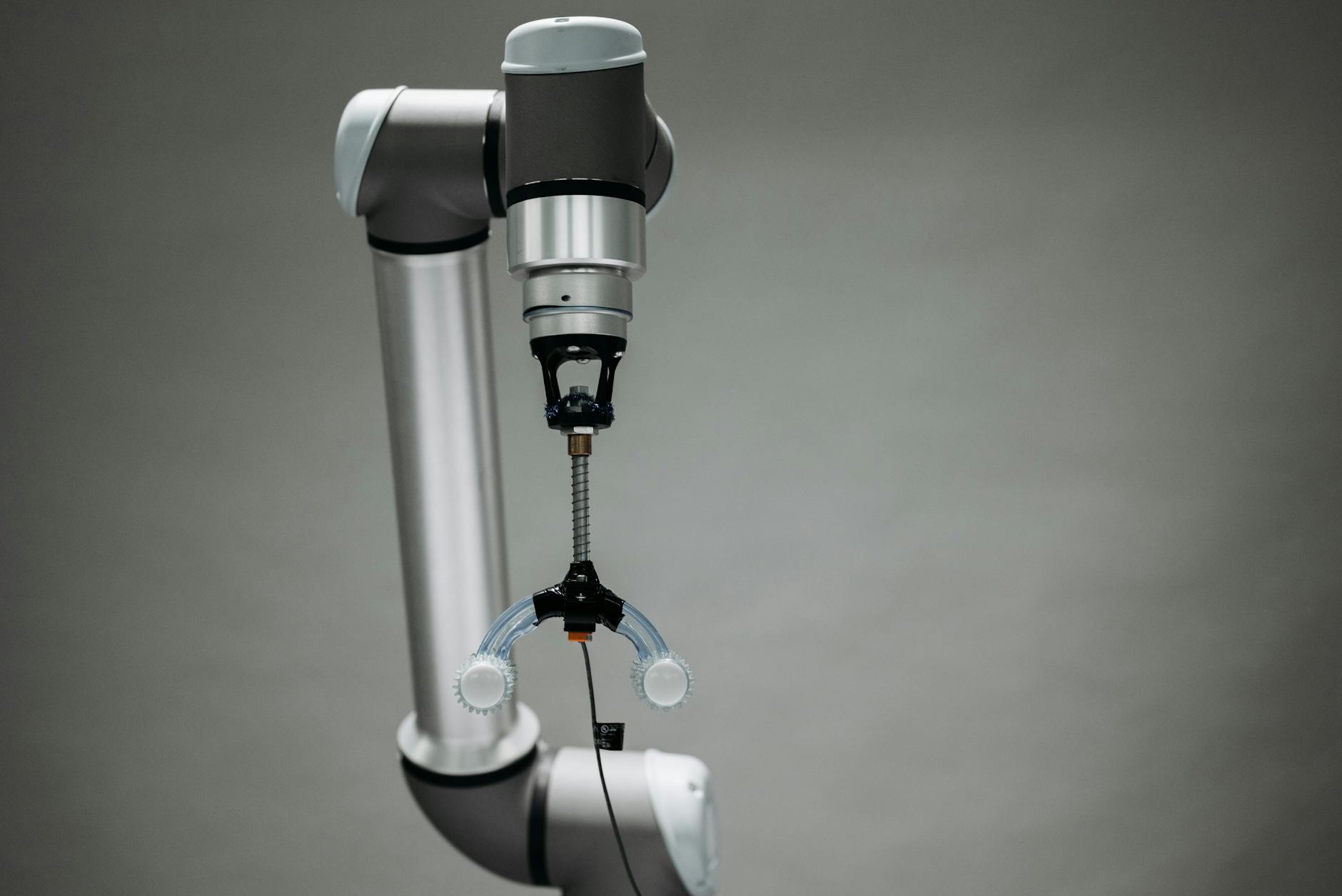

Arbe Robotics stands out as one of the most compelling robotics stocks under $20 for investors seeking exposure to the autonomous vehicle and advanced driver assistance systems (ADAS) market. The Israeli-based company has developed proprietary 4D imaging radar technology that addresses critical limitations in existing sensing solutions, positioning it at the intersection of robotics, artificial intelligence, and automotive safety. As the autonomous vehicle industry continues to mature and regulatory frameworks increasingly mandate advanced safety features, companies like Arbe that provide foundational sensing technology are attracting significant attention from both institutional investors and retail traders looking for growth opportunities in the sub-$20 price range. The investment thesis for robotics stocks has evolved considerably over the past several years. While early enthusiasm focused on humanoid robots and industrial automation, the market has recognized that enabling technologies””sensors, processors, and software platforms””often represent more accessible investment opportunities with clearer paths to profitability.
Arbe’s focus on radar technology fills a specific gap in the autonomous vehicle sensor stack, offering capabilities that complement lidar and cameras while functioning reliably in adverse weather conditions where other sensors struggle. This technological differentiation, combined with growing partnerships with major automotive manufacturers and tier-one suppliers, creates a compelling case for investors willing to accept the volatility inherent in small-cap technology stocks. Understanding why Arbe Robotics merits consideration requires examining both the company’s technological innovations and its position within the broader autonomous vehicle ecosystem. The following analysis explores the company’s core technology, financial metrics, competitive advantages, and risk factors that investors should weigh when evaluating this robotics stock. By the end of this comprehensive examination, readers will have a clearer picture of whether Arbe fits within their investment strategy and risk tolerance, as well as practical steps for conducting further due diligence on this emerging player in the robotics and automation sector.
Table of Contents
- What Makes Arbe Robotics Stock Attractive for Investors Under the $20 Price Point?
- Understanding Arbe’s 4D Imaging Radar Technology and Its Robotics Applications
- How Arbe Compares to Other Low-Priced Robotics and Automation Stocks
- Evaluating the Investment Case for Buying Arbe Robotics Stock Now
- Risk Factors and Challenges Facing Arbe Robotics as a Robotics Stock
- The Role of 4D Imaging Radar in the Future of Autonomous Robotics
- How to Prepare
- How to Apply This
- Expert Tips
- Conclusion
- Frequently Asked Questions
What Makes Arbe Robotics Stock Attractive for Investors Under the $20 Price Point?
Arbe robotics trades at a price point that makes it accessible to retail investors while still representing a company with substantial technological assets and commercial partnerships. The stock’s valuation reflects both the early-stage nature of the company’s revenue generation and the significant market opportunity in automotive radar systems. Unlike more established automotive suppliers that trade at premium valuations, Arbe offers exposure to the same end markets at a fraction of the market capitalization, creating asymmetric upside potential if the company executes on its commercial roadmap.
The company’s appeal extends beyond simple price accessibility. Arbe has secured design wins with multiple automotive manufacturers and tier-one suppliers, including partnerships that could translate into meaningful revenue as these programs move from development to production. The automotive industry operates on long development cycles, typically three to five years from initial design win to volume production, which means that Arbe’s current partnerships represent future revenue streams that are not yet reflected in current financial statements. This dynamic creates an opportunity for investors who can identify companies in the pre-revenue or early-revenue phase of automotive programs.
- **Low share price creates accessibility**: Retail investors can build meaningful positions without significant capital outlay, allowing for dollar-cost averaging strategies
- **Pre-revenue valuation discount**: The stock trades at a discount to potential future cash flows from announced design wins and partnerships
- **High growth sector exposure**: Autonomous vehicles and ADAS represent one of the fastest-growing segments in automotive technology, with radar playing an increasingly central role

Understanding Arbe’s 4D Imaging Radar Technology and Its Robotics Applications
Arbe’s core technological innovation lies in its 4D imaging radar platform, which represents a significant advancement over traditional automotive radar systems. Conventional radar provides information about the distance, velocity, and angle of objects, but Arbe’s system adds a fourth dimension””elevation””enabling the radar to create detailed three-dimensional images of the environment. This capability allows the system to distinguish between a vehicle and an overpass, a pedestrian and a traffic sign, or a motorcycle and a bicycle with far greater accuracy than legacy radar technology.
The technical specifications of Arbe’s radar system demonstrate its differentiation. The company’s Phoenix radar chipset enables ultra-high resolution with 2048 virtual channels, compared to the 12-48 channels typical of conventional automotive radar. This increased channel count translates to approximately 100 times better resolution, allowing the radar to detect and classify objects at distances exceeding 300 meters while maintaining the ability to identify small objects like pedestrians and cyclists. The system processes this information in real-time, generating what the company describes as a “radar point cloud” similar to the output of lidar systems but at a fraction of the cost and with superior performance in rain, fog, snow, and direct sunlight.
- **Resolution advantage**: 100x improvement over conventional radar enables object classification previously impossible with radar alone
- **Weather resilience**: Unlike cameras and lidar, radar maintains full performance in adverse weather conditions including heavy rain, fog, and snow
- **Cost efficiency**: Radar sensors cost significantly less than lidar systems while providing complementary capabilities, making them essential for mass-market autonomous vehicle deployment
How Arbe Compares to Other Low-Priced Robotics and Automation Stocks
The universe of robotics stocks trading under $20 includes a diverse range of companies, from industrial automation firms to autonomous vehicle technology providers. Arbe occupies a specific niche within this landscape, focusing on sensing technology rather than complete robotics systems. This positioning creates a different risk-reward profile compared to companies building end-to-end robotics solutions, as Arbe’s success depends on the broader adoption of autonomous vehicles rather than the company’s ability to manufacture and sell complete products.
Compared to other automotive technology companies in similar price ranges, Arbe demonstrates several distinguishing characteristics. The company’s intellectual property portfolio includes over 100 patents covering its radar architecture, signal processing algorithms, and system-level innovations. This patent protection creates barriers to entry and potential licensing opportunities that pure-play hardware companies may lack. Additionally, Arbe’s fabless business model””designing chips that are manufactured by third-party foundries””allows the company to scale production without the capital intensity of operating its own fabrication facilities.
- **Focused technology approach**: Unlike diversified robotics companies, Arbe’s concentrated focus on radar allows deeper expertise and faster innovation
- **Intellectual property moat**: Extensive patent portfolio protects core innovations and creates potential licensing revenue streams
- **Scalable business model**: Fabless semiconductor approach enables margin expansion as volume increases without proportional capital expenditure

Evaluating the Investment Case for Buying Arbe Robotics Stock Now
Timing considerations for investing in early-stage technology companies require balancing the desire to capture upside potential against the risks of investing before commercial validation. Arbe currently stands at an inflection point where multiple design wins are progressing toward production, creating the potential for revenue acceleration in the coming years. The company’s recent announcements regarding partnerships with major automotive manufacturers suggest that its technology has passed rigorous validation processes, reducing but not eliminating technology risk.
The broader market environment for autonomous vehicle technology has also evolved in ways that benefit radar-focused companies like Arbe. Early autonomous vehicle development emphasized lidar as the primary sensing modality, but the industry has increasingly recognized the importance of sensor fusion””combining radar, lidar, cameras, and ultrasonic sensors to create redundant perception systems. This shift has elevated radar from a supporting role to a critical component of autonomous vehicle architectures, expanding the addressable market for companies like Arbe that offer differentiated radar solutions.
- **Approaching commercial inflection**: Design wins moving to production create near-term catalysts for revenue growth
- **Industry validation**: Partnerships with major automotive manufacturers demonstrate technology acceptance
- **Sensor fusion trend**: Growing recognition of radar’s importance in autonomous vehicle architectures expands addressable market
Risk Factors and Challenges Facing Arbe Robotics as a Robotics Stock
Investing in early-stage technology companies carries inherent risks that investors must understand and accept. Arbe faces several challenges that could impact its stock price and long-term prospects. The company currently operates at a loss and will require continued investment in research and development, sales, and marketing to achieve its growth objectives. While the company has raised capital through its public listing and subsequent financing rounds, there is no guarantee that it will achieve profitability or that its cash runway will be sufficient to reach that milestone.
Competition in the automotive radar market includes well-established players with significant resources and existing relationships with automotive manufacturers. Companies like Continental, Bosch, and Aptiv have decades of experience supplying radar systems to the automotive industry and are developing their own advanced radar technologies. While Arbe’s technical differentiation provides advantages, the company must continue innovating to maintain its lead as competitors invest in similar capabilities. Additionally, the timeline for autonomous vehicle adoption remains uncertain, with regulatory, technical, and consumer acceptance challenges that could delay the market opportunity that Arbe is targeting.
- **Operating losses**: Continued investment required before achieving profitability creates financing risk
- **Competitive pressure**: Established automotive suppliers developing competing solutions with greater resources
- **Market timing uncertainty**: Autonomous vehicle adoption timeline subject to regulatory and technical delays

The Role of 4D Imaging Radar in the Future of Autonomous Robotics
Beyond automotive applications, Arbe’s 4D imaging radar technology has potential applications in broader robotics markets. Autonomous mobile robots in warehouses, agricultural robots, and delivery robots all require sensing systems capable of navigating complex environments safely. The same characteristics that make Arbe’s radar valuable for autonomous vehicles””high resolution, weather resilience, and real-time processing””apply to these adjacent markets, potentially expanding the company’s addressable opportunity beyond automotive.
The convergence of autonomous vehicles and robotics creates interesting possibilities for companies positioned at the intersection of these markets. As the underlying sensing and computing technologies mature, they become applicable across multiple form factors and use cases. Arbe’s focus on developing a scalable radar platform could enable the company to address multiple market segments with variations of its core technology, diversifying revenue streams and reducing dependence on any single application or customer.
How to Prepare
- **Research the company’s technology fundamentals**: Read Arbe’s technical white papers and patent filings to understand the specific innovations that differentiate its 4D imaging radar from competitors. Understanding the technology helps evaluate claims about competitive advantages and market positioning.
- **Analyze financial statements and cash position**: Review quarterly and annual reports to understand the company’s burn rate, cash runway, and path to profitability. Calculate how long the company can operate at current spending levels and assess the likelihood of future dilution from additional capital raises.
- **Study the competitive landscape**: Identify and research competing radar technology providers, including both startups and established automotive suppliers. Understanding the competitive environment helps assess whether Arbe’s advantages are sustainable.
- **Evaluate partnership announcements**: Examine press releases and SEC filings related to design wins and partnerships. Assess the credibility and potential revenue impact of these relationships, recognizing that not all design wins translate to significant production volume.
- **Assess your personal risk tolerance**: Determine what percentage of your portfolio should be allocated to speculative technology investments and whether Arbe’s risk profile aligns with your investment objectives and timeline.
How to Apply This
- **Start with a small position**: Given the speculative nature of early-stage technology stocks, begin with a position size that allows for volatility without causing undue stress. Many investors limit individual small-cap positions to 1-3% of their total portfolio.
- **Set price alerts and monitor catalysts**: Establish alerts for significant price movements and upcoming events such as earnings releases, partnership announcements, or industry conferences where management may provide updates.
- **Consider averaging into the position**: Rather than investing the entire intended allocation at once, consider spreading purchases over several months to reduce timing risk and take advantage of potential price volatility.
- **Review the investment thesis regularly**: Schedule quarterly reviews of the investment thesis to assess whether the company is making progress toward commercial milestones and whether the original reasons for investing remain valid.
Expert Tips
- **Focus on design win progression**: Track announced partnerships from initial design win through development milestones to production. Revenue recognition typically occurs years after initial announcements, so monitoring progress provides insight into future financial performance.
- **Watch institutional ownership changes**: Monitor SEC filings for changes in institutional ownership, as sophisticated investors conducting deep due diligence may provide signals about the company’s prospects.
- **Understand the automotive development cycle**: Recognize that automotive programs take three to five years from design win to production, requiring patience and long-term thinking that differs from consumer technology investment timelines.
- **Evaluate management credibility**: Assess whether management delivers on stated timelines and objectives. A track record of meeting or exceeding guidance builds confidence, while consistent misses warrant caution.
- **Consider the macro environment**: Interest rates, semiconductor supply chains, and autonomous vehicle regulatory developments all impact Arbe’s prospects. Staying informed about industry-level trends helps contextualize company-specific news.
Conclusion
Arbe Robotics represents a differentiated opportunity within the robotics stock universe, offering exposure to autonomous vehicle technology through its innovative 4D imaging radar platform. The company’s technological advantages, growing partnership roster, and accessible share price create an investment thesis that appeals to investors seeking growth potential in the sub-$20 price range. The combination of high-resolution sensing capabilities, weather resilience, and competitive cost positioning addresses real needs in the autonomous vehicle market, providing a foundation for commercial success if the company executes on its roadmap.
The path forward for Arbe involves converting design wins into production revenue, a process that will unfold over the next several years as automotive programs move through development cycles. Investors considering Arbe must balance the potential for significant upside against the very real risks facing early-stage technology companies operating in capital-intensive markets with uncertain timelines. Those who have conducted thorough due diligence, understand the risks involved, and have appropriate position sizing can make informed decisions about whether Arbe fits within their broader investment strategy. The autonomous vehicle market continues to evolve, and companies providing foundational sensing technology will play important roles regardless of which vehicle manufacturers ultimately dominate.
Frequently Asked Questions
How long does it typically take to see results?
Results vary depending on individual circumstances, but most people begin to see meaningful progress within 4-8 weeks of consistent effort. Patience and persistence are key factors in achieving lasting outcomes.
Is this approach suitable for beginners?
Yes, this approach works well for beginners when implemented gradually. Starting with the fundamentals and building up over time leads to better long-term results than trying to do everything at once.
What are the most common mistakes to avoid?
The most common mistakes include rushing the process, skipping foundational steps, and failing to track progress. Taking a methodical approach and learning from both successes and setbacks leads to better outcomes.
How can I measure my progress effectively?
Set specific, measurable goals at the outset and track relevant metrics regularly. Keep a journal or log to document your journey, and periodically review your progress against your initial objectives.
When should I seek professional help?
Consider consulting a professional if you encounter persistent challenges, need specialized expertise, or want to accelerate your progress. Professional guidance can provide valuable insights and help you avoid costly mistakes.
What resources do you recommend for further learning?
Look for reputable sources in the field, including industry publications, expert blogs, and educational courses. Joining communities of practitioners can also provide valuable peer support and knowledge sharing.