
Serve Robotics has emerged as a compelling case study for investors asking why this low priced robotics play with real deployment news continues to attract attention in an industry dominated by billion-dollar valuations and speculative promises. Unlike many robotics companies that remain trapped in perpetual development cycles, Serve has actual robots operating on actual streets, delivering actual food to paying customers. This distinction matters enormously in a sector where the gap between prototype demonstrations and commercial viability has swallowed countless startups and billions in venture capital. The company occupies an unusual position in the robotics landscape. Spun out of Uber in 2021, Serve Robotics carries the DNA of a tech giant while operating with the agility and stock price of a small-cap growth company.
Its sidewalk delivery robots have completed tens of thousands of commercial deliveries, primarily through partnerships with Uber Eats, giving the company something rare in robotics: proven unit economics from real-world operations. For investors seeking exposure to autonomous technology without the premium valuations attached to companies like Tesla or established industrial robotics firms, Serve presents an intriguing alternative. This article examines the factors that make Serve Robotics worth examining closely, from its current deployment metrics and revenue model to the competitive dynamics shaping the last-mile delivery market. Readers will gain a clear understanding of the company’s operational reality, the challenges it faces in scaling, and the investment considerations that apply to small-cap robotics stocks. Whether you’re evaluating Serve as a potential investment or simply tracking the evolution of autonomous delivery technology, the following sections provide the context necessary for informed analysis.
Table of Contents
- What Makes Serve Robotics a Low Priced Robotics Stock With Actual Deployment Progress?
- Real Deployment News and Commercial Milestones for Serve Robotics
- The Competitive Landscape in Autonomous Sidewalk Delivery
- Understanding Serve Robotics Revenue Model and Path to Profitability
- Risks and Challenges Facing Low Priced Robotics Investments
- The Broader Market Opportunity for Autonomous Delivery Robots
- How to Prepare
- How to Apply This
- Expert Tips
- Conclusion
- Frequently Asked Questions
What Makes Serve Robotics a Low Priced Robotics Stock With Actual Deployment Progress?
Serve robotics trades at a fraction of the market capitalization of more prominent robotics and autonomous vehicle companies, yet it has achieved something many of those larger competitors have not: consistent commercial deployment with paying customers. As of late 2024, the company operates a fleet of robots primarily in Los Angeles, with expansion into additional markets underway. This operational footprint, while modest compared to traditional delivery networks, represents genuine progress in an industry where vaporware remains common.
The company’s stock price reflects both its small-cap status and the inherent risks of early-stage robotics commercialization. Shares have experienced significant volatility since the company went public through a SPAC merger in 2023, with prices fluctuating based on deployment announcements, partnership news, and broader market sentiment toward growth stocks. This volatility creates both opportunity and risk for investors, as the low share price means even modest absolute gains or losses translate into substantial percentage moves. Several factors contribute to Serve’s relatively low valuation compared to robotics peers:.
- **Revenue scale**: The company generates modest revenue relative to its market cap, as autonomous delivery remains in early commercial stages
- **Capital requirements**: Scaling a hardware robotics business requires significant ongoing investment in manufacturing, deployment, and maintenance
- **Market uncertainty**: Questions remain about the total addressable market for sidewalk delivery robots and the regulatory environment they’ll face

Real Deployment News and Commercial Milestones for Serve Robotics
The most significant differentiator for Serve Robotics is its track record of actual deployments rather than future promises. The company has announced several meaningful commercial milestones that demonstrate operational capability. In 2024, Serve completed its 100,000th commercial delivery, a number that provides real data about robot reliability, customer acceptance, and operational economics. Partnership expansion has driven much of this deployment activity.
The company’s relationship with Uber Eats provides access to existing delivery demand without requiring Serve to build its own consumer-facing platform. This arrangement allows Serve to focus on what it does best””building and operating robots””while leveraging Uber’s massive user base and merchant relationships. Additional partnerships with restaurant chains and convenience stores have added deployment density in existing markets. Key deployment developments include:.
- **Fleet expansion commitments**: Serve announced plans to deploy 2,000 robots by 2025, representing a substantial increase from its existing operational fleet
- **Geographic expansion**: Beyond Los Angeles, the company has announced deployment plans for additional metropolitan markets
- **Nvidia partnership**: A strategic investment and technology collaboration with Nvidia brings both capital and access to advanced computing platforms for autonomous navigation
The Competitive Landscape in Autonomous Sidewalk Delivery
Serve Robotics operates in a competitive but still nascent market for autonomous last-mile delivery. Several competitors have pursued similar sidewalk robot strategies, while others approach the problem through different form factors like aerial drones or larger autonomous vehicles. Understanding this competitive context is essential for evaluating Serve’s position and prospects.
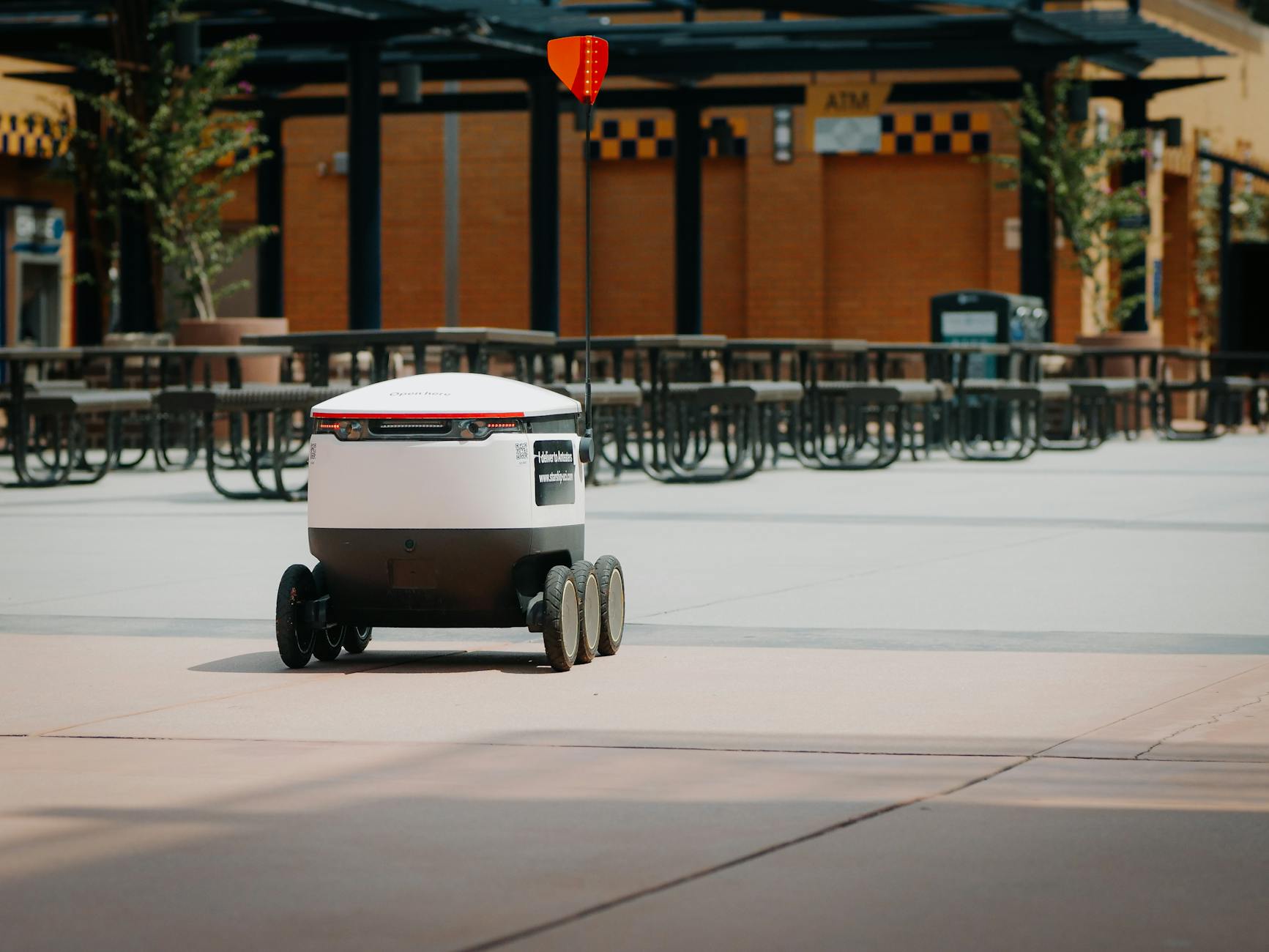
Starship Technologies, founded by Skype co-founders, operates the largest sidewalk delivery robot fleet globally, with significant deployments on college campuses and in select suburban markets. Starship’s head start gives it advantages in accumulated operational data and geographic coverage, but its focus on lower-density environments differs from Serve’s urban concentration. Other competitors like Coco and Kiwibot have pursued similar urban delivery strategies, creating direct competition in some markets. The competitive dynamics favor companies that can demonstrate:.
- **Operational reliability**: Robots that consistently complete deliveries without human intervention command better unit economics
- **Regulatory relationships**: Sidewalk robots require permits and face varying local regulations, making government relations crucial
- **Partnership access**: Relationships with major delivery platforms or restaurant chains provide demand that pure robotics companies struggle to generate independently
Understanding Serve Robotics Revenue Model and Path to Profitability
Serve Robotics generates revenue primarily through per-delivery fees paid by its platform partners, with Uber Eats representing the dominant source of delivery volume. This transactional model means revenue scales directly with the number of completed deliveries, creating a clear relationship between fleet size, utilization rates, and financial performance. The company’s path to profitability depends on achieving sufficient scale to cover fixed costs while maintaining or improving per-delivery economics.
Current financials show the typical profile of an early-stage robotics company: meaningful revenue growth but continued net losses as the company invests in fleet expansion, technology development, and market expansion. Management has outlined milestones for reaching cash flow breakeven, though like all projections in early-stage companies, these targets involve substantial execution risk. Critical factors in the profitability equation include:.
- **Robot production costs**: Manufacturing expenses per unit significantly impact the capital required for fleet expansion
- **Operational efficiency**: The ratio of deliveries completed per robot per day directly affects revenue generation
- **Maintenance and support**: Keeping robots operational requires ongoing investment in repair, software updates, and field support teams
- **Regulatory compliance**: Costs associated with permits, insurance, and safety requirements vary by jurisdiction
Risks and Challenges Facing Low Priced Robotics Investments
Investing in small-cap robotics companies like Serve carries risks that differ in magnitude and character from larger technology investments. The combination of hardware complexity, regulatory uncertainty, and capital intensity creates challenges that have historically proven difficult for many robotics startups to overcome. Dilution risk represents a particular concern for existing shareholders.
Robotics companies typically require multiple rounds of capital raising to fund operations and growth, and Serve has utilized various financing mechanisms since going public. Each capital raise can dilute existing shareholders, potentially offsetting gains from operational progress. Understanding the company’s cash runway and likely future financing needs helps investors assess this risk. Additional challenges worth monitoring include:.
- **Technology risk**: Autonomous systems must perform reliably across diverse conditions, and any high-profile failures could damage the company’s reputation and regulatory standing
- **Competitive pressure**: Well-funded competitors or new entrants could compress margins or capture market share
- **Regulatory changes**: Local governments could impose restrictions that limit deployment areas or increase operational costs
- **Economic sensitivity**: Demand for food delivery services fluctuates with economic conditions, potentially affecting utilization rates
The Broader Market Opportunity for Autonomous Delivery Robots
The last-mile delivery market represents one of the largest cost centers in modern retail and food service operations. Human delivery drivers account for the majority of delivery costs, creating strong economic incentives for automation. Various estimates place the total addressable market for autonomous delivery in the tens of billions of dollars annually in the United States alone, though the timeline for capturing this opportunity remains uncertain.
Sidewalk robots like those operated by Serve target a specific segment of this market: short-distance deliveries in dense urban environments where speed and cost matter more than cargo capacity. This segment aligns well with food delivery, convenience items, and small package logistics. The relatively low payload requirements””typically under 50 pounds””allow for smaller, lighter robots that can operate on sidewalks without the regulatory complexity of road-going autonomous vehicles.
How to Prepare
- **Research the company’s SEC filings thoroughly**: Quarterly and annual reports contain detailed information about revenue, cash burn rate, share count, and management’s discussion of risks and opportunities that press releases don’t cover
- **Understand the technology fundamentals**: Learn how sidewalk delivery robots navigate, what sensors they use, and what limitations current technology imposes on operational capabilities
- **Map the competitive landscape**: Identify direct competitors, assess their funding levels and deployment progress, and understand how Serve’s approach differs
- **Study the regulatory environment**: Research the permit requirements and restrictions in markets where Serve operates or plans to expand
- **Establish position sizing appropriate to risk**: Small-cap stocks with limited trading volume can move sharply on news; position sizes should reflect this volatility
How to Apply This
- **Set up alerts for company announcements**: Deployment milestones, partnership news, and financial reports can move the stock significantly, and timely information matters for active investors
- **Track operational metrics over time**: Following delivery counts, fleet size, and geographic expansion provides insight into execution progress independent of stock price movements
- **Compare quarterly results to management guidance**: Assess whether the company is meeting, exceeding, or falling short of its own projections
- **Monitor cash position and financing activity**: Watch for secondary offerings, debt issuances, or warrant exercises that could affect share count
Expert Tips
- **Focus on unit economics rather than top-line growth alone**: A company scaling rapidly but losing money on each delivery faces different challenges than one growing slowly with improving margins
- **Pay attention to insider transactions**: Purchases by executives and directors can signal confidence, while consistent selling may warrant scrutiny
- **Consider the optionality value**: Even if current operations don’t justify the valuation, successful technology development could enable licensing, acquisition, or expansion into adjacent markets
- **Watch for partnership expansion beyond Uber**: Dependence on a single platform partner creates concentration risk; diversification into additional channels would strengthen the business model
- **Track the broader autonomous vehicle regulatory environment**: Decisions affecting self-driving cars often influence the regulatory approach to sidewalk robots as well
Conclusion
Serve Robotics occupies a distinctive position in the robotics investment landscape as a low priced stock with genuine commercial deployment rather than purely speculative potential. The company has achieved measurable operational milestones””tens of thousands of completed deliveries, meaningful partnerships, and ongoing fleet expansion””that separate it from robotics ventures still searching for product-market fit. These accomplishments don’t guarantee future success, but they provide concrete evidence of technical capability and commercial viability that many peers lack.
The investment case for Serve ultimately depends on execution over the coming years. Can the company scale its fleet while improving unit economics? Will regulatory environments remain favorable for sidewalk robot deployment? Can Serve maintain its partnership with Uber while diversifying its customer base? Investors who can answer these questions with confidence””or who size their positions appropriately for the uncertainty involved””may find Serve Robotics an interesting way to gain exposure to the autonomous delivery revolution. Those who prefer to wait for more clarity can continue monitoring the company’s quarterly progress as the industry matures.
Frequently Asked Questions
How long does it typically take to see results?
Results vary depending on individual circumstances, but most people begin to see meaningful progress within 4-8 weeks of consistent effort. Patience and persistence are key factors in achieving lasting outcomes.
Is this approach suitable for beginners?
Yes, this approach works well for beginners when implemented gradually. Starting with the fundamentals and building up over time leads to better long-term results than trying to do everything at once.
What are the most common mistakes to avoid?
The most common mistakes include rushing the process, skipping foundational steps, and failing to track progress. Taking a methodical approach and learning from both successes and setbacks leads to better outcomes.
How can I measure my progress effectively?
Set specific, measurable goals at the outset and track relevant metrics regularly. Keep a journal or log to document your journey, and periodically review your progress against your initial objectives.
When should I seek professional help?
Consider consulting a professional if you encounter persistent challenges, need specialized expertise, or want to accelerate your progress. Professional guidance can provide valuable insights and help you avoid costly mistakes.
What resources do you recommend for further learning?
Look for reputable sources in the field, including industry publications, expert blogs, and educational courses. Joining communities of practitioners can also provide valuable peer support and knowledge sharing.