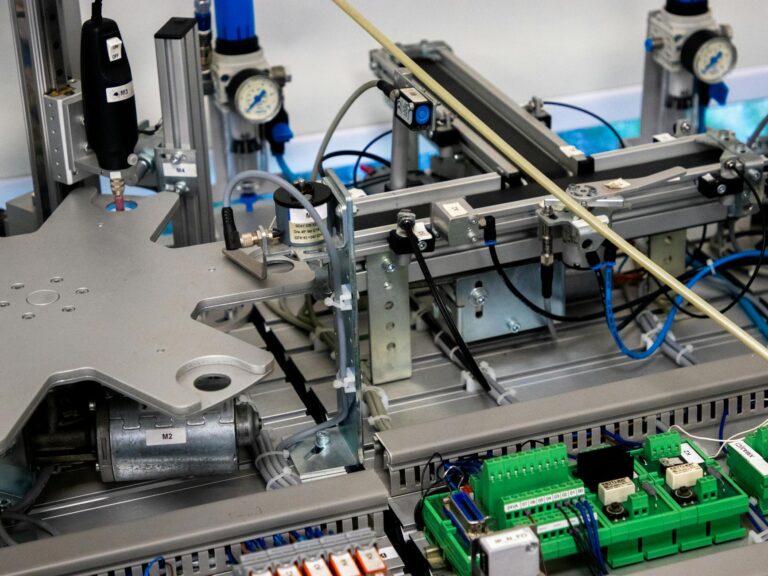

Understanding why Rockwell Automation stock belongs in your portfolio requires examining the intersection of industrial technology trends, financial fundamentals, and the accelerating global shift toward smart manufacturing. As factories worldwide undergo digital transformation, companies positioned at the center of this revolution present compelling investment opportunities that combine growth potential with industrial stability. The industrial automation sector faces a unique moment in history. Labor shortages, reshoring initiatives, sustainability mandates, and the rise of artificial intelligence in manufacturing create tailwinds that few industries can match.
Investors searching for exposure to these megatrends often struggle to identify companies with the right combination of market leadership, technological innovation, and financial resilience. Rockwell Automation, as the largest pure-play industrial automation company in the United States, addresses these concerns directly. By the end of this article, readers will understand Rockwell’s competitive positioning, revenue streams, growth drivers, and potential risks. The analysis covers financial metrics that matter for long-term investors, the company’s strategic initiatives, and how it compares to peers in the automation space. Whether building a technology-focused portfolio or seeking industrial exposure with secular growth characteristics, this comprehensive examination provides the foundation for informed decision-making.
Table of Contents
- What Makes Rockwell Automation a Strong Investment for Your Portfolio?
- Rockwell Automation’s Revenue Streams and Financial Performance
- Industrial Automation Trends Driving Rockwell Stock Growth
- How to Evaluate Rockwell Automation Stock for Portfolio Inclusion
- Risks and Challenges Facing Rockwell Automation Investors
- Rockwell’s Strategic Initiatives and Future Growth Catalysts
- How to Prepare
- How to Apply This
- Expert Tips
- Conclusion
- Frequently Asked Questions
What Makes Rockwell Automation a Strong Investment for Your Portfolio?
Rockwell Automation (NYSE: ROK) commands a distinctive position in the industrial automation landscape that few competitors can replicate. Founded in 1903 and headquartered in Milwaukee, Wisconsin, the company has evolved from a motor control manufacturer into a comprehensive provider of industrial automation solutions spanning hardware, software, and services. This transformation reflects broader industry trends while demonstrating management’s ability to adapt to changing market demands.
The company’s investment thesis rests on several structural advantages. Rockwell maintains the largest installed base of programmable logic controllers (PLCs) and distributed control systems in North America, creating recurring revenue streams through parts, upgrades, and services. This installed base represents decades of customer relationships and switching costs that competitors struggle to overcome. When a factory builds its automation infrastructure around Rockwell’s architecture, changing vendors requires significant capital expenditure and operational disruption.
- **Market leadership**: Rockwell holds approximately 50% market share in discrete automation in North America, with growing presence in Europe and Asia-Pacific
- **Recurring revenue**: Annual recurring revenue from software and services exceeded $2 billion in fiscal 2024, representing roughly 25% of total revenue
- **Customer stickiness**: Average customer relationship spans over 15 years, with retention rates above 95% for major accounts
- **Innovation pipeline**: Research and development spending consistently runs at 6-7% of revenue, funding next-generation solutions

Rockwell Automation’s Revenue Streams and Financial Performance
Understanding Rockwell’s financial architecture reveals why the stock merits portfolio consideration. The company operates through three reportable segments: Intelligent Devices, Software & Control, and Lifecycle Services. This diversified structure provides both stability and growth vectors that appeal to different investor objectives. Intelligent Devices represents the traditional hardware business, including drives, motion control systems, sensors, and industrial components. This segment generates approximately 40% of revenue and maintains healthy margins through premium pricing and operational efficiency.
Software & Control encompasses the company’s expanding digital offerings, including its FactoryTalk suite, Plex cloud manufacturing platform, and various analytics tools. Lifecycle Services captures installation, training, maintenance, and consulting revenue that grows alongside the installed base. Fiscal 2024 financial results demonstrated resilience despite challenging macroeconomic conditions. Total revenue reached approximately $9.1 billion, with adjusted earnings per share of $12.12. The company maintains a strong balance sheet with investment-grade credit ratings from major agencies. Free cash flow conversion consistently exceeds 100% of net income, funding both organic investments and shareholder returns.
- **Gross margins**: Hardware margins typically range from 35-40%, while software margins exceed 70%
- **Operating leverage**: Incremental margins on revenue growth often surpass 40% due to fixed cost absorption
- **Capital allocation**: Management targets returning 50-70% of free cash flow to shareholders through dividends and buybacks
- **Dividend track record**: 14 consecutive years of dividend increases with a current yield around 1.8%
Industrial Automation Trends Driving Rockwell Stock Growth
The macro environment for industrial automation has rarely been more favorable. Multiple secular trends converge to drive sustained demand for the solutions Rockwell provides, creating growth visibility that extends well beyond typical business cycles. Understanding these trends helps investors appreciate why the automation sector deserves long-term portfolio allocation. Labor dynamics fundamentally altered manufacturing economics over the past decade. The United States faces a projected shortage of 2.1 million manufacturing workers by 2030, according to Deloitte and the Manufacturing Institute.
This shortage forces companies to automate tasks previously performed by humans, regardless of automation’s return on investment calculations. When workers simply cannot be found, automation becomes necessary rather than optional. Rockwell’s solutions directly address this constraint by enabling factories to produce more output with fewer workers. Reshoring and nearshoring initiatives add another demand layer. Geopolitical tensions, supply chain disruptions during the pandemic, and government incentives through legislation like the CHIPS Act and Inflation Reduction Act encourage companies to build manufacturing capacity in North America. Every new factory requires automation infrastructure, and Rockwell’s domestic market leadership positions it to capture disproportionate share of this investment wave.
- **Smart manufacturing adoption**: Only 30% of factories globally have implemented comprehensive digital solutions, indicating substantial runway for penetration
- **Sustainability requirements**: Automation enables energy efficiency improvements of 10-30%, helping manufacturers meet emissions targets
- **Artificial intelligence integration**: Rockwell’s partnerships with Microsoft and NVIDIA bring generative AI capabilities to factory floors

How to Evaluate Rockwell Automation Stock for Portfolio Inclusion
Assessing any stock requires examining valuation metrics, competitive positioning, and risk factors specific to the company and sector. Rockwell trades at premium multiples relative to broader industrial indices, reflecting its growth characteristics and market position. Investors must determine whether this premium is justified by the company’s fundamentals. Valuation analysis typically begins with price-to-earnings ratios. Rockwell historically trades at 25-30x forward earnings, compared to 18-20x for the broader industrial sector.
This premium reflects higher growth rates, superior margin profiles, and the secular tailwinds supporting automation spending. Comparing Rockwell to automation peers like Emerson Electric, Honeywell, or Siemens provides additional context, though none of these competitors offer pure-play automation exposure. Enterprise value to EBITDA ratios offer another lens for evaluation. At approximately 18-20x EV/EBITDA, Rockwell commands multiples similar to high-quality industrial technology companies. The company’s growing software mix supports this valuation, as software businesses typically deserve higher multiples than hardware-centric models due to recurring revenue characteristics and margin expansion potential.
- **Growth rates**: Management targets 7-10% organic revenue growth over the cycle, with higher growth from software and services
- **Margin expansion**: Long-term operating margin targets exceed 25%, up from approximately 22% currently
- **Return on invested capital**: ROIC consistently exceeds 25%, well above the company’s weighted average cost of capital
- **Competitive moat**: High switching costs, proprietary protocols, and ecosystem lock-in create durable advantages
Risks and Challenges Facing Rockwell Automation Investors
No investment analysis is complete without honest assessment of risks. Rockwell faces cyclical exposure, competitive threats, and execution challenges that could impair returns under certain scenarios. Prudent investors weigh these factors against the growth opportunity. Cyclicality represents the most significant near-term risk. Industrial capital spending correlates strongly with economic conditions, and recessions typically produce 15-25% revenue declines for automation companies.
Rockwell’s growing software and services mix provides some buffer, as these revenue streams prove more resilient than hardware sales, but the company cannot fully escape industrial cycles. The company demonstrated this vulnerability in 2024 when destocking and project delays caused organic revenue to decline mid-single digits. Competitive dynamics also warrant attention. European giants Siemens and ABB invest heavily in automation, while Japanese players like Fanuc and Keyence maintain technological leadership in specific categories. Chinese automation companies increasingly challenge incumbents on price, though quality and support gaps remain. Rockwell must continue innovating to maintain its premium positioning and market share.
- **Interest rate sensitivity**: Higher rates increase the cost of capital for customers funding automation projects
- **Customer concentration**: Top 100 customers represent approximately 25% of revenue, creating some concentration risk
- **Acquisition integration**: Rockwell has made numerous acquisitions; poor integration could impair returns
- **Technology disruption**: New automation architectures could threaten Rockwell’s protocol-based competitive advantages

Rockwell’s Strategic Initiatives and Future Growth Catalysts
Management’s strategic roadmap provides insight into how Rockwell plans to compound value over the coming decade. The company pursues several initiatives designed to accelerate growth, expand margins, and strengthen competitive positioning in an evolving industrial landscape. Software transformation sits at the center of Rockwell’s strategy. The acquisition of Plex Systems in 2021 for $2.2 billion brought cloud-native manufacturing execution capabilities into the portfolio. Subsequent acquisitions of Fiix, Kalypso, and other software companies built out the digital stack.
Management targets software and digital services reaching $1.5 billion in annual recurring revenue by 2026, roughly triple the level from 2020. This transition matters because software revenue carries higher margins, greater predictability, and higher valuation multiples than hardware. Geographic expansion offers another growth vector. While North America remains Rockwell’s stronghold, the company increasingly targets Asia-Pacific and European markets where its share lags domestic levels. Investments in local sales teams, partnerships with regional integrators, and product localization support this international push. Emerging markets present particular opportunity as manufacturing bases expand across Southeast Asia, India, and Latin America.
How to Prepare
- **Review recent financial filings**: Read the most recent 10-K and 10-Q filings to understand current financial performance, segment dynamics, and management commentary on market conditions. Pay particular attention to order trends and backlog levels, which provide leading indicators of future revenue.
- **Analyze the competitive landscape**: Study Rockwell’s position relative to Siemens, ABB, Emerson, Honeywell, and specialized players. Understand where Rockwell maintains advantages and where competitors pose threats. Industry reports from firms like Interact Analysis or ARC Advisory Group provide useful context.
- **Assess valuation relative to growth**: Calculate key metrics including P/E, EV/EBITDA, and price-to-free-cash-flow ratios. Compare current valuations to historical ranges and peer companies. Determine whether the current price offers attractive risk-reward given your growth assumptions.
- **Understand macro exposure**: Research industrial production trends, manufacturing capital expenditure cycles, and leading indicators like the ISM Manufacturing Index. Rockwell’s performance correlates with these factors, and timing entry during cyclical weakness can enhance returns.
- **Define position sizing and entry strategy**: Determine what percentage of your portfolio Rockwell should represent based on your diversification targets and conviction level. Consider dollar-cost averaging into the position rather than establishing full exposure immediately, particularly given cyclical considerations.
How to Apply This
- **Open a brokerage account with access to NYSE-listed securities**: Ensure your broker provides access to Rockwell Automation common stock (ticker: ROK) with reasonable commission structures. Most major brokers including Fidelity, Schwab, and Vanguard offer commission-free equity trading.
- **Set price alerts and limit orders**: Rather than buying at market price immediately, consider setting limit orders at target entry points based on your valuation analysis. Price alerts help you monitor the stock without constant attention.
- **Establish a monitoring framework**: Create a checklist of metrics and events to track, including quarterly earnings releases, analyst day presentations, and macroeconomic indicators. Schedule periodic portfolio reviews to reassess your thesis.
- **Consider tax-advantaged account placement**: Rockwell’s moderate dividend yield and long-term growth orientation make it suitable for retirement accounts where dividends and capital gains receive tax-advantaged treatment. Evaluate whether IRA or taxable account placement optimizes your after-tax returns.
Expert Tips
- **Focus on order trends over quarterly revenue**: Rockwell’s backlog and order rates provide better insight into future performance than current quarter results. Strong orders during weak revenue periods often precede recovery.
- **Monitor software annual recurring revenue growth**: The pace of ARR expansion indicates success of the strategic transformation. Acceleration suggests the software strategy is gaining traction; deceleration warrants closer examination.
- **Watch for cyclical entry points**: Industrial stocks often overcorrect during recessions, creating attractive entry opportunities. Rockwell’s recession drawdowns have historically been followed by strong recoveries as industrial spending rebounds.
- **Track management insider transactions**: Rockwell executives have significant stock-based compensation. Unusual buying or selling patterns sometimes precede material developments.
- **Compare to automation pure-plays globally**: While U.S. peers lack pure-play exposure, international companies like Fanuc, Keyence, or Cognex offer comparison points for valuation and performance benchmarking.
Conclusion
Rockwell Automation represents a compelling portfolio holding for investors seeking exposure to industrial digitalization, manufacturing automation, and the broader reshoring trend. The company’s market leadership, recurring revenue streams, and strategic transformation toward software create a differentiated investment profile that combines industrial stability with technology-like growth characteristics. Financial discipline, consistent capital returns, and management’s track record of navigating cycles provide additional comfort for long-term holders.
The investment case ultimately rests on whether secular tailwinds in automation overcome cyclical headwinds that periodically affect industrial spending. For investors with multi-year time horizons, the structural drivers of automation demand appear durable and accelerating. Labor shortages are not temporary phenomena, reshoring incentives continue expanding, and artificial intelligence integration opens new applications for Rockwell’s solutions. Those who understand these dynamics and maintain patience through inevitable cyclical volatility position themselves to benefit from one of the most significant industrial transformations in decades.
Frequently Asked Questions
How long does it typically take to see results?
Results vary depending on individual circumstances, but most people begin to see meaningful progress within 4-8 weeks of consistent effort. Patience and persistence are key factors in achieving lasting outcomes.
Is this approach suitable for beginners?
Yes, this approach works well for beginners when implemented gradually. Starting with the fundamentals and building up over time leads to better long-term results than trying to do everything at once.
What are the most common mistakes to avoid?
The most common mistakes include rushing the process, skipping foundational steps, and failing to track progress. Taking a methodical approach and learning from both successes and setbacks leads to better outcomes.
How can I measure my progress effectively?
Set specific, measurable goals at the outset and track relevant metrics regularly. Keep a journal or log to document your journey, and periodically review your progress against your initial objectives.
When should I seek professional help?
Consider consulting a professional if you encounter persistent challenges, need specialized expertise, or want to accelerate your progress. Professional guidance can provide valuable insights and help you avoid costly mistakes.
What resources do you recommend for further learning?
Look for reputable sources in the field, including industry publications, expert blogs, and educational courses. Joining communities of practitioners can also provide valuable peer support and knowledge sharing.
Related Reading
- ABB Robotics Stock Analysis: Industrial Automation Leader
- Why Venture Capital Is Flooding Into Humanoid Robot Startups
- Fanuc Stock: The Japanese Robotics Giant Investors Overlook
- Top 5 Robotics ETFs for Diversified Automation Exposure
- How to Build a Robotics-Focused Investment Portfolio