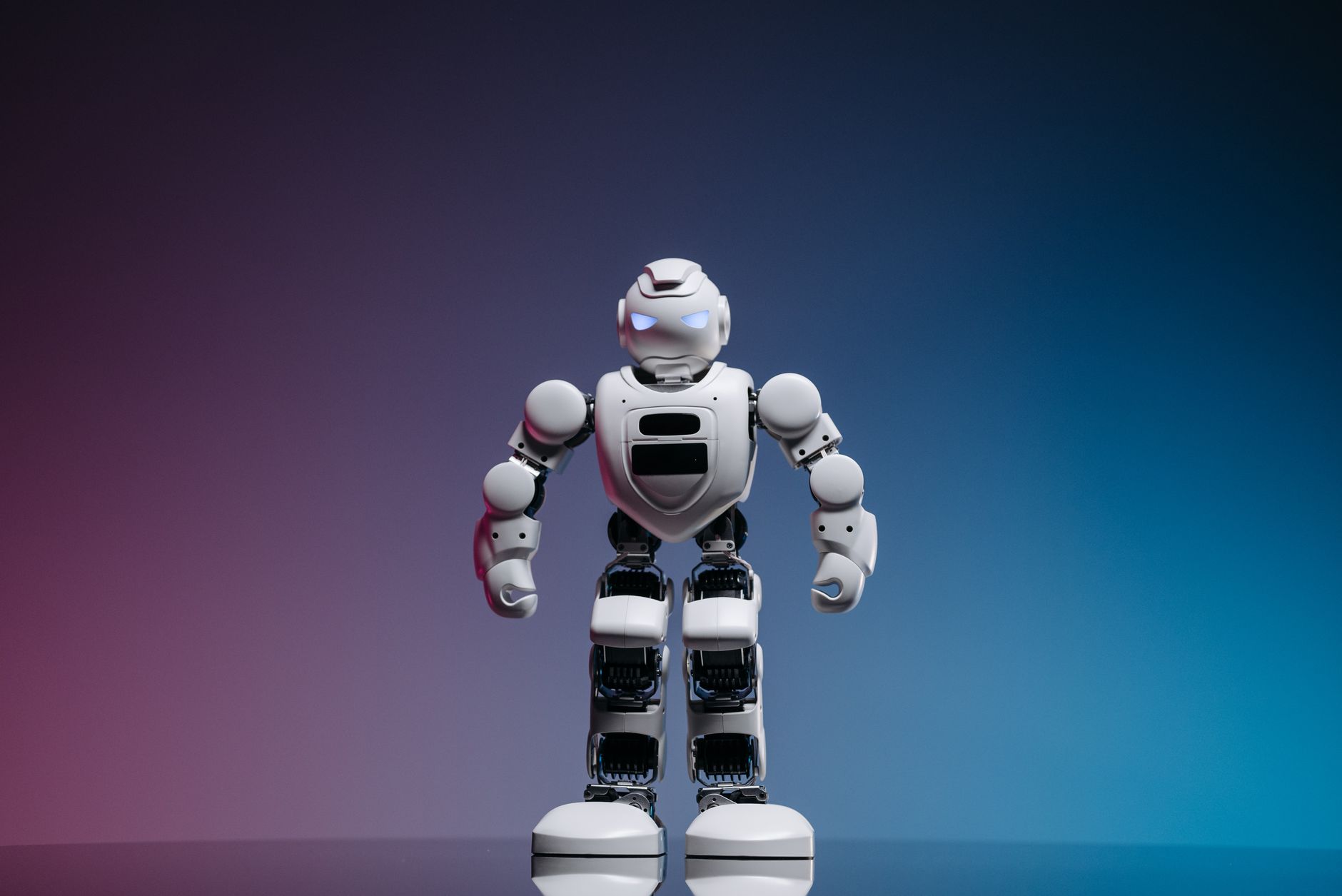

Recent video demonstrations of the 1X NEO humanoid robot have generated significant viewer reaction, with observers noting that the robot’s movement patterns trigger unexpected psychological responses. The uncanny quality of the NEO’s locomotion—a fluid, human-adjacent gait that doesn’t quite register as either mechanical or biological—appears to unsettle viewers in ways that more obviously robotic platforms do not. This phenomenon reflects a deeper challenge in robotics development: as machines move closer to mimicking human motion, they enter a psychological territory where minor imperfections become magnified rather than diminished in our perception.
The 1X NEO represents a shift in humanoid robot design toward more anthropomorphic movement patterns. Where earlier industrial robots moved in deliberate, segmented ways that we instinctively understood as artificial, the NEO’s movement attempts to approximate human biomechanics. This approach has both technological advantages and psychological side effects that designers and manufacturers are only beginning to fully understand.
Table of Contents
- Why Does Lifelike Robot Movement Disturb Viewers?
- The Technical Challenge Behind Realistic Movement
- How Companies Are Managing Audience Perception
- The Practical Implications for Robot Deployment
- Technical Limitations That Create the Unsettling Effect
- How the Uncanny Valley Affects Different Age Groups and Backgrounds
- What the 1X NEO Represents for Robotics Development
Why Does Lifelike Robot Movement Disturb Viewers?
The discomfort people report watching advanced humanoid robots relates partly to the uncanny valley effect, a psychological phenomenon where objects that appear almost—but not exactly—human trigger unease rather than comfort. A completely mechanical robot arm clearly registers as artificial, causing no discomfort. A photograph of a real person feels natural. A robot that approximates human movement with 85 percent accuracy, however, creates cognitive tension. The viewer’s brain recognizes something is off but cannot immediately categorize why.
The 1X NEO’s movements demonstrate this effect specifically in how the robot distributes weight during walking, how its joints articulate, and how its body maintains balance. These movements are fluid enough to seem intentional and natural, yet lack certain subtle characteristics of human motion—micro-adjustments for balance, slight momentum shifts, the way fatigue affects gait. A viewer watching the video cannot consciously articulate what feels wrong, which paradoxically makes the effect stronger than watching an obviously mechanical robot. This distinction matters for robot deployment. A manufacturing robot that moves in jerky, obvious mechanical patterns causes no psychological friction when workers interact with it. A humanoid robot operating in human environments with movement patterns that trigger unease creates a different workplace dynamic, even if the robot’s actual behavior is identical.
The Technical Challenge Behind Realistic Movement
Creating movement that appears human-like requires solving multiple engineering problems simultaneously. humanoid robots must manage bipedal balance—a problem humans solve unconsciously through continuous micro-corrections involving dozens of muscle groups. The 1X NEO uses sensors and real-time algorithmic adjustments to approximate this, but the computational load is substantial. The robot cannot perfectly replicate human movement because doing so would require matching the complexity of human neurology, which remains beyond current engineering capabilities. The movement patterns that trigger viewer discomfort often relate to this limitation. When a humanoid robot walks, it may show slightly stiff knee articulation, or maintain an unusually upright posture, or move with mechanical precision rather than natural variation.
These choices exist not because designers want them but because they represent engineering compromises. Perfect human-like movement would require exponentially more sensors, processing power, and battery capacity. The 1X NEO instead makes strategic choices about which aspects of human movement to prioritize and which to simplify. One important limitation: viewers often cannot distinguish between intentional design choices and technical limitations. A robot that maintains very upright posture might do so for stability reasons, but observers may interpret it as an indicator that something is “wrong” with the movement, reinforcing the uncanny valley effect. This perception problem affects how the public responds to the robot, regardless of the actual engineering reasoning behind specific movement patterns.
How Companies Are Managing Audience Perception
robotics companies face a strategic decision about how to present humanoid robots to the public. Showing video of the robot moving in realistic environments highlights its capabilities but may trigger the discomfort response. Some companies have found that transparency about what the robot is actually doing—explaining the movement choices and engineering constraints—helps audiences frame what they’re seeing. When viewers understand that a particular movement pattern exists for stability or energy efficiency rather than as an attempt at perfect human replication, the uncanny valley effect weakens. The 1X NEO videos that have circulated online demonstrate this principle.
Context matters significantly. A video showing the robot performing a specific task in an industrial setting generates different responses than the same robot moving without obvious purpose. Purposeful movement appears less unsettling than movement that seems exploratory or idle, possibly because humans can categorize purposeful motion more easily. A robot walking across a room looks strange; a robot walking across a room to retrieve an object feels more comprehensible. Companies developing advanced humanoid robots are increasingly studying how to present their robots to maximize public acceptance. This includes decisions about video framing, the environments where robots are demonstrated, what tasks they perform, and how commentary accompanies the footage.
The Practical Implications for Robot Deployment
The psychological response to robot movement has real implications for where and how these machines can be deployed effectively. A humanoid robot in a warehouse where human workers must interact with it needs to communicate clearly through movement patterns. If the robot’s gait creates discomfort or unease, workers may develop resistance to the technology, affecting adoption rates regardless of the machine’s actual capabilities or safety record. Different work environments show different tolerance levels for humanoid robots.
Manufacturing floors with clear task specialization show less friction than general service environments where robots must navigate complex social spaces. A humanoid robot delivering items in a hospital hallway triggers different psychological responses than a humanoid robot assembling components in an isolated production area. The robot’s actual behavior may be identical, but context shapes perception. Companies planning to deploy advanced humanoid robots increasingly account for this reality in their implementation strategies, sometimes preferring to modify deployment environments before deploying robots that might trigger negative psychological responses. This represents a tradeoff that companies must navigate: humanoid robots offer advantages in environments designed for human workers, but their psychological cost may require either redesigning the environment to be less human-centered or accepting that adoption will proceed more slowly than the underlying technology might suggest.
Technical Limitations That Create the Unsettling Effect
The movement quality in humanoid robot videos often reflects specific technical constraints that viewers instinctively notice. Bipedal robots require constant energy expenditure simply to maintain balance, meaning they cannot move with the efficiency and apparent ease of human walking. Humans walk using a combination of passive dynamics and active control; many humanoid robots require continuous active control of every joint, resulting in movement that looks precise but not quite natural. Battery limitations create another visible constraint. A human can walk for miles; most current humanoid robots operate for hours before requiring charging. This affects how engineers program movement patterns.
Some movement styles that appear more human-like require more energy, creating pressure to use movement patterns that are less natural-looking but more efficient. The 1X NEO, like other advanced humanoid robots, represents an engineering compromise in these areas. The movement quality viewers see in videos reflects what is technically possible given current battery technology, sensor capabilities, and computational power. An important warning about interpreting these videos: what appears on camera may be carefully controlled demonstration footage rather than representative of typical operation. The environments are often simplified, the tasks specific and practiced, and the movement paths predetermined or carefully monitored. Actual deployment in varied environments may reveal movement limitations that curated demonstration videos do not expose.
How the Uncanny Valley Affects Different Age Groups and Backgrounds
The intensity of the uncanny valley effect varies among viewers based on familiarity with robotics, cultural background, and prior exposure to humanoid robots. People who regularly encounter industrial robots often show less discomfort with humanoid robots than those for whom robotics is entirely novel. Younger viewers who have grown up with increasingly sophisticated robots in entertainment media sometimes show less pronounced uncanny valley responses than older viewers encountering advanced humanoid robots for the first time.
This variation has implications for how companies approach public communication about their robots. Research in robotics psychology suggests that providing context significantly reduces the uncanny valley effect. When viewers understand that they are watching a machine perform engineering tasks rather than viewing something attempting to authentically mimic human life, their reaction changes measurably. The same video footage of the 1X NEO robot presented as “advanced engineering demonstration” versus “humanoid robot exploration” generates noticeably different audience responses.
What the 1X NEO Represents for Robotics Development
The 1X NEO exemplifies a specific approach to humanoid robot development: prioritizing practical task capability while accepting that movement patterns may not perfectly mimic human motion. This represents a departure from some earlier humanoid robot projects that prioritized perfecting human-like appearance and motion. The 1X NEO focuses instead on solving practical engineering problems—how to maintain balance in varied environments, how to manipulate objects with dexterous precision, how to operate in spaces designed for human workers.
The viewer reactions to 1X NEO videos provide valuable feedback to the robotics industry about the psychological dimensions of humanoid robot deployment. As companies develop increasingly capable machines, they are learning that engineering capability is only part of the equation. The psychological and social dimensions of how humans perceive and interact with humanoid robots matter for adoption, workplace integration, and public acceptance. The discomfort some viewers report watching the 1X NEO move is not a flaw in the robot or a sign that the technology is failing—it reflects the robot successfully approximating human-scale movement patterns closely enough to trigger sophisticated psychological responses that simpler machines never activate.