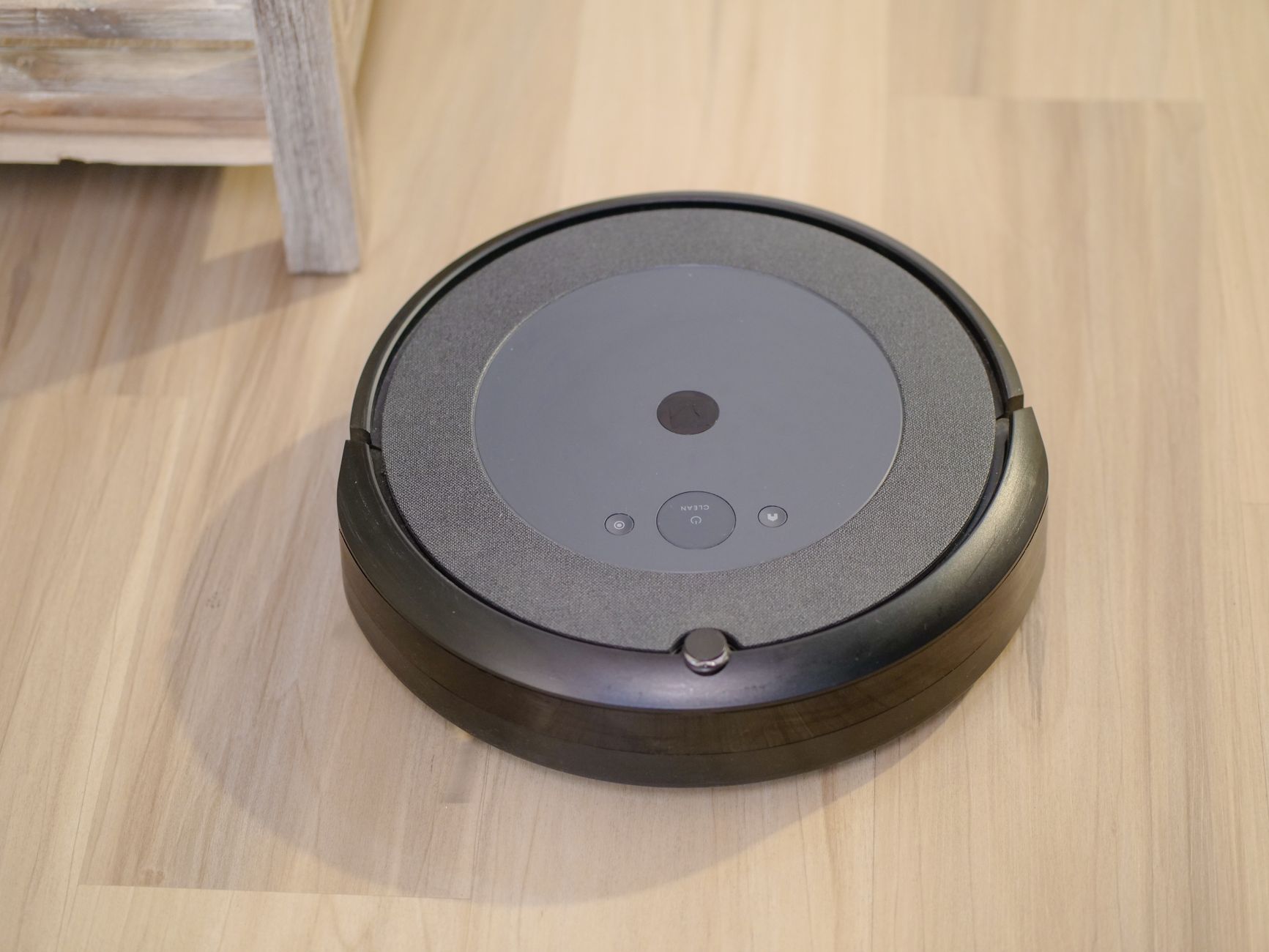

Robot vacuum sales have become a fixture in the smart home market, with premium models occasionally dropping to aggressive price points during seasonal promotions. A $400 discount on a high-end robotic vacuum represents the kind of deal that can move a purchase from “nice to have” to “now or never”—particularly for households that have been considering automation for their cleaning routines. However, timing matters.
Sales on robot vacuums often correspond with overstock situations or new model launches, meaning the discount reflects market dynamics more than brand generosity. Understanding what you’re actually buying, and whether the timing is right for your household, separates a smart purchase from an expensive mistake. The appeal of a $400 discount on smart cleaning technology extends beyond raw savings. It brings premium features—multi-floor mapping, app control, and scheduled cleaning—within reach of the middle market, making it worth evaluating whether your home’s layout and pet situation would actually benefit from robotic cleaning before the sale window closes.
Table of Contents
- What Does a $400 Discount Really Mean for Robot Vacuum Pricing?
- Smart Cleaning Features and Their Real-World Limitations
- How Household Layout and Pet Ownership Affect the Decision
- Comparing Discount Timing and Seasonal Sales Patterns
- Maintenance, Repair Costs, and Hidden Expenses
- How Smart Home Integration Actually Works
- Evaluating Whether This Sale Justifies Your Purchase
What Does a $400 Discount Really Mean for Robot Vacuum Pricing?
robot vacuum pricing exists in distinct tiers, and a $400 discount typically signals a shift from prosumer-grade to high-end consumer territory. A vacuum originally priced at $800 to $1,200 becomes accessible at $400 to $800, which is still a significant investment but more defensible for a household with 2,000+ square feet or heavy pet shedding. Comparable models from other brands in this price range often include hybrid mopping, WiFi scheduling, and obstacle avoidance, so context matters. A Roomba Combo at a similar discounted price point may lack some mapping features, while a Bissell alternative might prioritize suction power over navigation precision.
What makes a discount credible is whether the model was previously available at the stated full price for a meaningful period. If a vacuum has only been sold at the “sale” price through major retailers, the discount is largely theatrical. Real discounts track genuine inventory reduction or generational model shifts—the old E25 is being cleared to introduce an E26, for instance. Checking the price history on major retailers over the past 90 days provides concrete evidence rather than relying on the retailer’s original-price claim.
Smart Cleaning Features and Their Real-World Limitations
Smart robot vacuums marketed at this price point typically include multi-level floor mapping, room-by-room scheduling, app notifications, and integration with home automation systems like Alexa or Google Home. These features sound transformative until your vacuum encounters a common real-world scenario: a child’s toys scattered across the kitchen floor, which no amount of mapping can predict. The vacuum may navigate around them successfully, or it may get stuck and send a notification to your phone while you’re at work—but unlike a traditional vacuum, you can’t remotely solve the problem.
The smart features also rely on consistent WiFi coverage. If your home has dead zones or your router isn’t positioned for good coverage throughout the main living areas, the app control and scheduling features become less reliable. Likewise, robot vacuums struggle with thick rugs, transitions between floor types, and pet hair that tangles around the brush roll—limitations that no discount changes. A household with multiple pets and area rugs should test the model in-home before committing, since the return window often closes quickly during sales events.
How Household Layout and Pet Ownership Affect the Decision
The suitability of a robot vacuum depends heavily on your home’s physical layout. Open floor plans with minimal furniture make cleaning straightforward; homes with numerous rooms, narrow hallways, or raised thresholds between levels create navigation challenges that mapping technology helps but doesn’t eliminate. If your home is primarily one or two large rooms, a $400-discount robot vacuum is likely overkill—a budget model would accomplish the same task. Conversely, if you have four rooms, multiple pets, and stairs, the advanced mapping becomes genuinely valuable.
Pet ownership fundamentally changes the calculus. A household with a shedding dog or multiple cats generates hair volume that exceeds what most robot vacuum designs handle gracefully. These models require brush maintenance every two to four weeks, and some designs are prone to hair tangles that trigger manual intervention. The discount makes sense only if you’re adopting the vacuum specifically to supplement traditional vacuuming, not replace it—and if your schedule actually permits weekly manual emptying of the collection bin.
Comparing Discount Timing and Seasonal Sales Patterns
Robot vacuum discounts follow predictable seasonal patterns. Spring and fall typically see the largest discounts, driven by inventory rotation and anticipation of new product launches. Summer and winter sales are often limited to clearance stock or bundle deals. A $400 discount in March might be standard pricing, while the same discount in January reflects genuine clearance activity.
Knowing the typical price range across months helps distinguish between market-rate discounts and anomalous deals worth rushing to capitalize on. Comparison shopping across retailers matters more during sales than at regular prices. Best Buy, Amazon, and the manufacturer’s direct site often have different discount structures—one might offer $400 off plus free shipping, while another offers $300 off with an extended warranty. The warranty component carries real value: extended coverage protects against brush motor failure or battery degradation, issues that arise within years two and three of use and carry repair costs between $150 and $400. A deal that appears smaller but includes a two-year extended warranty may be superior to a larger headline discount.
Maintenance, Repair Costs, and Hidden Expenses
The discount price masks the true cost of ownership. Robot vacuums require regular maintenance: brush replacement every 6 to 12 months ($20 to $50), filter cleaning or replacement every 30 to 90 days (consumable cost, often $10 to $30 per filter), and occasional wheel or sensor cleaning ($0 to $20 in supplies). Some models require proprietary parts, which carry markup. Over three years, maintenance can total $200 to $400—material enough to shift your math on whether the discounted purchase was genuinely economical.
Warranty coverage and repair costs represent another hidden layer. If the vacuum’s motor fails outside the warranty period, repair costs run $150 to $300. Some manufacturers offer mail-in repair programs; others require working with authorized service centers. If your vacuum fails within warranty during a promotional period—a not-uncommon timing given surge in purchases during sales—restocking and repair logistics may take weeks. Understanding the manufacturer’s repair network and warranty terms before purchase protects you from discovering a three-week wait during what was supposed to be an automated cleaning solution.
How Smart Home Integration Actually Works
Many discounted robot vacuums include integration with Alexa, Google Assistant, or Apple Siri, allowing you to start cleaning with a voice command or routine. This sounds seamless until you encounter real-world usage patterns. Voice commands work fine for starting a clean (“Alexa, start the vacuum”), but you cannot remotely stop a vacuum using voice—it requires the app. If your vacuum is cleaning and you realize someone left their briefcase on the floor, voice control cannot rescue you.
Integration features should be considered conveniences, not solutions to fundamental problems. App scheduling does enable “vacuum while I’m at work” workflows, which is genuinely useful for reducing daily dust accumulation. However, scheduling requires clear floors as a prerequisite—the app cannot predict obstacles. Some robot vacuums integrate with smart home scenes, allowing you to trigger “leaving home” routines that simultaneously lock doors, adjust lighting, and start the vacuum, which streamlines launch but adds complexity if the routine breaks.
Evaluating Whether This Sale Justifies Your Purchase
The question is not whether you’re saving $400, but whether the vacuum itself is worth the after-discount price to your household. A $400 discount on a $1,200 vacuum makes it $800—still a five-figure commitment over its operational lifespan when maintenance is included.
If your household has 1,500 square feet, no pets, and low dust generation, a $300 to $400 budget model handles the job sufficiently; the discount does not change this calculus. If your household has 3,000 square feet, multiple pets, or family members with mobility limitations, a $800 robotic system with smart features addresses a genuine need, and the discount brings it within reach. Before purchasing, simulate the vacuum’s typical day: Will the paths it takes actually clean the areas where dust accumulates? Will toys, cords, or pet beds interfere? Will the emptying schedule fit your routine, or will a full bin sitting for three days defeat the purpose? A sale creates urgency, but robot vacuums last three to five years under normal use, so taking two weeks to evaluate whether it fits your life is a worthwhile investment of time compared to purchasing on impulse and discovering the vacuum doesn’t match your home’s reality.