
The long-cycle automation contractor operates in a specialized segment of the industrial automation market, handling projects that extend from months to years rather than weeks. These contractors manage complex system integrations, custom manufacturing installations, and enterprise-scale process automation where components must be precisely orchestrated over extended timelines. A long-cycle contractor might spend six to eighteen months designing, building, testing, and deploying an automated assembly line for automotive suppliers or pharmaceutical manufacturers—work that demands sustained technical expertise, project coordination, and deep familiarity with evolving requirements across multiple phases. What distinguishes long-cycle automation contractors is their ability to maintain project continuity through multiple stages of complexity.
While traditional automation service providers might handle discrete installations or quick system upgrades, long-cycle specialists manage the interdependencies between mechanical systems, electrical integration, control software, and human operators over time. They function as technical partners rather than transactional vendors, often embedded within client operations for the duration of the engagement. The economic model differs significantly from shorter-cycle work. Long-cycle projects require advance capital commitment, sustained staffing, and risk management across changing conditions. A contractor might allocate dedicated engineers to a single client facility for 18 months, absorbing the financial pressure if timelines slip or scope expands unexpectedly.
Table of Contents
- What Makes Long-Cycle Automation Projects Different From Standard Installations?
- The Risk and Liability Challenges of Extended Automation Contracts
- How Staffing and Resource Allocation Works for Long-Cycle Projects
- Planning and Delivery Strategies for Long-Cycle Automation Projects
- Common Failure Points and Technical Risks in Long-Cycle Projects
- Measuring Success and Performance Validation
- The Evolution of Long-Cycle Automation in the Era of Digital Monitoring
- Conclusion
What Makes Long-Cycle Automation Projects Different From Standard Installations?
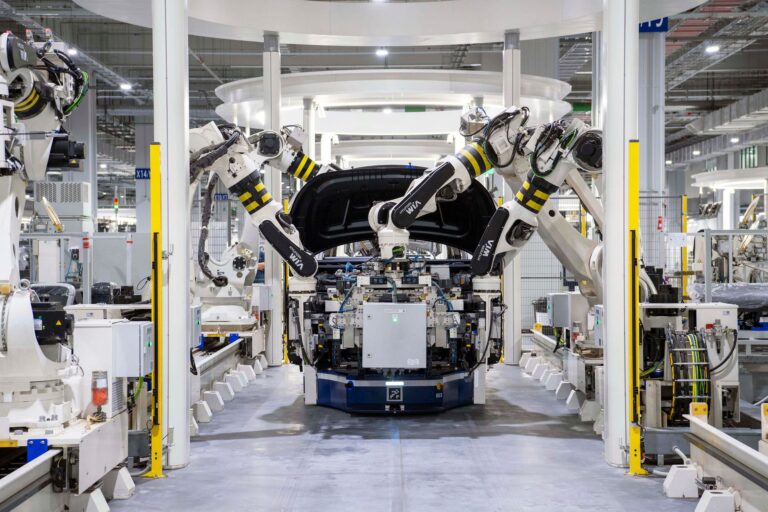
Long-cycle projects involve fundamental complexity that standard automation work does not address. Rather than replacing a single machine or updating a control interface, long-cycle work typically encompasses the redesign of production workflows, integration of legacy equipment with new systems, and the training of workforce transitions. The timescale itself—measured in contract years rather than contract months—creates cascading challenges around staffing allocation, supply chain coordination, and regulatory compliance. A typical example: an automotive parts supplier might contract with a long-cycle automation firm to redesign an entire fabrication line, integrating new CNC machines with existing hydraulic equipment, implementing real-time production monitoring, and establishing quality control automation.
The project includes design phases (months 1-4), manufacturing and delivery of custom controls (months 5-10), on-site installation (months 11-14), testing and integration (months 15-18), and a six-month ramp-up period where the contractor maintains on-site presence to troubleshoot and optimize. Any delay in equipment delivery cascades through dependent phases, compressing later stages and increasing pressure on teams. The technological demands compound over time. Initial automation designs must account for future modifications, operator skill levels, and regulatory changes that may occur during the project lifecycle. A contractor designing a pharmaceutical packaging line in 2024 must anticipate potential compliance updates through 2026, building flexibility into architectures that will outlive the initial contract.

The Risk and Liability Challenges of Extended Automation Contracts
Long-cycle automation carries financial and operational risks that contractors and clients must carefully manage. Performance bond requirements are typically higher, contract disputes may persist for years after completion, and scope creep can erode profitability across extended engagements. A common limitation is that many clients underestimate integration complexity early in the project, leading to change orders that balloon costs by 20-40% before completion. Staffing stability poses an underestimated hazard. When a contractor dedicates engineers to a single client for 18 months, employee turnover during the engagement can compromise project continuity and knowledge transfer.
If a key systems engineer leaves midway through implementation, the replacement must absorb complex, undocumented design decisions made earlier in the project. Some contractors have experienced six-month delays caused entirely by the loss of critical personnel during the integration phase. This vulnerability is why long-cycle contractors increasingly invest in documentation practices and paired-team structures that provide redundancy. Contractual liability also extends beyond typical automation project timelines. If a long-cycle automation system experiences critical failures six months after deployment—during the client’s production ramp—the contractor may still carry warranty obligations or be drawn into dispute resolution. Long-cycle contracts typically require extended warranties (12-24 months post-completion) and performance guarantees, creating liabilities that persist well after the physical installation ends.
How Staffing and Resource Allocation Works for Long-Cycle Projects
Long-cycle contractors must operate with a fundamentally different staffing model than traditional automation shops. Rather than cycling teams across multiple simultaneous projects, a long-cycle firm might deploy a core team to a single client facility for the duration of the engagement, with rotating specialists joining for specific phases. This approach provides continuity and reduces ramp-up time, but it also concentrates risk if a major client delays the start of work or terminates the contract. Consider a systems integrator contracted for a 16-month factory automation project. The contractor might allocate four full-time engineers from month one through sixteen, supported by rotating specialists in mechanical design, PLC programming, and network infrastructure.
During the critical integration phases (months 11-14), the team might expand to eight people working overlapping shifts to maintain schedule. This staffing structure ties up significant capital and constrains the contractor’s ability to pursue other work simultaneously. The economic pressure is substantial. If a contractor has committed salary costs across a 16-month timeline but the project extends to 20 months due to equipment delays, those additional four months may be absorbed by the contractor at no extra revenue. Some long-cycle contracts include schedule adjustment clauses that allow for scope reduction or extended timelines, but these protections vary widely and often favor the client who controls the ultimate deployment decision.

Planning and Delivery Strategies for Long-Cycle Automation Projects
Successful long-cycle automation requires phased delivery and gate-based progress verification. Rather than attempting to complete design and then move entirely to build phases, effective contractors implement rolling waves of design-build-test across specific subsystems, allowing early validation and course correction before resources are committed to later phases. A practical example: instead of designing the entire production system upfront, a contractor might deliver the raw material handling subsystem through complete design-build-test by month six, then use that operational experience to inform the design of the midstream processing system (months 7-14). This approach trades some design efficiency (designs cannot be fully optimized across all subsystems simultaneously) for early validation and reduced risk of fundamental design errors.
A competitor using a traditional waterfall approach might discover a critical incompatibility at month 12, forcing rework of systems already partially implemented. The tradeoff is between schedule predictability and design optimization. Rolling-wave delivery extends overall timelines slightly but provides better visibility into problems. Conversely, upfront complete design can theoretically be more optimal but concentrates risk into early phases where errors are expensive to correct. Most successful long-cycle contractors accept longer design phases (3-4 months versus 2-3 months) to produce more detailed, validated specifications before committing to manufacturing and installation.
Common Failure Points and Technical Risks in Long-Cycle Projects
The most frequent failure mode in long-cycle automation is inadequate control system architecture planning. A system designed for immediate deployment may not accommodate the maintenance, diagnostics, and expansion work that occurs over years of operation. If a contractor implements a custom control system without standardized logging, diagnostic capabilities, or remote monitoring, that system becomes difficult to troubleshoot once the contractor’s on-site team departs. Critical production issues can then require flying technicians back to the site at high cost, or worse, leaving problems unresolved. Environmental and operational changes represent another significant risk.
A manufacturing line designed for one product family may face pressure to handle alternate product variants, higher throughput, or different operating temperatures once implementation is complete. Systems designed without modularity or headroom fail under these new conditions. A packaging automation line that worked well for 500-unit-per-hour throughput may be expected to handle 650 units per hour after two years of operational success, stressing hydraulic systems, pneumatic timing, and vision systems beyond their design margins. The warning here is that many long-cycle automation projects inherit scope expansion organically as clients discover capabilities or face market pressures. A contractor’s protection is contractual clarity around what constitutes standard operation versus modifications requiring change orders. Vague contractual language around “normal operating ranges” creates disputes when clients push systems beyond original parameters.

Measuring Success and Performance Validation
Long-cycle automation projects require extended performance validation periods, typically 60-90 days of continuous operation at rated capacity before final acceptance. This requirement protects clients from accepting systems with latent defects and protects contractors from liability for issues caused by client operation rather than system design. However, this extended validation period creates cash flow pressure for contractors who must maintain full on-site staffing while waiting for acceptance conditions to be met.
A real-world scenario: a beverage bottling line automation contract specifies that the system must operate at 95% capacity for 60 consecutive days with fewer than four unplanned stops before final payment is released. If the system experiences an intermittent sensor failure on day 47, the 60-day counter resets and the validation period begins again. The contractor’s team remains deployed for potentially an additional month waiting for the 60-day window to complete without incident. This delay directly impacts profitability and resource availability for the next engagement.
The Evolution of Long-Cycle Automation in the Era of Digital Monitoring
Long-cycle automation is becoming increasingly integrated with permanent digital monitoring and remote diagnostics capabilities. Where contractors once deployed on-site for months and then provided periodic maintenance visits, modern engagements often include ongoing remote monitoring systems, predictive maintenance algorithms, and cloud-based performance dashboards that persist after the initial deployment team departs. This capability extends the contractor’s service relationship and creates opportunities for ongoing support revenue, but it also extends liability and requires sustained investment in monitoring infrastructure.
Forward-looking automation contractors are building long-cycle service models that transition from delivery-focused engagements to managed service arrangements. Rather than completing a project and handing it to the client’s operations team, contractors increasingly retain responsibility for system performance under extended service agreements. This shift aligns contractor incentives with long-term client success and creates more sustainable business models than traditional lump-sum project delivery.
Conclusion
Long-cycle automation contractors occupy a critical but challenging position in the industrial automation market. They manage projects of sufficient complexity and duration that they require specialized project management, sustained staffing, and risk mitigation approaches fundamentally different from traditional system integrators. Success requires careful upfront scoping, realistic timeline estimation, and architectural decisions that account for years of operational life beyond the initial deployment.
Organizations considering engagement with a long-cycle automation contractor should prioritize clarity around scope boundaries, performance validation timelines, and support responsibilities after deployment. The contractor’s past performance on similar-scale projects, their staffing stability, and their approach to change management are more predictive of success than their equipment selection or theoretical capabilities. Long-cycle automation remains a high-stakes undertaking, but one where disciplined planning and experienced partnerships deliver automation systems that sustain competitive advantage over years of production.