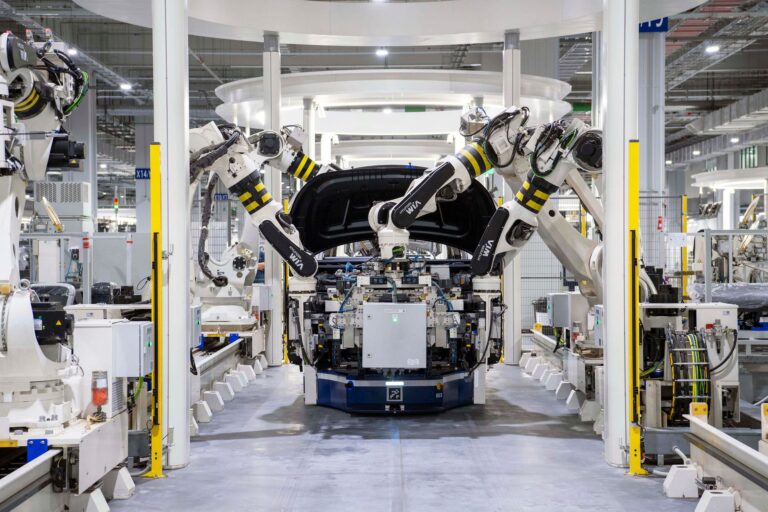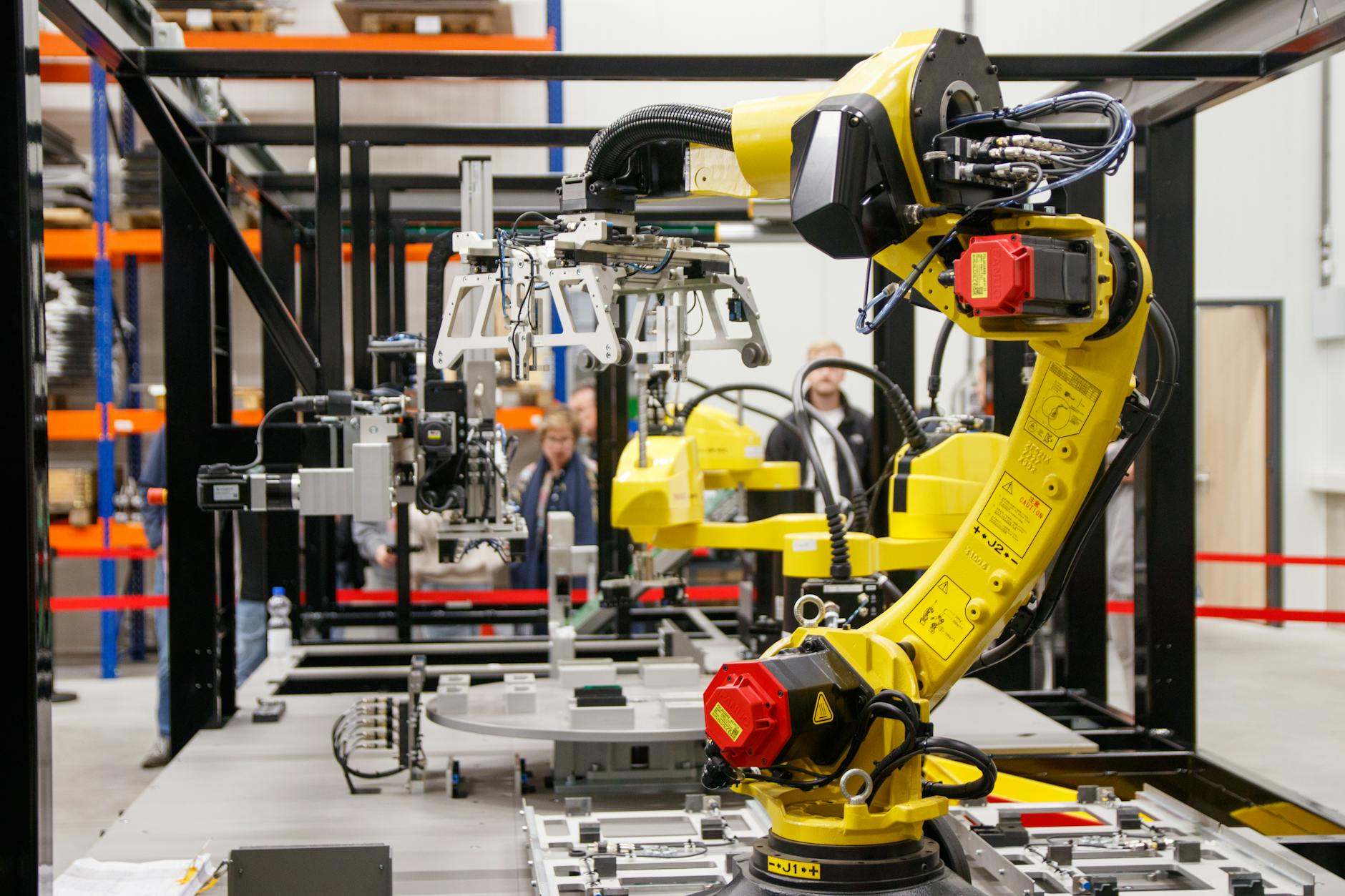

TER, or Throughput Efficiency Ratio, is the critical performance metric that determines whether an industrial robot is delivering real value or just moving parts around. It measures the actual productive output a robot achieves compared to its theoretical maximum capacity, accounting for downtime, setup, maintenance, and inefficiencies that plague most manufacturing floors. Think of it as the true intelligence behind the machine—not just what it claims to do, but what it actually accomplishes under real-world conditions.
Understanding TER is essential because two identical robots running the same program can produce vastly different results depending on factors like cycle time variation, tool changeout efficiency, and unplanned stops. A robot claiming 60 units per hour might deliver only 38 units per hour in practice when you account for material handling delays, sensor calibration drift, and the dozen small disruptions that happen during any production shift. TER exposes this gap between promise and performance.
Table of Contents
- Why TER Matters More Than Robot Speed Specs
- The Hidden Factors Dragging Down TER in Real Operations
- How Integration Complexity Affects TER in Multi-Robot Cells
- Measuring and Improving TER Systematically
- The Reliability-Speed Tradeoff Nobody Talks About
- TER Benchmarking Across Different Robot Applications
- Future Directions in Optimizing Industrial Robot TER
- Conclusion
Why TER Matters More Than Robot Speed Specs
Robot manufacturers love to advertise cycle times and payloads, but these numbers mean almost nothing without understanding ter. A fast robot that requires frequent recalibration, struggles with material consistency, or demands excessive setup time will never compete with a slower robot that runs dependably for 14 hours straight. TER forces you to look at the complete picture: the robot’s reliability, repeatability, integration efficiency, and real-world productivity. Consider a packaging facility running two different collaborative robots on identical tasks.
Robot A completes each cycle in 8 seconds with a published 450 units-per-hour capacity. Robot B takes 9 seconds per cycle, rated for 400 units per hour. But when measured against actual output over a full shift, Robot A achieves a 68 percent TER due to frequent vision system recalibrations and material jamming, while Robot B maintains 82 percent TER through superior sensor redundancy and mechanical simplicity. Over the course of a year, Robot B produces substantially more output despite its slower theoretical specs.

The Hidden Factors Dragging Down TER in Real Operations
TER reveals inefficiencies that spreadsheets and marketing materials conveniently ignore. Material variability, environmental factors, and integration challenges all chip away at effective throughput. A robot operating in a dusty environment without proper filtration sees vision system accuracy drift, reducing its ability to pick parts reliably. Humidity fluctuations affect servo calibration.
Temperature swings in manufacturing facilities introduce mechanical play that degrades placement accuracy, forcing the robot to slow down or re-attempt operations. The warning here is critical: many operations fail to measure TER at all, operating in a state of blissful ignorance about their actual productivity loss. A facility might budget for a 90 percent TER but never systematically track whether that target is being met. When TER isn’t monitored, small problems compound quietly. A tool changer that’s degrading 1 percent per week becomes a 15 percent productivity killer after six months, and nobody notices until profitability mysteriously evaporates.
How Integration Complexity Affects TER in Multi-Robot Cells
TER in complex manufacturing cells requires accounting for synchronization overhead, communication latency, and changeover losses between different robots and equipment. In an automotive sub-assembly operation running five robots in sequence, the entire cell’s TER might be 72 percent even though individual robots test at 88 percent each. The difference comes from communication delays, synchronization waits, and the fact that the slowest operation in the chain dictates throughput for the entire cell.
Specific example: A smartphone factory runs dual-robot assembly stations where one robot handles component placement while a second manages orientation and verification. The placement robot achieves 85 percent TER in isolation, but when integrated with the verification bot, the system-level TER drops to 73 percent. The bottleneck is the verification step, which requires computer vision processing that can’t be accelerated without redesigning the entire optical system. This demonstrates that TER must be measured at the system level, not just at individual robot performance.

Measuring and Improving TER Systematically
To improve TER, you need systematic measurement and root cause analysis. Start by establishing a baseline over at least two weeks of normal operation, tracking every stop, deviation, and delay. Categorize downtime into scheduled maintenance, unscheduled failures, setup and changeover, optimization stops, and miscellaneous delays.
Each category typically represents different improvement opportunities. The comparison matters: improving TER by 5 percent through better preventive maintenance might cost $3,000 in sensor upgrades and training, while squeezing the same 5 percent gain through faster cycle times could require $40,000 in tooling redesign. The tradeoff is clear once you understand where your specific TER losses originate. Most facilities discover that their biggest TER killers aren’t robot speed at all—they’re material handling inefficiencies, changeover time, or maintenance intervals that could be optimized with modest investment in supporting infrastructure.
The Reliability-Speed Tradeoff Nobody Talks About
Here’s the critical limitation: optimizing a robot for maximum speed typically damages TER. Faster acceleration profiles increase wear on mechanical systems. Tighter tolerances for high-speed operation reduce robustness in the face of material variation. A robot pushed to 95 percent of its rated cycle time might experience 3x the maintenance frequency, actually lowering long-term TER despite achieving impressive short-term cycle numbers.
The warning is essential: vendors sometimes optimize demonstration units for impressive cycle times, then customers find the same settings produce unreliable operation in production. Setting realistic cycle time targets that maintain a 5 to 10 percent speed margin preserves mechanical life and reliability. Electronics components also degrade faster under sustained high-speed operation—servo drives and control systems generate more heat, capacitors age faster, and cumulative wear accelerates across the system. The most sustainable TER comes from operating at 85 to 90 percent of theoretical maximum speed, not from pushing every fraction of a second.
TER Benchmarking Across Different Robot Applications
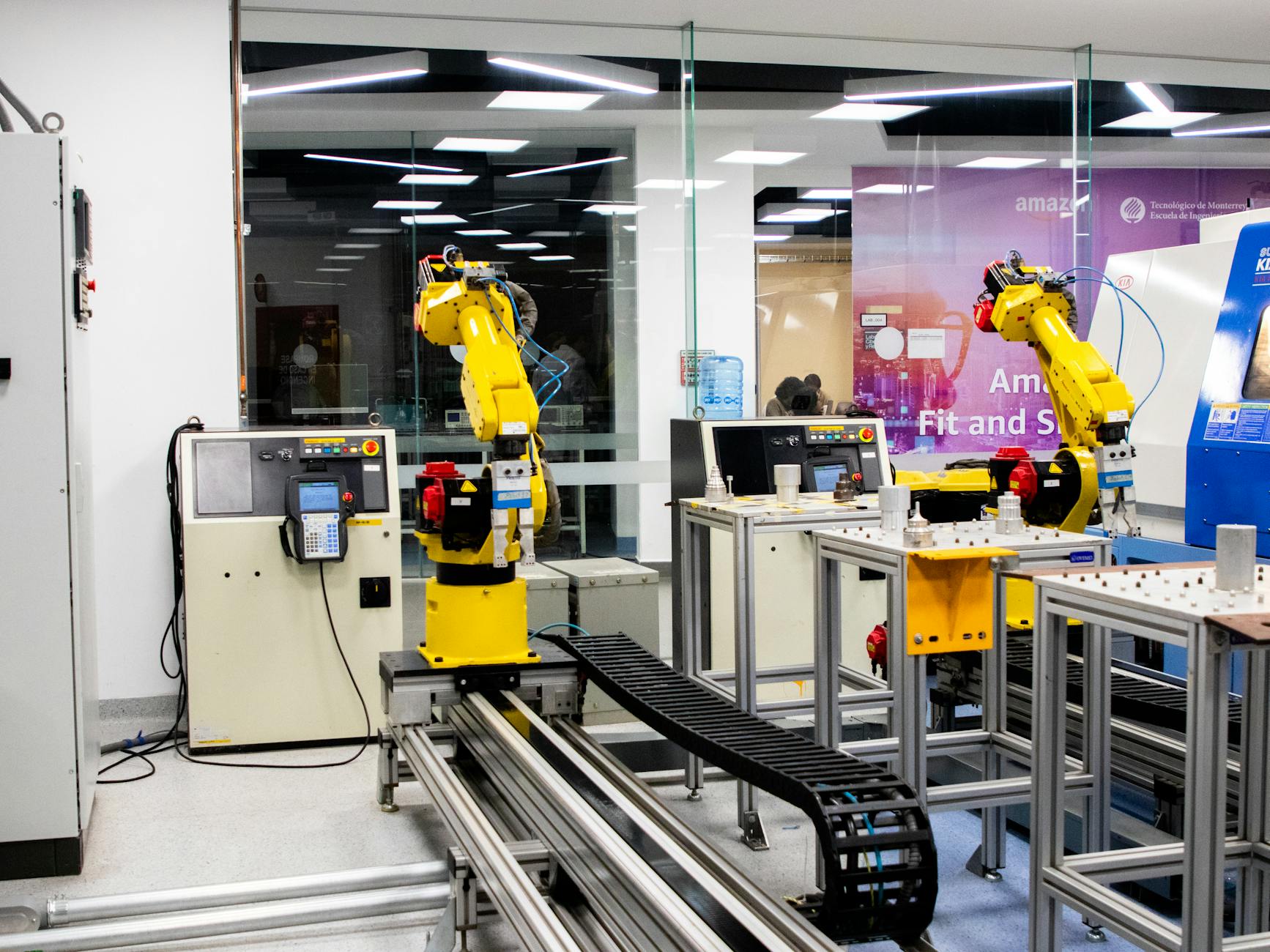
Different application types carry different achievable TER ranges. Pick-and-place operations in controlled environments typically achieve 80 to 92 percent TER because the variables are limited and the tasks repetitive. Machine tending operations, where the robot works around other equipment with variable cycle times, struggle to reach 75 to 85 percent TER due to synchronization losses.
Precision assembly tasks requiring vision feedback and adaptive placement often cap out around 70 to 82 percent TER because sensing and verification add unavoidable overhead. An electronics manufacturer running through-hole insertion robots on a standardized line maintains 89 percent TER through consistent material feed and minimal changeover. The same company’s prototyping cell, building custom configurations with varied components, achieves only 64 percent TER—the same robot hardware, radically different TER based on task structure and process standardization.
Future Directions in Optimizing Industrial Robot TER
Advancing AI and machine learning are beginning to enable predictive TER optimization, where systems analyze historical performance data to anticipate component wear, material consistency issues, and optimal cycle time adjustments before problems impact production. Edge computing on modern robot controllers allows real-time TER calculation and automatic cycle time adjustment based on actual conditions rather than fixed parameters.
The future of industrial robotics increasingly focuses on TER as the core metric, not cycle time marketing specs. As competition intensifies, manufacturers and integrators who consistently deliver high TER—robots that run reliably at good productivity levels for sustained periods—will outcompete those chasing impressive theoretical numbers. The intelligence in industrial robotics, the real intel, is understanding and maintaining TER.
Conclusion
TER transforms robot purchasing and operation from a guessing game based on attractive marketing specs into a data-driven practice centered on real productivity. It accounts for the dozens of factors that determine whether a robot investment pays off: reliability, maintainability, integration efficiency, environmental robustness, and sustainable performance over months and years rather than demonstration hours.
Your next step is to establish TER measurement protocols in any facility running industrial robots. Begin tracking scheduled and unscheduled downtime, measuring actual output against theoretical capacity, and categorizing where productivity losses occur. The insights will almost certainly surprise you—and they’ll point directly to your highest-impact improvement opportunities.