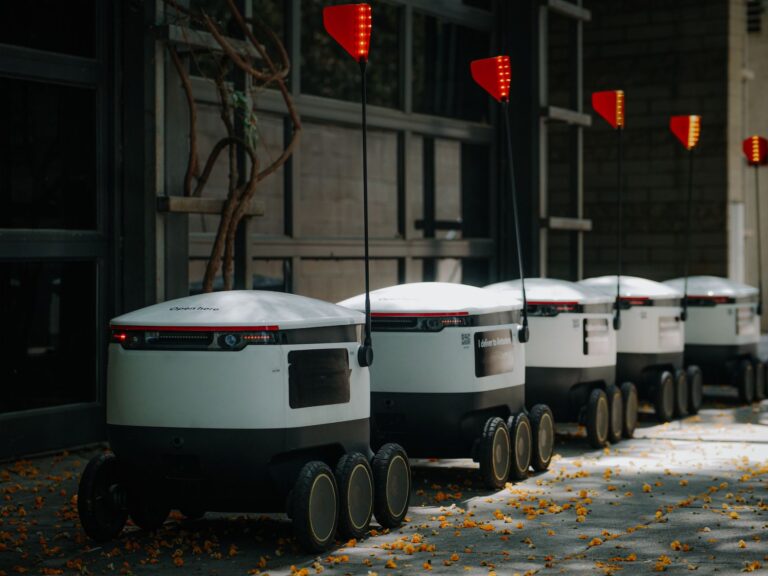

PATH represents a strategic shift in how organizations approach software robotics—moving from point solutions to integrated platforms that orchestrate complex automation workflows across entire business processes. Rather than deploying isolated bots to handle individual tasks, PATH-style platforms provide a unified ecosystem where software robots operate as coordinated agents within a larger automation infrastructure. For example, a financial services company using a PATH-based platform can deploy robots that work together to validate invoices, extract data from multiple systems, route exceptions to human reviewers, and update general ledgers—all while reporting performance metrics to a central dashboard.
The “platform play” aspect is crucial. Instead of building or buying separate tools for monitoring, scheduling, security, and bot development, organizations get these capabilities as integrated components. This contrasts with legacy approaches where enterprises stitched together point solutions, creating integration nightmares and operational complexity that often consumed more resources than the automation itself saved.
Table of Contents
- Why Platform Architecture Matters More Than Individual Robot Capabilities
- The Hidden Costs of Platform Consolidation
- How Process Mining and Intelligent Automation Drive Platform Value
- Building vs. Buying: The Platform Economics Question
- Exception Handling and Human-in-the-Loop Complexity
- Scalability and Performance at Enterprise Level
- The Convergence of Automation, AI, and Platform Architecture
- Conclusion
- Frequently Asked Questions
Why Platform Architecture Matters More Than Individual Robot Capabilities
The most sophisticated individual robot is useless if it can’t integrate with other systems, report its performance, or scale predictably. A path platform addresses this by providing foundational architecture that makes robots reliable and maintainable at enterprise scale. This means standardized development frameworks, centralized process mining to identify automation opportunities, built-in security and compliance controls, and analytics that track bot performance alongside human workers.
Consider a healthcare organization automating prior authorization workflows. A platform approach means the robots handling medical record retrieval, insurance policy lookup, and provider verification all work within the same governance structure, share common security protocols, and feed data into unified dashboards that compliance officers can audit. A collection of disconnected bots would require separate logins, monitoring, and audit trails—multiplying operational overhead. The platform play ensures consistency and reduces the cognitive load on operations teams managing dozens or hundreds of automation processes.

The Hidden Costs of Platform Consolidation
Moving to a unified platform isn’t a pure efficiency gain. Organizations must invest significantly in migration, retraining, and architecture redesign. Many enterprises already have heterogeneous environments—some robots built with UIPath, others with automation Anywhere or Blue Prism, custom Python scripts for specific tasks. Migrating these to a single PATH platform requires either rewriting the robots entirely or maintaining compatibility layers that add technical debt.
The promise of unified governance comes with the reality of rip-and-replace projects that take months and divert engineering resources from new automation work. There’s also the risk of platform lock-in. A comprehensive platform becomes deeply embedded in an organization’s operations, making it difficult to switch vendors or maintain flexibility if a competitor’s tool becomes more suitable for specific use cases. Some enterprises find they need a hybrid approach anyway—keeping specialized tools for unique requirements while using the platform for standard workflows. This defeats part of the consolidation argument but reflects real-world complexity.
How Process Mining and Intelligent Automation Drive Platform Value
Modern PATH platforms don’t just execute robots—they include process mining and analytics that identify where automation creates the most value. Process mining software analyzes event logs from existing systems to visualize actual workflows, identify bottlenecks, and highlight repetitive steps suitable for automation. This intelligence layer transforms platforms from execution engines into optimization tools. A platform without process mining is essentially a faster way to automate the wrong things.
With it, organizations can continuously identify automation opportunities and prioritize high-impact projects. An example from logistics: a PATH platform’s process mining component analyzes shipment tracking data and discovers that customer service reps spend 15% of their time manually reconciling orders that have conflicting tracking statuses. The platform then intelligently flags these cases, routes them to bots for resolution, and escalates genuine exceptions to humans. Over time, the platform learns which exception types bots handle successfully and which need human judgment, continuously optimizing the human-bot collaboration.

Building vs. Buying: The Platform Economics Question
Organizations can theoretically build proprietary platform architecture, but the economics rarely justify it. Building a production-grade automation platform requires expertise in security, compliance, scalability, and observability—capabilities that mature platform vendors have refined over years and thousands of implementations. The build-your-own approach typically costs 3-5 times more than licensing an established platform, takes 18-24 months to reach feature parity, and creates ongoing maintenance burdens. The buying decision creates different tradeoffs.
Vendor platforms offer rapid deployment and regular feature updates but require organizations to adapt workflows to platform constraints rather than the reverse. Some platforms excel at document processing and rule-based tasks but struggle with exception handling requiring sophisticated decision logic. Leading platforms offer different strengths—some prioritize ease of use for citizen developers, others prioritize scalability for large-scale deployments. Organizations must align their automation strategy with platform capabilities rather than expecting the platform to solve every use case equally well.
Exception Handling and Human-in-the-Loop Complexity
One of the most misunderstood aspects of platform-based automation is exception handling. Bots work flawlessly within defined, predictable processes but stumble when reality diverges from expectations. A PATH platform’s real value emerges in how it handles these exceptions. Poor platforms simply fail, leaving errors in queues for humans to resolve manually. Better platforms include intelligent escalation—routing exceptions to the right specialist, providing context from prior similar cases, and learning which exception types can be handled by enhanced automation rules.
A common pitfall is underestimating the volume and variety of exceptions. In a customer service process, the bot handles 85% of cases perfectly—but that remaining 15% is complex, context-dependent, and requires human judgment. A platform without effective exception architecture becomes a bottleneck, creating backlogs that nullify automation gains. The successful implementations treat the human-bot collaboration as a designed system, not a fallback mechanism. This means designing escalation policies, training humans on exception handling, and continuously tuning the automation boundaries.

Scalability and Performance at Enterprise Level
As automation projects mature, organizations deploy hundreds or thousands of bots. At this scale, platform architecture becomes non-negotiable. Traditional approaches—running bots on individual machines or small clusters—become unmanageable. PATH platforms handle scale through distributed execution, dynamic resource allocation, and centralized orchestration.
When demand spikes, the platform allocates additional computational resources. When demand drops, it reallocates those resources elsewhere. A manufacturing company deploying 300 bots across supply chain, finance, and operations processes needs infrastructure that automatically balances load, provides redundancy if a bot fails, and maintains performance even as bot count and complexity grow. Without platform architecture, this becomes a nightmare of manual resource management and reactive firefighting when performance degrades.
The Convergence of Automation, AI, and Platform Architecture
The future of automation platforms lies in tighter integration with machine learning and large language models. Early platform implementations relied on rule-based logic—if X, then Y. Newer platforms incorporate ML for pattern recognition, anomaly detection, and predictive escalation. Some are beginning to experiment with LLMs for unstructured data processing, document understanding, and natural language interaction.
However, this evolution introduces new complexity. ML models require training data, performance monitoring for drift, and the honest acknowledgment that they’re probabilistic rather than deterministic. Platforms that claim AI as a differentiator without addressing model governance, explainability, and continuous retraining are selling optimism rather than capabilities. The platforms that will matter are those that treat AI as a component within broader governance and operational frameworks—enhancing automation where models genuinely improve outcomes, and falling back to rules-based logic or human judgment when AI confidence is insufficient.
Conclusion
PATH platforms represent the maturation of automation from point solutions to engineered systems. Organizations moving beyond isolated bot implementations must contend with platform architecture, governance, scalability, and the unglamorous reality of exception handling and human collaboration. The platform play succeeds not because individual robots are more intelligent, but because the surrounding infrastructure—process discovery, centralized management, security, compliance, and analytics—turns scattered automation efforts into cohesive competitive advantages.
The decision to consolidate on a platform should be driven by operational reality: the size of the automation portfolio, the complexity of cross-process orchestration required, and the maturity of the organization’s automation practice. Early-stage automation efforts might thrive with lightweight tools and custom development. Mature programs managing dozens of processes across multiple business units benefit from platform consolidation—but only if implementation planning accounts for migration costs, team retraining, and the months of optimization required before value realization exceeds the disruption cost.
Frequently Asked Questions
What distinguishes a PATH platform from traditional RPA tools?
Traditional RPA tools focus on individual bot execution and development. PATH platforms add process mining, centralized governance, analytics, exception handling, and orchestration across multiple bots and systems. A PATH platform treats automation as an enterprise capability, not just a collection of bots.
Can organizations run a hybrid approach—using multiple tools alongside a platform?
Yes, and most do in practice. Mature automation environments often keep specialized tools for specific strengths while using the platform for standard workflows. However, this adds complexity in monitoring, governance, and integration.
How long does it take to see ROI from a platform-based approach?
Initial deployment typically takes 4-6 months, with meaningful ROI appearing around month 8-12 as the organization matures its processes. Organizations should budget 12-18 months before platform benefits exceed implementation and transition costs.
What’s the most common reason platform implementations fail?
Underestimating exception handling complexity and the effort required to achieve human-bot collaboration at scale. Platforms are effective when organizations design exception handling explicitly and invest in helping humans work effectively with bots.
Should we build our own platform instead of buying?
Building costs 3-5x more than licensing, takes 18-24 months for basic feature parity, and creates ongoing maintenance burdens. The only viable build case is for truly unique requirements not served by any vendor platform—which is rare.
How do we prevent vendor lock-in when choosing a platform?
Look for platforms supporting standard interfaces, open data formats, and API-first architecture. Document your processes independently of platform-specific constructs. However, some lock-in is inevitable with any platform—prioritize finding a vendor with strong long-term market position and roadmap alignment with your strategy.