
MDA (formerly MacDonald, Dettwiler and Associates, now part of Maxar Technologies) represents a classic “picks and shovels” investment in the space economy—a company that profits by providing essential infrastructure and services rather than directly operating satellites or launching rockets. While SpaceX, Blue Origin, and Axiom Space grab headlines with their heroic missions, MDA supplies the tools, data, and systems that make the space industry function. Their satellite imagery, robotics, and communications technologies form the backbone of how modern space operations actually work. For investors seeking exposure to space economy growth without betting on any single launch company or constellation operator, MDA’s position as a critical supplier offers a more defensive, infrastructure-focused approach.
The company operates across three primary business segments: satellites and space robotics, geospatial intelligence services, and communications systems. Think of it this way: if SpaceX is the transportation company, MDA is partially the steel mill. When Planet Labs needs to operate their Earth observation fleet, when governments require satellite imagery for disaster response, or when spacecraft in orbit need maintenance via robotic arms, MDA’s technology and services are in the chain. This positioning has proven valuable across commodity cycles and economic downturns—people always need accurate maps, weather data, and communication systems, regardless of whether new rockets are launching monthly or quarterly.
Table of Contents
- Why MDA Thrives as Space Industry Infrastructure
- Satellite Imagery and Geospatial Services—Mature But Competitive
- Space Robotics and On-Orbit Servicing—A Emerging High-Stakes Market
- Communications and Antenna Systems—Stable, Overlooked Revenue
- Geopolitical Risk and Regulatory Challenges
- Private Equity Interest and Valuation Dynamics
- The Long-Term Picks and Shovels Bet
- Conclusion
- Frequently Asked Questions
Why MDA Thrives as Space Industry Infrastructure
mda‘s business model insulates it from some of the volatility that plagues pure-play launch companies or satellite operators. A launch company makes money when rockets go to space; if launches pause due to regulatory issues, accidents, or market saturation, revenue drops sharply. MDA, conversely, generates recurring revenue from services and data that remain valuable regardless of launch cadence. Their geospatial division, for instance, sells Earth observation data and imagery analysis to agriculture, insurance, mining, and government sectors. These customers buy because they need operational intelligence, not because they’re excited about space exploration. This creates a more stable, less cyclical revenue base than relying entirely on launch-dependent business.
The company also benefits from structural tailwinds in satellite data adoption. Agricultural companies increasingly use satellite imagery for crop monitoring and yield prediction. Insurance firms employ satellite analytics to assess natural disasters and price policies more accurately. Oil and gas companies track pipeline infrastructure and facility operations via satellite. As these use cases mature and compete primarily on data quality and analytics sophistication rather than raw availability, companies like MDA that can deliver consistent, high-resolution imagery and actionable insights hold advantages over newer competitors with newer satellites but less operational maturity. A farmer doesn’t care which constellation’s satellite took the image; they care whether it helps them make better decisions at harvest time.

Satellite Imagery and Geospatial Services—Mature But Competitive
MDA’s Maxar subsidiary operates the WorldView and GeoEye satellite constellations, which provide high-resolution Earth observation data. The limitation here is important: competition has intensified dramatically. Planet Labs operates over 200 small satellites offering daily global coverage at lower resolution. Europe’s Copernicus program provides free Sentinel data to any user. Smaller startups like Capella Space offer synthetic aperture radar (SAR) imagery that works through clouds and darkness, something optical satellites cannot do. MDA’s advantage lies in image resolution and archive depth—their satellites see finer detail than most competitors—but that advantage shrinks as competitors improve and as customers accept slightly lower resolution in exchange for lower cost or higher revisit frequency.
The warning here is that geospatial data increasingly commoditizes. As more space-based imagery sources launch, the price per gigabyte of data has fallen steadily. This pressure forces MDA to shift toward higher-margin services: analytics, data fusion, and interpretation rather than raw imagery sales. This is a necessary evolution, but it requires different skills and customer relationships than selling data did. A company comfortable paying $100,000 for raw satellite imagery may balk at paying $500,000 for integrated analysis and recommendation. Margins compress at each step of the value chain, and MDA must execute better in analytics and customer relationships to maintain pricing power as competition mounts in the data layer below.
Space Robotics and On-Orbit Servicing—A Emerging High-Stakes Market
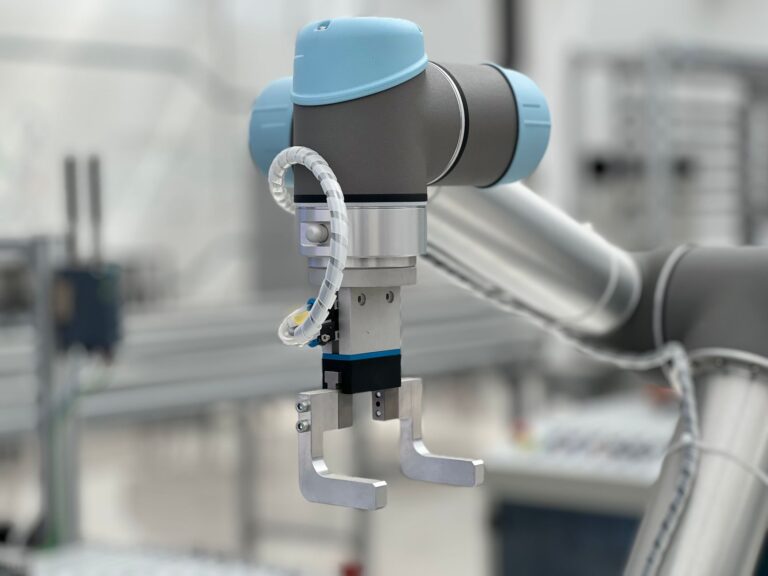
MDA’s robotic capabilities trace back to the Canadarm, which they developed for the Space Shuttle and later the International Space Station. This heritage gives them deep expertise in remote manipulation, spacecraft docking, and in-space assembly. As the space industry matures, demand is growing for on-orbit servicing—spacecraft that refuel satellites, repair broken instruments, or decommission dead satellites. MDA is positioned to supply the arms and systems that perform this work. Axiom Space, for instance, is building commercial space stations and will require robotic systems for assembly and maintenance. Relativity Space is testing 3D printing in orbit, which could require robotic support systems.
The example here matters: imagine a telecom satellite worth $500 million drifting offline in geostationary orbit because a propellant valve failed. Rather than total loss, an on-orbit servicing spacecraft equipped with a MDA robotic arm could approach, dock, and repair or refuel the satellite, extending its life by five or ten years. For operators, that’s worth millions. For MDA, it’s a high-margin service that requires robotics expertise. However, this market remains nascent. Few operational servicing missions have flown, regulations around space debris and orbital maneuvers remain uncertain, and demand is still mostly speculative. MDA is betting on a market that doesn’t yet exist at scale, which is wise long-term but creates near-term revenue uncertainty.
Communications and Antenna Systems—Stable, Overlooked Revenue
Beyond imagery and robotics, MDA operates a substantial communications systems business, supplying satellite ground stations, antenna systems, and communications terminals. This segment rarely makes headlines but generates steady revenue and profits from governments and commercial operators. It’s the infrastructure equivalent of an electrical utility: unglamorous, essential, and profitable if managed well. Military applications form a meaningful part of this business, which provides stability but also regulatory scrutiny and geopolitical risk. A practical tradeoff exists here: the communications business trades growth for stability.
It’s unlikely to double in a year because the addressable market is defined, customers are locked in via long-term contracts, and switching costs are high. But it’s also unlikely to crash because demand for satellite communications infrastructure remains constant. For an investor seeking a pure space economy growth play, this may feel boring—the communications business grows in-line with overall satellite constellation growth, not faster. For an investor seeking a stable, dividend-friendly holding that benefits from space growth without gambling on any single mission or market, the communications segment is exactly what they want. The tension is real: MDA must allocate capital between boring but profitable established businesses and newer, higher-growth but riskier ones like on-orbit servicing.
Geopolitical Risk and Regulatory Challenges
MDA’s position as a critical space technology supplier makes it subject to export controls and geopolitical scrutiny. The U.S. government and Canadian government both regulate what MDA can sell, where it can export, and which customers it can serve. Recent tensions around Chinese satellite constellations and the Russian invasion of Ukraine have highlighted the sensitivity of space technology. MDA cannot sell advanced imaging or robotics to certain countries or entities, which limits addressable market and creates political risk. If U.S.-China tensions escalate further, governments may impose additional restrictions on advanced satellite technology, directly impacting MDA’s ability to operate internationally. Another risk is that governments may decide to build competing capabilities in-house rather than buy from commercial suppliers.
The U.S. Space Force, for example, has occasionally considered developing its own satellite imagery and communications platforms rather than relying on contractors. If the U.S. or other major governments shift toward vertical integration, MDA’s revenue could suffer. Additionally, space debris is becoming a serious concern. As more satellites launch, the risk of collisions and debris-creating events rises. If a major debris-creating event occurs—say, a large satellite breaking apart in high-traffic orbit—governments may impose stricter launch and operation regulations that could harm constellation operators and, by extension, the companies that supply them. MDA’s success depends partly on space industry growth continuing unimpeded, which is not guaranteed.

Private Equity Interest and Valuation Dynamics
MDA has attracted significant private equity and strategic investor interest over the past decade, reflecting confidence in the underlying infrastructure thesis. The company trades at multiples reflecting both space economy growth potential and the more mature, stable nature of many of its existing businesses. Investors pricing in aggressive space economy growth have bid up valuations; those concerned about near-term margin pressures in geospatial data or delays in on-orbit servicing commercialization have pushed back.
One concrete example: in 2022-2023, MDA’s stock faced pressure as geospatial revenue growth slowed and the broader space industry encountered delays. But the company’s core infrastructure positioning—the fact that satellites still need imaging, communications still need ground stations, and robotics still have few qualified competitors—helped the stock recover as investors re-anchored on the long-term structural case. For prospective investors, this illustrates an important dynamic: picks and shovels plays can seem boring during boom periods (why invest in MDA when you can own a rocket company?) but regain appeal during slowdowns because infrastructure needs persist.
The Long-Term Picks and Shovels Bet
MDA’s “picks and shovels” positioning will likely prove prescient over the next decade as the space economy matures. Launch costs have fallen dramatically, encouraging more actors to operate in space. As the number of satellites multiplies and space becomes less niche and more operational, demand for infrastructure—communications, robotics, data services, ground systems—will grow steadily. MDA doesn’t need to bet on any single rocket company, constellation owner, or space station succeeding.
It benefits if the entire ecosystem expands. The long-term risk is that infrastructure becomes commoditized and margins collapse, or that vertical integration erodes demand. But for now, MDA remains a relatively unique combination: significant installed base and customer relationships, critical technologies with few direct competitors, and exposure to multiple growing segments of the space industry. It’s a less thrilling investment thesis than “the rocket company that will revolutionize space” but potentially more durable over decades.
Conclusion
MDA represents a compelling infrastructure play within the broader space economy investment thesis. Rather than betting on a specific launch company or satellite constellation succeeding, investors in MDA are betting on the space industry as a whole maturing and requiring more specialized infrastructure, data services, and robotics capabilities. The company’s established satellite imagery business provides current revenue and cash flow, while newer segments like on-orbit servicing offer significant long-term upside.
Competitors exist in every segment, and geopolitical risks are real, but MDA’s deep expertise and installed customer base provide defensibility that pure-play space companies lack. For roboticists and automation engineers watching the industry, MDA exemplifies how much value is created not in flashy headlines but in the reliable systems that enable those headlines. The next decade of space growth will likely be defined as much by improved satellite data, better on-orbit servicing, and robust communication infrastructure as by new launch vehicles. MDA is positioned to capture meaningful share of that value creation, making it a worth tracking for anyone serious about the space economy.
Frequently Asked Questions
How is MDA different from SpaceX or other launch companies?
MDA supplies infrastructure and services to the space industry rather than operating rockets or owning constellations. It’s analogous to an equipment manufacturer or utilities company versus an airline or shipping line. MDA profits whether SpaceX launches once a month or weekly, whereas SpaceX’s revenue depends directly on launch volume.
What is the “picks and shovels” metaphor?
During the California Gold Rush, the most reliable profits often went to suppliers of picks, shovels, and provisions rather than to miners themselves. Applied to space, MDA supplies critical tools and services to companies exploiting space, regardless of whether those companies succeed or fail individually.
What are the main revenue drivers for MDA?
Satellite Earth observation and imagery, geospatial analytics and services, space robotics and on-orbit servicing development, and satellite communications ground stations and antenna systems.
What is the biggest risk to MDA’s business?
Geopolitical restrictions on space technology sales, government vertical integration (building in-house alternatives), commoditization of geospatial data, and increased competition from international players and startups.
Is MDA profitable now?
Yes, MDA generates positive operating cash flow from established segments like communications and satellite imagery. Newer segments like on-orbit servicing are still in development and absorb R&D investment but haven’t yet scaled to high-volume profitability.
How much of MDA’s business is government versus commercial?
Both are significant. Government customers (U.S., Canadian, and allied nations) represent a substantial portion and provide contract stability, while commercial segments like agricultural and insurance data services are growing. The exact split varies by business unit and changes over time.