
Home → Humanoid Robots → Tesla Optimus vs Boston Dynamics Atlas: Which Humanoid Robot Will Dominate 2026
Tesla Optimus vs Boston Dynamics Atlas: Which Humanoid Robot Will Dominate 2026
Published: January 11, 2026 | 0 Comments
The humanoid robot industry has reached an inflection point. Tesla’s Optimus and Boston Dynamics’ Atlas represent two fundamentally different approaches to building machines that can work alongside humans, and both are racing to prove their viability in real-world applications.
Understanding the technical differences between these platforms matters because the winner of this competition will likely shape automation in manufacturing, logistics, and eventually home environments for decades to come. Each company brings distinct advantages and faces unique challenges.
This comparison examines the hardware capabilities, software approaches, commercial strategies, and realistic timelines for both robots based on publicly available information and industry analysis.
Table of Contents
- The Humanoid Robot Market in 2026
- Tesla Optimus: Hardware and Capabilities
- Boston Dynamics Atlas: Hardware and Capabilities
- Head-to-Head Technical Comparison
- Commercial Strategy and Target Markets
- Current Limitations of Both Platforms
- Which Robot Will Lead in 2026?
- Frequently Asked Questions
The Humanoid Robot Market in 2026
Investment in humanoid robotics has surged dramatically. Goldman Sachs projects the humanoid robot market could reach $38 billion by 2035, with commercial deployments beginning to scale in 2026. Multiple well-funded startups have entered the space, but Tesla and Boston Dynamics remain the most visible competitors.
The interest is driven by labor shortages in manufacturing and logistics, advances in AI that make general-purpose robots more feasible, and falling costs for sensors and actuators. Companies that successfully deploy humanoid robots stand to capture significant value in industries worth trillions globally.
Tesla Optimus: Hardware and Capabilities
Tesla unveiled the Optimus robot (originally called Tesla Bot) in 2021 and has iterated rapidly. The current generation features 28 degrees of freedom, custom-designed actuators, and hands capable of manipulating small objects with precision.
Key hardware specifications:
- Height and weight: 5’8″ (173 cm), approximately 135 lbs (61 kg)
- Carrying capacity: 45 lbs (20 kg) payload, 150 lbs (68 kg) deadlift
- Walking speed: 5 mph (8 km/h) maximum
- Degrees of freedom: 28 total, 11 in each hand
- Battery: 2.3 kWh pack, estimated 4-6 hours of operation
- Sensors: Cameras, force sensors, IMUs, no LiDAR
Tesla’s approach emphasizes vision-based navigation using the same neural network architecture developed for Full Self-Driving. This allows rapid iteration on software and leverages Tesla’s existing AI infrastructure, including the Dojo supercomputer.
The company has deployed Optimus robots in its own factories for tasks like picking and placing battery cells. This internal testing environment provides real-world feedback while controlling the deployment conditions.
Boston Dynamics Atlas: Hardware and Capabilities
Boston Dynamics has been developing advanced robots since 1992, and Atlas represents decades of research into dynamic locomotion. The company unveiled a fully electric version of Atlas in 2024, replacing the previous hydraulic system.
Key hardware specifications:
- Height and weight: 4’11” (150 cm), approximately 190 lbs (86 kg)
- Carrying capacity: Not publicly specified, demonstrated moving heavy objects
- Movement: Full 360-degree joint rotation, extreme flexibility
- Degrees of freedom: Not publicly specified, highly articulated
- Power: Electric actuators, battery capacity not disclosed
- Sensors: Depth cameras, LiDAR, force/torque sensors
Boston Dynamics prioritizes athletic capability and has demonstrated Atlas performing parkour, backflips, and complex gymnastic routines. The new electric version maintains this agility while adding manipulator arms designed for industrial tasks.
The company is owned by Hyundai, which provides access to automotive manufacturing expertise and a clear path to deployment in Hyundai factories. This partnership gives Atlas a defined initial market that does not exist for most humanoid robot startups.
Head-to-Head Technical Comparison
Comparing these robots requires understanding the different design philosophies driving their development.
Locomotion and stability: Atlas demonstrates superior dynamic movement, including the ability to recover from pushes and navigate uneven terrain with confidence. Optimus walks more cautiously and has not publicly demonstrated the same level of athletic recovery. For industrial environments with flat floors, this difference matters less than in unstructured settings.
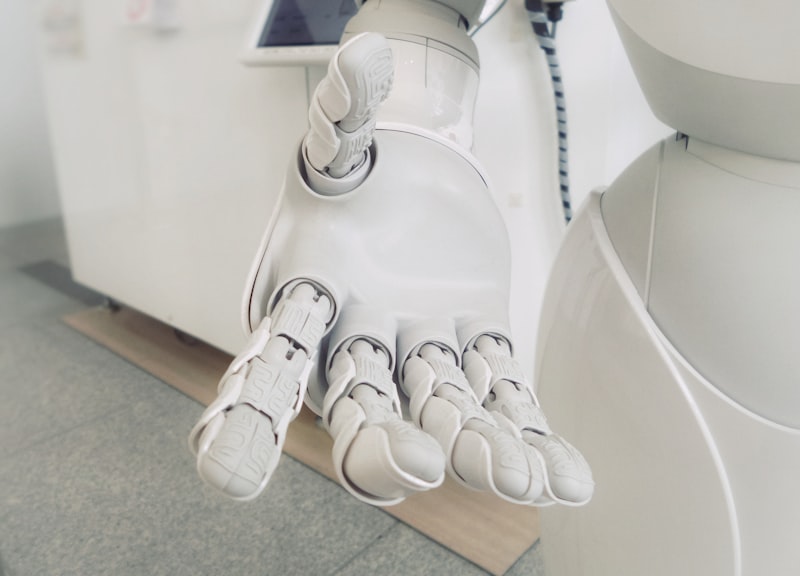
Manipulation: Optimus hands show impressive dexterity for fine motor tasks like handling small components. Atlas’s new manipulators appear designed for heavier industrial work rather than precision handling. The right choice depends on the application.
AI and autonomy: Tesla’s end-to-end neural network approach allows the robot to learn from demonstration and adapt to new tasks without explicit programming. Boston Dynamics uses more traditional motion planning combined with learned behaviors. Tesla’s approach may scale better as data accumulates.
Manufacturing scale: Tesla’s core competency is high-volume manufacturing at low cost. The company claims Optimus will eventually cost under $20,000 to produce. Boston Dynamics has never manufactured at scale, and Atlas likely costs significantly more per unit currently.

Commercial Strategy and Target Markets
The companies are pursuing different go-to-market strategies that reflect their organizational structures and capabilities.
Tesla’s Strategy
Tesla plans to deploy Optimus initially in its own factories, then offer robots to other manufacturers, and eventually sell to consumers. This vertical integration allows Tesla to iterate rapidly on a platform it controls completely.
Elon Musk has projected that Optimus could become Tesla’s most valuable product line, potentially worth more than the car business. The company aims to produce millions of units eventually, which would require unprecedented manufacturing scale for humanoid robots.
Boston Dynamics’ Strategy
Boston Dynamics is focusing on industrial customers, particularly automotive manufacturing through parent company Hyundai. The company has experience selling Spot robots to enterprises and can apply similar sales and support infrastructure to Atlas.
Rather than pursuing consumer markets immediately, Boston Dynamics aims to prove reliability in controlled industrial environments where the economic value of automation is clearest and support requirements are manageable.
Current Limitations of Both Platforms
Neither robot is ready for widespread deployment. Understanding current limitations provides realistic expectations for the 2026 timeframe.
Battery life: Both robots have limited operational time between charges. Industrial deployment requires either extended battery capacity, hot-swappable batteries, or frequent charging breaks that reduce productivity.
Reliability: Complex electromechanical systems with many moving parts fail frequently. Achieving the uptime expected in industrial environments requires extensive testing and iteration that takes years.
Task flexibility: While both companies demonstrate impressive individual capabilities, general-purpose robots that can switch between diverse tasks autonomously remain years away. Current deployments focus on narrow, well-defined applications.
Cost: Even Tesla’s optimistic cost projections put Optimus in a price range that requires significant productivity gains to justify. Most businesses cannot currently make the economics work.
Which Robot Will Lead in 2026?
Predicting winners in emerging technology markets is inherently uncertain, but several factors favor each competitor.
Factors favoring Tesla Optimus:
- Demonstrated ability to manufacture complex products at scale
- Existing AI infrastructure and data collection capabilities
- Internal deployment opportunity in Tesla factories
- Aggressive timeline and high investment priority
- Lower projected unit costs enabling broader adoption
Factors favoring Boston Dynamics Atlas:
- Decades of robotics research and engineering expertise
- Superior demonstrated locomotion and recovery capabilities
- Hyundai partnership providing manufacturing and deployment pathway
- Proven track record commercializing Spot robot
- More conservative timeline reduces execution risk
By the end of 2026, both companies will likely have robots performing useful work in controlled industrial settings. Tesla may have more units deployed due to internal factory use, while Boston Dynamics may demonstrate more robust performance in varied conditions.
The more interesting question is which approach proves more successful over five to ten years. Tesla’s bet on AI-first development and mass manufacturing could pay off dramatically if the technology matures faster than expected. Boston Dynamics’ methodical approach provides a safer path but may leave the company behind if competitors move faster.
How to Prepare for the Humanoid Robot Era
Businesses and individuals watching this space should take several practical steps:
- Identify specific tasks in your operations that could benefit from humanoid automation
- Monitor pilot deployments and published results from both companies
- Consider the infrastructure changes required to support robot workers
- Evaluate workforce training needs as human-robot collaboration increases
- Track competing startups including Figure AI, Apptronik, and Agility Robotics
Frequently Asked Questions
When will humanoid robots be available to buy?
Tesla has suggested Optimus could be available for purchase by enterprises in 2025-2026, with consumer sales potentially following in subsequent years. Boston Dynamics has not announced public sales timelines for the new Atlas. Initial availability will likely be limited and expensive.
How much will these robots cost?
Tesla has projected eventual production costs under $20,000 for Optimus, though early units will likely cost more. Boston Dynamics has not disclosed Atlas pricing, but given Spot costs around $75,000, Atlas likely costs significantly more. Prices should decrease as production scales.
Can these robots work alongside humans safely?
Both companies are designing their robots for human collaboration, with force-limited actuators and safety systems. However, operating near heavy machinery requires careful risk assessment. Early deployments will likely include physical separation or close supervision.
What jobs will humanoid robots do first?
Initial applications will focus on repetitive manual tasks in structured environments: picking and placing objects in warehouses, loading machines in factories, and moving materials. Tasks requiring fine judgment, creativity, or extensive human interaction remain further out.
Will humanoid robots replace human workers?
Humanoid robots will augment human workers rather than immediately replace them. Labor shortages in manufacturing and logistics mean robots will initially fill gaps rather than displace existing workers. Longer term economic effects depend on deployment speed and policy responses.
Conclusion
The competition between Tesla Optimus and Boston Dynamics Atlas represents a pivotal moment in robotics. Each company brings distinct strengths: Tesla offers manufacturing scale and aggressive AI development, while Boston Dynamics provides proven athletic capability and enterprise experience.
By 2026, neither robot will dominate the market in any definitive sense. Both will operate in pilot deployments while the companies work through the immense challenges of making humanoid robots reliable and economical. The winner over the next decade will be determined by which approach proves more adaptable as AI capabilities improve and manufacturing scales.