
Figure AI has emerged as one of the most ambitious players in the race to build commercially viable humanoid robots. With $2.6 billion in funding at a matching valuation, the company has attracted investment from some of the most influential names in technology, including Microsoft, OpenAI, Nvidia, Amazon founder Jeff Bezos, and Intel.
Founded in 2022, Figure has moved remarkably fast in an industry known for long development timelines. The company’s Figure 01 robot has already begun pilot deployments at BMW manufacturing facilities, representing one of the first real-world commercial applications for general-purpose humanoid robots.
This article examines Figure AI’s approach to humanoid robotics, the technology behind their robots, their strategic partnerships, and what their success or failure could mean for the broader robotics industry. Understanding Figure helps contextualize the current surge of investment and interest in humanoid robots.
Table of Contents
Who Is Figure AI?
Figure AI was founded in 2022 by Brett Adcock, a serial entrepreneur who previously founded Vettery (sold to Adecco) and Archer Aviation (a public air taxi company). Adcock’s track record of building and scaling companies attracted early interest from investors despite the company’s ambitious goals.
Founding Team
Figure has assembled a team with deep robotics expertise:
- Brett Adcock (CEO): Serial entrepreneur with exits in HR tech and aviation
- Engineering leadership: Veterans from Boston Dynamics, Tesla, Google, Apple
- AI team: Researchers with backgrounds in machine learning and computer vision
- Hardware team: Experts in actuators, sensors, and mechanical design
Company Mission
Figure’s stated mission is to expand human capabilities through advanced robotics. The company believes humanoid robots can address labor shortages, perform dangerous tasks, and eventually assist with daily living. This differs from companies focused on specific applications, positioning Figure as pursuing general-purpose humanoid capability.
Rapid Progress
Figure’s development speed has surprised industry observers:
- 2022: Company founded, initial team assembled
- 2023: First prototype demonstrated, Series A funding
- 2024: Figure 01 deployed at BMW, massive Series B raised
- 2025-2026: Scaling commercial deployments
The Historic Funding Round
Figure AI’s February 2024 funding round made headlines for both its size and its investor roster. The $675 million raise at a $2.6 billion valuation represented one of the largest investments ever in a humanoid robotics company.
Key Investors
The investor list reads like a who’s who of technology:
- Microsoft: Major investment as part of AI partnership expansion
- OpenAI: Technology partnership for large language model integration
- Nvidia: Strategic investment from the AI computing leader
- Jeff Bezos: Personal investment from Amazon’s founder
- Intel: Investment in emerging robotics platform
- Additional investors: Parkway Venture Capital, Align Ventures, ARK Invest
Why Such Large Investment?
Several factors explain the exceptional funding level:
- Market opportunity: Addressable market potentially in trillions for labor automation
- Technical progress: Demonstrated working prototype unlike many competitors
- Team credibility: Experienced founder and strong technical team
- AI integration: OpenAI partnership provides advanced capabilities
- Early commercial traction: BMW partnership validates market interest
Use of Funds
Figure has indicated funds will support:
- Scaling manufacturing capabilities
- Expanding engineering team
- Advancing AI and software development
- Building commercial deployment infrastructure
Figure 01: The Robot
Figure 01 is the company’s first commercial humanoid robot, designed specifically for real-world work environments rather than research applications alone.
Physical Specifications
Key hardware characteristics:
- Height: Approximately 5 feet 6 inches (168 cm)
- Weight: Around 132 pounds (60 kg)
- Payload capacity: Approximately 44 pounds (20 kg)
- Battery life: About 5 hours of operation
- Speed: Walking speed around 1.2 meters per second
Design Philosophy
Figure designed the robot with commercial deployment in mind:
- Human-scale: Sized to work in environments designed for people
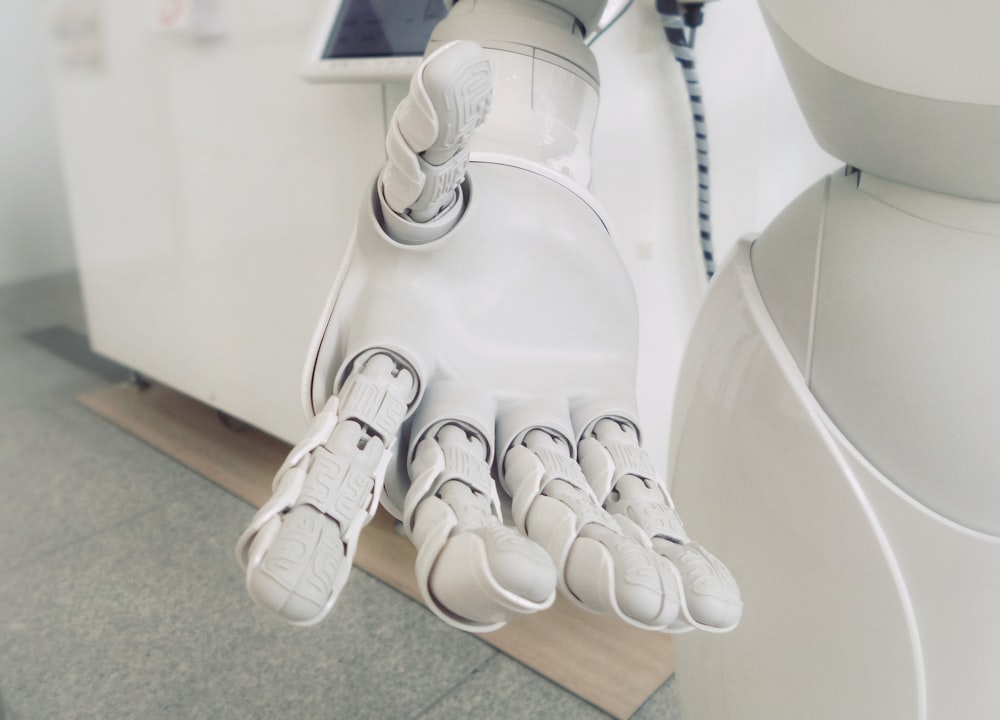
- Dexterous hands: Capable of grasping and manipulating various objects
- Bipedal locomotion: Walks on two legs to navigate human spaces
- Modular design: Components designed for manufacturing and service
Capabilities Demonstrated
Figure has shown the robot performing:
- Making coffee and operating kitchen appliances
- Picking up and placing objects with precision
- Walking and navigating environments
- Responding to natural language commands
- Learning tasks through demonstration
Integration with AI
Figure 01 incorporates advanced AI for perception and decision-making:
- Computer vision for understanding the environment
- Natural language processing for command interpretation
- Neural networks for motion planning
- Learning systems that improve with experience
Core Technology and AI Integration
Figure’s technology combines proprietary robotics development with partnerships that provide advanced AI capabilities.
OpenAI Partnership
The collaboration with OpenAI represents a significant advantage:
- Language understanding: GPT-based systems interpret human instructions
- Reasoning: AI can plan multi-step tasks from high-level commands
- Learning: Models can improve from demonstration and feedback
- Multimodal processing: Combining visual and language understanding
Proprietary Hardware
Figure develops key hardware internally:
- Actuators: Custom motors and gearboxes for precise movement
- Sensors: Integrated sensing for environmental awareness
- Hands: Dexterous end effectors for manipulation
- Computing: Onboard processing for real-time control
Software Architecture
The software stack enables autonomous operation:
- Perception system: Understanding surroundings from sensor data
- Motion planning: Generating smooth, safe movements
- Task execution: Carrying out complex multi-step operations
- Fleet management: Coordinating multiple robots
Learning and Adaptation
A key differentiator is the robot’s ability to learn:
- Imitation learning: Acquiring skills by watching demonstrations
- Reinforcement learning: Improving through trial and experience
- Transfer learning: Applying skills to new situations
- Continuous improvement: Getting better over time in deployment
The BMW Manufacturing Partnership
Figure’s partnership with BMW represents one of the first commercial deployments of a general-purpose humanoid robot in manufacturing, providing crucial real-world validation.
Partnership Details
The collaboration involves:
- Location: BMW Spartanburg, South Carolina manufacturing facility
- Scope: Pilot deployment for specific manufacturing tasks
- Timeline: Initial deployment in 2024, expansion planned
- Goal: Demonstrate humanoid robot value in automotive manufacturing
Why BMW?
The partnership makes strategic sense for both parties:
- Labor challenges: Automotive manufacturing faces persistent labor shortages
- Existing automation: BMW already uses extensive robotics
- Innovation culture: BMW invests in emerging technologies
- Scale potential: Success could expand to multiple facilities
Tasks Being Tested
Figure robots are being evaluated for:
- Material handling and logistics within the facility
- Parts delivery to assembly stations
- Quality inspection tasks
- Tasks too complex for traditional automation
Significance
The BMW deployment matters because:
- Revenue generation: First paying customer validates business model
- Real-world data: Actual deployment provides critical learning
- Credibility: Major brand validates technology readiness
- Expansion potential: Success opens doors to other manufacturers
Competitive Landscape
Figure operates in an increasingly crowded field of humanoid robot developers. Understanding the competition helps contextualize Figure’s position and strategy.
Tesla Optimus
Perhaps the most significant competitor:
- Resources: Tesla’s manufacturing scale and AI capabilities
- Strategy: Building for high-volume, low-cost production
- Timeline: Deploying in Tesla factories, external sales planned
- Differentiation: Focus on cost and manufacturing scalability
Boston Dynamics
The established leader in robot athleticism:
- Heritage: Decades of robotics research
- Atlas: Most physically capable humanoid demonstrated
- Approach: Premium positioning, Hyundai backing
- Challenge: Commercial deployment still ramping
Other Competitors
Additional companies pursuing humanoid robots:
- Agility Robotics: Digit robot already in warehouse deployment with Amazon
- Apptronik: Apollo humanoid with NASA collaboration
- Sanctuary AI: Phoenix humanoid focused on AI cognition
- 1X Technologies: NEO humanoid backed by OpenAI
- Chinese players: Unitree, UBTECH, and others advancing quickly
Figure’s Competitive Position
Figure differentiates through:
- Speed of development: Rapid progress from founding to deployment
- OpenAI partnership: Exclusive advanced AI integration
- Commercial focus: Designed for work from the start
- Investor support: Deep pockets for continued development
Business Model and Path to Commercialization
Converting humanoid robot technology into a viable business requires solving both technical and commercial challenges. Figure’s approach reflects lessons from other robotics companies.
Revenue Model Options
Several business models are possible:
- Robot sales: Selling robots outright to customers
- Robot-as-a-Service: Monthly fees for robot deployment
- Labor replacement: Charging based on work completed
- Hybrid models: Combining elements of different approaches
Target Markets
Initial focus areas for commercialization:
- Manufacturing: BMW partnership as beachhead
- Logistics: Warehouses and distribution centers
- Commercial spaces: Retail, hospitality, healthcare
- Long-term: Consumer and home applications
Path to Scale
Scaling humanoid robot deployment requires:
- Reliability: Robots must work consistently without failures
- Support infrastructure: Maintenance and service capabilities
- Cost reduction: Unit economics must work for customers
- Demonstrated ROI: Clear value proposition for buyers
Unit Economics Challenge
Key financial considerations:
- Robot cost: Manufacturing costs per unit
- Customer value: Labor savings or productivity gains
- Payback period: Time for customer to recoup investment
- Lifetime value: Total revenue per robot deployed
Challenges and Risks
Despite impressive progress, Figure faces significant challenges on the path to commercial success.
Technical Challenges
Robotics remains hard:
- Reliability: Real-world environments are unpredictable
- Dexterity: Human-level manipulation is extremely difficult
- Battery life: Limited runtime constrains applications
- Edge cases: Handling unexpected situations safely
Commercial Challenges
Building a sustainable business is equally difficult:
- Cost: Humanoid robots are expensive to produce
- ROI proof: Customers need clear value demonstration
- Support: Service infrastructure across deployments
- Sales cycles: Enterprise customers move slowly
Competition Risks
Competitors pose real threats:
- Tesla: Vast resources and manufacturing expertise
- Incumbents: Boston Dynamics’ technical lead
- New entrants: Well-funded startups globally
- Chinese competition: Lower-cost manufacturing potential
Market Timing
Uncertainty about market readiness:
- Customer acceptance: Will companies deploy humanoid robots?
- Regulatory environment: Standards and regulations unclear
- Labor dynamics: Social and political factors
- Economic conditions: Investment in automation varies with economy
Future Outlook
Figure’s trajectory will significantly impact the humanoid robotics industry, whether through success or lessons from failure.
Near-Term Milestones
Key developments to watch:
- BMW expansion: Growth from pilot to meaningful deployment
- Additional customers: Diversifying beyond single partner
- Technical improvements: Capability and reliability advances
- Manufacturing scale: Moving from prototype to production
Long-Term Vision
Figure’s broader ambitions include:
- Factory labor: Significant presence in manufacturing
- Logistics automation: Warehouse and distribution center deployment
- Commercial services: Retail, hospitality, and healthcare
- Consumer market: Eventually, home assistance robots
Industry Impact
Regardless of Figure’s specific outcome:
- Validation: Success would validate humanoid robot market
- Investment: Additional funding would flow to the sector
- Talent: Engineers attracted to humanoid robotics
- Learning: Industry benefits from deployment experience
How to Follow Figure’s Progress
Track the company’s development through:
- Public demonstrations: Video releases showing capabilities
- Partnership announcements: New commercial relationships
- Funding news: Additional investment rounds
- Industry conferences: Presentations and demonstrations