

The search for the best AI chip stocks for robotics applications has intensified as autonomous systems move from research labs into warehouses, hospitals, manufacturing floors, and eventually homes. Semiconductors designed for artificial intelligence workloads represent the computational backbone that enables robots to perceive their environments, make split-second decisions, and execute complex tasks with precision. As the robotics industry approaches an estimated market value exceeding $200 billion by 2030, investors are increasingly focused on the chipmakers whose silicon powers this transformation. Understanding which semiconductor companies stand to benefit most from robotics growth requires examining the specific computational demands of autonomous systems. Unlike traditional computing, robotics applications demand real-time inference capabilities, energy efficiency for battery-powered systems, and the ability to process multiple sensor inputs simultaneously.
These requirements favor certain chip architectures and companies with expertise in parallel processing, edge computing, and specialized AI accelerators. The convergence of improved algorithms, cheaper sensors, and more powerful chips has created a tipping point where commercial robotics deployment is accelerating across industries. This article provides a thorough examination of the semiconductor landscape as it relates to robotics, covering the leading publicly traded companies developing AI chips for autonomous applications. Readers will gain insight into what differentiates various chip architectures, which companies hold competitive advantages, the financial metrics worth monitoring, and how to evaluate risk factors specific to this sector. Whether building a growth-oriented portfolio or seeking to understand the technology underpinning the robotics revolution, this analysis offers the foundational knowledge needed to make informed investment decisions.
Table of Contents
- What Makes AI Chip Stocks Essential for Robotics Investment Portfolios?
- Leading AI Chip Companies Powering Robotics Innovation
- Evaluating AI Chip Architectures for Robotics Applications
- How to Analyze AI Chip Stocks for Robotics Exposure
- Risk Factors in AI Chip Investments for Robotics Markets
- Emerging Players and Startups Reshaping Robotics Chip Markets
- How to Prepare
- How to Apply This
- Expert Tips
- Conclusion
- Frequently Asked Questions
What Makes AI Chip Stocks Essential for Robotics Investment Portfolios?
Robotics systems require computational capabilities that differ fundamentally from traditional computing workloads. A warehouse robot navigating among human workers must process camera feeds, lidar point clouds, and sensor data while simultaneously running motion planning algorithms—all within milliseconds. This real-time requirement places AI chips at the center of robotics functionality, making semiconductor companies essential holdings for investors seeking exposure to automation trends. Without sufficiently powerful and efficient processors, even the most sophisticated robotic software remains theoretical.
The financial case for AI chip stocks within robotics portfolios rests on the expanding addressable market. Industrial robots shipped globally exceeded 500,000 units annually as of 2023, with collaborative robots (cobots) growing at roughly 20% year-over-year. Each of these systems requires one or more AI-capable processors, creating recurring demand as fleets expand. Beyond industrial settings, service robots for healthcare, hospitality, and logistics are proliferating, while autonomous vehicles and drones add further demand vectors. Chip companies serving multiple robotics end markets benefit from diversified revenue streams that reduce dependence on any single application.
- **Real-time processing requirements**: Robotics applications cannot tolerate latency, demanding chips optimized for inference at the edge rather than cloud-based processing
- **Energy efficiency constraints**: Mobile robots operating on batteries need processors that deliver high performance per watt, favoring specialized architectures over general-purpose CPUs
- **Sensor fusion complexity**: Modern robots integrate cameras, lidar, radar, and tactile sensors, requiring chips capable of parallel processing across heterogeneous data streams

Leading AI Chip Companies Powering Robotics Innovation
NVIDIA dominates the AI chip landscape for robotics through its GPU architecture and comprehensive software ecosystem. The company’s Jetson platform, specifically designed for autonomous machines, powers everything from delivery robots to agricultural equipment. NVIDIA’s CUDA programming framework and pre-trained AI models through its Isaac platform reduce development time for robotics companies, creating strong ecosystem lock-in. With data center revenue exceeding $40 billion annually and robotics representing a growth vertical, NVIDIA maintains the scale to invest heavily in next-generation architectures. AMD has emerged as a credible alternative in high-performance computing, with its acquisition of Xilinx adding critical FPGA capabilities relevant to robotics. FPGAs offer reconfigurability that proves valuable in robotics applications where algorithms evolve rapidly and custom hardware acceleration provides competitive advantages.
AMD’s embedded processor line targets industrial automation specifically, while its MI300 accelerators compete for robotics cloud training workloads. The company’s growing market share in data centers demonstrates its ability to challenge NVIDIA’s dominance. Intel’s robotics relevance stems from its RealSense depth cameras, Movidius vision processing units, and Mobileye autonomous driving division. Although Intel has lost ground in cutting-edge AI training chips, its embedded processors remain prevalent in industrial robotics, and the company’s manufacturing investments through the CHIPS Act could restore competitiveness. Qualcomm represents another significant player, leveraging its mobile chip expertise for robotics applications requiring low power consumption and wireless connectivity. The company’s Robotics RB series processors target drones, delivery robots, and industrial AMRs (autonomous mobile robots).
- **NVIDIA**: Market leader with 80%+ share in AI training, strong robotics-specific platforms
- **AMD**: Growing competitor with FPGA capabilities from Xilinx acquisition
- **Intel**: Legacy presence in embedded systems, depth sensing technology
- **Qualcomm**: Mobile expertise translating to low-power robotics applications
Evaluating AI Chip Architectures for Robotics Applications
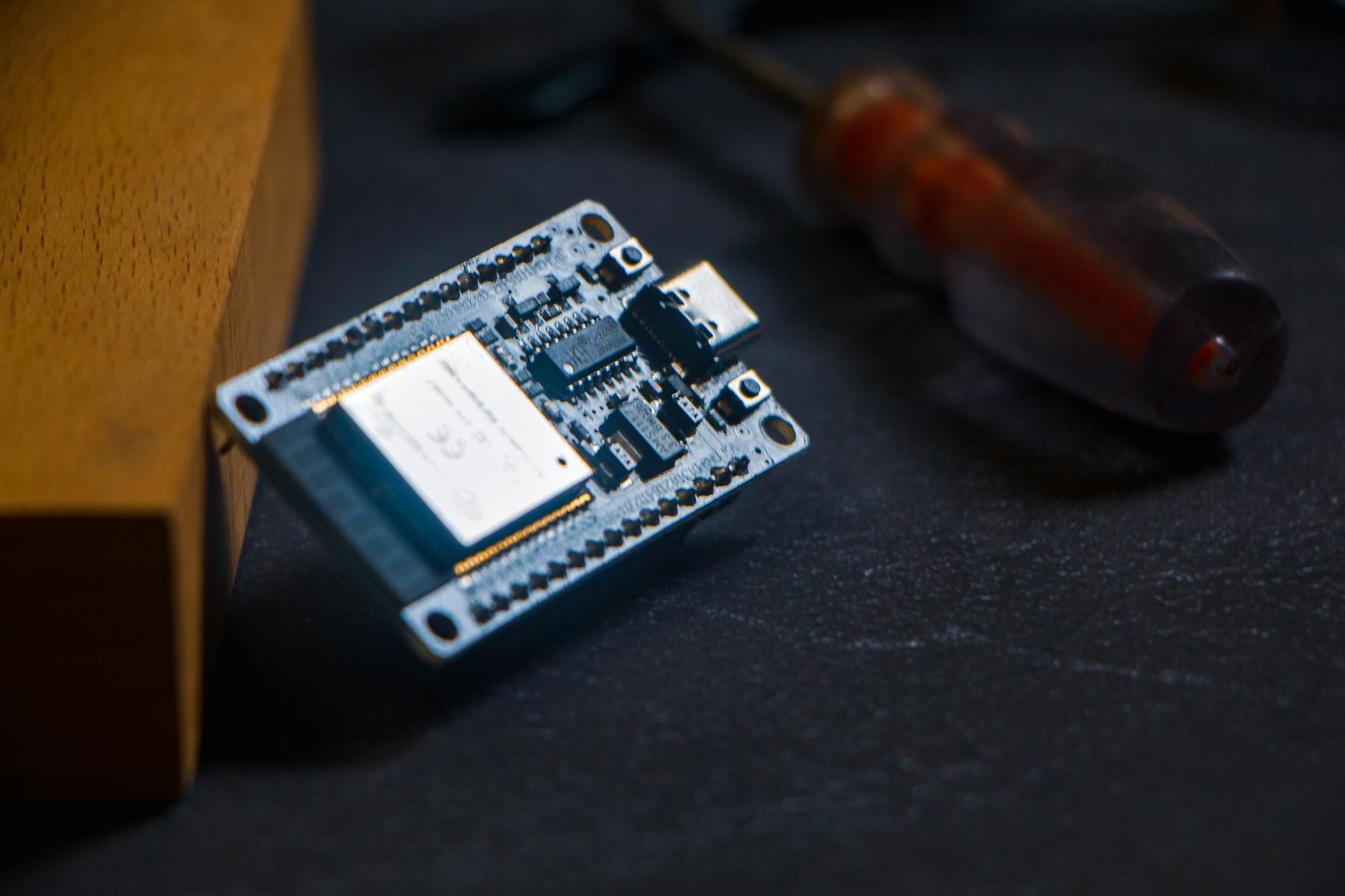
Graphics Processing Units (GPUs) excel at the parallel computations underlying neural network inference, making them the default choice for robotics applications requiring computer vision and deep learning. NVIDIA’s dominance in this space reflects years of software investment that makes its chips easier to program than alternatives. However, GPUs consume significant power, limiting their suitability for smaller mobile robots where battery life is paramount. High-end robotics applications like autonomous vehicles and large industrial systems can accommodate GPU power requirements, but the market is bifurcating based on energy constraints. Application-Specific Integrated Circuits (ASICs) offer superior efficiency for defined workloads by eliminating the flexibility overhead inherent in general-purpose processors. Google’s Tensor Processing Units demonstrate this approach for cloud AI, while companies like Hailo and Kneron develop edge AI chips specifically optimized for robotics inference.
These specialized chips can deliver 10x or greater efficiency improvements for specific neural network architectures, enabling always-on AI processing in battery-powered devices. The tradeoff involves reduced flexibility when algorithms change, potentially requiring hardware updates. Field-Programmable Gate Arrays (FPGAs) occupy a middle ground, offering reconfigurability while achieving better efficiency than GPUs for many workloads. AMD’s Xilinx division and Intel’s former Altera unit provide FPGAs widely used in industrial robotics where deterministic timing and custom interfaces matter. FPGAs prove particularly valuable during robotics prototyping phases when requirements evolve rapidly. The programming complexity of FPGAs historically limited adoption, but high-level synthesis tools have reduced this barrier, making FPGA-based solutions increasingly accessible.
- **GPUs**: Best for complex vision tasks but high power consumption
- **ASICs**: Maximum efficiency for specific workloads, limited flexibility
- **FPGAs**: Reconfigurable efficiency, steeper learning curve
How to Analyze AI Chip Stocks for Robotics Exposure
Financial analysis of semiconductor companies requires understanding both traditional metrics and sector-specific indicators. Revenue growth rates matter, but investors should examine the composition of that growth—companies with increasing robotics and edge AI revenue demonstrate positioning for long-term trends. Gross margins indicate pricing power and competitive moats; leading AI chip companies like NVIDIA maintain gross margins above 70%, reflecting strong demand and limited competition. Research and development spending as a percentage of revenue signals commitment to maintaining technological leadership in a field where architectures evolve rapidly. Market share trends provide insight into competitive dynamics. The AI accelerator market concentrated heavily toward NVIDIA through 2024, but increased competition from AMD, Intel, and custom chips from hyperscalers suggests potential share shifts.
Investors should monitor design wins with major robotics companies, as these multi-year relationships provide revenue visibility. Partnerships with robotics software platforms, sensor manufacturers, and system integrators indicate ecosystem positioning that extends beyond pure hardware capabilities. Valuation comparisons must account for growth expectations and market positioning. Price-to-earnings ratios for AI chip leaders often exceed 30x, reflecting anticipated growth, while traditional semiconductor companies trade at lower multiples. Price-to-sales ratios help compare companies at different profitability stages. Enterprise value to gross profit normalizes for margin differences across business models. Comparing current valuations to historical ranges identifies potential overextension or opportunity, though structural industry shifts can justify sustained premium multiples.
- **Track robotics-specific revenue segments** when companies disclose them separately
- **Monitor design wins** announced with major robotics manufacturers
- **Compare R&D intensity** to peers as an indicator of competitive investment
- **Assess customer concentration** risk if major robotics clients represent significant revenue
Risk Factors in AI Chip Investments for Robotics Markets
Cyclicality represents an inherent risk in semiconductor investing that even AI chip stocks cannot fully escape. The industry historically experiences boom-bust cycles driven by inventory buildups and capacity mismatches. The 2022-2023 period demonstrated this pattern when pandemic-era overordering led to inventory corrections despite underlying AI demand strength. Robotics applications may moderate this cyclicality somewhat due to longer deployment timelines and enterprise purchasing patterns, but investors should prepare for volatility. Geopolitical factors increasingly influence semiconductor investments. Export controls limiting advanced chip sales to China affect companies with significant revenue exposure to Chinese robotics manufacturers.
Taiwan Semiconductor Manufacturing Company (TSMC) fabricates the majority of advanced AI chips, creating concentration risk should cross-strait tensions escalate. The CHIPS Act and similar initiatives in Europe and Japan aim to diversify manufacturing, but building semiconductor fabrication capacity requires years and billions in capital. Companies with diversified manufacturing relationships or domestic production capabilities carry lower geopolitical risk. Technology obsolescence presents a perpetual concern in an industry where architectures evolve continuously. Current GPU dominance could face disruption from neuromorphic chips, photonic processors, or quantum computing advances over longer timeframes. More immediately, the shift from training-focused to inference-focused workloads benefits different architectures than those dominating current markets. Investors should assess whether companies are investing across multiple architectural approaches or concentrating on potentially obsolescent technologies.
- **Supply chain concentration**: TSMC dependency affects most AI chip companies
- **Regulatory uncertainty**: Export controls and antitrust concerns create policy risk
- **Competition from hyperscalers**: Amazon, Google, and Microsoft developing custom chips
- **Valuation risk**: High multiples leave limited margin for execution missteps

Emerging Players and Startups Reshaping Robotics Chip Markets
Beyond established semiconductor giants, a cohort of specialized companies targets robotics-specific chip opportunities. Hailo, an Israeli startup that went public through SPAC merger, develops edge AI processors achieving claimed efficiency advantages over GPU solutions for inference workloads. The company has secured design wins with major automotive and robotics companies seeking alternatives to NVIDIA’s dominance. Kneron similarly focuses on edge AI chips, emphasizing power efficiency for battery-powered applications and privacy-preserving on-device processing. Cerebras Systems takes the opposite approach, building wafer-scale processors for AI training that dwarf conventional chips. While not directly deployed in robots, these training systems accelerate the development of AI models that eventually run on edge devices.
Graphcore, despite recent struggles, represents the venture capital investment flowing into AI chip alternatives. For investors seeking exposure to these earlier-stage companies, the opportunity comes with higher risk given unproven business models and competition from well-capitalized incumbents. Many of these companies remain private or trade on smaller exchanges with limited liquidity. The robotics-specific chip market also includes companies like Prophesee, developing event-based vision sensors that reduce data processing requirements by capturing only changes in a scene rather than full frames. Such neuromorphic approaches could eventually displace conventional architectures for certain robotics applications. Investors interested in emerging players should consider venture capital funds or ETFs providing diversified exposure rather than concentrated bets on individual startups with binary outcomes.
How to Prepare
- **Establish foundational knowledge of chip architectures** by studying the differences between GPUs, FPGAs, ASICs, and emerging approaches. Understanding why certain architectures suit specific robotics applications enables better assessment of competitive positioning. Resources from semiconductor industry associations and academic courses provide technical depth without requiring engineering expertise.
- **Identify the robotics end markets each company serves** by reviewing investor presentations, earnings calls, and design win announcements. Companies derive revenue from diverse applications including industrial automation, autonomous vehicles, drones, service robots, and consumer products. Mapping these exposures reveals which companies benefit from specific robotics trends.
- **Analyze the software ecosystem surrounding each hardware platform** since developer adoption often determines long-term success. NVIDIA’s CUDA dominance illustrates how software lock-in creates durable competitive advantages. Evaluate the availability of development tools, pre-trained models, and integration support that lower barriers for robotics companies adopting each platform.
- **Review financial statements focusing on segment reporting** that breaks out robotics-relevant revenue. Some companies report automotive or edge computing segments separately, providing visibility into robotics exposure. Calculate growth rates for these segments relative to overall company growth to identify accelerating trends.
- **Assess supply chain relationships and manufacturing strategies** by identifying which foundries each company uses and whether they are diversifying production. Companies dependent on single-source manufacturing face greater geopolitical and supply disruption risks. Review capital expenditure plans and announced partnerships with manufacturing facilities.
How to Apply This
- **Construct a watchlist of 8-12 AI chip companies** with varying market capitalizations and robotics exposure levels. Include dominant players like NVIDIA alongside challengers and specialists. Monitor this watchlist consistently rather than chasing momentum in individual names, allowing pattern recognition across the sector.
- **Define position sizing based on conviction and risk tolerance** recognizing that semiconductor stocks exhibit higher volatility than broader market indices. Consider limiting individual positions to 3-5% of a technology allocation while maintaining diversification across the AI chip landscape. Larger positions in established leaders and smaller speculative allocations to emerging players balances risk and upside potential.
- **Establish entry points using technical and fundamental criteria** rather than purchasing at arbitrary times. Semiconductor stocks often pull back 20-30% even during secular uptrends, providing better entry opportunities than chasing all-time highs. Dollar-cost averaging over multiple months reduces timing risk in volatile securities.
- **Schedule quarterly reviews aligned with earnings releases** to reassess thesis validity and competitive positioning. Semiconductor industry dynamics shift rapidly, and positions requiring fundamental thesis changes should be adjusted promptly. Maintain a written investment thesis for each holding to enable objective review against actual results.
Expert Tips
- **Focus on inference chip capabilities rather than training dominance** when evaluating robotics exposure. While training AI models requires massive computational power concentrated in data centers, deployed robots run inference workloads at the edge. Companies optimizing for inference efficiency may capture disproportionate robotics value even if they lag in training benchmarks.
- **Monitor partnership announcements between chip companies and robotics manufacturers** as leading indicators of revenue several quarters ahead. Design-in cycles for robotics applications often span 18-24 months, meaning announced partnerships translate to revenue over extended periods. These announcements provide insight before financial results reflect the opportunity.
- **Track automotive AI chip developments as a proxy for broader robotics trends** since autonomous vehicles represent the largest and most demanding robotics application. Companies succeeding in automotive often possess capabilities transferable to industrial, service, and consumer robotics. Automotive design wins signal technical credibility that influences other markets.
- **Consider the total cost of ownership beyond chip prices** when assessing competitive positioning. Robotics companies evaluate development tool quality, software support, power consumption, and thermal management alongside silicon costs. Companies offering superior ecosystems command premium pricing that sustains gross margins.
- **Watch for margin pressure signals indicating competitive intensity** such as promotional pricing, increased customer incentives, or declining average selling prices. The AI chip market has supported premium pricing through supply constraints, but eventual capacity additions could normalize margins toward semiconductor industry averages.
Conclusion
Investing in AI chip stocks for robotics applications offers exposure to two converging megatrends: the proliferation of artificial intelligence and the automation of physical tasks across industries. The semiconductor companies powering this transformation occupy critical positions in technology value chains, capturing significant margins on essential components. NVIDIA’s current dominance demonstrates the rewards available to companies that establish ecosystem leadership, while emerging competitors and architectural innovations suggest the landscape will continue evolving.
Successful investment in this sector requires ongoing education about technical developments, careful analysis of competitive dynamics, and disciplined portfolio construction that acknowledges semiconductor cyclicality and volatility. The robotics market’s expansion over the coming decade will create sustained demand for AI-capable processors, benefiting companies positioned at this intersection. By understanding the computational requirements of autonomous systems, evaluating chip architectures against those requirements, and monitoring the financial health and competitive positioning of leading suppliers, investors can participate in the automation revolution through the enabling technology at its core.
Frequently Asked Questions
How long does it typically take to see results?
Results vary depending on individual circumstances, but most people begin to see meaningful progress within 4-8 weeks of consistent effort. Patience and persistence are key factors in achieving lasting outcomes.
Is this approach suitable for beginners?
Yes, this approach works well for beginners when implemented gradually. Starting with the fundamentals and building up over time leads to better long-term results than trying to do everything at once.
What are the most common mistakes to avoid?
The most common mistakes include rushing the process, skipping foundational steps, and failing to track progress. Taking a methodical approach and learning from both successes and setbacks leads to better outcomes.
How can I measure my progress effectively?
Set specific, measurable goals at the outset and track relevant metrics regularly. Keep a journal or log to document your journey, and periodically review your progress against your initial objectives.
When should I seek professional help?
Consider consulting a professional if you encounter persistent challenges, need specialized expertise, or want to accelerate your progress. Professional guidance can provide valuable insights and help you avoid costly mistakes.
What resources do you recommend for further learning?
Look for reputable sources in the field, including industry publications, expert blogs, and educational courses. Joining communities of practitioners can also provide valuable peer support and knowledge sharing.
Related Reading
- Which Robotics Stock Will 100x in the Next Decade
- Top 5 Robotics ETFs for Diversified Automation Exposure
- NVIDIA Isaac Platform: Why This Could Drive Stock to New Highs
- How to Invest in Humanoid Robots Before Mass Production Begins
- How Cloud Robotics Enables Shared Learning Across Machines