
Building a robotics-focused investment portfolio has become one of the most compelling strategies for investors seeking exposure to transformative technology trends. The robotics and automation sector stands at an inflection point, driven by advances in artificial intelligence, declining hardware costs, and unprecedented demand across manufacturing, healthcare, logistics, and consumer applications. Unlike speculative technology investments of previous decades, robotics represents tangible, revenue-generating businesses solving real-world problems at scale. The challenge for individual investors lies in navigating a complex landscape that spans multiple industries, geographies, and market capitalizations. Robotics companies range from pure-play manufacturers of industrial arms to software firms developing autonomous navigation systems, from semiconductor suppliers enabling machine vision to healthcare giants deploying surgical robots.
This diversity creates both opportunity and confusion. Without a structured approach, investors risk overconcentration in headline-grabbing stocks while missing the suppliers, integrators, and infrastructure companies that often deliver superior risk-adjusted returns. By the end of this article, readers will understand how to evaluate robotics companies across the value chain, construct a diversified portfolio matching their risk tolerance, and identify the metrics that matter most in this capital-intensive industry. The goal is not to chase the next hot stock but to build a sustainable allocation to robotics that can compound wealth over market cycles. Whether starting with a few thousand dollars or managing a substantial portfolio, the principles outlined here provide a framework for thoughtful robotics investment.
Table of Contents
- Why Should Investors Consider Building a Robotics Investment Portfolio?
- Understanding the Robotics Value Chain for Strategic Portfolio Construction
- Diversification Strategies Across Robotics Subsectors
- How to Evaluate Robotics Companies Before Investing
- Managing Risk in a Robotics-Heavy Portfolio
- Investment Vehicles for Robotics Portfolio Exposure
- How to Prepare
- How to Apply This
- Expert Tips
- Conclusion
- Frequently Asked Questions
Why Should Investors Consider Building a Robotics Investment Portfolio?
The investment case for robotics rests on fundamental economic forces that transcend market cycles. Labor shortages in developed economies have reached critical levels, with manufacturing job openings in the United States exceeding 600,000 as of late 2024. Demographic trends in Japan, Germany, China, and South Korea point toward shrinking workforces over the coming decades, making automation not merely advantageous but essential for maintaining economic output. Companies that successfully deploy robotics gain permanent cost advantages that competitors cannot easily replicate. Market size projections underscore the growth runway ahead.
The global robotics market, valued at approximately $55 billion in 2024, is projected to exceed $150 billion by 2032, representing a compound annual growth rate near 14%. Specific segments show even more dramatic expansion. Collaborative robots, or cobots, are growing at roughly 25% annually as smaller manufacturers adopt automation. Surgical robotics revenue has doubled over the past five years. Warehouse automation spending surged following the e-commerce acceleration, with major retailers investing billions in robotic fulfillment infrastructure.
- **Structural labor shortages** create sustained demand regardless of economic conditions, as companies must automate to maintain operations
- **Declining payback periods** for robotic systems, now often under two years, accelerate adoption among cost-conscious buyers
- **Technological convergence** between robotics, AI, and cloud computing expands addressable markets into previously manual industries
- **Government incentives** in the United States, European Union, and Asia provide tax benefits and subsidies for domestic automation investment

Understanding the Robotics Value Chain for Strategic Portfolio Construction
Successful robotics portfolio construction requires understanding how value flows through the industry ecosystem. At the top sit end-market applications: industrial robots welding automotive frames, surgical systems performing minimally invasive procedures, drones inspecting infrastructure, and autonomous vehicles navigating city streets. These application-layer companies often command premium valuations and media attention, but they represent only one investment avenue. Beneath the applications lies a complex supply chain where substantial profits concentrate.
Semiconductor companies produce the processors, sensors, and memory chips that give robots their intelligence. Motion control specialists manufacture the precision motors, drives, and actuators that enable movement. Vision system providers supply the cameras and software allowing robots to perceive their environments. Software platforms orchestrate robot fleets and integrate with enterprise systems. Each layer presents distinct investment characteristics: semiconductor companies offer high margins but cyclical demand; component suppliers provide stability but slower growth; software firms deliver recurring revenue but face competitive pressure.
- **Pure-play robotics manufacturers** like Fanuc, ABB, and Intuitive Surgical offer direct exposure but concentrated risk
- **Component suppliers** including Harmonic Drive, Cognex, and Keyence capture value across multiple end markets
- **Semiconductor enablers** such as NVIDIA, Texas Instruments, and ON Semiconductor benefit from robotics without depending solely on it
- **Integration and software companies** including Rockwell Automation and PTC provide sticky, recurring revenue streams
Diversification Strategies Across Robotics Subsectors
Geographic diversification deserves particular attention in robotics investing. Japan dominates industrial robot manufacturing, accounting for roughly 45% of global production. Companies like Fanuc, Yaskawa, and Kawasaki Heavy Industries have built competitive moats over decades. European firms, particularly those based in Germany and Switzerland, lead in high-precision applications and industrial automation software. American companies command surgical robotics, autonomous vehicles, and the semiconductor infrastructure powering the industry.
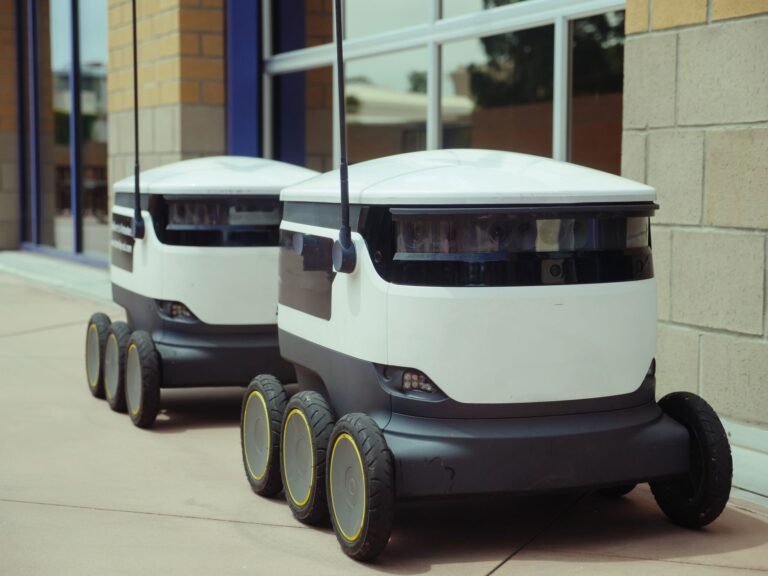
Chinese robotics firms, while earlier in their development, are capturing domestic market share rapidly and may emerge as global competitors. Subsector diversification protects against technology-specific risks while capturing the breadth of robotics growth. Industrial automation represents the mature core of the market, offering stability and dividends but moderate growth. Medical robotics delivers higher growth rates, though regulatory approvals and reimbursement dynamics introduce uncertainty. Service robotics, encompassing everything from cleaning robots to delivery drones, remains earlier-stage with higher volatility but substantial upside potential. Autonomous vehicles and mobile robots occupy perhaps the riskiest category, requiring patient capital but promising transformational returns if technical and regulatory challenges resolve.
- **Industrial robotics** provides baseline exposure to manufacturing automation trends across automotive, electronics, and general industry
- **Medical and surgical robotics** offers defensive characteristics since healthcare spending remains resilient during economic downturns
- **Logistics and warehouse automation** correlates with e-commerce growth and supply chain resilience investments
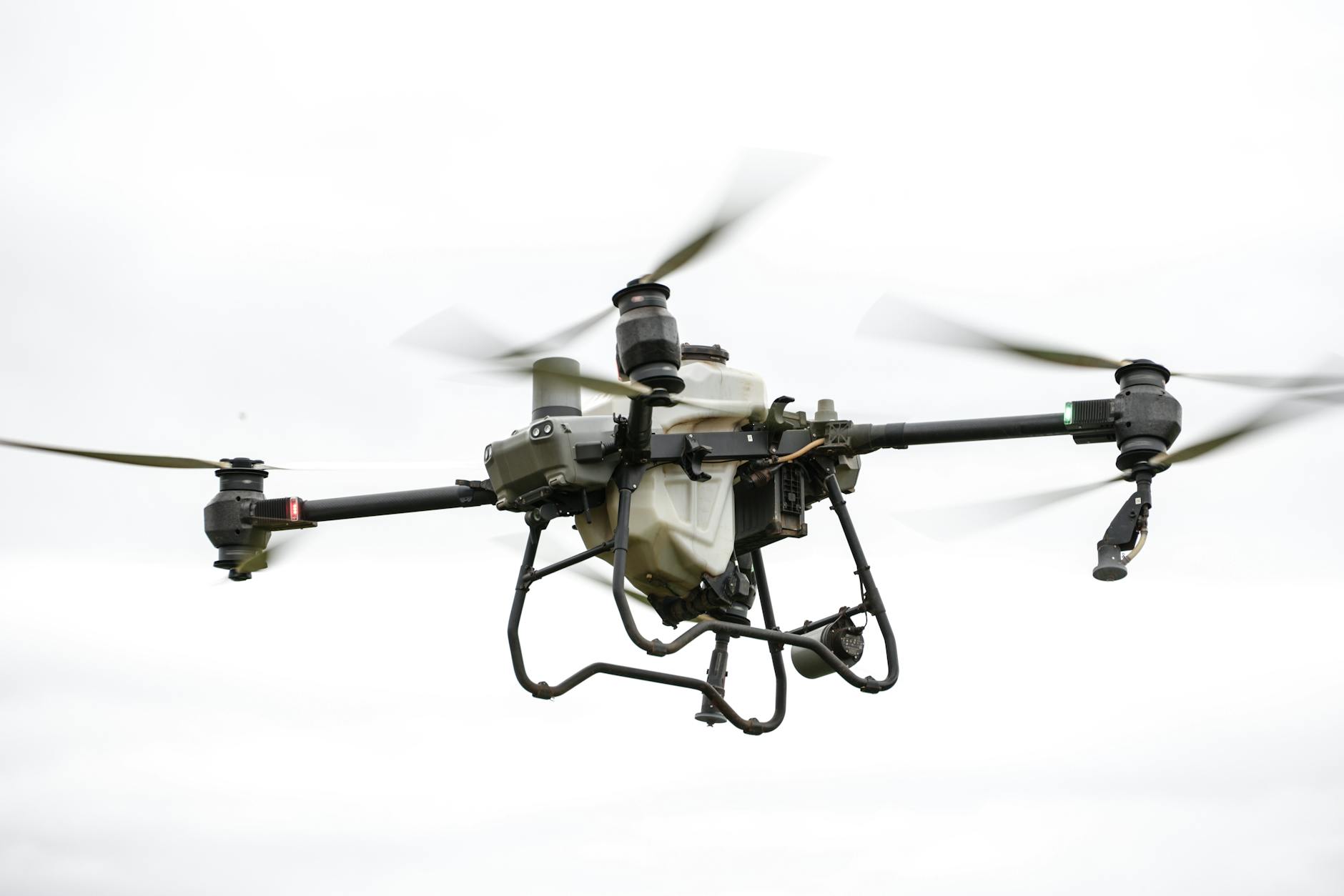
- **Agricultural robotics** addresses food security concerns and labor shortages in farming communities

How to Evaluate Robotics Companies Before Investing
Financial metrics for robotics companies require contextual interpretation that differs from traditional manufacturing analysis. Gross margins above 40% typically indicate software or sensor content lifting profitability above pure hardware economics. Research and development spending as a percentage of revenue signals competitive positioning; leaders often invest 8-15% of sales in R&D, while followers struggle to exceed 5%. Order backlog trends reveal demand visibility, particularly important given long lead times for industrial equipment. Recurring revenue percentages from software, services, and consumables indicate business model quality beyond one-time equipment sales.
Qualitative factors often determine long-term winners more than current financials. Patent portfolios and technical talent concentrations in robotics hubs like Pittsburgh, Munich, Tokyo, and Boston suggest innovation capacity. Customer concentration risk matters significantly, as dependence on a single automotive OEM or retailer creates vulnerability. Management teams with engineering backgrounds tend to navigate technology transitions more effectively than those focused primarily on financial engineering. Strategic partnerships with major technology platforms or industrial conglomerates can provide distribution advantages and validation.
- **Installed base growth** indicates market acceptance and future service revenue potential
- **Utilization rates** of deployed robots reflect genuine productivity value rather than speculative purchases
- **Competitive win rates** in head-to-head evaluations demonstrate product superiority
- **Customer retention metrics** reveal whether robots deliver sustained value justifying ongoing relationships
Managing Risk in a Robotics-Heavy Portfolio
Concentration risk represents the most common mistake in thematic investing. Enthusiasm for robotics can lead investors to overweight the sector far beyond prudent allocation levels. Financial advisors generally recommend limiting thematic exposures to 5-15% of total portfolio value, depending on risk tolerance and time horizon. Within that allocation, no single robotics holding should exceed 20-25% of the robotics sleeve without compelling justification. Position sizing discipline prevents a single company failure from devastating overall returns. Technology risk manifests differently across the robotics value chain. Pure-play robot manufacturers face disruption from new entrants leveraging AI advances to leapfrog incumbent hardware designs.
Component suppliers confront commoditization pressure as Chinese manufacturers scale production. Software companies battle platform giants like Amazon, Google, and Microsoft extending into industrial automation. Understanding these competitive dynamics helps investors anticipate which holdings require closer monitoring versus those with durable advantages. Valuation discipline becomes particularly crucial in technology sectors prone to narrative-driven excess. Price-to-sales ratios exceeding 10x, enterprise value-to-EBITDA multiples above 30x, or price-to-earnings ratios beyond 50x require exceptional growth justification. During market euphoria, robotics stocks can reach valuations implying perfection across revenue growth, margin expansion, and competitive positioning. Building cash reserves to deploy during periodic corrections often enhances long-term returns more than chasing momentum during peaks.
- **Correlation analysis** reveals whether robotics holdings move together, reducing portfolio diversification benefits
- **Drawdown limits** establish predetermined exit points to prevent emotional decision-making during volatility
- **Rebalancing schedules** maintain target allocations as individual positions appreciate or decline
Investment Vehicles for Robotics Portfolio Exposure
Exchange-traded funds offer efficient diversification for investors lacking time or expertise to select individual robotics stocks. The Global X Robotics and Artificial Intelligence ETF (BOTZ) provides broad exposure to industrial and healthcare robotics leaders. The ROBO Global Robotics and Automation Index ETF offers more diversified holdings across market capitalizations. iShares Automation and Robotics ETF provides European-listed access to global robotics companies.
These funds charge expense ratios between 0.50% and 0.80% annually, a reasonable cost for diversified exposure and professional rebalancing. Direct equity investment allows greater control over holdings and potential tax efficiency through selective loss harvesting. Investors comfortable with individual stock selection can construct portfolios tailored to specific subsector views or risk preferences. This approach works best for those able to monitor holdings regularly and conduct ongoing fundamental research. A hybrid strategy combining ETF core positions with individual stock satellites balances diversification benefits against conviction opportunities.
How to Prepare
- **Assess your overall portfolio allocation** by reviewing current holdings and determining what percentage robotics should represent. Consider your total investable assets, existing technology exposure, and whether robotics positions would create excessive overlap with current holdings in semiconductors, industrials, or healthcare.
- **Define your investment timeline** realistically, recognizing that robotics investments may require five to ten years to realize their full potential. Shorter time horizons demand more liquid, large-cap holdings, while longer horizons permit smaller company exposure that may deliver outsized returns.
- **Evaluate your risk tolerance** honestly by considering how you would respond to a 30-40% drawdown in robotics holdings, which has occurred during past market corrections. If such declines would prompt panic selling, reduce target allocation or emphasize more stable dividend-paying industrial companies.
- **Research the robotics landscape** systematically by reading industry reports from firms like McKinsey, BCG, and the International Federation of Robotics. Understanding market structure, growth drivers, and competitive dynamics provides context for evaluating individual companies.
- **Establish a watchlist** of potential holdings across the value chain, including pure-play manufacturers, component suppliers, semiconductor enablers, and software platforms. Track these companies over several quarters before investing to understand their business rhythms and management communication styles.
How to Apply This
- **Start with a core ETF position** representing 50-60% of your robotics allocation to establish immediate diversification while you develop expertise in individual company selection. Add to this position during market weakness rather than chasing strength.
- **Build satellite positions** in three to five individual companies representing different subsectors and geographies. Weight these positions according to conviction level, with higher-conviction ideas receiving larger allocations up to the 20-25% maximum per holding.
- **Implement a systematic contribution schedule** adding to robotics positions monthly or quarterly regardless of market conditions. Dollar-cost averaging reduces timing risk and removes emotional decision-making from the investment process.
- **Review holdings quarterly** against fundamental performance metrics including revenue growth, margin trends, order backlog, and competitive positioning. Sell positions where the investment thesis has deteriorated rather than holding indefinitely hoping for recovery.
Expert Tips
- **Follow industrial automation trade publications** like Robotics Business Review, The Robot Report, and Automation World to identify emerging trends and technologies before they reach mainstream financial media. Early awareness of inflection points provides investment timing advantages.
- **Attend investor days and earnings calls** for portfolio holdings to hear management perspectives directly. The quality of responses to analyst questions often reveals more about company culture and competitive positioning than prepared remarks.
- **Track patent filings** at the United States Patent and Trademark Office and international equivalents to identify innovation trajectories. Companies with accelerating patent activity often precede commercial product launches by 18-24 months.
- **Monitor acquisition activity** as larger industrial conglomerates purchasing robotics startups validates technology approaches and establishes valuation benchmarks. Strategic acquirers typically pay premiums to gain capabilities, signaling value in similar independent companies.
- **Build relationships with industry professionals** by attending robotics conferences, joining LinkedIn groups, and engaging with technical communities. Practitioners often identify winning and losing technologies before financial analysts recognize the trends.
Conclusion
Constructing a robotics-focused investment portfolio requires balancing enthusiasm for transformative technology against disciplined risk management. The sector offers genuine long-term growth potential driven by demographic forces, technological progress, and economic necessity. Investors who understand the value chain, diversify across subsectors and geographies, and maintain valuation discipline position themselves to benefit from automation trends reshaping the global economy.
The journey from initial research to fully constructed portfolio takes time, and rushing the process typically produces inferior results. Start with broad ETF exposure, gradually build expertise through ongoing learning, and add individual positions as conviction develops. Market corrections, which inevitably occur, provide opportunities to acquire quality robotics companies at reasonable valuations. With patience and systematic execution, a robotics portfolio can serve as a meaningful contributor to long-term wealth creation while providing exposure to technologies improving productivity and quality of life worldwide.
Frequently Asked Questions
How long does it typically take to see results?
Results vary depending on individual circumstances, but most people begin to see meaningful progress within 4-8 weeks of consistent effort. Patience and persistence are key factors in achieving lasting outcomes.
Is this approach suitable for beginners?
Yes, this approach works well for beginners when implemented gradually. Starting with the fundamentals and building up over time leads to better long-term results than trying to do everything at once.
What are the most common mistakes to avoid?
The most common mistakes include rushing the process, skipping foundational steps, and failing to track progress. Taking a methodical approach and learning from both successes and setbacks leads to better outcomes.
How can I measure my progress effectively?
Set specific, measurable goals at the outset and track relevant metrics regularly. Keep a journal or log to document your journey, and periodically review your progress against your initial objectives.
When should I seek professional help?
Consider consulting a professional if you encounter persistent challenges, need specialized expertise, or want to accelerate your progress. Professional guidance can provide valuable insights and help you avoid costly mistakes.
What resources do you recommend for further learning?
Look for reputable sources in the field, including industry publications, expert blogs, and educational courses. Joining communities of practitioners can also provide valuable peer support and knowledge sharing.
Related Reading
- Best AI Chip Stocks for Robotics Applications
- SpaceX’s Robotic Arms: Engineering Marvels Behind Rocket Catches
- How to Invest in Humanoid Robots Before Mass Production Begins
- Why Surgical Robots Are Becoming Standard in Operating Rooms Worldwide
- Agricultural Robots Are Solving the Global Farm Labor Shortage