
Robotic dental systems are mastering complex crown preparation through a combination of miniaturized robotics, artificial intelligence, and advanced imaging technology that delivers precision impossible to consistently achieve by hand. A prototype autonomous robotic system developed by researchers has demonstrated the capability to complete crown preparation in approximately 15 minutes—eight times faster than the traditional process, which typically requires two separate one-hour appointments.
This represents a fundamental shift in how dentistry approaches one of its most routine yet technically demanding procedures. The technology achieves this speed and precision by removing human hand tremor and fatigue from the equation while simultaneously mapping tooth and underlying nerve structures with three-dimensional optical coherence tomography. Perceptive, the company developing the AI-driven robotic crown preparation system, completed its first autonomous dental crown procedure in July 2024, demonstrating that the concept moves beyond theoretical promise into clinical reality.
Table of Contents
- How Do Robotic Dental Systems Master Precision Crown Preparation?
- Mapping Teeth and Nerves with Precision Imaging Technology
- Speed Advantages That Free Up Dentist Time
- Human Error Reduction and Precision Consistency
- Regulatory Status and the Path to Wide Clinical Adoption
- AI-Driven Treatment Planning and Personalization
- Beyond Crown Preparation: The Broader Implications for Robotic Dentistry
How Do Robotic Dental Systems Master Precision Crown Preparation?
robotic crown preparation systems operate through a carefully choreographed two-step mechanical process. A wide drill reduces the tooth surface from above, removing the bulk of material that needs to be removed for crown placement. A second, longer and thinner drill then works on the tooth sides to achieve the precise angles and dimensional specifications required for a proper crown fit.
This sequential approach distributes the work in a way that optimizes both material removal efficiency and the structural integrity of the tooth preparation. The miniature intraoral robot developed at the University of Basel measures just 43 by 26 by 28 millimeters—approximately the size of a wine cork. Despite its small external dimensions, the system’s motors and control systems are located outside the patient’s mouth, connected to the working end through flexible drive shafts, cables, and tubes. This design keeps the oral cavity clear while maintaining the rigidity necessary for accurate tooth preparation.
Mapping Teeth and Nerves with Precision Imaging Technology
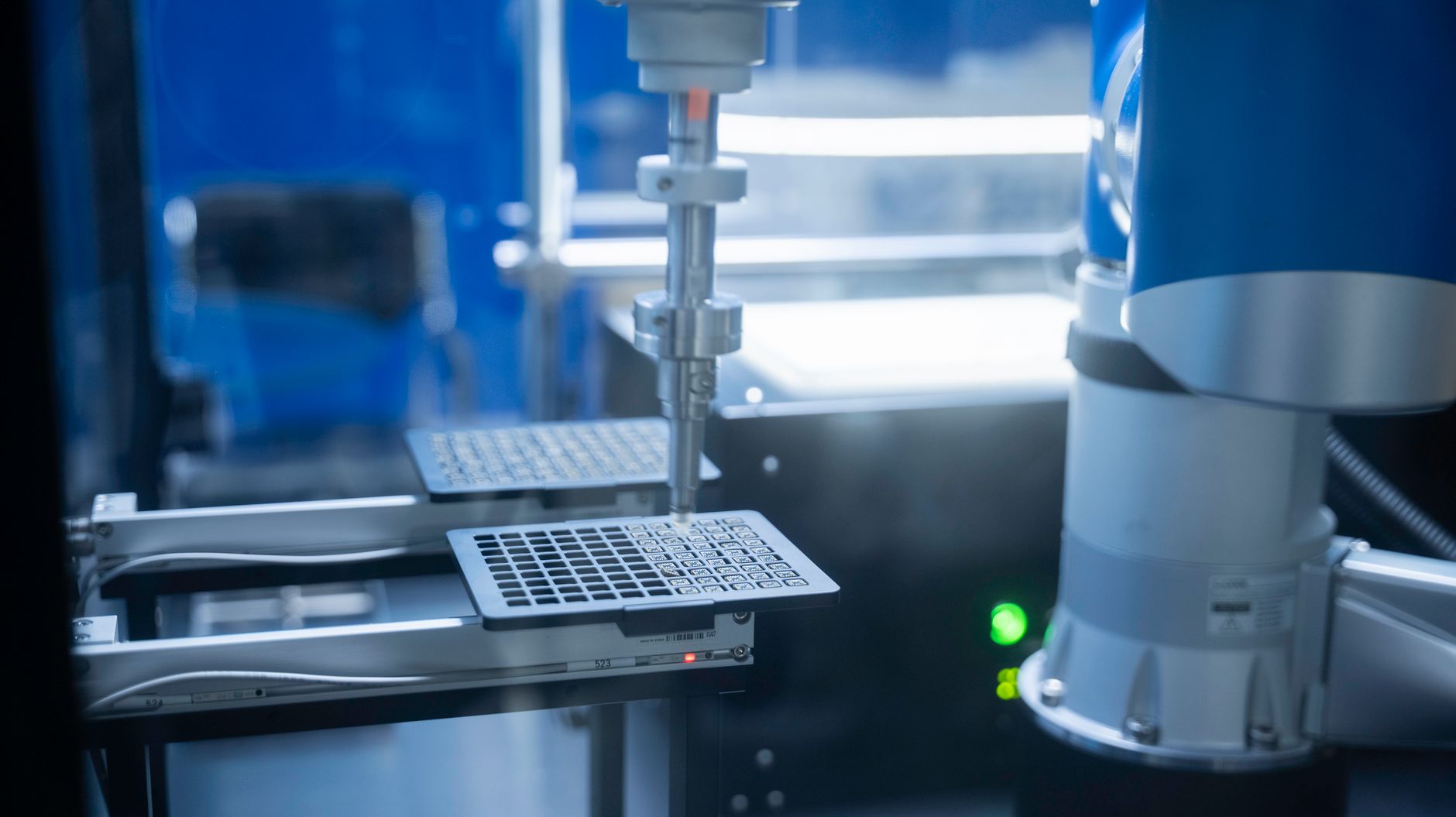
The imaging backbone of robotic crown preparation relies on 3D optical coherence tomography, a handheld scanner technology that maps both the tooth structure and the underlying nerve pathways with high precision. This imaging step occurs before the robotic preparation begins, allowing the AI system to calculate exact drilling paths that maximize material removal while maintaining a safety buffer around sensitive nerve structures. A dentist would need years of experience to develop the same instinctive understanding of where nerves lie in relation to the tooth surface.
One significant limitation of current systems is that the imaging quality depends heavily on factors like tooth pigmentation, existing restorations, and the angle at which the scanner is held. Some tooth types image more clearly than others, which means the preparatory imaging step may require multiple scans or repositioning to gather sufficient data. This preprocessing requirement means that even though the actual robotic preparation takes 15 minutes, the complete procedure—including imaging, AI analysis, and preparation—extends somewhat longer in clinical practice.
Speed Advantages That Free Up Dentist Time
The eight-fold speed improvement over traditional crown preparation unlocks significant clinical economics. In a standard dental practice, a single dentist might complete three to four crown preparations per day using traditional methods, with each patient occupying the chair and the dentist’s focused attention for extended periods. If robotic systems reduce the hands-on time per crown, dentists can redirect attention to other patients, complex cases that require human judgment, or treatment planning for upcoming procedures.
This efficiency gain matters particularly in busy practices or dental clinics serving high-volume patient populations. A dentist doesn’t need to be physically present during the entire robotic preparation sequence—only to verify the imaging, confirm the AI’s treatment plan, and oversee the beginning and end of the robotic procedure. However, the reality of clinical workflow integration is more complex than simply replacing manual work with faster robotic work. Practices must still schedule patients appropriately, manage the imaging equipment, and ensure that the transition from robotic preparation to crown fabrication and insertion remains smooth.
Human Error Reduction and Precision Consistency
Every crown preparation performed by human hands reflects that dentist’s skill level on that particular day. Fatigue, distraction, variation in hand tremor, and differences in how individual dentists interpret preparation guidelines all create variability in preparation quality. A robotic system programmed with precise parameters delivers identical preparation geometry every single time, which theoretically should reduce the need for remakes and adjustments.
This precision advantage comes with an important tradeoff: if the AI system or imaging data contains an error, that error propagates through every subsequent preparation until the issue is identified and corrected. A human dentist, working on a particular patient, might instinctively notice that something doesn’t look right and adjust the approach. A robotic system executing a flawed preparation plan has no such adaptive capacity. Clinical teams using robotic systems must develop robust quality-assurance procedures that catch errors before the patient leaves the chair.
Regulatory Status and the Path to Wide Clinical Adoption
The robotic crown preparation system is currently awaiting FDA clearance in the United States, a regulatory hurdle that reflects the agency’s appropriate caution toward novel dental devices. The July 2024 autonomous crown procedure demonstrates proof of concept, but regulatory approval requires substantial clinical data showing safety across diverse patient populations, tooth types, and clinical scenarios. The approval timeline remains uncertain, and dental practices cannot legally deploy these systems in routine patient care until clearance is granted. Beyond regulatory approval, adoption also faces practical barriers.
Dental schools would need to incorporate robotic system operation into their curricula. Practicing dentists would require training and certification. Dental equipment manufacturers would need to integrate robotic systems into their product portfolios. Equipment costs, maintenance, and technical support infrastructure don’t yet exist at scale. Early adopters will likely be research institutions and specialized practices willing to navigate the learning curve and absorb higher costs in exchange for access to cutting-edge technology.
AI-Driven Treatment Planning and Personalization
The artificial intelligence component of robotic crown preparation doesn’t simply execute a predetermined path—it analyzes the imaging data from each specific patient to calculate optimal drilling parameters. The AI accounts for variations in tooth anatomy, bone density, nerve proximity, and the thickness of material that needs to be removed. This level of personalization would be extraordinarily difficult for a human dentist to achieve consistently across dozens of patients per week.
The system learns from each procedure, theoretically improving its preparation strategies as it accumulates clinical data. This learning mechanism requires careful oversight to ensure that any updates to the AI’s treatment algorithms are validated before they affect patient care. A well-intentioned software update that subtly changes preparation parameters could propagate problematic changes across many procedures before anyone detects the issue.
Beyond Crown Preparation: The Broader Implications for Robotic Dentistry
Crown preparation represents only one category of dental procedures, albeit a common and technically challenging one. The success of robotic systems in this domain signals that other procedures involving precise material removal—cavity preparation, implant site development, and periodontal scaling—may eventually benefit from similar automation.
Each of these applications would require its own clinical validation, regulatory approval, and training protocols. The miniaturization and precision demonstrated by the University of Basel prototype and the Perceptive system indicate that robotic dentistry isn’t confined to bulky external machines or simple automated functions. Intraoral robots capable of working in the confined space of the human mouth while maintaining sub-millimeter accuracy represent a technical achievement that could reshape multiple domains within dentistry.
- —