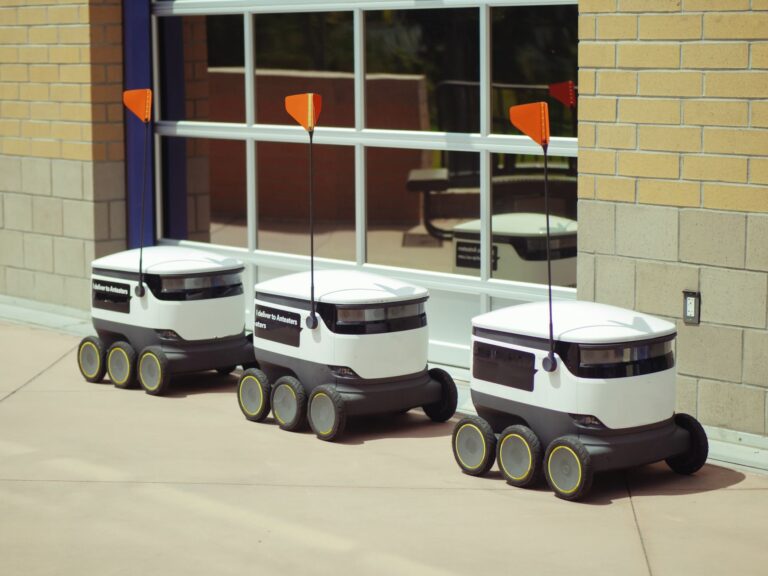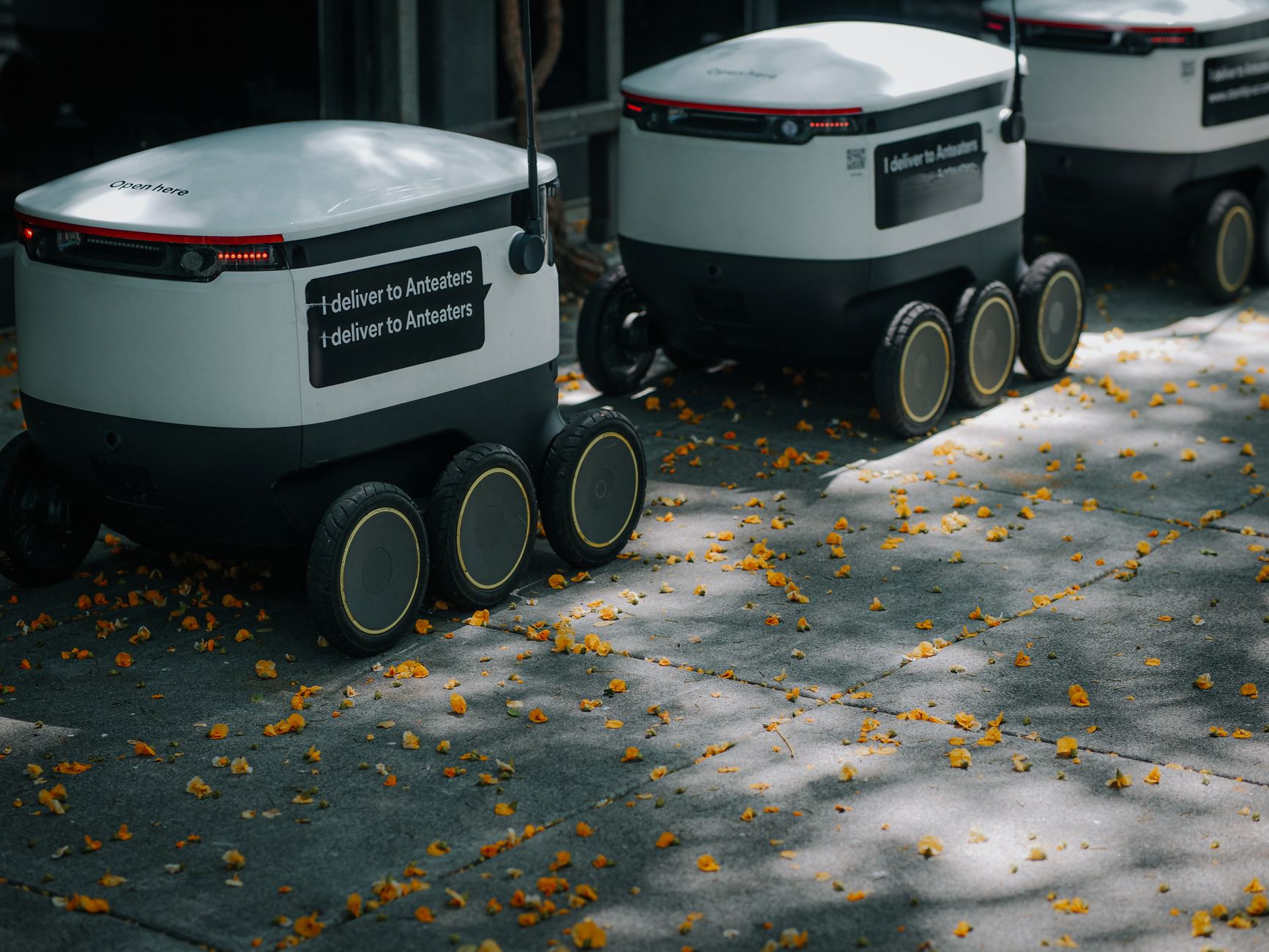

An autonomous delivery service has ceased operations at a university location, marking another setback for robotics companies attempting to establish last-mile delivery networks on college campuses. The shutdown reflects the mounting operational challenges that autonomous delivery providers face when deploying robots in complex, high-traffic environments where pedestrian safety concerns, regulatory restrictions, and infrastructure limitations intersect. Universities, despite their reputation as innovation hubs, have proven to be difficult proving grounds for autonomous delivery technology, with several pilot programs either scaling back or exiting entirely over the past few years.
The closure highlights a fundamental mismatch between autonomous delivery technology and the unique demands of university environments. College campuses combine dense pedestrian traffic, unpredictable weather conditions, numerous restricted zones, and risk-averse institutional policies—all factors that increase operational costs and reduce the efficiency gains that autonomous delivery promises. When a service stops operating at a university location, it typically signals that the economics no longer work, not necessarily that the technology itself is flawed.
Table of Contents
- Why Autonomous Delivery Services Fail on University Campuses
- The Regulatory and Infrastructure Barriers
- Last-Mile Delivery Economics in Campus Environments
- What Universities Are Doing Instead
- The Technology Readiness Gap
- Campus Safety and Operational Concerns
- What This Means for the Delivery Automation Industry
- Frequently Asked Questions
Why Autonomous Delivery Services Fail on University Campuses
University campuses present operational complexities that differ sharply from the controlled environments where autonomous delivery robots perform best. Unlike suburban residential neighborhoods or business parks, campuses combine high-density foot traffic with unpredictable movement patterns. Students change routes seasonally, academic schedules shift, and campus events create temporary congestion zones that disrupt planned delivery pathways. A robot designed to navigate one semester’s rhythm may face entirely different conditions the next, forcing constant recalibration of routes and operational parameters.
The fundamental issue is that autonomous delivery services calculate profitability based on delivery volume and route efficiency. On campuses, delivery volume often concentrates in specific buildings and times, creating inefficient dead zones and idle periods. A robot that could complete twelve deliveries per hour in a suburban neighborhood might manage five on campus, due to elevator wait times, building access restrictions, and the need for human handoff inside dormitories. When delivery density drops, the hourly cost per successful delivery rises sharply, eroding the financial case for continued operation.
The Regulatory and Infrastructure Barriers
Universities operate as private property with their own governance structures, and most institutions have become increasingly cautious about autonomous robot operations following pedestrian incidents at other campuses. Many universities now require insurance, liability waivers, geofencing to specific pathways, and human supervision—requirements that add operational overhead and eliminate many of the cost advantages that autonomous systems promise. Some institutions have implemented rules limiting robot operations to off-peak hours or specific corridors, effectively confining the technology to the margins of campus life where demand is lowest. Infrastructure presents a second barrier that campus planners often underestimate.
Sidewalks designed for foot traffic lack the smooth, obstacle-free surfaces that autonomous delivery robots prefer. Steps, curbs, gravel paths, and seasonal weather—ice, snow, heavy rain—all complicate navigation and increase the risk of equipment damage or operational shutdown. A robot stuck on a snowy campus sidewalk requires human retrieval, which defeats the purpose of autonomous operation. When a service provider calculates the costs of winterization, maintenance cycles, and recovery operations, the expenses often exceed what the university is willing to pay per delivery.
Last-Mile Delivery Economics in Campus Environments
The fundamental problem facing autonomous delivery on campuses is the last-mile economics equation. A robot that successfully navigates from the distribution hub to a building entrance still cannot complete the delivery without human intervention. A student in a dorm room three floors up requires either a delivery drone capable of reaching that height, an elevator-capable robot with access credentials, or a human employee who carries the package upstairs. This “final fifty feet” problem is where the autonomy promise breaks down and labor costs reemerge.
Consider a delivery service operating in a typical residential neighborhood versus on campus. In the neighborhood, the robot delivers a package to a porch and departs; the homeowner retrieves it on their schedule. On campus, the recipient expects same-day delivery to their location, not to a central mailroom. Delivering a meal from a campus restaurant to a student in a residence hall requires navigating multi-story buildings and gaining access to secured areas. These requirements are solvable individually but expensive collectively, especially when spread across dozens of delivery locations serving thousands of potential recipients with unpredictable demand patterns.
What Universities Are Doing Instead
Rather than relying on autonomous delivery to the individual student level, universities that have continued autonomous pilot programs have typically narrowed their scope significantly. Some institutions now use delivery robots strictly for inter-building logistics—moving supplies and materials between university facilities, academic buildings, and storage areas. In this application, the robots navigate known pathways, encounter fewer pedestrians, and deliver to receiving docks where trained staff await. The efficiency gain is measurable, and the liability concerns diminish.
Other universities have opted for a hybrid model in which delivery robots serve a campus micromobility network rather than replacing the full delivery chain. A package arrives at a central hub via traditional delivery vehicle, then a robot transports it to one of several regional distribution points on campus—a library, a student center, a dining hall—where students retrieve it. This approach preserves some autonomy benefits while eliminating the high-cost final-mile problem. The trade-off is that students must retrieve packages at scheduled pickup times rather than receiving same-day delivery to their rooms, which is a significant reduction in convenience compared to the original promise.
The Technology Readiness Gap
Autonomous delivery robots available today are optimized for specific scenarios, and university campuses do not match those scenarios particularly well. Most commercial robots perform reliably on paved, relatively flat surfaces with minimal pedestrian interference. They struggle with multi-story navigation, variable terrain, crowded spaces, and dynamic obstacles. A robot that reliably delivers across a suburban neighborhood may falter on a campus where a crowd exits a lecture hall, creating sudden congestion on a previously clear pathway.
Sensors and decision-making algorithms improve continuously, but they improve fastest in conditions where companies test them repeatedly. Autonomous vehicle companies test in sunny, dry conditions and controlled environments where data collection is efficient. When a robot encounters an unexpected obstacle—a student sitting on a path, a sports team moving equipment, or a parking lot filled with cars instead of the expected open space—the robot’s decision tree often leads to conservative behavior: it stops and requests human assistance. When requests for human assistance become frequent, the service becomes unprofitable relative to hiring human delivery personnel.
Campus Safety and Operational Concerns
Safety concerns, both real and perceived, have become a significant friction point between universities and autonomous delivery service providers. A delivery robot malfunctioning and rolling into a pedestrian generates institutional liability and reputational risk that a university must consider. Even if the robot’s sensors detected the pedestrian and attempted to avoid collision, the mere fact of a robot in contact with a person creates legal exposure and administrative burden. Universities risk-averse in nature; a single incident can justify terminating an entire pilot program and prohibiting the technology across campus indefinitely. Weather-related shutdowns create additional operational challenges.
During winter, snow and ice can render sidewalks inaccessible to wheel-based robots within hours. A service must either shut down operations during bad weather—reducing the reliability that customers depend on—or invest in specialized equipment, larger battery systems, and more frequent maintenance cycles. These incremental costs accumulate. A campus in a region with four months of winter weather faces substantially higher operational costs than one in a mild climate, yet the delivery demand does not increase proportionally. When a service provider shuts down for the season or abandons a location, it reflects the economics, not the technology’s theoretical capability.
What This Means for the Delivery Automation Industry
The pattern of autonomous delivery services stopping operations at university locations is not a failure of robotics technology itself; it is evidence that certain environments are not suitable deployment sites for current-generation autonomous delivery systems. The technology works well in specific contexts: suburban residential areas with predictable demand, controlled-access logistics facilities, and stable operating environments. Universities occupy neither of these categories consistently, making them poor candidates for scaling autonomous delivery at profitable margins. For the robotics industry, these campus shutdowns serve as useful data points about deployment feasibility.
Companies in this sector are learning that successful autonomous delivery requires matching the technology to the environment, not attempting to adapt the technology to every environment. Some providers are pivoting toward industrial and logistics applications where autonomy can deliver measurable value without the pedestrian safety and regulatory complexities that campuses introduce. Others continue to pursue campus partnerships but with significantly reduced expectations about the scope and profitability of operations. The autonomous delivery dream remains technically sound, but the path to profitability has narrowed considerably.
- —
Frequently Asked Questions
Why do autonomous delivery robots struggle specifically on university campuses?
Campuses combine dense pedestrian traffic, regulatory restrictions, building access requirements, and seasonal weather challenges that increase operating costs while reducing delivery efficiency compared to suburban neighborhoods.
Can autonomous delivery work in any university application?
Some universities have found success using robots for inter-building logistics and material transport between facilities, where routes are predictable and final delivery doesn’t require multi-story navigation.
What’s the main cost barrier for autonomous delivery on campus?
The final-mile problem—getting packages from a building entrance to individual student rooms—requires human intervention or expensive drone technology, eliminating the labor cost savings that autonomous systems promise.
Are these failures the fault of the robots or the campuses?
Neither; it’s a mismatch between current technology capabilities and the operational requirements of university environments. The robots work as designed in appropriate settings.
What do universities typically do instead now?
Most institutions have shifted to package distribution hubs where robots transport items between central locations, and students retrieve packages at scheduled pickup times.
Will autonomous delivery ever work broadly on campuses?
Possibly, but it will require either more advanced robots capable of multi-story navigation and dynamic obstacle handling, or lower customer expectations about delivery speed and individualized service.