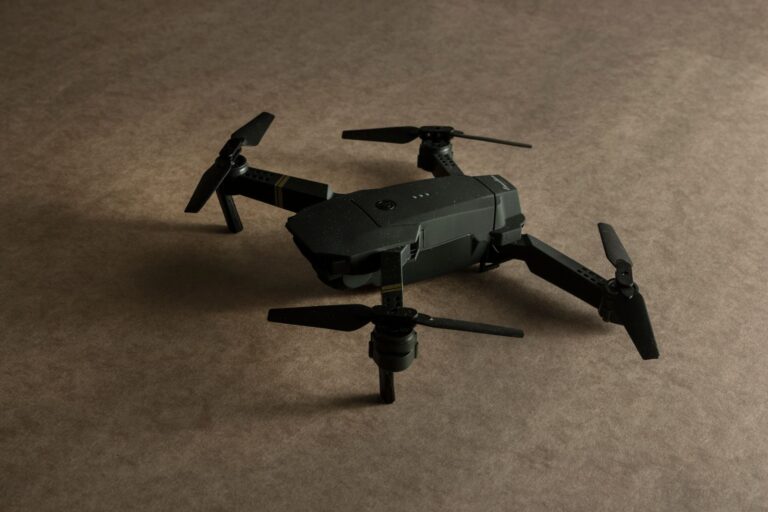

Ukraine has intensified diplomatic warnings toward Belarus regarding the supply and integration of unmanned aircraft systems into Russian military operations, particularly as drone technology has become central to warfare on the eastern front. The escalation reflects Ukrainian concerns that Belarus, despite maintaining official neutrality, is facilitating the transit, repair, or operational deployment of Russian unmanned systems—a critical vulnerability in Ukraine’s defensive strategy. This warning campaign targets a specific technical reality: unmanned aircraft have fundamentally altered how both sides conduct reconnaissance, targeting, and strike operations, making any expansion of drone-capable infrastructure in Belarus a direct threat to Ukrainian territory and military assets.
The robotics and automation sector plays an unintended but significant role in this geopolitical tension. Many commercial and semi-commercial drone platforms rely on technologies—autopilot systems, stabilization hardware, autonomous navigation components—that blur the line between civilian innovation and military application. Ukraine’s escalating rhetoric reflects awareness that the same engineering capabilities driving agricultural and mapping drones can be weaponized or converted to wartime logistics in ways that traditional arms transfers cannot easily be monitored or restricted.
Table of Contents
- How Unmanned Aircraft Became Central to Modern Conflict Dynamics
- Technical and Logistical Complexities of Unmanned Aircraft Support
- The Role of Automation and Autonomy in Drone Deployment
- Intelligence Gathering and Ukrainian Counter-Measures
- Cross-Border Drone Operations and Detection Challenges
- Regulatory and Technology Transfer Concerns
- Implications for Robotics Industry Standards and Oversight
- Frequently Asked Questions
How Unmanned Aircraft Became Central to Modern Conflict Dynamics
Unmanned aircraft have transitioned from surveillance platforms to integral tactical systems within the Ukraine-Russia conflict, fundamentally changing how military operations are planned and executed. Both Ukrainian and Russian forces operate various categories of drones: small quadcopters for squad-level reconnaissance, medium-range systems for deeper targeting, and larger platforms capable of carrying significant payloads over extended distances. The tactical value derives from their ability to operate continuously in denied airspace, relay real-time targeting data to artillery and missile systems, and conduct strikes with minimal risk to operators.
The escalation of Ukrainian warnings against Belarus centers on the concern that Russian forces are establishing or expanding drone repair, maintenance, or staging operations within Belarusian territory. If such infrastructure exists, it would extend the operational range and sustainability of Russian unmanned systems by providing secure spaces for repairs, component sourcing, and system recalibration—capabilities that cannot be easily replicated in front-line or heavily contested areas. This capability represents a meaningful military advantage that transcends simple aircraft numbers, as a small number of maintained and rotated platforms can sustain continuous operations across a wide area.
Technical and Logistical Complexities of Unmanned Aircraft Support
Supporting unmanned aircraft systems requires more than pilot training or basic maintenance. Modern drones rely on precision electronics, specialized batteries with limited operational lifespans, sensors requiring calibration, and communication systems dependent on specific frequency allocations and encryption standards. A functioning repair depot or maintenance facility capable of returning damaged systems to service must house technicians with expertise in these domains, parts inventory management, and quality control—infrastructure that Ukraine likely suspects exists in Belarus, or could be rapidly established.
The limitation in Ukrainian detection and response capabilities lies in the ambiguity of dual-use technology. A facility ostensibly focused on civilian robotics, agricultural drone maintenance, or automation systems could be repurposed or partially allocated to military unmanned aircraft support without requiring obvious physical restructuring. This creates a verification problem: satellite imagery or intelligence gathering may detect military drones in Belarusian airspace or evidence of activity, but establishing the scale or permanence of support operations remains difficult. Ukraine’s escalating warnings may partly reflect frustration with this technical opacity—the inability to definitively prove the extent of Belarusian involvement, even as circumstantial evidence accumulates.
The Role of Automation and Autonomy in Drone Deployment
Modern unmanned aircraft increasingly rely on autonomous capabilities that reduce dependence on real-time operator control, enabling longer missions, wider coverage, and reduced training requirements for personnel. Autonomous flight stabilization, obstacle avoidance, waypoint navigation, and automated return-to-base functionality represent core robotics innovations now embedded in military platforms. These capabilities make unmanned systems more valuable in extended conflicts, where sustained operations require minimal continuous human oversight and allow operators to manage multiple platforms simultaneously.
Ukraine’s warnings implicitly acknowledge that autonomy increases the operational value of any drone infrastructure in Belarus. A repair facility supporting autonomous or semi-autonomous unmanned systems allows rapid cycling of platforms through maintenance and redeployment—maximizing availability and operational tempo. Contrast this with systems requiring constant operator control: they demand greater pilot availability, create longer downtime between sorties, and impose more stringent communication requirements. The automation dimension transforms a potential Belarusian support role from minor logistics into a genuine force multiplier, capable of sustaining higher operational intensity and broader geographic coverage.
Intelligence Gathering and Ukrainian Counter-Measures
Ukrainian military and intelligence agencies have likely mapped existing drone operational patterns, repair cycles, and suspected transit routes through Belarusian territory. By escalating public warnings, Ukraine accomplishes multiple objectives: signaling to Belarus the costs of such cooperation, communicating to international partners the scope of suspected Russian operations, and potentially triggering Belarusian internal political pressure to restrict such activities. The warning campaign also serves an intelligence function—publicizing concerns may prompt adversaries to alter operational patterns, providing Ukrainian observers with fresh data about deployment and maintenance schedules.
However, counter-measure options remain limited for Ukraine. Direct military strikes on suspected facilities in Belarus would represent a significant escalation with unpredictable political consequences, potentially drawing Belarusian armed forces into direct conflict. Cyber operations targeting drone guidance systems or communication networks remain theoretically possible but difficult to execute at scale and risk collateral effects. This constraint—the inability to fully interdict suspected support operations without unacceptable political risk—partly explains why Ukraine has shifted toward persistent diplomatic and public warnings, attempting to create friction between Belarus and Russia through exposure rather than force.
Cross-Border Drone Operations and Detection Challenges
Unmanned aircraft capable of flying across the Belarus-Ukraine border present a fundamental defensive challenge: identifying and tracking systems that operate at low altitudes, maintain intermittent communication patterns, and can loiter for extended periods without immediately obvious deployment. Small quadcopters can cross borders in minutes, while larger systems can penetrate deep into Ukrainian territory before engaging in their intended mission. The detection problem worsens as drone capabilities improve—better batteries extend range, improved optics enable standoff targeting, and enhanced autonomous capabilities reduce radio signature and operator exposure.
A significant limitation in Ukrainian response capabilities involves the sheer volume of potential threats. If Belarus has become a forward staging or logistics hub for Russian drone operations, the volume of sorties originating from or transiting through Belarusian territory could overwhelm conventional air defense systems designed to counter aircraft and cruise missiles. Small drones present a lower-cost target for air defense than manned aircraft or standoff missiles, but the cumulative cost of defending against dozens or hundreds of daily drone missions exceeds the cost of the platforms themselves. This asymmetry—where the defender pays more to counter threats than the attacker invests in creating them—fundamentally shapes Ukrainian strategy and explains the emphasis on reducing the threat’s logistical foundation rather than engaging every individual platform.
Regulatory and Technology Transfer Concerns
The escalation of warnings also reflects Ukrainian concerns about the normalization of unmanned aircraft operations within Belarus. If commercial and military drone operations become integrated into Belarusian infrastructure and technical expertise, reversing that integration becomes progressively harder. Technology transfer effects matter: maintenance expertise, parts suppliers, and operational procedures established to support military drones also create baseline capabilities applicable to civilian and future military programs. The warning campaign attempts to establish deterrence before such integration becomes permanent or self-sustaining.
International regulations on unmanned aircraft remain fragmented and difficult to enforce. Export controls on drone technology have tightened in many countries, but dual-use components—motors, batteries, electronic control boards, sensors—remain relatively accessible through commercial channels. A motivated state actor with access to commercial robotics supply chains and expertise could assemble advanced unmanned systems without direct technology transfer from foreign military suppliers. This reality constrains the effectiveness of traditional export controls and explains why Ukraine’s warnings focus on operational deployment and logistical support rather than acquisition alone.
Implications for Robotics Industry Standards and Oversight
The escalating Ukraine-Belarus tensions over unmanned aircraft support reflect a broader shift in how robotics innovation intersects with military and security concerns. Civilian robotics companies developing autonomous systems, advanced sensors, or communication hardware now operate within a context where their products may acquire military applications through transparent or indirect pathways. Industry standards for unmanned aircraft, traditionally focused on safety and efficiency, increasingly incorporate security and export-control considerations that influence product design and deployment.
Ukrainian warnings serve as a case study in how geopolitical tension reshapes technological governance. The inability to clearly separate civilian drone development from military application—both rely on identical autopilot systems, stabilization algorithms, and sensor fusion techniques—means that warnings about military drone support implicitly affect civilian robotics development and deployment in regions touched by the conflict. Companies operating drones for agricultural mapping, infrastructure inspection, or environmental monitoring in borderlands near Belarus face increased scrutiny, while regulatory frameworks for civilian unmanned systems increasingly incorporate security checkpoints and deployment restrictions. The technical capabilities enabling beneficial applications simultaneously enable military operations, creating ongoing pressure to align robotics innovation with security policy.
- —
Frequently Asked Questions
What types of unmanned aircraft are used in the Ukraine conflict?
Both Ukrainian and Russian forces operate small quadcopters for reconnaissance, medium-range systems for targeting, and larger platforms capable of extended-range operations. The specific platforms range from commercial models adapted for military use to specialized military unmanned systems.
Why can’t Ukraine simply strike suspected drone support facilities in Belarus?
Direct military strikes on Belarusian territory would constitute escalation into a neutral country and risk drawing Belarus into direct conflict with Ukraine, creating unacceptable political consequences. Ukraine relies instead on diplomatic warnings and intelligence exposure.
How does drone autonomy affect their military value?
Autonomous capabilities—automated stabilization, waypoint navigation, and return-to-base functions—allow operators to manage multiple platforms simultaneously and reduce dependence on constant pilot control. This increases operational tempo and extends mission duration.
What makes drone repair infrastructure strategically important?
Repair and maintenance facilities allow damaged systems to be quickly returned to service, extending the operational lifespan of limited drone inventories. This transforms logistics support into a genuine force multiplier by enabling continuous high-tempo operations.
Can civilian drone technology be converted to military use?
Yes. The autopilot systems, sensors, and autonomous capabilities used in civilian applications like agricultural mapping are identical to those in military drones. This dual-use reality constrains traditional export controls and enforcement.