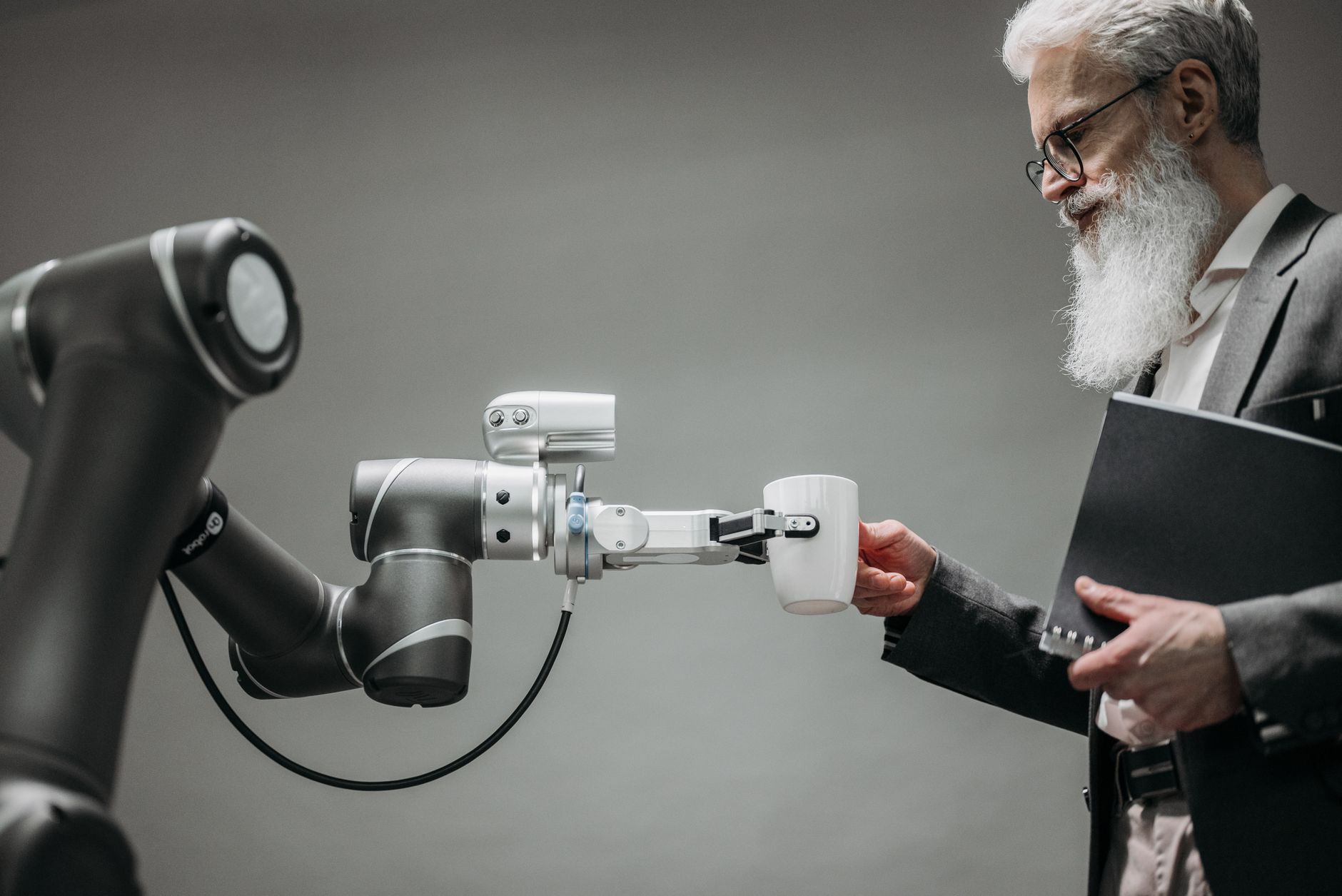

Developer communities focused on collaborative research connect engineers and researchers working on shared technical problems—from robotics control systems to industrial automation protocols. To join these communities, you start by identifying projects aligned with your interests (typically through GitHub, project wikis, or dedicated forums), then engage with existing members through code contributions, issue discussions, or research documentation. Most communities operate through a combination of formal governance structures and informal participation channels, meaning you can begin contributing at whatever level matches your expertise and availability. The primary appeal of these communities is that they accelerate research cycles. A single engineer might spend months solving a problem in isolation; within a collaborative research community, the same problem often gets tackled by multiple contributors bringing different perspectives and specialties.
For robotics specifically, communities around open-source simulation frameworks, motion planning libraries, and sensor integration projects demonstrate this model at scale—where individual researchers publish findings, others build on them, and problems get solved faster than any single organization could manage alone. Joining requires understanding both the technical and social norms of each specific community. Some communities are highly structured with formal review processes and contribution guidelines, while others operate more fluidly around a shared problem space. The difference matters: structured communities demand more upfront learning of their processes, but provide clearer pathways to meaningful contribution. Looser communities may have lower barriers to entry but sometimes lack clear mechanisms for turning casual interest into sustained research collaboration.
Table of Contents
- What Types of Developer Communities Focus on Collaborative Research?
- Barriers and Misconceptions About Joining Collaborative Research Communities
- Finding Communities Aligned with Your Research Goals
- Steps to Join and Begin Participating Effectively
- Managing Common Challenges and Communication Dynamics
- Contributing Research Findings and Empirical Results
- Building Sustained Presence and Long-Term Value
- Frequently Asked Questions
What Types of Developer Communities Focus on Collaborative Research?
Collaborative research communities in technology typically center around specific problem domains or shared infrastructure. A robotics research community might revolve around a simulation environment like Gazebo or V-REP, where researchers contribute physics engines, sensor models, and benchmarking tools. An automation community might organize around protocols like ROS (Robot Operating System), industrial middleware standards, or machine learning frameworks applied to control systems. These aren’t casual discussion forums—they’re working environments where research output flows back into the shared codebase. The governance structures vary substantially.
Some communities operate as formally organized non-profits with boards and funding mechanisms, while others are entirely volunteer-driven and organized through GitHub repositories. A large framework like TensorFlow has working groups with rotating leadership, while a specialized robotics library might be maintained by a core team of five people who coordinate through issues and pull requests. Understanding the governance structure matters because it determines who makes decisions about the project’s direction, what counts as “good” research, and how conflicts get resolved. Within these communities, different roles exist and overlap. Core maintainers who control the repository and accept or reject contributions; active contributors who regularly submit code, research findings, or documentation; and participants who engage through discussions, bug reports, and feedback. Most communities are perpetually understaffed at the core-maintainer level, which creates opportunities for committed participants to take on leadership roles—but it also means contributor burnout is a real problem when responsibility expands faster than the person’s available time.
Barriers and Misconceptions About Joining Collaborative Research Communities
A common misconception is that you need to be an expert to participate meaningfully. In reality, many communities are limited by the number of people willing to do foundational work: writing documentation, reproducing bugs systematically, refactoring code for clarity, and running automated testing. These contributions are often less glamorous than cutting-edge research additions, but they’re essential and frequently under-resourced. newcomers often overshoot their initial contributions by trying to tackle complex research problems, when the community’s actual need is for someone to write clear setup guides or create reproducible test cases. Another barrier is the perception that research contributions need to be novel or publish-worthy to matter. Many active members of collaborative research communities contribute incremental improvements, bug fixes, architectural cleanups, and empirical evaluations of existing approaches.
These contributions advance the field collectively without necessarily resulting in individual papers or major breakthroughs. The research value accumulates through the community’s sustained effort rather than individual heroics. A practical limitation worth acknowledging: not all communities are healthy or welcoming. Some have implicit hierarchies where certain people’s contributions are accepted quickly while others face harsh code review. Some communities have been abandoned by maintainers but remain indexed in search results, leading new people to invest time in dead projects. Before joining a community, spend a few hours reading recent issues, pull requests, and discussions to assess whether it’s genuinely active and whether the interaction tone matches your working style.
Finding Communities Aligned with Your Research Goals
The most direct path is to start with the specific technology, problem, or tool you’re interested in researching. If you’re working on robotic manipulation, you might search for communities around MoveIt (a popular manipulation framework), or explore research groups that publish on arXiv and link to their experimental code repositories. If your interest is in automation protocols, you’d look for active communities around frameworks like Ignition, CoppeliaSim, or industrial standards bodies that maintain collaborative repositories. GitHub is the de facto hub for most technical research communities in robotics and automation. Search for repositories matching your keywords, but focus on ones with recent activity—look at the date of the last merged pull request, the number of open issues being responded to, and whether maintainers are engaging with contributors.
Many research communities also maintain dedicated documentation sites, Discord servers, or Slack channels where participants coordinate. These communication channels are often where the real collaborative work happens, separate from the formal code repositories. Academic networks and conferences also point to active communities. If you attend robotics or automation conferences, follow up with researchers whose work aligns with your interests, and ask them which communities they contribute to. Many research groups explicitly list the open-source projects they’re involved with. Research groups at universities often maintain collaborative projects that welcome external contributions—and academic-affiliated projects tend to have documented processes because they need to support students cycling through the group.
Steps to Join and Begin Participating Effectively
Your first action is to set up proper presence: create or update your GitHub profile with a clear bio and profile picture, fork the repository you’re interested in, and clone it locally. Spend time reading the contribution guidelines—almost every serious research community has a CONTRIBUTING.md file or equivalent documentation. This document typically covers coding standards, the process for submitting changes, how to report bugs, and the expectations for participation. Skipping this step is one of the most common mistakes; maintainers are frustrated by contributors who don’t follow the documented process, and time spent reading guidelines upfront saves conflict later. Start by engaging in low-friction ways: help reproduce reported bugs, answer questions in issue trackers or forums, improve documentation, and run test suites to identify failures. These activities let you learn how the community works while building familiarity with the codebase.
Document what confused you as a newcomer—those confusions often represent documentation gaps that you can then fix. A well-written documentation improvement might be your first pull request, and it’s genuinely valuable to the community. As you progress, look for issues labeled “good first issue,” “help wanted,” or “documentation” in the repository. These are typically lower-stakes tasks that maintainers have explicitly identified as suitable for newer contributors. When you submit your first code contribution, expect the review process to be thorough—maintainers are protecting the quality and integrity of research infrastructure, so detailed feedback isn’t personal criticism. Respond to feedback thoughtfully, ask clarifying questions if feedback seems unclear, and be prepared to revise your work multiple times before it’s merged.
Managing Common Challenges and Communication Dynamics
Review lag is a constant challenge in volunteer-driven research communities. You might submit a contribution and wait two weeks or more for feedback—not because reviewers don’t care, but because core maintainers are usually contributing in their limited free time. Set realistic expectations about timeline, and in the meantime, continue participating in other ways. If review lag becomes chronic (months without feedback), it’s a sign the project may be under-resourced or stalled, and you might redirect your efforts elsewhere. Communication mismatches often arise between researchers accustomed to academic discussions and engineers focused on practical implementation. A researcher might frame a problem in terms of mathematical optimality, while an engineer in the community prioritizes computational efficiency and implementation simplicity.
Both perspectives are valid, and navigating these differences requires clarity and willingness to compromise. If you’re new to a community and you encounter disagreement between contributors, resist the urge to insert yourself into disputes—observe how experienced members handle conflict and learn the community’s norms. Scope creep is a risk for engaged contributors. Once you start participating, you may feel pressure (or impose it on yourself) to fix all issues, respond to all questions, and maintain high code quality across the project. This path leads to burnout, especially if you’re a volunteer with limited time. Establish clear boundaries about what you can commit to, and communicate those boundaries explicitly. Healthy communities respect contributors’ time limits rather than expecting unlimited availability.
Contributing Research Findings and Empirical Results
Many research communities benefit from members who run experiments, benchmark different approaches, and share results. This might mean evaluating whether a new robotics control algorithm performs better than existing methods under specific conditions, or testing automation protocols across different hardware configurations. These empirical contributions are often undervalued compared to novel algorithmic contributions, yet they’re essential for understanding what works in practice.
When sharing research results, focus on reproducibility: document your experimental setup, provide code that others can run, and be transparent about limitations and edge cases. A benchmark showing one approach outperforms another in one scenario but fails in another scenario is more valuable to a community than an optimistic claim without caveats. Research communities that build credibility are the ones where members can trust the findings because they’re reported honestly rather than spun for maximum impact.
Building Sustained Presence and Long-Term Value
Over time, consistent participation builds your credibility within a community—not through any formal promotion, but through demonstrated reliability and quality. Contributors who regularly submit well-reviewed code, respond helpfully to others’ questions, and show up over months and years become trusted voices in the community’s decision-making. This trust opens opportunities to take on more responsibility: you might become a maintainer of a specific module, lead a research effort on a particular problem, or represent the community at conferences.
The transition from participant to leader in a research community typically happens gradually and informally. There’s rarely a formal application process; instead, you become a de facto leader by consistently stepping up when work needs to be done, making good decisions, and maintaining the community’s trust. For robotics and automation communities, this path often leads to opportunities like authoring joint papers, speaking at conferences, or being consulted on major architectural decisions. These opportunities stem directly from years of visible, reliable participation.
- —
Frequently Asked Questions
How long does it take to become a trusted contributor in a developer research community?
There’s no fixed timeline, but consistently participating for three to six months—submitting quality contributions, engaging in discussions, and helping others—typically establishes you as a reliable community member. Recognition depends more on sustained presence and quality than on the absolute number of contributions.
What if I find a bug in a community project but don’t have time to fix it?
Report it. Write a clear bug report with reproduction steps, expected behavior, and actual behavior. You’re not obligated to fix every problem you find; identifying and documenting issues is itself a valuable contribution that helps maintainers and other contributors prioritize work.
Can I participate in multiple research communities simultaneously?
Yes, but be realistic about time. Contributing meaningfully to one community typically requires several hours per week. Most active contributors maintain presence in two or three related communities and more casual involvement in others.
How do I know if a community is dead before investing time?
Check recent activity: When was the last merge? Are maintainers responding to recent issues? Do pull requests get feedback within two weeks? If a project hasn’t been updated in six months and issues are piling up unanswered, it’s likely inactive.
Should I submit research ideas before I’ve contributed code?
No. Earn credibility through participation first—code contributions, bug reports, documentation improvements. Once you’re known and trusted in a community, your research ideas will receive thoughtful consideration rather than dismissal as coming from an unknown person.
What’s the difference between open-source projects and research communities?
Open-source projects prioritize software quality and practical utility. Research communities use shared code as a vehicle for advancing research—which sometimes means accepting experimental features, publishing results, and prioritizing novel findings over production stability. —