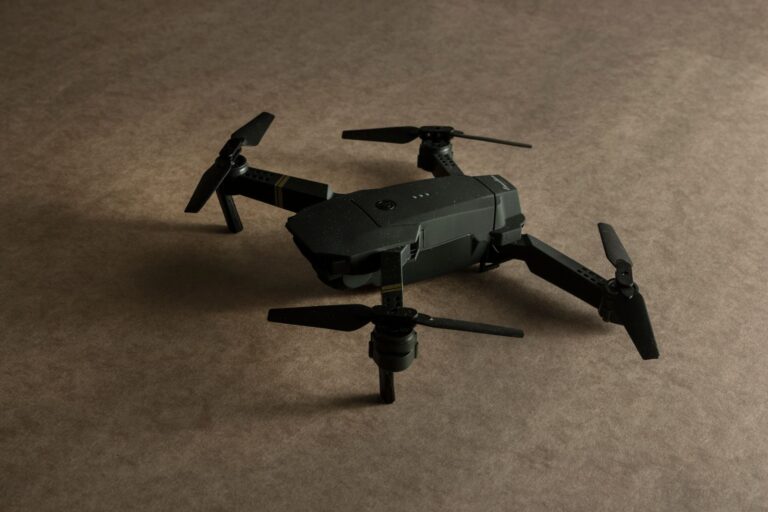

U.S.-Iran tensions have intensified following a drone attack on a cargo vessel in the Persian Gulf, marking another escalation in a pattern of maritime incidents that has become increasingly difficult to ignore. The attack underscores how unmanned aerial systems—technology that was once confined to military laboratories—have become active participants in regional conflicts, changing the calculus of naval operations and commercial shipping. This incident represents a shift in how autonomous and semi-autonomous systems are deployed in contested waters, with implications that extend far beyond immediate geopolitical concerns into the broader landscape of maritime security infrastructure.
The significance of this event lies not merely in the attack itself, but in what it reveals about the evolution of drone technology and its integration into military strategy. When unmanned systems can operate across international waters with limited detection and interception capabilities, shipping becomes vulnerable in ways that previous naval doctrines did not fully anticipate. The cargo ship attack demonstrates that the automation and robotics capabilities driving commercial efficiency have their counterparts in weapons systems that operate with minimal human intervention once deployed.
Table of Contents
- How Are Drones Changing Maritime Security and Naval Operations?
- The Limits of Automated Defense Systems and What They Reveal
- Autonomous Systems in Military Doctrine and What Iran’s Capabilities Reveal
- Commercial Shipping and the Need for Alternative Risk Management
- Cyber Threats and the Risks of Over-Reliance on Automated Maritime Systems
- The Broader Implications for Unmanned Systems in Contested Environments
- Naval Doctrine and the Evolution of Autonomous Maritime Defense
- Frequently Asked Questions
How Are Drones Changing Maritime Security and Naval Operations?
Drone technology has fundamentally altered the risk profile for commercial and military vessels operating in contested waters. Unlike traditional anti-ship weapons, drones offer lower cost, extended range, and the ability to operate across multiple countries’ air defense systems with reduced detection. They can loiter, adjust their approach, and respond to defensive measures in ways that ballistic missiles cannot. The Persian Gulf, which sees roughly one-third of the world’s traded oil passing through its waters, has become a testing ground for these capabilities.
For maritime defense, this shift has forced automation of detection and response systems. Modern cargo ships and naval vessels rely increasingly on automated radar systems, electronic warfare countermeasures, and autonomous defense platforms that can track and engage threats faster than humans can process the information. However, this creates a vulnerability: automated systems can be spoofed, jammed, or confused by decoys. A comparison illustrates the problem: while an advanced naval destroyer’s Aegis combat system can track hundreds of targets simultaneously and engage multiple threats autonomously, it requires constant software updates and human oversight to distinguish genuine threats from false alarms—something not always available in real-time maritime operations.
The Limits of Automated Defense Systems and What They Reveal
Automated defense systems are critical for modern naval operations, yet they have inherent limitations that the recent attack exposes. A primary weakness is that automation, regardless of sophistication, operates within the parameters of its programming. If a drone attack uses tactics outside the defensive system’s training data, or if the speed and trajectory of an attack exceed the system’s decision threshold, the automated response may fail.
Cargo ships—which are commercial vessels designed for efficiency rather than combat—typically have no automated defense systems at all, making them particularly vulnerable to drone attacks. This limitation is especially concerning because drone swarms, multiple unmanned aircraft coordinating an attack, would overwhelm most current maritime defenses. A single drone can be tracked and potentially intercepted; a swarm of 10 or 20 drones, coordinating their approach and dividing the attention of automated and human defenses, presents an entirely different challenge. Shipping companies now face a warning that was previously theoretical: operating in high-risk maritime zones requires either significantly upgraded defenses (which cargo ships cannot afford) or alternative routing that adds weeks to voyages and substantial costs to operations.
Autonomous Systems in Military Doctrine and What Iran’s Capabilities Reveal
The use of drones in the Persian Gulf reflects a broader shift in military doctrine toward autonomous systems. Iran has developed and deployed several classes of unmanned aircraft, from reconnaissance drones to systems capable of carrying weapons. These platforms represent a form of technological asymmetry—a nation with a smaller conventional military can project power through unmanned systems in ways that would be more difficult with traditional aircraft or naval vessels. The specific type of drone used in the cargo ship attack provides insight into what capabilities are now accessible to regional actors.
What makes this significant for the robotics field is that many of the components in these systems are derived from commercial or dual-use technology. Guidance systems, navigation computers, and materials for lightweight airframes are available through international supply chains or can be reverse-engineered from captured systems. The barrier to entry for drone technology is lower than it was for fighter jets or missiles, which means that the proliferation of these capabilities is likely to accelerate. A concrete example: the components used in commercial agricultural drones—designed to spray pesticides over large fields autonomously—can be adapted for surveillance or weapons delivery, creating a technology transfer pathway that is difficult for any country to monitor or control.
Commercial Shipping and the Need for Alternative Risk Management
For shipping companies and cargo owners, the immediate response to escalating attacks has been to reroute vessels around the Persian Gulf, using longer passages around the Cape of Good Hope or through the Suez Canal. This alternative routing adds approximately 2 weeks to transit times and increases fuel costs significantly—a comparison reveals the trade-off: avoiding the Persian Gulf adds roughly 4,000 additional nautical miles per journey. Insurance premiums for vessels transiting high-risk maritime zones have also increased, often doubling or tripling the baseline rate.
The broader implication is that commercial maritime logistics must now incorporate threat assessment and route optimization in ways that were previously unnecessary. This has led to increased automation in shipping operations—from AI-driven vessel routing systems that factor in geopolitical risk, weather, and fuel efficiency simultaneously, to autonomous or semi-autonomous vessel systems that can operate with reduced crew sizes in high-risk areas. However, a significant trade-off exists: crews operating in high-risk zones often require additional training and compensation, and autonomous systems introduce their own vulnerabilities to cyber attack, which may be a greater concern than conventional threats in contested waters.
Cyber Threats and the Risks of Over-Reliance on Automated Maritime Systems
As maritime security becomes more automated, the attack surface for cyber threats expands correspondingly. A drone attack on a cargo ship is a kinetic threat; a cyber attack on that same ship’s navigation or communication systems could be even more damaging. Modern cargo vessels rely on GPS for positioning, automated collision avoidance systems, and engine management systems connected to the internet for monitoring and diagnostics. Each of these systems represents a potential entry point for a cyber attack designed to disable or divert a vessel.
The limitation that warrants a warning: maritime automation has been designed primarily with efficiency in mind, not security. Legacy systems aboard aging cargo vessels may have limited or no encryption, outdated software that cannot be patched without shutting down operations, and minimal network segmentation between critical systems. A sophisticated adversary could potentially take control of a vessel’s propulsion or steering through cyber means, a capability that requires far less visible infrastructure than a drone and is nearly impossible to attribute definitively. This combination of kinetic and cyber threats means that maritime operators now face a security challenge that requires constant vigilance across multiple domains.
The Broader Implications for Unmanned Systems in Contested Environments
The Persian Gulf incidents demonstrate that unmanned systems function differently in contested environments than in controlled testing conditions. Weather, electromagnetic interference, adversary countermeasures, and the complexity of real-world targeting create friction that lab environments do not replicate. A drone that works reliably in test flights may behave unpredictably when facing active defenses or operating at the limits of its endurance and range.
For roboticists and automation engineers, this reveals a gap between simulation and reality that has profound implications for how autonomous systems are designed and deployed. The example extends to commercial robotics as well: autonomous vehicles operating in ports and harbors must now account for security threats that were not previously part of the design criteria. A port using autonomous container handling equipment or unmanned ground vehicles for logistics must now consider whether those systems could be targets or could be hijacked to cause disruption. This shifts the focus for robotics developers toward resilience and redundancy—building systems that continue to function even when individual components are compromised or destroyed.
Naval Doctrine and the Evolution of Autonomous Maritime Defense
The attacks in the Persian Gulf are prompting military strategists and naval architects to reconsider how autonomous systems should be integrated into fleet operations. Traditional naval doctrine emphasizes concentrating firepower and maintaining formations for mutual defense; autonomous defense systems enable distributed operations where individual ships can manage threats independently. This represents a significant shift in how naval power is projected and how alliances operate in contested waters.
The example of naval defense systems shows how automation is reshaping military strategy: the U.S. Navy’s development of autonomous anti-ship systems and unmanned surface vessels reflects recognition that manned ships are increasingly vulnerable to precisely the kind of attacks being demonstrated in the Persian Gulf. These autonomous platforms can operate without putting human crews at risk, can respond to threats at machine speed rather than human speed, and can be deployed in greater numbers than traditional naval vessels. However, the integration of these systems into existing command structures remains incomplete, creating vulnerabilities where unmanned and manned systems must coordinate in real-time under conditions of incomplete information and active threat.
- —
Frequently Asked Questions
Why are drone attacks on cargo ships significant for the robotics industry?
Drone attacks expose vulnerabilities in maritime automation and force the integration of new security protocols into autonomous systems designed for commercial efficiency.
What are the practical trade-offs for shipping companies responding to drone threats?
Avoiding high-risk zones adds weeks to voyages and substantial costs, while remaining in contested waters requires upgraded defenses or cyber security measures that most commercial vessels cannot support.
How does this affect autonomous vessel technology development?
Developers must now incorporate threat resilience, redundancy, and cyber security into autonomous maritime systems, changing design priorities from efficiency alone to efficiency-plus-survivability.
Can commercial maritime automation systems be retrofitted for defense?
Partially—navigation and engine systems can be upgraded with encryption and segmentation, but many older vessels have legacy systems that cannot be economically retrofitted.
What is the cyber security risk for automated cargo ships?
Modern vessels rely on internet-connected systems for monitoring and diagnostics, creating entry points for cyber attacks that could disable propulsion, steering, or communication systems.