
Zebra Technologies stock represents one of the most overlooked opportunities in the robotics and automation sector, flying under the radar of many investors who associate the company primarily with barcode scanners and label printers. While household names like Nvidia, Rockwell Automation, and Fanuc dominate conversations about automation investing, Zebra Technologies has quietly transformed itself into a comprehensive automation solutions provider with deep penetration across warehousing, manufacturing, and retail operations. The company’s strategic acquisitions and organic development have positioned it at the intersection of enterprise visibility, machine learning, and autonomous mobile robotics. The industrial automation market faces a critical inflection point as labor shortages persist, e-commerce volumes surge, and supply chain resilience becomes a boardroom priority.
Companies across every sector are scrambling to digitize operations and deploy intelligent automation solutions that can adapt to volatile demand patterns. Zebra Technologies addresses these challenges through an integrated portfolio that combines hardware, software, and services—moving far beyond its legacy identity as a peripheral device manufacturer. For investors seeking exposure to automation megatrends without paying the premium valuations attached to pure-play robotics companies, understanding Zebra’s transformation becomes essential. By the end of this article, readers will understand exactly how Zebra Technologies fits into the robotics and automation investment thesis, what differentiates its approach from competitors, the financial metrics that matter most, and how to evaluate whether this hidden automation play deserves a place in a diversified technology portfolio. The analysis covers Zebra’s autonomous mobile robot business, its software intelligence platform, competitive positioning, valuation considerations, and the risks that investors must weigh against the company’s growth potential.
Table of Contents
- Why Is Zebra Technologies Stock Considered a Hidden Robotics and Automation Play?
- Zebra’s Autonomous Mobile Robot Business and Warehouse Automation Strategy
- Machine Vision and Computer Vision Technology in Zebra’s Portfolio
- How to Evaluate Zebra Technologies Stock for an Automation-Focused Portfolio
- Competitive Risks and Market Challenges Facing Zebra’s Automation Business
- The Role of RFID and IoT in Zebra’s Long-Term Automation Vision
- How to Prepare
- How to Apply This
- Expert Tips
- Conclusion
- Frequently Asked Questions
Why Is Zebra Technologies Stock Considered a Hidden Robotics and Automation Play?
The “hidden” label attached to Zebra Technologies stock stems from a fundamental perception gap between how the market categorizes the company and what the company actually does. Most financial databases and ETF providers classify Zebra under “Electronic Equipment & Instruments” or “Technology Hardware,” placing it alongside companies focused on passive devices rather than intelligent automation systems. This classification obscures Zebra’s substantial investments in autonomous mobile robots, computer vision, prescriptive analytics, and workforce optimization software. The 2021 acquisition of Fetch Robotics for $290 million marked a decisive strategic pivot, bringing a fleet of autonomous mobile robots (AMRs) into Zebra’s portfolio and signaling management’s commitment to the automation opportunity.
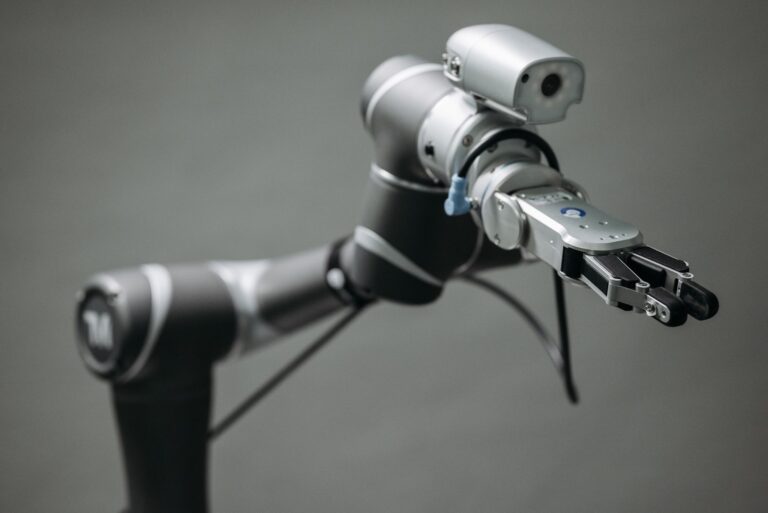
Zebra’s automation credentials extend well beyond the Fetch acquisition. The company’s machine vision and fixed industrial scanning division provides quality inspection systems that use artificial intelligence to detect defects at manufacturing line speeds. Its Reflexis workforce management software optimizes labor deployment across retail stores, warehouses, and manufacturing facilities. The SmartSight inventory intelligence system combines shelf-scanning robots with advanced analytics to automate retail inventory management. When these capabilities are viewed collectively rather than in isolation, the picture of an integrated automation platform emerges—one that competes more directly with companies like Cognex, Teradyne, and even elements of Rockwell Automation than with simple hardware manufacturers.
- **Fetch Robotics integration**: Zebra now offers a complete autonomous mobile robot platform capable of goods-to-person picking, cart transport, and case conveyance in warehouse environments
- **Machine vision expansion**: The company’s fixed industrial scanning and machine vision products address quality control and traceability requirements across pharmaceutical, electronics, and automotive manufacturing
- **Software intelligence layer**: Zebra’s Workcloud suite provides the analytics and workflow optimization that transforms raw data from edge devices into actionable operational intelligence
- **Enterprise relationships**: With solutions deployed across 95% of Fortune 500 companies, Zebra maintains relationships that create natural upsell opportunities for automation products
Zebra’s Autonomous Mobile Robot Business and Warehouse Automation Strategy
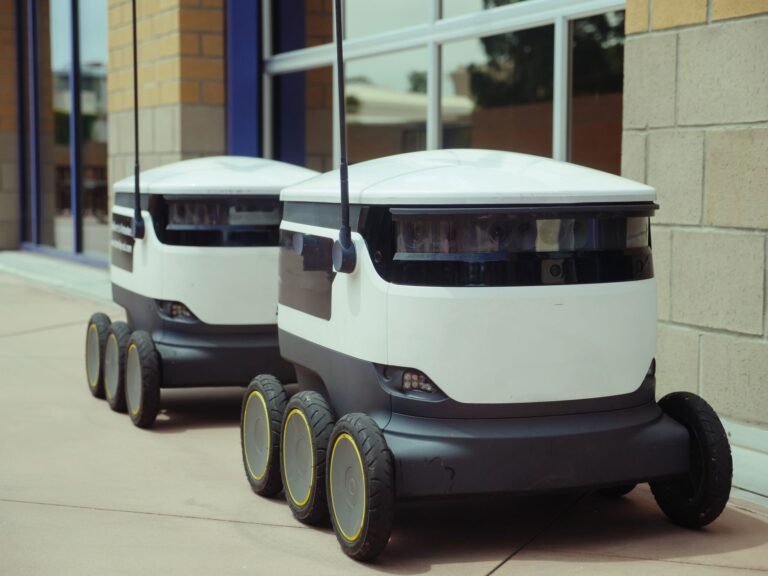
The warehouse automation market represents the most significant growth vector for Zebra Technologies, driven by the fundamental transformation of how goods move through distribution networks. E-commerce penetration continues climbing globally, and every percentage point increase translates into millions of additional packages requiring sortation, picking, and shipping. Traditional warehouse designs built around human workers and forklifts cannot scale to meet these demands efficiently. Autonomous mobile robots offer a flexible alternative to fixed conveyor infrastructure, enabling warehouses to increase throughput without the capital expenditure and inflexibility associated with traditional material handling systems.
Fetch Robotics, now operating as Zebra’s AMR division, brought to market a range of robots designed specifically for intralogistics applications. The product line includes the Freight series for material transport, RollerTop conveyors for integration with existing automation, and the CartConnect system for autonomous cart movement. Unlike competitors focused primarily on goods-to-person picking, Zebra’s AMR portfolio addresses multiple use cases within the same facility, allowing customers to deploy a standardized robot fleet across transport, picking assistance, and conveyance applications. The robots operate using Zebra’s FetchCore fleet management software, which coordinates dozens or hundreds of robots simultaneously while integrating with warehouse management systems and enterprise resource planning platforms.
- **Fleet management software**: FetchCore provides the orchestration layer that enables enterprise-scale AMR deployments with integration to existing warehouse management systems
- **Interoperability advantage**: Zebra’s robots work within heterogeneous automation environments rather than requiring customers to commit to single-vendor solutions
- **Service and support model**: Zebra leverages its existing global service infrastructure to support AMR customers, providing a competitive advantage against pure-play robotics startups
- **Pilot-to-production pathway**: The relatively modest capital requirements for initial AMR deployments allow customers to validate performance before scaling, reducing adoption friction
Machine Vision and Computer Vision Technology in Zebra’s Portfolio
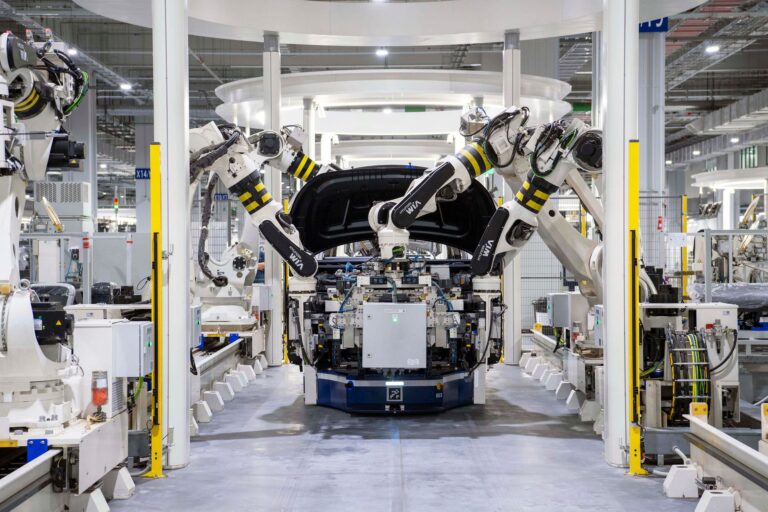
Machine vision represents another critical automation capability within Zebra’s portfolio, addressing quality control, traceability, and identification challenges across manufacturing and logistics operations. The company’s fixed industrial scanning products capture data at points where human inspection would be too slow, too inconsistent, or too expensive to maintain. In pharmaceutical manufacturing, for instance, serialization regulations require that every individual package be marked with a unique identifier and verified at multiple points along the production line. Zebra’s machine vision systems perform these verifications at speeds exceeding 1,000 packages per minute while simultaneously detecting print quality defects that could render codes unreadable.
Beyond regulatory compliance, machine vision enables the quality inspection automation that manufacturers require to reduce scrap rates and warranty claims. Zebra’s deep learning-based inspection systems can be trained on examples of good and defective products, learning to identify anomalies that would be difficult to define through traditional rule-based programming. This capability proves particularly valuable in industries like electronics manufacturing and automotive assembly, where defect types vary widely and production changeovers occur frequently. The integration of machine vision with Zebra’s broader enterprise visibility platform allows quality data to flow into statistical process control systems and trigger automated responses when processes drift out of specification.
- **Deep learning inspection**: AI-based defect detection reduces the programming effort required to deploy inspection systems while improving detection accuracy for subtle anomalies
- **Serialization compliance**: Machine vision systems ensure pharmaceutical and consumer goods manufacturers meet track-and-trace regulatory requirements
- **Throughput scalability**: Fixed industrial scanners and vision systems operate at manufacturing line speeds without creating bottlenecks
- **Data integration**: Quality and identification data flows into enterprise systems for analytics, compliance reporting, and process optimization

How to Evaluate Zebra Technologies Stock for an Automation-Focused Portfolio
Evaluating Zebra Technologies as an automation investment requires looking beyond headline revenue figures to understand the growth trajectory and margin profile of the company’s automation-related businesses. The company reports revenue across two segments: Asset Intelligence & Tracking (AIT) and Enterprise Visibility & Mobility (EVM). While this segmentation doesn’t isolate automation revenue specifically, management commentary on earnings calls provides insight into the growth rates of robotics, machine vision, and software offerings relative to the legacy hardware business. Investors should track these qualitative disclosures alongside quantitative metrics to gauge automation’s increasing contribution to overall results.
Gross margin and operating margin trends reveal whether Zebra’s automation products are accretive or dilutive to overall profitability. Software and recurring revenue businesses typically carry higher margins than hardware, and Zebra’s push toward software-as-a-service models for workforce management and analytics should, over time, improve the company’s margin structure. Conversely, the AMR business remains in an investment phase where hardware development costs and go-to-market expenses may pressure margins in the near term. Comparing Zebra’s valuation multiples against both traditional hardware peers and automation-focused companies provides context for assessing whether the market is pricing the automation optionality embedded in the stock.
- **Revenue mix shift**: Monitor the growth rates of software, services, and robotics relative to traditional printing and scanning hardware
- **Recurring revenue percentage**: Higher recurring revenue indicates stickier customer relationships and more predictable earnings
- **R&D investment levels**: Sustained investment in automation product development signals management’s commitment to the transformation
- **Acquisition integration**: Evaluate whether acquired capabilities like Fetch Robotics are achieving revenue synergies and integration milestones
Competitive Risks and Market Challenges Facing Zebra’s Automation Business
Despite promising market dynamics, Zebra Technologies faces substantial competitive challenges in its automation businesses that investors must weigh carefully. The AMR market has attracted significant venture capital investment and features well-funded competitors including Locus Robotics, 6 River Systems (now owned by Shopify), and Boston Dynamics (owned by Hyundai). These competitors possess deep robotics expertise and, in some cases, strategic relationships with major e-commerce players that could limit Zebra’s market access. Additionally, the large industrial automation conglomerates—Siemens, ABB, Honeywell, and Rockwell—possess resources to accelerate their own robotics and software capabilities through acquisition or internal development.
Customer concentration represents another risk factor worth monitoring. Zebra’s enterprise relationships span thousands of customers, but within specific automation product lines, revenue may concentrate among a smaller number of large warehouse operators or manufacturers. The loss of a major AMR customer or a decision by a key account to standardize on a competitor’s platform could create material revenue headwinds. Furthermore, the cyclical nature of capital expenditure in warehousing and manufacturing means that demand for automation equipment fluctuates with broader economic conditions. Recessions historically trigger delays or cancellations of automation projects, even when the long-term business case remains compelling.
- **Well-funded competitors**: Pure-play robotics companies and large industrial conglomerates compete aggressively for automation market share
- **Technology evolution risk**: Rapid advances in robotics and AI could render current product generations obsolete faster than anticipated
- **Customer concentration**: Automation revenue may concentrate among fewer large customers compared to the diversified legacy hardware business
- **Cyclical demand**: Capital equipment purchases for automation projects are discretionary and sensitive to economic conditions

The Role of RFID and IoT in Zebra’s Long-Term Automation Vision
Radio frequency identification (RFID) technology, while not robotics in the traditional sense, forms a foundational layer of Zebra’s automation strategy by enabling the item-level visibility that autonomous systems require to function effectively. Autonomous mobile robots navigating warehouse aisles need accurate, real-time data about inventory locations—information that RFID provides far more efficiently than manual barcode scanning. Zebra’s RFID readers, tags, and infrastructure products generate the digital twin of physical inventory that powers intelligent automation decisions. As RFID adoption expands beyond apparel retail into food service, healthcare, and general merchandise, the addressable market for Zebra’s sensing technologies grows accordingly.
The Internet of Things (IoT) connectivity embedded across Zebra’s portfolio creates additional automation integration points. Mobile computers, printers, and scanners equipped with wireless connectivity feed operational data into cloud platforms for analytics and machine learning. This installed base of connected devices provides Zebra with visibility into customer operations that informs product development and creates opportunities to layer additional software services. The convergence of sensing, connectivity, and intelligence at the operational edge positions Zebra as an infrastructure provider for the autonomous enterprise, even in scenarios where the company’s own robots are not deployed.
How to Prepare
- **Review recent earnings transcripts and investor presentations**: Management commentary provides the most detailed insight into automation business performance, customer wins, and product development priorities that quarterly revenue figures alone cannot convey. Pay particular attention to discussions of AMR deployments, software bookings, and competitive dynamics.
- **Understand the competitive landscape**: Research Zebra’s direct competitors in each automation segment—Locus Robotics, Cognex, Honeywell, and others—to assess relative strengths and weaknesses. Evaluate whether Zebra’s integrated approach or competitors’ specialized focus resonates more strongly with target customers.
- **Analyze valuation relative to peers**: Compare Zebra’s price-to-earnings, price-to-sales, and enterprise value-to-EBITDA ratios against both traditional hardware peers and automation-focused companies. This dual comparison reveals whether the market is pricing Zebra as a legacy hardware company or recognizing its automation potential.
- **Assess balance sheet strength and capital allocation**: Review Zebra’s debt levels, cash flow generation, and stated priorities for capital deployment. The company’s ability to fund continued R&D investment and strategic acquisitions without excessive leverage matters for long-term value creation.
- **Consider macroeconomic sensitivity**: Model how Zebra’s revenue and earnings might perform under recession scenarios when capital expenditure budgets contract. Understanding downside risk helps calibrate position sizing appropriately.
How to Apply This
- **Determine portfolio allocation**: Based on risk tolerance and existing technology sector exposure, decide what percentage of the portfolio Zebra Technologies stock should represent—typically ranging from 1% for conservative allocations to 5% for higher-conviction positions.
- **Establish entry strategy**: Choose between lump-sum investment at current prices or dollar-cost averaging over several months to reduce timing risk. Set price alerts for levels that would represent more attractive entry points based on fundamental valuation.
- **Define monitoring cadence**: Schedule quarterly reviews following earnings releases to assess whether the automation thesis is progressing as expected. Track key performance indicators identified during due diligence against management guidance and analyst expectations.
- **Set exit criteria**: Establish in advance the conditions that would trigger reconsideration of the investment—whether based on valuation reaching target levels, competitive position deteriorating, or management strategy shifting away from automation priorities.
Expert Tips
- **Focus on software revenue growth rates** rather than total revenue when assessing automation progress, since software carries higher margins and indicates deeper customer relationships than transactional hardware sales.
- **Monitor warehouse construction and leasing data** as leading indicators for AMR demand. Strong logistics real estate activity typically precedes capital equipment purchases for automation, providing early signal of demand trends.
- **Track management equity ownership and incentive structures** to confirm that leadership compensation aligns with long-term automation value creation rather than short-term financial engineering.
- **Pay attention to partner ecosystem announcements**, particularly integrations with warehouse management system vendors like Manhattan Associates and Blue Yonder, which validate Zebra’s relevance in customer automation stacks.
- **Compare gross margin trends across quarters** to identify whether automation products are achieving scale economies or facing pricing pressure from competitors, which carries significant implications for long-term profitability.
Conclusion
Zebra Technologies stock offers investors a differentiated avenue into the robotics and automation megatrend, combining the stability of an established enterprise technology provider with the growth potential of emerging automation markets. The company’s evolution from barcode specialist to integrated automation platform provider remains underappreciated by many market participants, creating potential opportunity for investors who look beyond surface-level classifications. The combination of autonomous mobile robots, machine vision, RFID infrastructure, and workforce optimization software positions Zebra to capture value as enterprises accelerate their digital transformation and automation initiatives.
The investment case requires patience and acceptance of execution risk as Zebra integrates acquired capabilities and scales its automation businesses against well-funded competition. Investors should approach the opportunity with clear evaluation criteria, appropriate position sizing, and realistic expectations for the timeline over which automation contributions will materially impact financial results. For those seeking automation exposure without pure-play valuations and with diversification across multiple technology vectors, Zebra Technologies merits serious consideration as a portfolio component in the evolving industrial technology landscape.
Frequently Asked Questions
How long does it typically take to see results?
Results vary depending on individual circumstances, but most people begin to see meaningful progress within 4-8 weeks of consistent effort. Patience and persistence are key factors in achieving lasting outcomes.
Is this approach suitable for beginners?
Yes, this approach works well for beginners when implemented gradually. Starting with the fundamentals and building up over time leads to better long-term results than trying to do everything at once.
What are the most common mistakes to avoid?
The most common mistakes include rushing the process, skipping foundational steps, and failing to track progress. Taking a methodical approach and learning from both successes and setbacks leads to better outcomes.
How can I measure my progress effectively?
Set specific, measurable goals at the outset and track relevant metrics regularly. Keep a journal or log to document your journey, and periodically review your progress against your initial objectives.
When should I seek professional help?
Consider consulting a professional if you encounter persistent challenges, need specialized expertise, or want to accelerate your progress. Professional guidance can provide valuable insights and help you avoid costly mistakes.
What resources do you recommend for further learning?
Look for reputable sources in the field, including industry publications, expert blogs, and educational courses. Joining communities of practitioners can also provide valuable peer support and knowledge sharing.
Related Reading
- iRobot Stock After Amazon Deal Collapse: Buy or Avoid
- Best Robotics Penny Stocks With Massive Upside Potential
- Brooks Automation Stock: Semiconductor Robotics Opportunity
- How to Build a Robotics-Focused Investment Portfolio
- NVIDIA Isaac Platform: Why This Could Drive Stock to New Highs