
August 2026 moved exoskeleton robotics closer to practical use through a new U.S. medical clearance, a wider clinical-access pilot, and more structured testing.
The key change was not a leap in raw power, but progress in access, wearability, supervision, and evidence. An exoskeleton is a wearable robotic system that supports or assists human movement. This update matters to wheelchair users, clinicians, employers, and buyers because each group must distinguish documented capabilities from announced or narrowly tested ones.
Table of Contents
- Eve creates a new personal-mobility option
- ReWalk access is expanding—but only as a pilot
- Industrial designs are prioritizing workflow fit
- Testing is becoming more task-based
- What to watch after August
Eve creates a new personal-mobility option
On August 3, the FDA cleared Wandercraft's Eve as a Class II powered exoskeleton under 510(k) K260381. The decision created a newly documented U.S. personal-device option for eligible wheelchair users with spinal-cord injury, according to the FDA clearance record. "Cleared" is the important term.
Prospective users should not interpret Eve as a universal substitute for a wheelchair or as an unrestricted walking device. Wandercraft specifies use on level indoor surfaces or immediately adjacent level outdoor surfaces. A specially trained companion must supervise use, as detailed in Wandercraft's August 11 announcement. Those limits could affect home layout, daily routines, caregiver availability, and the device's practical value for an individual user.
ReWalk access is expanding—but only as a pilot
Lifeward and Ottobock Care began a six-month U.S. pilot on August 5 for ReWalk 7. The program uses Ottobock Care's network of more than 50 clinics to support evaluation, training, reimbursement expertise, and follow-up.
This approach addresses more than device availability. A medical exoskeleton also requires suitable assessment, user instruction, continued support, and a path through reimbursement processes. National expansion is not guaranteed. Lifeward says broader scale will depend on the pilot's results, making clinic access and follow-up quality the near-term measures to watch in the company's pilot announcement.
Industrial designs are prioritizing workflow fit
CYBERDYNE began selling or renting the HAL LB06 work-support exoskeleton on February 2. It targets lifting and bent-posture tasks in emergency response, airports, factories, construction, logistics, and agriculture. The notable improvements concern everyday usability. CYBERDYNE says the LB06's back section is 65% thinner than the LB03's and that workers can put it on in about 10 seconds. These changes suggest industrial adoption increasingly depends on whether equipment fits existing work cycles.
Evidence from agriculture remains limited. Six farmers aged 40 to 70 used HAL during onion pulling and trimming in a May field trial. CYBERDYNE reported favorable feedback alongside unresolved improvement requests, so the trial supports continued evaluation rather than broad claims about agricultural deployment. Ottobock's SUITX unit is taking a related approach by combining powered exoskeletons with sensor data and AI-based ergonomics analysis. It reported that an Airbus study found overhead-work load reductions of up to 43% and efficiency gains of up to 14%, while its companion app was only planned for an initial-market launch during 2026.
Testing is becoming more task-based
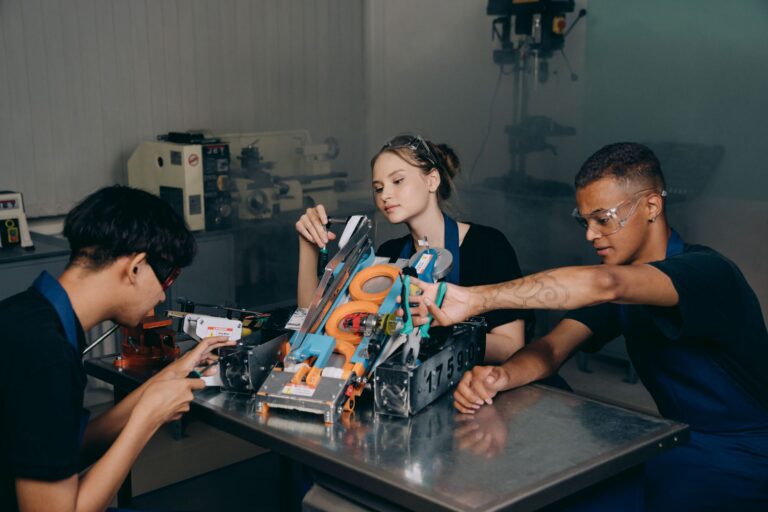
ASTM's Exo Games, held August 3–6, tested student-built emergency-response exoskeletons against F48 standards. The event reflects a shift toward repeatable tasks that allow developers to compare performance more consistently. Standards still capture only part of real use.
ASTM cautions that its gait test covers straight paths, excluding obstacles and other environmental complexity. A strong test result therefore should not be treated as proof that a system will perform equally well on stairs, uneven ground, or cluttered emergency sites. Readers evaluating performance claims should check:.
- Which task and environment the test covered.
- Whether participants resembled the intended users.
- Whether the result measured workload, speed, safety, or user preference.
- Which common obstacles or operating conditions the test excluded.
What to watch after August
The next announced consumer-mobility event is Hypershell's September 3 unveiling of Halo in Berlin. Hypershell describes it as a full-leg exoskeleton with four powered joints, but as of August 28 it remained an announced debut—not an independently evaluated or commercially demonstrated product, according to the company's August 27 release. The useful questions begin after the unveiling: What environments will Halo support, what supervision or training will it require, and what testing will substantiate its performance? Until those details appear, the four-joint design is a specification to examine, not evidence of practical capability.