
Chef Robotics builds robotic arms that pick, portion, and place food items into meal trays and containers on commercial food-production lines. The company uses NVIDIA's Isaac platform — a set of simulation, perception, and AI tools built for robot development — to train and run the computer vision and motion-planning software that lets its arms handle food that varies in shape, size, and texture from one piece to the next.
Food handling is a harder robotics problem than it looks. A box of screws is uniform; a tray of chicken thighs, diced vegetables, or cookie dough is not. Chef Robotics' pitch is that its arms learn to adapt to that variation using AI models developed and refined with NVIDIA's tools, rather than relying on rigid, pre-programmed motions that only work for a single, consistent product.
Table of Contents
- What Chef Robotics Actually Builds
- What the NVIDIA Isaac Platform Provides
- Why Food Manipulation Is a Distinct Robotics Problem
- What This Means for Food Manufacturers Evaluating Automation
- Where This Fits in the Broader Robotics AI Trend
- Frequently Asked Questions
What Chef Robotics Actually Builds
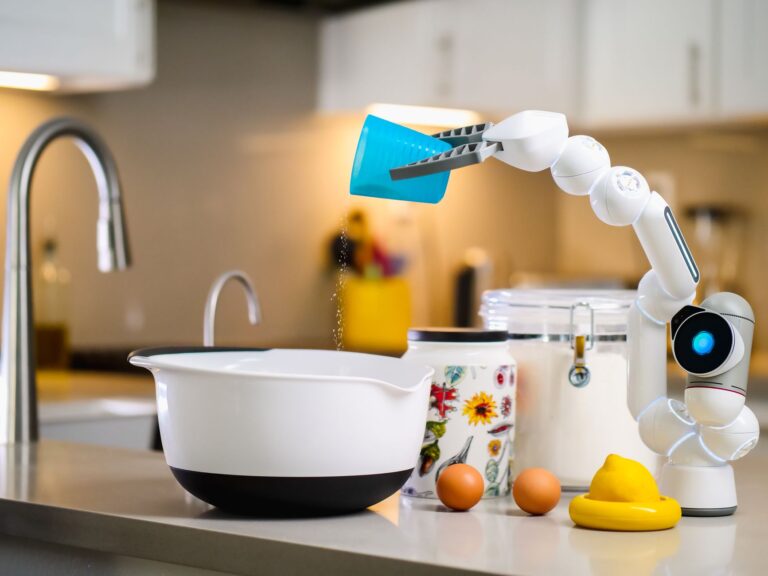
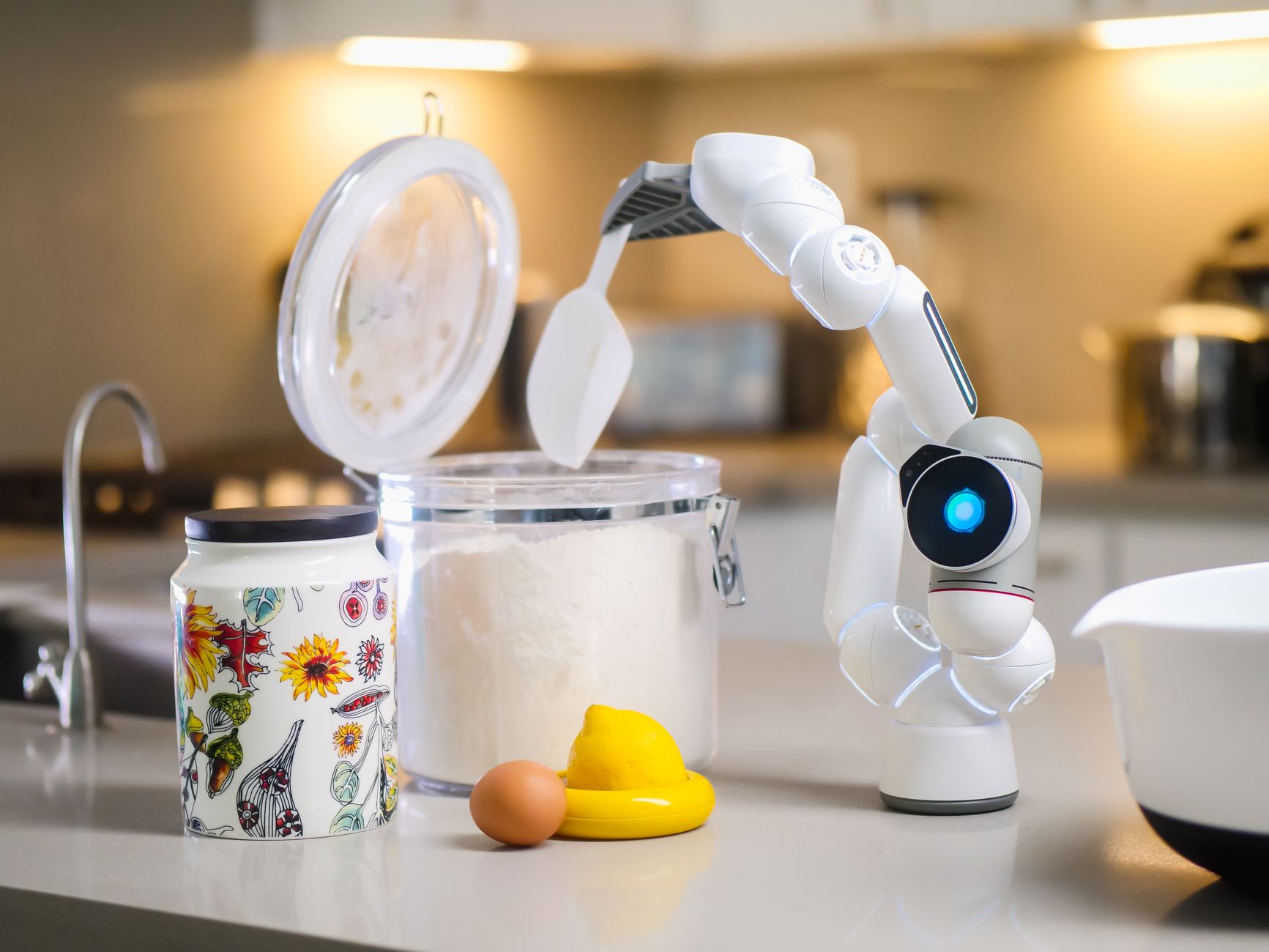
Chef Robotics makes robotic picking-and-placing systems designed to go into existing food-production and catering lines, rather than selling a general-purpose robot arm. Customers are typically food manufacturers and prepared-meal companies that need to portion ingredients into trays, bowls, or containers at high volume. The core engineering challenge is perception and grip.
Food items are irregular, soft, sticky, or easily damaged, and a scoop of rice or a cut of protein never looks exactly the same twice. A robot that works from fixed coordinates will fail constantly on this kind of line, so the arm needs a camera system and a model that can recognize what it's looking at and decide how to pick it up in real time. That is the piece of the stack where NVIDIA's platform comes in: Chef Robotics uses it for the perception and decision-making layer that sits between the camera feed and the arm's motion, rather than for the arm's physical hardware itself.
What the NVIDIA Isaac Platform Provides
NVIDIA Isaac is a collection of software for building and training robots, aimed at the kind of problem Chef Robotics has: a robot that needs to perceive a messy, variable environment and act on it. The platform spans simulation, where a robot's software can be tested against thousands of virtual scenarios before it ever touches real hardware, and tools for building and running perception models that identify objects and plan grasps. For a food-handling task, simulation is useful because generating real-world training examples for every possible shape and orientation of a food item is slow and expensive.
Simulating variations of a product lets a robotics team expose their model to far more scenarios than a physical test kitchen could produce, then validate the result on real food. Isaac also provides the runtime layer that connects a camera's input to the arm's motion commands, handling the recognition and grasp-planning calculations fast enough to keep up with a live production line. Chef Robotics' integration points are these two pieces: training the system on food-specific variation, and running that trained system inside the arm's control loop on the factory floor.
Why Food Manipulation Is a Distinct Robotics Problem
Most industrial robots that have operated on factory floors for decades handle rigid, consistent parts — the same bolt, the same box, positioned the same way every time. Food breaks that pattern. A single order of stir-fry vegetables can include pieces that differ in size, shape, and orientation within the same scoop, and the product itself can be soft enough that gripping it the wrong way damages it or changes its portion weight.
This is why Chef Robotics' use of Isaac centers on adaptive perception rather than fixed-path automation. The system has to identify what is in front of it and choose a grip strategy for that specific piece, over and over, rather than execute a single memorized motion. That is closer to the kind of generalized object manipulation research that AI-heavy robotics companies have pursued for warehouse picking, applied here to food.
- Rigid-part robots: same object, same orientation, pre-programmed path.
- Food-handling robots: variable shape, size, and texture, decided in real time from camera input.
- The shift from one to the other requires a perception and planning layer capable of generalizing across a product category, which is what simulation-trained AI models are built for.
What This Means for Food Manufacturers Evaluating Automation
A manufacturer considering robotic portioning should treat the underlying AI and perception stack as the differentiator, not the robotic arm itself. Arms from multiple vendors can perform similar physical motions; what varies is whether the system reliably recognizes and grips the manufacturer's specific products without constant reprogramming. Questions worth asking a vendor in this category: Because Chef Robotics' approach relies on AI models trained against simulated and real food variation, a prospective customer should expect an onboarding period where the system is calibrated to their specific product line, rather than an out-of-box fit for an arbitrary food item.
- How does the system handle a new product SKU — does it need to be retrained, and how long does that take?
- What happens when a product's appearance changes seasonally or by supplier (different produce batches, different protein cuts)?
- Is damage to delicate or inconsistent items tracked as a metric, not just picking speed?
- Does the system run on standard factory-floor hardware, or does it require specialized compute at each station?
Where This Fits in the Broader Robotics AI Trend
Chef Robotics' use of Isaac is part of a wider pattern of robotics companies adopting NVIDIA's simulation and AI tools rather than building perception stacks from scratch. The appeal is that Isaac is built once by NVIDIA and reused across many robotics applications — warehouse picking, manufacturing, and now food handling — so a company like Chef Robotics can focus its own engineering effort on food-specific problems like grip force for delicate items, rather than reinventing basic computer-vision infrastructure. For readers tracking the industrial-automation space, the practical signal is that food manipulation is being treated as a variant of the same generalized-object-grasping problem that warehouse and logistics robotics have worked on for years, using the same category of AI tooling, rather than as a niche requiring entirely separate robotics research.
Frequently Asked Questions
Does NVIDIA make the robotic arm Chef Robotics uses?
No. NVIDIA's Isaac platform provides the simulation, perception, and AI software; the robotic arm hardware is separate from that platform.
Why can't a standard industrial robot arm handle food the same way it handles manufactured parts?
Manufactured parts are uniform and consistently positioned, while food items vary in shape, size, and texture piece to piece, requiring real-time perception and adaptive gripping rather than a fixed, pre-programmed motion.