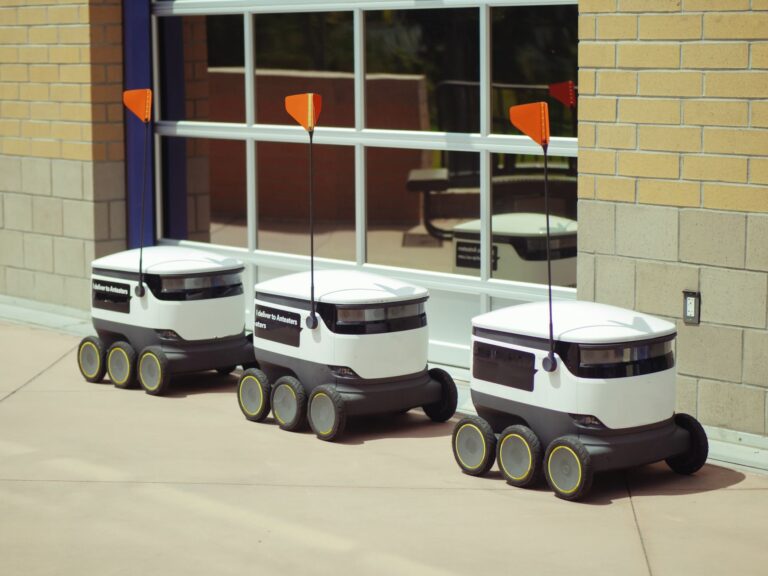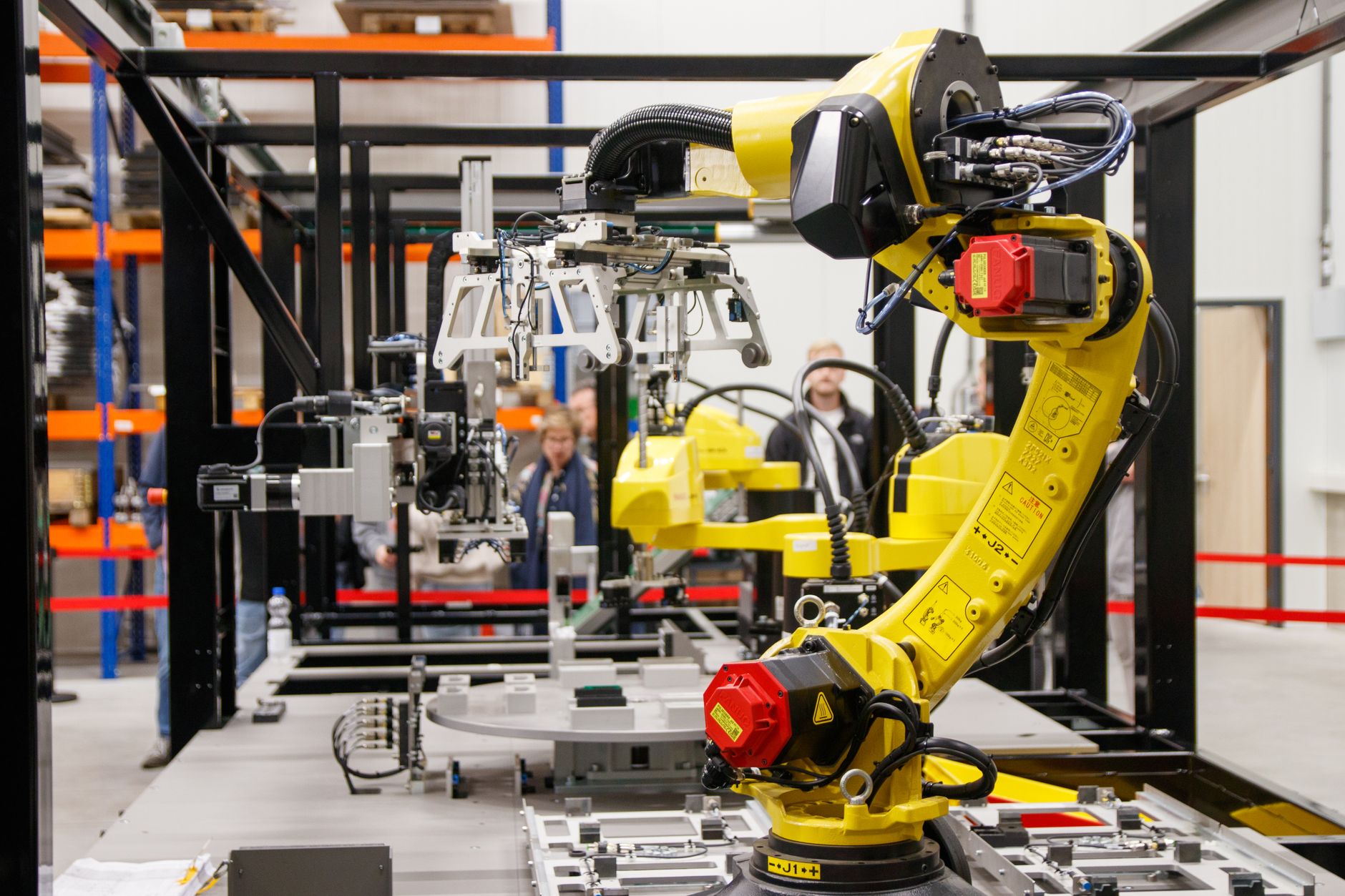

Construction robots in September 2026 are commercially real but narrowly deployed: autonomous excavators now dig on live U.S. infrastructure jobs, bricklaying and layout robots work production sites, and 3D printers have finished entire subdivisions.
The market is growing fast — The Business Research Company projects growth from $6.55 billion in 2025 to $7.79 billion in 2026, an 18.9% annual rate — but every machine in the field still works alongside human crews, not instead of them. This FAQ answers the questions contractors, tradespeople, and technology watchers ask most: how big the market really is, what the machines can and cannot do yet, whether robots threaten construction jobs, and what the safety numbers say. Each answer is grounded in a named source, and the limitations get as much space as the headlines.
Table of Contents
- How big is the construction robotics market, really?
- What can autonomous excavators actually do on a jobsite?
- Will robots take construction jobs?
- Which robots are proven in bricklaying, 3D printing, and layout?
- Do construction robots make jobsites safer?
- What should a contractor evaluating robots do first?
- Frequently Asked Questions
How big is the construction robotics market, really?
It depends entirely on whose model you read. The Business Research Company puts the 2026 global market at $7.79 billion, while other analysts counting a narrower slice of the sector — Coherent Market Insights among them — value 2026 at just $1.29–$1.44 billion. That is a fivefold spread on the same industry in the same year.
The gap comes from methodology: what counts as a "construction robot" (does an autonomy retrofit kit on a rented excavator count? a drone? a 3D printer?), which revenue streams are included, and how services are treated. Treat any single dollar figure as one model among several, not a measurement. What the estimates agree on is direction. Every major forecast shows double-digit annual growth, driven by the same three forces: chronic labor shortages, jobsite safety pressure, and demand for faster project delivery.
What can autonomous excavators actually do on a jobsite?
As of this year, they can dig without anyone in the cab on real projects. On August 17, 2026, Bedrock Robotics announced that its retrofit kit now runs excavators fully autonomously on live U.S. infrastructure work: a Nevada water-treatment site with Sundt Construction, a Texas earthwork job with Champion Site Prep, and a 1.2-million-cubic-yard sitework project with Zachry Construction. The retrofit model matters for buyers.
Bedrock's kit converts existing excavators rather than replacing them, so a contractor's current fleet is the starting point, not a write-off. The limits are just as concrete. Bedrock itself describes the machines as reaching only "near human-level productivity," and per Construction Dive's reporting, a human site manager still sets the dig plan before the machine executes it. Autonomous earthmoving in 2026 removes the operator from the cab; it does not remove human judgment from the job.
Will robots take construction jobs?
Not in 2026 — the industry cannot fill the jobs it already has. Associated Builders and Contractors estimates the U.S. construction industry must attract roughly 349,000 net new workers in 2026 and another 456,000 in 2027, driven by retirements, immigration enforcement, and megaprojects like AI data centers. In that context, robots backfill vacancies rather than displace people.
A crew that cannot hire enough masons rents a bricklaying robot; a sitework contractor short on operators retrofits an excavator. The work shifting to machines is largely work that would otherwise go unstaffed or unbid. The practical implication for workers is a skills shift, not an exit. The autonomous excavator still needs the site manager who plans the dig; the layout robot still needs the trades who build to its lines. Learning to direct and check these systems is the durable position.
Which robots are proven in bricklaying, 3D printing, and layout?
Three categories have moved past demos into production work: The shared caveat is scope. Virtually all of ICON's production homes are single-story — its Phoenix system is aimed at multistory printing but that is the frontier, not the norm.
Hadrian X handles wall structure, not the full trade stack. Each robot automates one well-bounded task; nobody sells a robot that builds a building.
- Bricklaying: FBR's next-generation Hadrian X lays over 300 U.S.-format masonry blocks per hour from a 32-meter telescopic boom, and homebuilder PulteGroup piloted it in Florida in February 2025, standing up a house's walls in about a day versus weeks by hand, per The Robot Report.
- 3D printing: ICON and Lennar completed the world's largest 3D-printed community — 100 single-story homes of roughly 1,500–2,100 square feet at Wolf Ranch in Georgetown, Texas — and ICON counts 263 completed homes and structures since 2017.
- Layout: Dusty Robotics' FieldPrinter prints BIM floor plans directly on slabs to within 1/16-inch accuracy at 10,000–15,000 square feet per day, and has marked over 300 million square feet across more than 1,000 buildings. Its FieldPrinter 2.0 prints each trade's layout in a distinct color.
Do construction robots make jobsites safer?
The hazard they target is real and measurable. The Bureau of Labor Statistics' 2024 fatality census recorded 1,032 deaths among construction and extraction workers, with fatal falls, slips, and trips accounting for 370 — down 7.5% from 400 in 2023, but still the largest single category. Falls and struck-by hazards are exactly what current robots remove people from.
A layout robot keeps workers off their knees but, more importantly, autonomous excavators and demolition machines take people out of trench and high-wall zones, and a boom-fed bricklaying robot keeps masons off scaffolds for structural walls. No source yet ties a fatality-rate decline to robot adoption specifically — deployment is too thin. The honest claim is exposure reduction: every hour a machine works a hazardous position is an hour a person does not.
What should a contractor evaluating robots do first?
Match the machine to a labor gap you can name, not to the technology's ambition. The proven deployments all share that shape: Sundt and Zachry applied autonomy to operator-short earthwork; PulteGroup piloted Hadrian X where masonry crews were the schedule constraint.
Expect augmentation economics, not replacement economics. At "near human-level productivity," an autonomous excavator pays off by extending hours and filling vacant seats — a bid built on the machine outperforming a good operator is a bid built on a claim no vendor currently makes.
- Start with retrofit or rental options before capital purchases — Bedrock's kit converts machines you already own.
- Pilot on one scoped task with a measurable baseline, the way PulteGroup timed wall erection in days against weeks.
- Budget for the human roles that remain: dig planners, layout checkers, robot tenders.
- Verify claimed throughput on your site conditions; vendor figures like Dusty's 10,000–15,000 square feet per day are ceilings, not guarantees.
Frequently Asked Questions
Can I buy a fully autonomous excavator today?
Not as a new machine — Bedrock Robotics deploys autonomy as a retrofit kit on existing excavators, currently on live U.S. infrastructure projects with partners like Sundt and Zachry Construction.
Are 3D-printed homes limited to one story?
In practice yes: virtually all of ICON's 263 completed homes and structures are single-story, and its Phoenix system for multistory printing is still emerging rather than in production use.
How accurate is robotic layout printing?
Dusty Robotics states its FieldPrinter marks BIM plans on slabs to within 1/16 inch, covering 10,000–15,000 square feet per day.